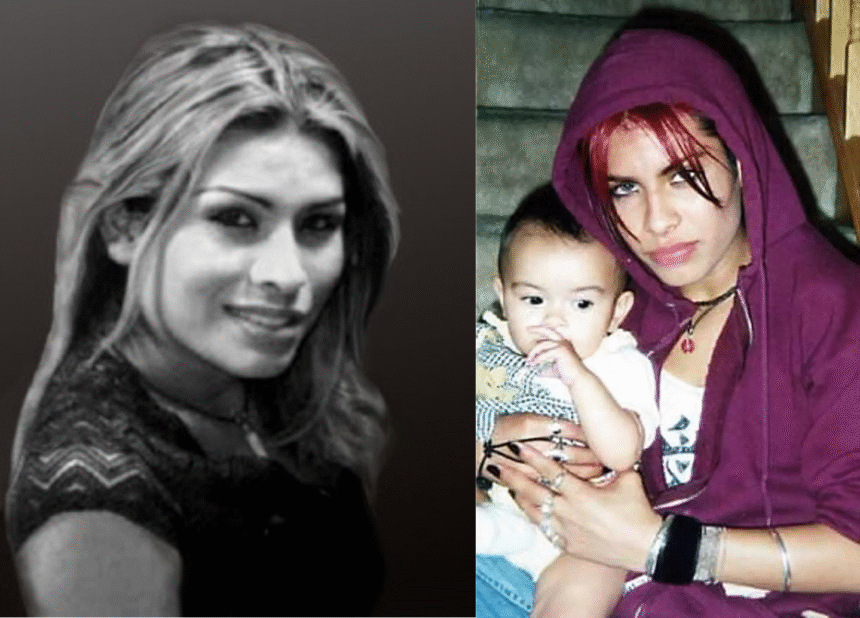
In 2002, 17-year-old transgender teen Gwen Araujo was beaten and strangled in Newark, California, after four men discovered she was transgender.
Before October
Gwen Araujo was born on February 24, 1985, in Brawley, California, to Edward Araujo and Sylvia Guerrero. Her parents separated when she was still an infant. In 1999, at age 14, she came out as transgender and began using the name Gwen, inspired by singer Gwen Stefani. She also used the names Wendy and Lida.
Over time, she grew her hair long and planned to begin hormone treatment and eventually have surgery. Family members said she was bullied in junior high school because of her voice and manner, and she later transferred to an alternative high school. She did not return for the 2002–03 school year.
In late August or early September 2002, Araujo met Michael Magidson, José Merel, Jaron Nabors, and Jason Cazares. They spent time together, smoked marijuana, and socialized. After their first meeting, Nabors asked the others whether Araujo might be male, but the question was dismissed.
In the days that followed, Araujo had oral sex with Magidson and anal sex with Merel. During those encounters, she told them she was menstruating and prevented them from touching her genitals. Under California law at the time, both men, who were 22, committed statutory rape because Araujo was 17.
Tension around her identity grew during the following weeks. Nicole Brown, who was dating Paul Merel and knew Araujo, later said the two had fought after Brown challenged Araujo to strip in front of the men. Brown said Araujo surprised her with her strength.
By late September, the men were discussing whether she was female. According to testimony later given in court, they had also begun to say that if she was not, the situation could end badly for her.
The party
On the night of October 3, 2002, Araujo went to a party at a house in Newark rented by José and Paul Merel. Also present were Emmanuel Merel, Magidson, Nabors, Cazares, and Brown.
During later court proceedings, Nabors said José Merel stated that if Araujo turned out to be male, she would not leave the house. Nabors also recalled Magidson saying he did not know what he would do. Brown said the men had gone out to a club and returned after midnight.
In the early hours of October 4, the atmosphere changed. Magidson demanded that Araujo tell him her sex or allow him to touch her genitals. She refused. Brown suggested that someone check her body, and Magidson took Araujo into the bathroom.
About half an hour later, Brown entered the room and discovered that Araujo had male genitalia during what later testimony described as a forced inspection. José Merel later admitted he had sex with Araujo while they were in the bathroom.
After that discovery, the confrontation moved quickly. Brown testified that the men who had been sexually involved with Araujo became furious. She said she warned Araujo that they were very angry.
When Araujo tried to leave through the front door, Magidson, Nabors, and Cazares forced her back into the house. Emmanuel Merel later said he also tried to help her get out but was blocked. José Merel vomited, cried, and said he could not be gay.
Once Araujo was back inside, the assault began. Magidson pulled at her clothing in an effort to expose her, punched her in the face, knocked her to the floor, and put her in a chokehold before others pulled him away.
Araujo pleaded with the men to stop and said she had a family. José Merel then hit her with a can of food, cutting her head, and struck her again with a frying pan. Soon afterward, Brown woke Paul Merel, and the three of them left with Emmanuel.
As they departed, Nabors and Cazares left in Magidson’s truck to collect shovels and a pickaxe from Cazares’s home.
The killing
When Nabors and Cazares returned, Araujo was still alive. She was sitting on a couch and bleeding from the head. José Merel, according to testimony, was concerned about the blood and told her to get off the furniture.
The violence then resumed. Nabors later said that he and Cazares urged the others to knock her out. Magidson drove Araujo’s head into the living room wall with his knee, leaving visible damage and knocking her unconscious.
Cazares kicked her. Merel cleaned blood from the couch and carpet, then went to his room, where he later said he cried.
After Araujo lost consciousness, Magidson tied her wrists and ankles. She was wrapped in a comforter to limit further blood stains and carried into the garage. At that point, the accounts given by the defendants were no longer consistent.
Nabors said Magidson strangled Araujo with a rope and that Cazares struck her with a shovel. Magidson blamed Nabors for both acts. Cazares said he did not hit her and did not witness her death.
José Merel said he believed she was still alive until he saw her body in the bed of Magidson’s truck. The autopsy later concluded that she died from strangulation associated with blunt force trauma to the head.
Her body was placed in a pickup truck, and the four men drove about four hours to El Dorado County. There, in the El Dorado National Forest near Silver Fork Road, they buried her in a shallow grave.
On the drive back to Newark, they stopped for breakfast at a McDonald’s drive-through. Later that morning, when Brown asked José Merel what had happened, he replied only that Araujo had taken a long walk home.
Araujo’s mother reported her missing on October 5 after she failed to return or call. Police did not initially treat the case with urgency, in part because she was transgender and also because she had stayed away from home overnight before.
On October 9, Araujo’s aunt contacted police after hearing rumors that a girl who had been outed as transgender at a party had been killed and buried near Tahoe. Investigators began interviewing people who had attended the gathering.
A friend of Nabors also told police that Nabors had confessed. The friend agreed to wear a recording device in another conversation with him. After hearing that recording, investigators confronted Nabors, and on October 15 he led them to Araujo’s body.
Court and after
The first arrests followed quickly. Police initially took Magidson, Nabors, José Merel, and Paul Merel into custody. Paul Merel was released after Brown and Emmanuel Merel said he had left the house before the killing.
Murder charges were filed against Magidson, Nabors, and José Merel on October 17. A letter Nabors later wrote to a girlfriend, describing what he called a “Soprano-type plan” to kill Araujo and dispose of her body, was intercepted by jail officials and led to Cazares’s arrest on November 19.
Araujo’s funeral was held on October 25, 2002, at St. Edwards Catholic Church in Newark. She was later cremated, and Sylvia Guerrero kept her ashes. In 2004, a judge approved Guerrero’s request to change her child’s legal name after death to Gwen Amber Rose Araujo.
On February 24, 2003, Nabors pleaded guilty to voluntary manslaughter and agreed to testify against the other defendants. He later received an 11-year sentence. The first trial of Magidson, José Merel, and Cazares began in April 2004.
During that case, defense arguments included a form of the trans panic defense, which claimed that the discovery of Araujo’s gender identity had caused overwhelming shock. The jury could not reach a unanimous verdict, and the trial ended in a mistrial in June.
A second trial began in May 2005. By then, the court required attorneys to refer to Araujo with female pronouns. During testimony, a recording of Magidson’s first police interview was played for jurors. In it, an investigator was heard encouraging him to present the case in a way consistent with a panic defense.
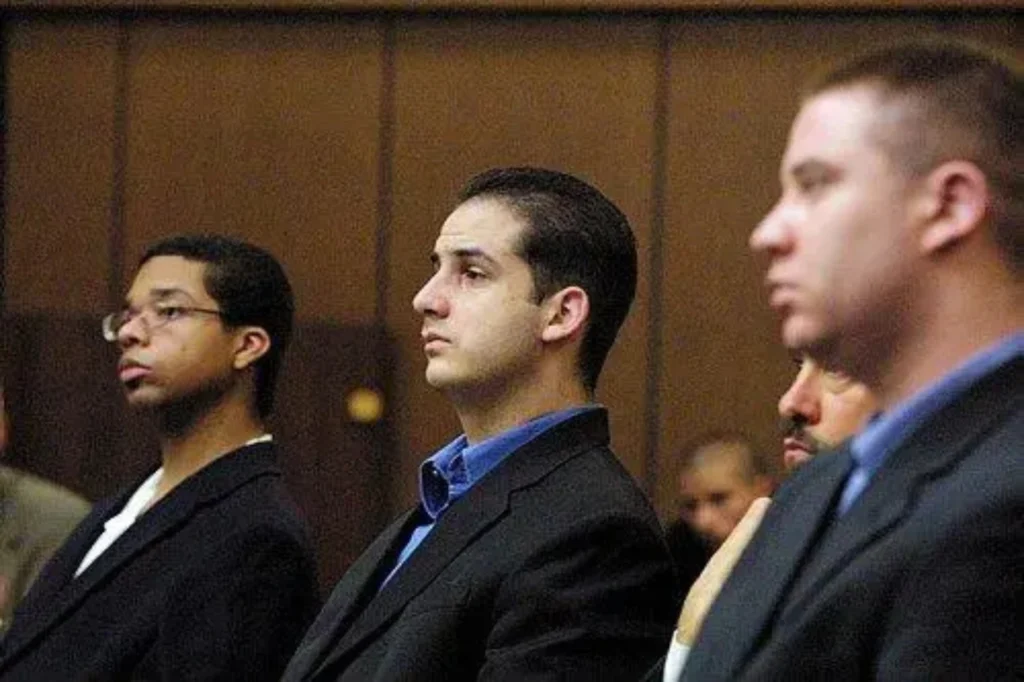
On September 12, 2005, the jury convicted Magidson and José Merel of second-degree murder but rejected hate-crime enhancements. It deadlocked on Cazares. To avoid another trial, Cazares later entered a no-contest plea to voluntary manslaughter and received a six-year sentence.
In January 2006, Magidson and Merel were sentenced to 15 years to life. Merel expressed remorse to Araujo’s family, while the judge said Magidson showed none. In September 2006, Governor Arnold Schwarzenegger signed the Gwen Araujo Justice for Victims Act, which limited the use of bias against victims in criminal trials.
In 2014, Governor Jerry Brown signed another law that further restricted the gay and trans panic defense in California. Cazares was released in 2012, and Nabors was released before 2016.
Merel was granted parole in 2016 with Guerrero’s support. Magidson was denied parole in 2016, 2019, and 2024, and he will be eligible again in 2029.