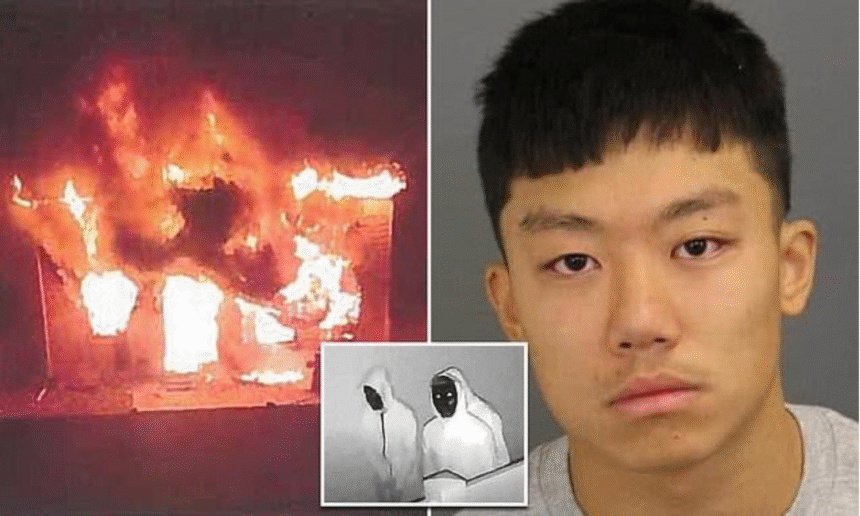
A late-night fire on Aug. 5, 2020, destroyed a home on North Truckee Street in Denver. Five residents died and three survived with injuries.
Kevin Bui was born in the United States to parents who had immigrated from Vietnam. He grew up with an older sister, Tanya Bui, in a household that initially faced financial strain.
His father worked as an accountant and later built a business that brought the family into a more secure life, including a move to a large home in Lakewood, Colorado. In school, Bui earned good grades and participated in sports, including football and swimming.
Outside that setting, he later described becoming involved in illegal activity alongside his sister while still a teenager. He said they sold marijuana and fentanyl, finding customers through Snapchat. He also said he took part in stealing credit card information through online criminal sources and moved into buying and selling firearms.
In 2018, a separate family story was taking shape in a Denver neighborhood. Amadou Sow, an immigrant from Senegal who worked night shifts at Walmart, purchased a four-bedroom, two-story home in Green Valley Ranch.
He lived there with his wife, Hawa Ka, and their children, including their daughter Adama, who was 10, and their son Umar, who was 22 in 2020. The family practiced Islam and had immigrated with the goal of building long-term stability.
Hawa Ka planned to pursue nursing school once the family was more settled.
After buying the house, Amadou Sow opened it to another Senegalese household, the Diol family, whom he knew well. Djibril Diol had immigrated to the United States about a decade earlier and earned a civil engineering degree at Colorado State University.
After becoming a U.S. citizen, he was joined by his wife, Adja, and their young daughter, Khadija, who was 1 in 2020. About three months before the fire, Djibril’s sister Hassan moved into the home with her infant daughter, Hawa, who was 7 months old.
Hassan worked at Amazon and lived in the United States without her husband, Amadou, who remained in Senegal while pursuing a visa and had not met his daughter in person.
In July 2020, Bui arranged to meet a group of people in Denver for a gun sale. He later said the meeting turned into a robbery in which the group took his cash, his shoes, and his phone. Afterward, Bui used an iPad linked to his phone account to locate the device through a tracking feature.
The location displayed the address of the Denver home where Amadou Sow and the Diol family lived. Bui treated that location as accurate and began planning retaliation against the people he believed were responsible.
Bui recruited two friends, Gavin Seymour and Dillon Siebert. Seymour was 15 and Siebert was 14 at the time investigators identified them as suspects. Bui was 16. In preparation, the group searched the address online to view the property and its layout.
Bui also communicated about burning the house. On Aug. 1, he messaged Seymour, “# possibly ruin our futures and burn his house down.” The group also obtained white masks similar to those later recorded on a neighbor’s security camera.
On the evening of Aug. 4, the three teenagers met and went to Party City, then ate at Wendy’s. Afterward, they drove toward the neighborhood where the home stood and stopped at a gas station to fill gas cans.
They reached the area after a drive of about 30 minutes and drove around while looking at the home and nearby streets. They parked a dark, four-door sedan far enough away to avoid placing it directly in front of the house and approached on foot through the backyard.
The back door was unlocked. The three entered and poured gasoline through interior rooms on the lower level and onto surfaces inside the house. They then ran back toward the street.
At 2:26 a.m., a neighbor’s security camera recorded three hooded figures moving through the side yard while carrying gas cans. All three wore black clothing and white masks with small eye openings.
About 12 minutes later, the same camera recorded them running away. Flames appeared in lower-level windows shortly afterward, and a scream was audible on the recording.
At 2:40 a.m., a police officer saw thick smoke rising from the home and called the fire department. By the time fire crews arrived, the structure was engulfed. Amadou Sow, Hawa Ka, and Adama escaped by jumping from a second-story window.
Amadou Sow suffered a fractured left foot. Hawa Ka sustained severe spinal injuries, including fractures in two places. Adama was not injured. Umar was not in the home because he was working a night shift at 7-Eleven.
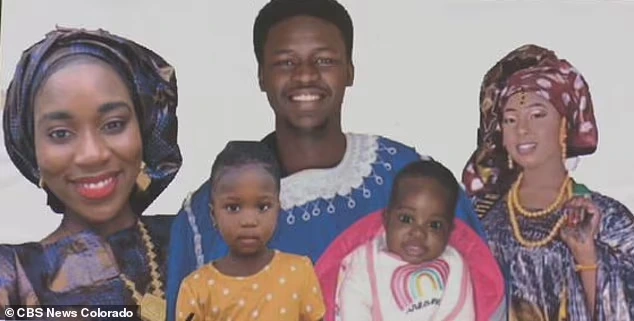
Firefighters forced entry through the front door and moved inside to search for others after learning more residents lived there. They found Khadija near the front area of the house, with Djibril and Adja nearby. Hassan was also located inside, still holding Hawa.
All five were unconscious when firefighters reached them. Each died from smoke inhalation. The medical examiner described soot coating their lungs and heat-related changes to internal tissues.
After the fire was extinguished, investigators began examining how it started. Noe Reza Jr., a neighbor, approached investigators and displayed footage from his security camera showing masked figures carrying gas cans shortly before the fire.
The video established that the fire was intentionally set and directed attention to identifying the people involved.
Nearby residents reviewed their own camera recordings. Several clips, when combined, showed an unfamiliar dark sedan moving slowly through neighborhood streets before the fire and then speeding away afterward, including driving over curbs.
The footage did not provide a readable license plate or a clear vehicle make and model. With few witnesses and limited camera detail, investigators interviewed family members, friends, and coworkers connected to the residents.
Those interviews did not produce a suspect, and investigators did not identify a personal dispute involving the victims that explained the attack. Media coverage raised questions about a potential hate crime because the residents were Senegalese immigrants and Muslim, and investigators did not treat that as the leading explanation.
Public attention increased as the investigation continued. On Aug. 18, images of the suspect vehicle were released. A petition calling for greater focus gathered 24,000 signatures.
Residents, including other immigrant families, reported fear about additional attacks in the area. Investigators continued to seek leads, including checking tips from outside Colorado, but those efforts did not identify the masked figures.
Investigators then pursued digital location evidence. They obtained a court order requiring major phone carriers to provide phone numbers that had connected to cellular towers near the home during the relevant time period.
The result produced thousands of numbers. Mark Sonnendecker, a digital forensics agent with the Bureau of Alcohol, Tobacco, Firearms, and Explosives, managed the sorting process. He focused first on T-Mobile records and reduced the list to nearly 1,500 numbers. I
nvestigators narrowed that group to the 100 numbers closest to the house and later used a device in the neighborhood that identified active phones in the area on another night.
Sixty-seven numbers appeared to belong to people still present in the neighborhood, leaving about 33 associated with phones that had been present during the fire window but were not later detected there.
As months passed, investigators shifted strategy toward online search activity. They sought records showing which devices had searched the home’s address in the weeks before the fire. The search produced 61 devices linked to queries for the address.
Investigators used the associated IP information to narrow the results to five devices connected to people in Colorado and focused on the three devices that had searched the address more than once.
A court order to Google produced account information tied to those devices. One account belonged to a family member connected to the victims, and another was linked to a delivery service. The remaining accounts were tied to Tanya Bui, Seymour, and Siebert.
Investigators connected Tanya Bui to the earlier phone-location work because her name matched one of the 33 T-Mobile numbers that appeared near the house during the fire window.
They then identified Kevin Bui as her younger brother and found he was closely associated with Seymour and Seabbert through their social media activity. Investigators also learned the three teenagers lived about 20 miles from the home.
On New Year’s Day 2021, investigators drove by Bui’s parents’ home and saw a dark-colored Toyota Camry in the driveway, consistent with the general appearance of the sedan recorded in neighborhood video.
That day, investigators obtained another court order for Google data and reviewed search histories for Kevin Bui, Seymour, and Siebert from early July through early August 2020.
The records showed Siebert had searched for Party City during the month before the fire. Investigators identified masks sold by Party City that matched the style recorded on the neighbor’s security camera.
On Jan. 27, 2021, Kevin Bui, Seymour, and Siebert were arrested. During interviews, Seymour and Siebert did not provide detailed accounts. Bui described the July robbery and said the phone-tracking feature on his iPad displayed the home’s address. Investigators did not determine why the tracking feature led to that location.
All three defendants accepted plea agreements. Bui pleaded guilty to two counts of second-degree murder and received a 60-year prison sentence.
At sentencing, he said he was not asking the surviving family members for forgiveness and apologized, calling himself “an arrogant knucklehead.” Seymour pleaded guilty to one count of second-degree murder and received a 40-year sentence.
Siebert was tried as a juvenile and received a 10-year sentence, with three years in a juvenile detention center followed by seven years in a young offender program.
Additional criminal cases followed for Tanya Bui and Kevin Bui. In February 2022, Tanya Bui pleaded guilty to possession of a firearm in furtherance of a drug trafficking crime and possession with intent to distribute a mixture containing a detectable amount of fentanyl, and she was sentenced to 10 years and 10 months.
Kevin Bui later faced allegations of drug trafficking while in jail after pills containing fentanyl were found in his cell. In 2023, Bui’s father was arrested and charged with 48 counts related to tax crimes.
The damaged home was later demolished.