
Omaima Nelson, a 23-year-old Egyptian-born model, was convicted of murdering, dismembering, and cannibalizing her 56-year-old husband, Bill Nelson.
Discovery of the Crime
The investigation began in early December 1991 after authorities were alerted to suspicious activity connected to Omaima Nelson.
On December 1, 1991, she contacted a former boyfriend, Richard Gray, at his home in Anaheim and attempted to involve him in a plan to dispose of her husband’s body. Gray refused to listen to her explanation and told her to leave. After she left, he notified law enforcement.
Officers soon searched the Costa Mesa apartment that Nelson shared with her husband, Bill Nelson.
What investigators discovered inside the residence immediately confirmed that a violent crime had taken place. Furniture throughout the apartment was stained with blood, and pieces of human tissue were found scattered around several rooms.
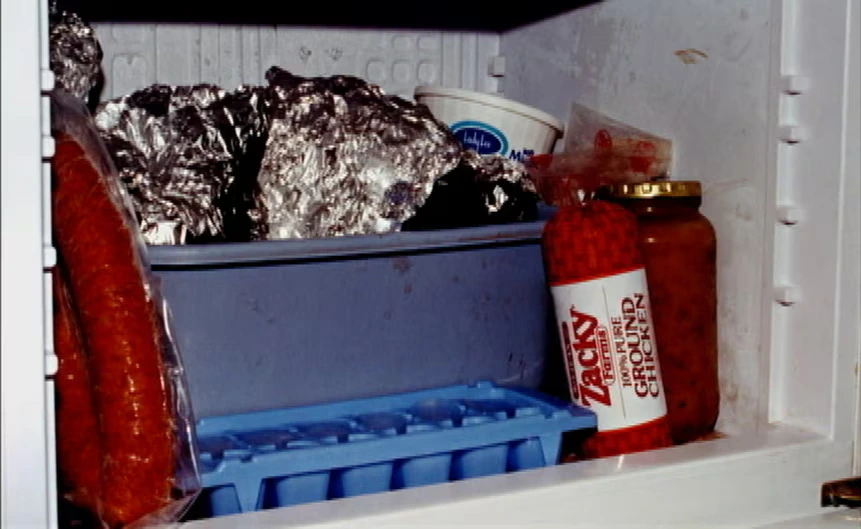
Authorities reported that many of the remains were wrapped in tinfoil or placed inside plastic bags and cardboard boxes. Investigators located a total of eleven containers holding human remains inside the apartment. Another garbage bag filled with remains was discovered inside Nelson’s vehicle.
During the search, police also recovered several items connected to the dismemberment of the body.
These included a large soup pot that had been used to cook some of the remains, a cooler that contained the victim’s severed head, and a deep-fat fryer holding two human hands. Officers also found a glass jar described in reports as containing “contents” of an undisclosed nature.
Bill Nelson was a large man, standing approximately six feet four inches tall and weighing about 230 pounds. Investigators initially estimated that they had recovered only about 100 pounds of remains.
The coroner’s office later adjusted the figure to about 150 pounds. Even after the revised estimate, roughly 80 pounds of body mass could not be accounted for, including Nelson’s genitals.
The condition of the apartment and the remains found inside made it clear that the killing had occurred there. The discovery quickly became the central piece of evidence in the criminal case that followed.
Who Was Omaima Nelson?
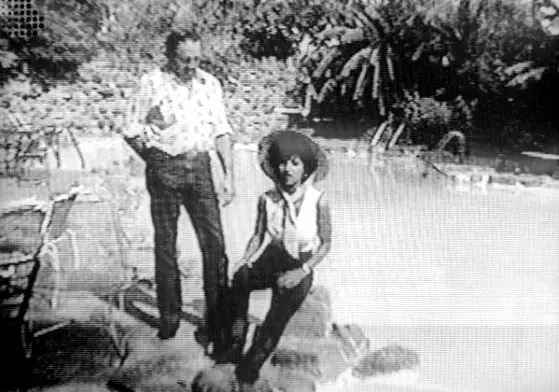
Omaima Aree Nelson was born and raised in Cairo, Egypt. She was one of sixteen children in her family. Reports about her exact age have differed, but most sources indicate that she was born in 1968.
When she was six years old, she underwent customary female circumcision at the request of her father. After this period, Omaima and two of her sisters lived with their mother in a poor neighborhood in Cairo located near a local necropolis. The family experienced financial hardship while living there.
In 1986, she immigrated to the United States after marrying an American citizen named Roger Stainbrook. The marriage later ended in divorce. After arriving in the country, Omaima settled mainly in Southern California.
She worked first as a student nanny and later took a job as a model at South Coast Plaza in Costa Mesa. During that time, she was known to socialize frequently in local bars and maintain relationships with several men at the same time.
Prosecutors later described her conduct as “almost hooker-like” when discussing the way she approached older men in bars. She sometimes used the names Ishta or Nadia when meeting men.
Omaima received a driver’s license in 1989, but records show that she accumulated twelve traffic violations in the years that followed. One of those incidents involved the theft of a car leased by her boyfriend at the time, a 38-year-old man named Jack Huston from Chino.
Other accusations involving former partners also appeared in reports before the murder occurred.
In November 1990, a 61-year-old Huntington Beach resident named Robert Hannson accused her of attempted robbery after she allegedly pointed a gun at him while he was tied up during a consensual bondage session. No official charges were filed with the Orange County Sheriff’s Department.
Another former boyfriend, Richard Gray, said that Omaima once held a knife to his throat. She later claimed that the event took place during a consensual sex game.
In a separate incident in 1989, a female security guard caught her shoplifting at a Thrifty’s store. During the confrontation, Omaima reportedly bit the guard on the breast, which led to a charge of battery.
The Night of the Murder
In October 1991, Omaima met Bill Nelson while playing pool at a bar in Huntington Beach. Nelson was 56 years old at the time, more than thirty years older than her. He worked as a pilot in Laredo, Texas, and lived in Costa Mesa as a computer programmer.
Earlier that same year, Nelson had been released from prison after serving four years for attempting to smuggle 100 tons of marijuana from Mexico through his job. Despite this history, acquaintances described him as friendly and said the couple appeared affectionate when they were seen together.
Omaima later said that Nelson proposed to her only two days after they met. The couple claimed that they married on November 1, 1991, during an Egyptian ceremony that took place in either Las Vegas or Phoenix. However, records from both cities did not show any official documentation of the marriage.
Additional complications existed because Nelson’s divorce from his previous wife, Kathy Nelson, had not yet been finalized. Attorneys involved in that divorce later stated that the proceedings were still ongoing at the time Omaima claimed the marriage occurred.
According to Omaima, the confrontation that led to Nelson’s death occurred on November 28, 1991, in their apartment on Elden Street in Costa Mesa. She said Nelson sexually assaulted her after she had been tied to a bed during bondage play.
She claimed that she managed to free herself from the restraints and struck him with a lamp before stabbing him with scissors and hitting him with a clothes iron.
Medical examiners later concluded that Nelson died from multiple stab wounds.
After the killing, Omaima began dismembering his body. She cooked his head and boiled his hands in order to remove fingerprints. Some body parts were reportedly placed in a garbage disposal along with leftover turkey.
Neighbors later told investigators that they heard the disposal unit running for several hours around the time authorities believed Nelson died.
Omaima also reportedly castrated Nelson, which she said was done as revenge for the assaults she claimed he committed.
She told her psychiatrist, David Sheffner, that she had cooked her husband’s ribs in barbecue sauce and eaten them, though she later denied making this statement. Sheffner described the dismemberment as taking place in a “trance-like state” and said her behavior reflected a psychotic episode.
Following the killing, Omaima drove through Orange County using Nelson’s 1975 Corvette while trying to persuade acquaintances and former partners to help dispose of the remains.
Trial and Conviction
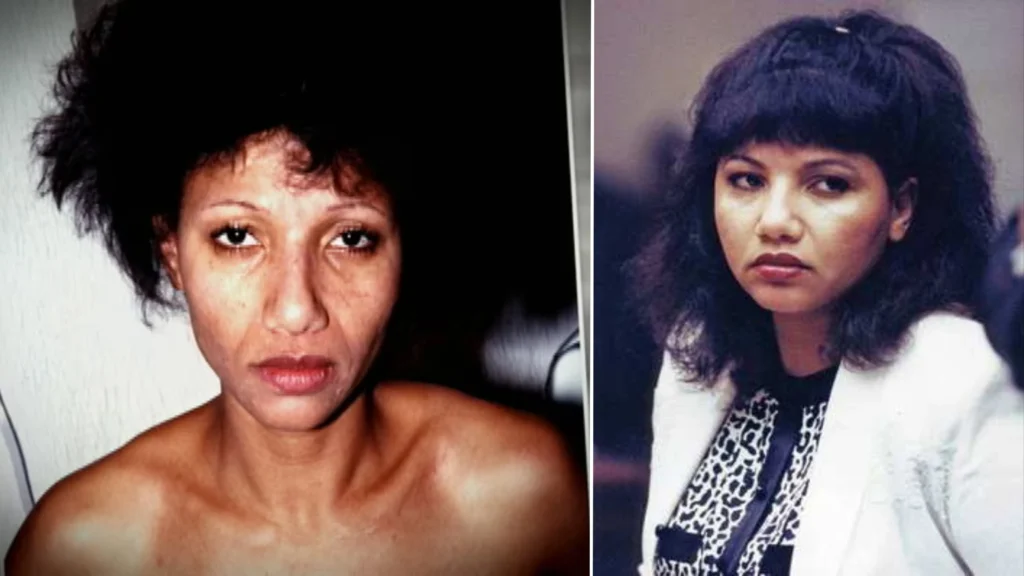
The investigation quickly expanded after another individual contacted police. In the early morning hours of December 2, 1991, Omaima visited the home of a 27-year-old acquaintance named Jose Esquivel.
She told him that Nelson had sexually assaulted her and showed him cuts on her chest, thighs, and feet, along with marks on her wrists that she said were caused by restraints.
She asked Esquivel to help dispose of the remaining body parts, including entrails and dentures, which she had brought with her in a garbage bag. She planned to dump them in the Back Bay in Newport Beach. In return, she promised him appliances and claimed she could pay him $75,000 from a safe. The safe actually contained only $100.
Esquivel agreed to help and stepped outside, saying he needed to get his truck. Instead, he contacted police and reported what had happened.
During questioning, Omaima first provided a different explanation for the death. She told investigators that after the alleged assault, “two women and three guys” entered the apartment, drugged her, killed Nelson, and attempted to frame her by placing the dismembered remains in the apartment.
Authorities arrested Omaima Nelson on December 2, 1991, on suspicion of murder. Her trial began nearly one year later on December 1, 1992, in Santa Ana.
Her defense attorney, Thomas Mooney, argued that she had acted in self-defense. He told the court that she had experienced female genital mutilation as a child, which made sexual activity traumatic and painful. He also argued that she had suffered abuse earlier in her life and developed battered woman syndrome.
Omaima claimed that Nelson had been violent during their short three-week relationship and that he had threatened to kill her or report her to immigration authorities as an illegal immigrant.
Prosecutors challenged those claims. Her former husband testified that she had never complained about pain during sex. Kathy Nelson, the victim’s former wife, also told the court that Nelson had not been violent during their marriage.
Medical examinations conducted in December 1991 found no evidence of physical sexual trauma on Omaima. Meanwhile, the pathology report showed ligature marks on Nelson’s wrists, suggesting he had been restrained shortly before his death.
Omaima Nelson told the court: “If I didn’t defend my life, I would have been dead. I’m sorry it happened, but I’m glad I lived,” she added. “I’m sorry I dismembered him.”
After six days of deliberation, the jury delivered its verdict. On January 12, 1993, Omaima Nelson was convicted of second-degree murder.
The court sentenced her to 27 years to life in prison. She appealed the conviction in 1995, but the appeal was unsuccessful.
Omaima spent years incarcerated at Central California Women’s Facility before later being transferred to the California Institution for Women. During her time in prison, records indicate she maintained several long-distance relationships.
In 2006, she said she had become a born-again Christian. Around that same period, she claimed she had married one of her supporters, a man in his seventies, and received permission for conjugal visits. Prison officials later stated that no official marriage had taken place.
Her prison disciplinary record includes several infractions such as fighting, battering a staff member, possession of contraband, theft, arguing, refusing instructions, and failing to comply with grooming standards.
Omaima first became eligible for parole in 2006. Commissioners denied the request, stating that she remained unpredictable and posed a risk to public safety.
She became eligible again in 2011, but the parole board denied release once more, stating that she had not accepted responsibility for the murder and would not likely become a productive citizen if freed.
Her next opportunity to request parole is scheduled for 2026.