
In August 2022, Ashley Dale was shot inside her Liverpool home during a gang-linked attack aimed at her boyfriend.
The callout
At 12:41 a.m. on 21 August 2022, Merseyside Police were called to a home in the Old Swan area of Liverpool after a neighbour reported what sounded like gunfire and then found a woman lying unresponsive in a back garden. Officers arrived within minutes and treated the address as an active crime scene.
Police saw clear damage at the front of the house. The front door had been forced open, showing it had been kicked or driven in with heavy force. Officers also found the back door leading to the garden standing open. The layout suggested the incident moved from the front of the house to the rear exit.
In the garden, the victim was on the patio and covered in blood. Her position indicated she had collapsed outside after leaving the house. A mobile phone was close to her body, consistent with it being in her hand or near her at the time she tried to move away. Officers checking the area identified a pool of blood beneath her body.
Inside the home, investigators located spent bullet casings. This confirmed the incident was a shooting and not a single close-range strike outside. The presence of casings in the property also indicated shots were fired within the house rather than only at the threshold.
The case immediately drew attention because gun killings are uncommon in the United Kingdom. The scene required a rapid shift from a standard emergency response to a full homicide investigation with firearms evidence, witness work, and urgent attempts to identify suspects who had fled by vehicle.
Police soon confirmed the victim was 28-year-old Ashley Dale.
Who Ashley was

After Ashley Dale was identified, police informed her family and began gathering background information to understand possible motives and threats. Ashley was born in Liverpool to her parents, Julie and Steven Dunne. She was the oldest of three children in a close family.
In 2015, her younger brother, Lewis, was shot and killed at age 16 in a case linked to mistaken identity and a rival gang. That earlier killing remained a major part of the family’s experience with violence in their community.
Ashley later completed a degree in environmental health and worked as an environmental health officer. People who worked with her described her as committed and caring in her role. Her job focused on local living conditions and public health issues.
Police attention also turned to her personal life, because the early facts suggested the attack may have been connected to organised crime rather than her own actions.
Ashley was in a relationship with Lee Harrison, a Liverpool man with connections to the drug trade and local gangs. Her relatives had concerns about those links, especially after the earlier loss of Lewis.
Investigators also reviewed Ashley’s communications in the weeks before she died. In messages to friends, she described rising worry and a sense that someone might target the home.
These messages became important later because they provided a record of her fear and the names involved, and they helped explain why police focused on people connected to Harrison.
As the investigation continued, it became clear that police did not treat Ashley as the intended target. The working position was that she was caught in an attempt to locate and punish another person.
That point shaped the direction of the inquiry, because it moved the focus from Ashley’s own life to conflicts around Harrison and the men believed to be hunting him.
The feud around Lee
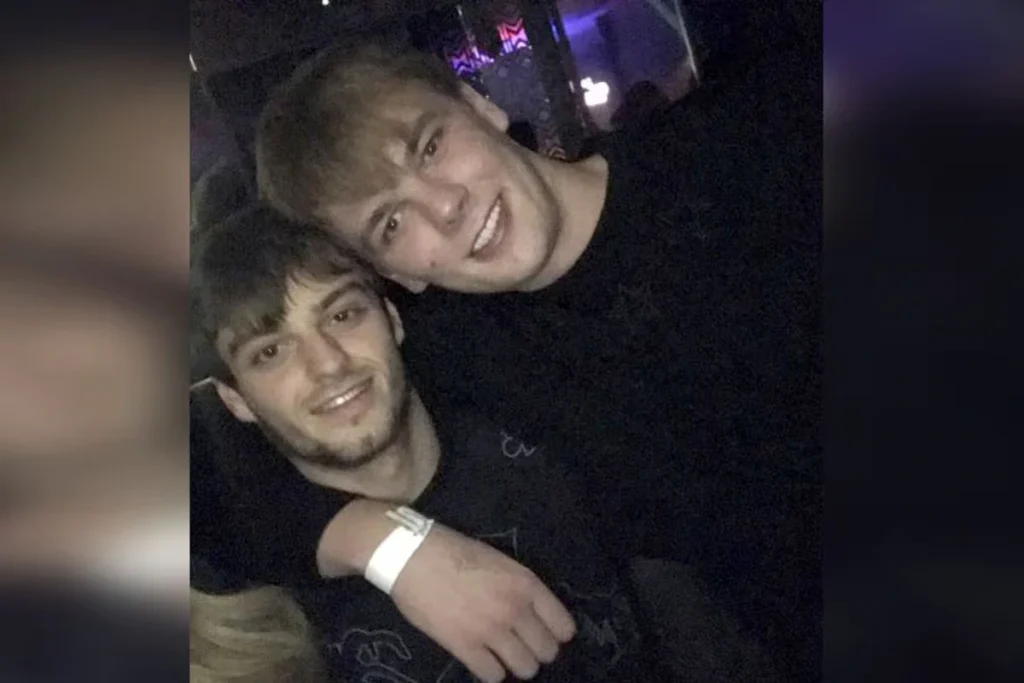
Police inquiries into Lee Harrison’s background highlighted a conflict with a drug dealer named Niall Barry. Harrison and Barry had known each other for years and had worked together in drug supply, including cannabis and high-grade cocaine. Their relationship broke down in 2018 after Barry was robbed.
The robbery was linked to a group described as the “Hillsiders.” Barry lost cocaine valued at about £40,000. Barry believed Harrison had connections to the Hillsiders and suspected Harrison had provided information that enabled the robbery.
Harrison denied involvement, but the allegation led to a complete collapse in trust. From that point, investigators treated the issue as a long-running dispute that had turned into an active threat.
By 2022, the hostility was still present. In June 2022, Harrison and Ashley were at Glastonbury Festival when they encountered a member of Barry’s group. A fight followed. Barry was also at the festival, and when he learned what had happened, he told others that the next time he saw Harrison he would stab him.
Police later stopped and searched Barry and his associates. Body-worn video recorded officers finding a knife. During the encounter, officers discussed the knife’s location and took action for suspected possession of a bladed weapon.
Barry’s associate, James Witham, claimed the knife was his even though it was found in a bag that also contained Barry’s passport. Witham was detained on suspicion of carrying a weapon.
The search did not end the dispute. Instead, it showed investigators that the tension involved direct threats and weapons. This context became important after Ashley’s death, because it gave police a motive framework: a dispute over drugs, loyalty, and perceived betrayal, with a stated intention to attack Harrison.
Warnings and the last night
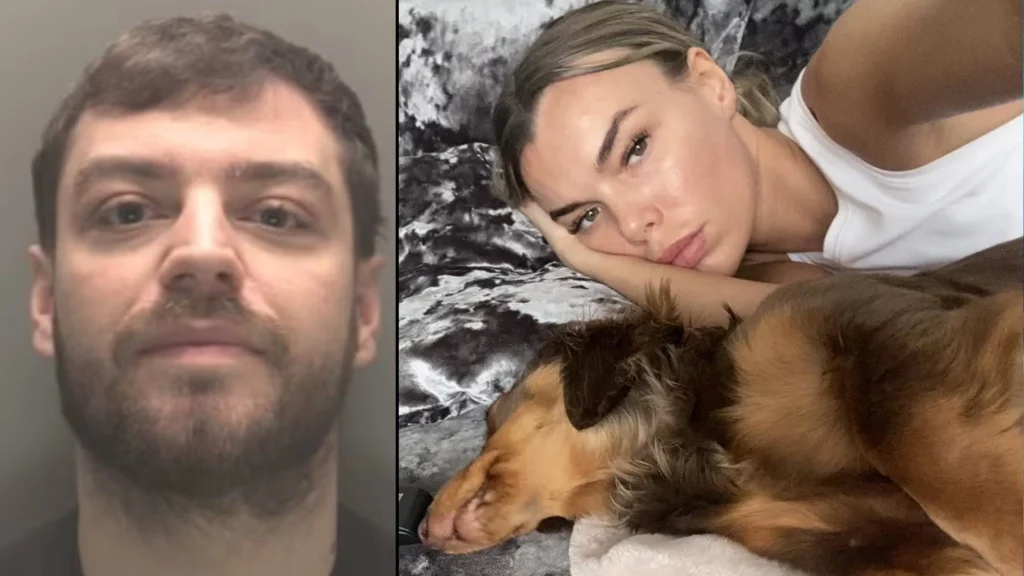
After the June incident, Ashley’s messages to friends showed increasing fear about the threat posed by Barry and his circle.
In one message to a friend named Mol, she wrote that she was worried and could not stop thinking something would happen. In later texts, she said she felt watched and described hearing noises outside, unsure if it was anxiety or a real presence.
On the evening of 20 August 2022, Ashley was at home with her dog, Darla. Harrison was out. During the evening, a car alarm sounded in the area.
Ashley recognised it as her own vehicle but initially suggested to a friend that it might have been triggered by rain. Later, the alarm went off again, and her messages reflected a stronger sense of unease.
Investigators later concluded the alarm was not accidental. They found that Ashley’s tires had been slashed. Police treated this as a deliberate attempt to draw someone outside. No one came out, and the attackers changed their approach.
In the early hours of 21 August, the doorbell rang. Shortly after, the front door was kicked in. A gunman entered and fired multiple shots.
Ashley ran toward the back of the house with her phone, moving to the rear exit and into the garden area. She was struck by a bullet in the back. Darla remained inside while the armed men moved through the property.
Inside the house, the attackers fired into several rooms while searching for Harrison. Evidence later showed five rounds were fired upstairs into an empty bedroom. The gunman’s actions indicated an effort to locate a person who was not present.
Ashley collapsed outside and died from her injuries.
Tracking the attackers
After securing the scene, detectives focused on how the attackers approached and left the area. Physical evidence included the forced front door, the open back door, the spent casings inside, and the slashed tyres outside. Officers also began a rapid review of local surveillance footage.
Investigators identified James Witham and Joseph Peers as key suspects. On 20 August, both men were captured on CCTV at a shop. After making a purchase, they left and entered a grey Hyundai i30N. Police later treated that car as a significant lead.
Additional footage placed the same vehicle near Ashley’s home earlier that evening, including in the Page Moss area, which investigators considered consistent with checking the location before the attack.
At about 11:30 p.m., Witham and Peers were recorded approaching Ashley’s white Volkswagen and slashing the tyres. This supported the view that the alarm was intentionally triggered to tempt Ashley or Harrison to come outside. When nobody emerged, they left and returned later with a gun.
Police concluded one attacker carried a Scorpion-style machine gun. Witham was identified as the shooter. Investigators reconstructed the sequence: forced entry, eight shots fired as Ashley moved toward the back door, then additional shots upstairs, followed by a quick exit.
After the shooting, Witham and Peers left the area and checked into a hotel in St Helens to avoid immediate detection. Police tracked their movements and issued instructions to officers to look for a vehicle linked to the suspects, including an Audi Q7.
Officers later stopped the vehicle and carried out arrests captured on body-worn video. The footage showed officers ordering the occupants to keep their hands visible, opening doors, confirming identity, and arresting them on suspicion of murder.
During the same phase, police also examined Harrison’s conduct. He was described as uncooperative, refused to provide a statement, remained silent in interviews, declined to help identify suspects, changed his phone number, and cut contact with Ashley’s family. He later travelled to Spain shortly after the killing.
Courtroom record
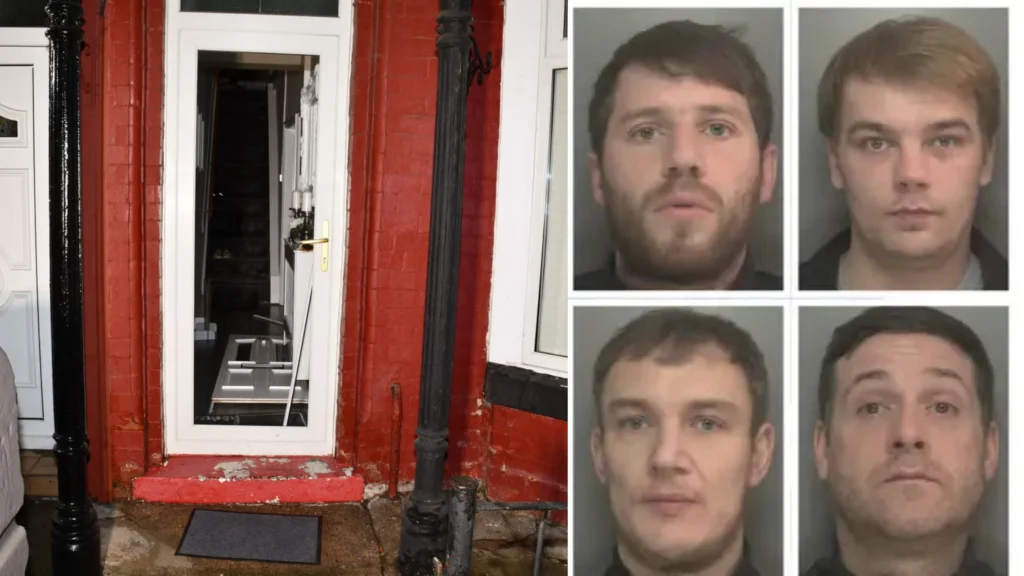
As arrests continued, detectives pursued other suspects believed to have organised the attack. Police located Niall Barry at a local golf resort.
Intelligence suggested he was planning to leave the country. Officers carried out an operation to stop him from fleeing and arrested him. A fourth man, Sean Zeisz, was also arrested for his part in the murder.
All four men were charged, and the case moved toward trial. Prosecutors presented CCTV footage, witness accounts, and digital material, including Ashley’s texts, as part of the overall sequence linking threats, planning activity, and the final attack.
The trial began in October 2023. The central issue was intent and responsibility across the group. Witham, identified as the gunman, claimed he did not intend to kill Ashley.
He said the purpose was to “shoot the place up” as a warning and that he shot her after encountering her unexpectedly. Prosecutors challenged that account using the facts of the entry and firing pattern.
Evidence described Ashley screaming and attempting to escape, giving the shooter time to understand he was firing at a person moving away.
The eight rounds discharged toward the back exit included the fatal shot to Ashley’s back. The prosecution position was that the actions showed a deliberate and dangerous use of a firearm inside an occupied home.
The jury heard that the attackers were looking for Harrison and that Ashley was not the main target. They also heard how the earlier tire-slashing plan was used to try to draw someone outside before the forced entry.
The upstairs shots into an empty bedroom were presented as part of the effort to locate Harrison and demonstrate the attackers’ willingness to use lethal force.
The case against Barry and the others relied on the broader chain of events, including the feud, threats, coordination, and the actions taken before and after the murder, such as travel and attempted evasion.
Sentences and aftermath
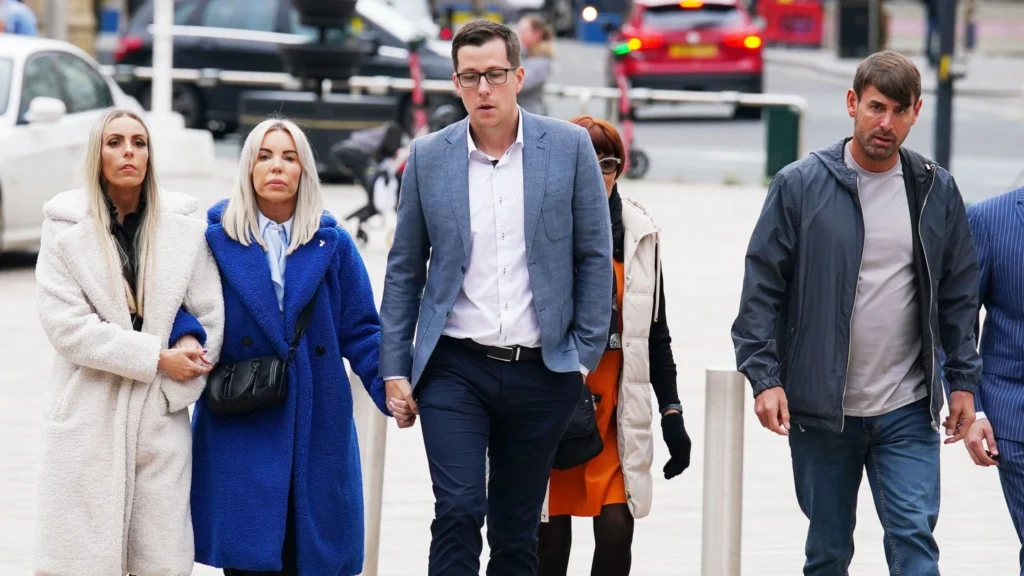
In November 2023, the court sentenced the four men for Ashley Dale’s murder. James Witham received a life sentence with a minimum term of 43 years. Niall Barry received life with a minimum term of 47 years.
Joseph Peers received life with a minimum term of 41 years. Sean Zeisz received life with a minimum term of 42 years. Together, the minimum terms totalled 173 years.
Ashley’s family described the outcome as unable to repair the loss. Her mother said the murder changed her life permanently and that time had stood still. Her father spoke publicly about the family’s earlier tragedy, noting that Ashley was the eldest of his three children and Lewis was the youngest, and that both were now dead.
Community support included vigils and memorials in Ashley’s name. Her family also spoke about the wider impact of gang violence on their lives and called for it to end.
At the time of the murder trial, Lee Harrison did not face punishment in relation to Ashley’s death and remained free. After the trial, he marked the anniversary of Ashley’s death in an online post.
In February 2025, however, Harrison was sentenced in a separate case at Liverpool Crown Court. He received a five-year prison term after pleading guilty to conspiracy to supply heroin and crack cocaine, and possession of cocaine with intent to supply.