
Kaylee Sawyer was a 23-year-old woman from Bend, Oregon. In the early morning hours of July 24, 2016, her life was taken by a man she believed was a police officer. That man was actually a campus security guard named Edwin Lara.
Background
Kaylee Anne Sawyer was born in Bend, Oregon to Jamie and Juli Sawyer. She was known to be caring, hard-working, and focused on her future. At the time of her death, she worked as a dental assistant with Awbrey Dental and was also a student at Central Oregon Community College.
Friends and family described Kaylee as someone who always tried to help others. She had goals, plans, and a full life ahead of her. No one could have imagined that a normal night out would turn into such a tragic event.
The Night She Disappeared
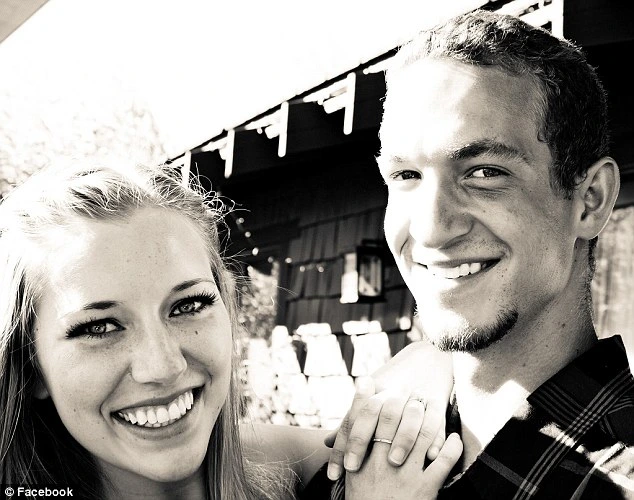
On July 24, 2016, Kaylee had just returned home from a bachelorette party. After getting back to her apartment, she had an argument with her boyfriend, Camron Reimhofer. Wanting some space, she left their shared apartment to take a walk alone, the CNN reports.
A few minutes later, Camron tried to text her, but she did not want to talk. Her last message to him mentioned her phone dying and saying goodbye.
Not long after that, Kaylee ended up inside a security vehicle driven by Edwin Lara. He was wearing a uniform and driving a car that made him look like a real police officer. Believing she could trust him, Kaylee accepted the ride.
Lara drove her to a remote parking lot on the campus. It was there that he assaulted her and later took her life.
Two days later, on July 26, 2016, a woman’s body matching Kaylee’s description was found near Highway 126, around milepost 100 in the Dry Creek area of Redmond, Oregon. Police soon confirmed it was Kaylee Sawyer. Her cause of death was ruled as blunt force trauma.
This heartbreaking discovery shocked the Bend community and sparked an intense search for her killer.
Lara’s Two-Day Crime Spree
The day after Kaylee’s murder, Edwin Lara fled to Salem, Oregon. While there, he approached a young woman, claimed to be a police officer, and kidnapped her at gunpoint. He even showed her news reports about what he had done to Kaylee, which made her even more fearful.
He then forced her to travel with him toward California. On the way, Lara stopped at a hotel in Cottage Grove, Oregon. In the hotel room, he handcuffed his victim, made her take sleeping pills, and acted inappropriately toward her, leading her to believe she had been assaulted.
Worried that police were getting close, Lara left the hotel with the woman and continued driving. He wanted to change vehicles so he could avoid being seen. He stopped at two rest areas, looking for another car to steal.
In the early morning hours of July 26, 2016, Lara stopped at a motel in Yreka, California. According to CBS News, there, he noticed an elderly man near his vehicle. With his gun visible, Lara demanded the man’s vehicle. When the man refused, Lara shot him in the abdomen.
His kidnapping victim begged to be released, but Lara forced her to leave with him on foot to a nearby gas station.
At the gas station, Lara found two young men and their elderly grandmother sitting in a vehicle. He threatened them and forced them to let him inside the car. Along with his original victim, Lara made them drive away.
During the drive, he told them about Kaylee Sawyer and the shooting in Yreka. He admitted he had an “urge to kill.” Later, Lara let the three California victims out on the side of the road but threatened them again before driving away with his Oregon victim.
Not long after, law enforcement in California caught up to him and arrested him, finally bringing the terrifying situation to an end.
Court and Sentencing
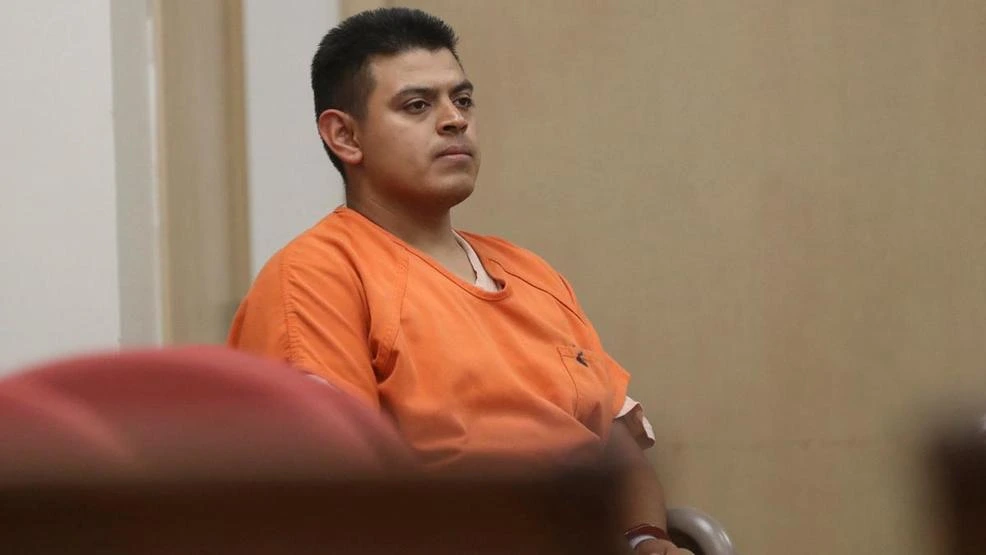
In January 2018, Edwin Lara pleaded guilty to the murder of Kaylee Sawyer. He was sentenced to life in prison.
In April 2019, he received a second life sentence after pleading guilty to kidnapping and carjacking related to his crime spree.
These sentences ensured that Lara would never be free again.
In July 2020, Central Oregon Community College agreed to pay $2 million to Kaylee Sawyer’s family, per KPIC.
Her family had filed a federal lawsuit three years earlier. They argued that the college had failed to do a proper background check on Lara. They also said the school allowed security vehicles to look too much like real police cars.
According to the family, Kaylee only accepted the ride because she believed Lara was a police officer she could trust. This mistake, caused by the appearance of his vehicle and uniform, played a role in her death.
The college’s settlement was seen as a step toward accountability.
Kaylee’s Law
On May 25, 2019, Oregon Governor Kate Brown signed Senate Bill 576 into law. It became known as “Kaylee’s Law.”
This new law made important changes to campus security rules. Under the law:
- Campus security vehicles cannot look like police cars
- They cannot have roof-top lights or a push bumper
- They cannot have a divider (“cage”) between the front and back seats
- They must have GPS, an interior video camera, or a recorded dispatch system
These changes were put in place to protect students and prevent confusion between campus security and real law enforcement.
Let’s dig into how families can fight back against institutional negligence.
How Families Can File Lawsuits Against Institutions for Negligence
When a family loses someone they love, life feels like it freezes in time. The world keeps moving, but for them, everything feels broken. The person’s room stays the same. Their favorite things are still there. Every memory becomes painful.
And sometimes, the hardest part to accept is that the death didn’t have to happen at all. It happened because someone or some organization, failed to do what they were supposed to do.
In the United States, families have a legal option in situations like this. If an institution such as a school, university, hospital, nursing home or another organization was careless and that carelessness caused a death, the family can file a wrongful death lawsuit.
This kind of lawsuit is not about getting revenge. It is about holding the institution responsible for its failure and getting support for the losses the family now has to live with.
A wrongful death lawsuit can help cover medical bills from before the person died, funeral and burial costs, lost income the person would have earned in the future and even emotional pain. While money can never replace a life, it can at least help families survive financially and protect others from going through the same pain.
What Negligence Means in Simple Words
Negligence sounds like a complicated word but the idea is simple. It means someone was not careful when they should have been. If an institution knows a place is dangerous but does nothing about it, that is negligence.
If they hire people without checking their background, that is negligence. If they ignore warnings, complaints or safety rules, that is also negligence.
When an institution takes people into its care or invites them onto its property, it has a responsibility to keep them reasonably safe. Schools must protect students. Hospitals must protect patients. Nursing homes must protect residents. Companies must make sure their workers and visitors are not in danger.
When they fail to do this, they can be held legally responsible.
Courts usually look at four things. First, did the institution have a duty to protect the person? Then, did they fail that duty? Next, did that failure directly cause the death? And finally, what harm did the family suffer because of it? If all four of these can be shown, the case becomes much stronger.
Some states set limits on how much money can be awarded, especially when the institution is run by the government. That’s why every case is different and depends on where it happens and what the law says at that time.
Who Is Allowed to File a Wrongful Death Claim
Not everyone can file a wrongful death lawsuit. In most states, the right usually belongs to the closest family members. This includes a husband or wife, children and parents. In some cases, brothers, sisters or other relatives may be able to file if they depended on the person for financial support.
If no immediate family member files the case, a court may choose a personal representative to act on behalf of the person’s estate. This person handles the legal process and makes sure any compensation is given to the right people.
If young children are involved the court may also appoint someone to protect their interests during the case.
This process is meant to keep everything fair, organized and legal.
How the Lawsuit Process Usually Works
For most families, being involved in a lawsuit is totally new, so it can feel confusing, overwhelming and honestly a little scary. It usually kicks off with a meeting with a lawyer who actually understands these kinds of cases. The lawyer listens to the family’s story, goes over all the details and explains what options they have. A lot of lawyers offer that first meeting for free.
If the case moves forward, the next step is to file a paper called a complaint. This paper says what the institution did wrong, how it caused the person to die and what the family wants the court to give them.
After that, both sides begin collecting evidence. This stage can take a long time. Police reports, autopsy results, video footage, safety records, emails, messages and employee files may all be reviewed. Witnesses may be interviewed. Experts, such as doctors or safety specialists, may study the case and give their opinions about what should have been done differently.
People connected to the case can also be asked questions under oath. These are called depositions. It can be emotionally hard for families because it forces them to go over painful details again and again. But this stage is often where the truth becomes clearer.
Many wrongful death cases are settled before they ever reach a courtroom. A settlement is when the institution agrees to pay a certain amount of money to the family to end the case. If no agreement is reached, the case goes to trial and a judge or jury decides the outcome.
The Kind of Evidence That Makes a Difference
Strong evidence can completely change the direction of a case. Something as small as an ignored email or a past complaint can become very important.
Evidence that often helps includes records showing that safety problems were reported but never fixed, proof that employees were not properly trained or documents showing that background checks were skipped.
Surveillance videos, text messages, call logs and witness statements can also help show what really happened. Medical reports help connect the death to the institution’s failure. Financial records help show how much the family depended on the person and what they have lost financially.
Each piece of evidence is like another part of the story coming together.
Deadlines That Families Must Take Seriously
One of the most important things to understand is that wrongful death cases have strict deadlines. These deadlines are called the statute of limitations.
In most states, families only have one to three years to file the case. In some situations, the clock starts when the negligence is discovered instead of the day the person died.
If a public or government institution is involved, the deadline can be even shorter. If the family misses the deadline, they may completely lose their right to file the lawsuit, no matter how strong the case is. That is why speaking to a lawyer as soon as possible is so important.
The Biggest Challenge in These Cases
The toughest part of any wrongful death case is proving the death could have been avoided. Families have to show that if the institution had done its job, their loved one probably would still be alive. And honestly, that’s not always easy.
Institutions usually roll in with big-time lawyers and insurance teams. They might try to claim the death was sudden or that they already did everything right. That can be really frustrating and painful for families. Still, when the evidence is solid and the facts are laid out clearly, the truth usually comes through.
What Happens After a Case Is Resolved
If the family gets a settlement or the court orders money to be paid, a judge usually decides how it’s divided. If there are kids involved their share is often held and protected until they’re old enough to get it.
But the impact of these cases goes beyond money. Many times, after a lawsuit, institutions change their policies. They improve their hiring process, increase security, add better training programs and fix safety problems that had been ignored. These changes can save lives in the future.
For many families, knowing that their loved one’s story helped protect others brings a small sense of peace.