
A routine welfare check at a suburban Colorado home led police to a discovery that set off a long investigation and a closely watched trial.
Unwelcome Messages and Growing Fear
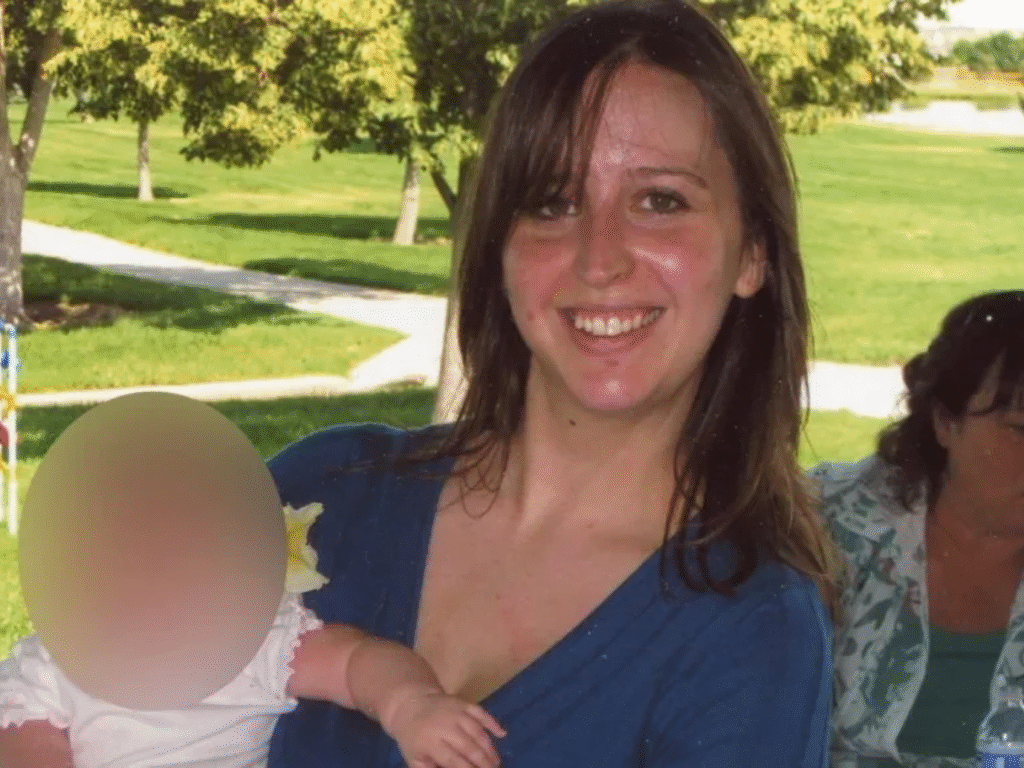
Kristil Krug, a resident of suburban Broomfield, Colorado, began receiving unwelcome messages in the fall of 2023. On October 2, a text arrived from someone who identified himself as Anthony.
The sender wrote that he would soon be visiting the area and asked whether she wanted to hook up. Kristil did not respond. The following day, further texts came from the same sender. They contained obscenities and told her to kill herself and not to waste his time.
Over the next two months, the messages kept coming by text and email. Some contained threats against Kristil and her husband, Dan. One email included a photograph of Dan stepping out of his car at work, and this image prompted Kristil to call the police.
She met with Broomfield Detective Andrew Martinez, who recorded their conversation. She came into the interview room and described everything without hesitation.
A few days after she came forward, another text suggested that the sender might be watching them both. Martinez described the harassment as constant, and Kristil believed that danger waited around every corner.
Kristil told Martinez that she knew an Anthony from her past. Anthony Holland had been her boyfriend for about a year after high school and into college, and the two broke up in the fall of 2000.
Her parents, Lars and Linda Grimsrud, remembered him at the time as friendly and courteous, with good manners. In 2002, Holland contacted Kristil out of the blue, and she reported further Facebook contact in 2005, 2010 and 2016.
In her view, he never seemed willing to accept a refusal. Kristil deleted her Facebook account and believed the contact had ended.
Kristil confided in her father, Lars, who was shocked to learn that she was being stalked. As the weeks passed, she told her siblings, Jenna Ericson and Josh Adamson, that she was terrified.
She added that it would be either her or the stalker who ended up dead, and that she would do everything in her power to make sure it was not her.
Obtaining information about the sender was slow. Martinez had to file court-approved search warrants with the phone and email companies, which sometimes responded slowly.
Kristil conducted her own search and hired a private investigator, who located Holland in Utah, about 500 miles away. She passed this discovery to Martinez, who decided not to contact Holland.
Martinez explained to Kristil that he wanted to gather as much evidence as possible and, ideally, obtain an arrest warrant first, so that officers could take Holland into custody instead of having to walk away.
Kristil came to feel that the investigation was not aggressive enough and told her father she felt abandoned. She also took steps to protect herself and her family, including installing security cameras at her home.
Her father considered the situation serious enough that she should begin carrying a gun, and he lent her one of his own for the time being.
Dan was also interviewed by Martinez, and the threats were taking a toll on him as well. He explained that the sender had been nicknamed Kickman, because the email address first used to contact Kristil was a.holland.kicks@gmail.com.
As the weeks went by and Martinez’s investigation continued, Kristil’s parents saw the constant threats wearing her down. She was often in tears and asked how she was going to live. She also felt that Holland was hunting her.
The Morning of December 14
Kristil started the morning of December 14, 2023, like any other, taking her two younger children to school, while her husband, Dan, left for his job at the Colorado Department of Public Health and Environment.
Kristil then returned home and pulled into her garage. At about 8:00 a.m., she was attacked there as she stepped out of her car.
Messages from Kristil’s phone went to her father, Detective Martinez and Dan that morning. Dan’s arrived while he was driving to work and asked whether he could pick up one of the children after school. He replied by asking what time, but Kristil never answered.
About three hours passed during which Dan could not reach Kristil. The silence was out of character for her, and Dan called the Broomfield Police Department to request a welfare check. He told officers that the alleged stalker had threatened both him and Kristil.
Officer John O’Hayre was dispatched to the Krug home. He went to the front door, looked inside and saw that everything appeared orderly and quiet. He knocked loudly and considered the possibility that she was not home.
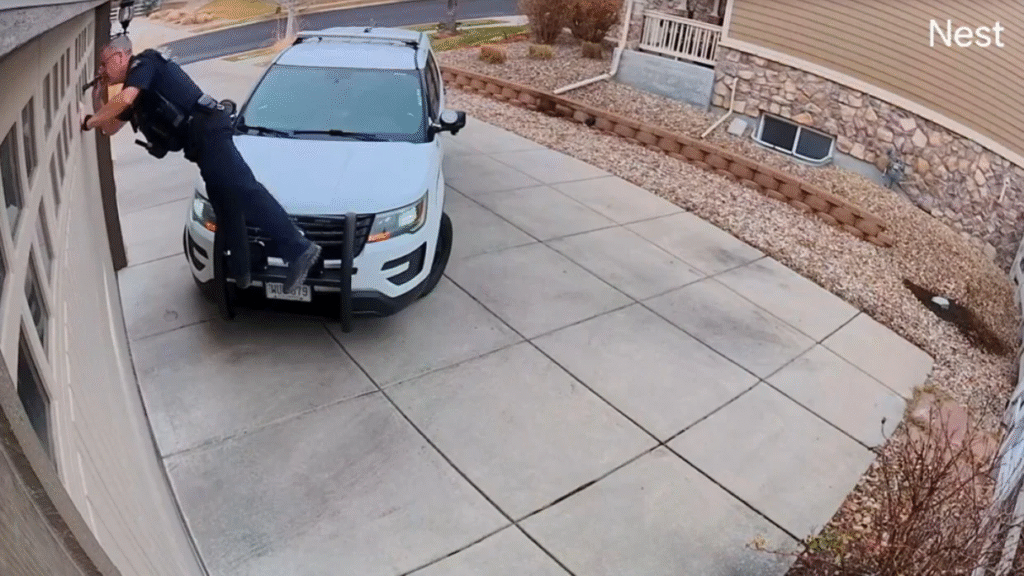
He wanted to see into the garage, but its windows were too high for him to look through. He moved his patrol car into the driveway, positioned its push bumper near the garage, and stepped onto it to look through a window.
Through the window, O’Hayre saw Kristil lying motionless with a wound to her head. He immediately checked for signs of life and found no pulse, so he began CPR. He also saw a stab wound on her chest.
When paramedics arrived, he opened the garage door, and Kristil’s mother, Linda, came running toward him. She had just arrived at the house and told him that her daughter was dead.
Overcome with grief, Linda sobbed that she could not believe it was true. Kristil’s parents said no words can describe what a parent feels at such a moment.
Screaming then came from the top of the hill, and a man ran down toward the house. Officers told him to stay back, and he said it was his home. The man was Dan, who had rushed home from work.
He broke down in tears on the floor. Victim’s advocate Heather Aites stayed with him. She knew that Dan had been living through the stalking case alongside his wife and had been targeted as well.
At the scene, family members said they believed the stalker was responsible. Officers were on heightened alert and feared for Dan’s safety, believing he could be the next target. The community was alarmed that a killer was at large.
The couple, both 43, had been married for 16 years and had three young children. Aites drove Dan to the police station, and an officer’s body camera recorded the ride.
Dan sat crouched beside the passenger door, sobbing, while Aites comforted him by rubbing his back. He remained focused on the children and was adamant that he be the one to tell them what had happened.
The Investigation Begins
Under the direction of Broomfield Police Chief Enea Hempelmann, investigators did everything in their power to find the person responsible, interviewing people, canvassing the neighborhood and searching the Krug home for evidence.
Several hours after his arrival at the station, Dan had calmed down and told detectives that nothing unusual had happened that morning. Kristil had seemed fine when he left for work.
Investigators examined the home’s security cameras. The doorbell camera, the side camera and the side house camera had all been turned off manually. Only a Nest camera near the garage was still operating.
Detectives also asked neighbors about footage from their own home cameras. One neighbor with a Ring doorbell camera agreed to let officers review it, and officers asked to see the last three to five hours.
Detective Martinez’s initial assumption was that Holland had traveled to Kristil’s home and murdered her. Within hours, police went to Holland’s home in Eagle Mountain, near Salt Lake City.
Holland was alone in the house when about eight officers pounded on the door. They asked whether he knew Kristil Krug, and he said that he did. He had no idea what was happening and wondered why officers would come to his home to ask about her.
He told them that his last contact with her had been a Facebook message years earlier, in which he said he missed her. Officers did not tell him that Kristil had been murdered. They asked where he had been that day and whether he could prove it.
Holland had made a purchase hours earlier at a Kohl’s store near his home: a sweatshirt, bought at 12:16 p.m. He still had the receipt. The drive between Utah and Colorado takes about eight hours.
He also showed officers work records listing the days he had worked, which showed he had been in Utah all along. Officers took the receipt and records to a squad car and made a phone call. When they returned, they told him he was free to go.
Randy Pihlak, a digital forensic examiner with the Broomfield Police Department, was asked to take a closer look at the messages sent to Kristil.
Because the stalking case had become a murder investigation, he was able to file expedited requests for information from the companies involved. This happened about four to five hours after the murder was reported to police.
He quickly found that messages from two of the accounts used to harass Kristil had been sent from the same location: the Wi-Fi system at Dan’s workplace.
The discovery shifted the focus of the investigation to Dan, and detectives set out to learn where he had been and what he had been doing.
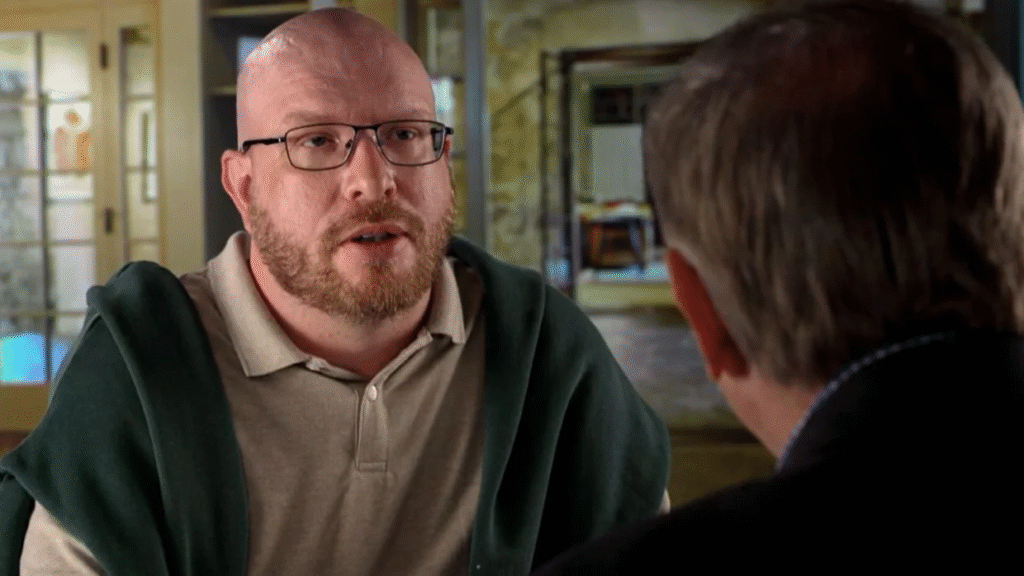
Detectives Martinez and Jennifer King Sullivan confronted him with the finding and told him that Anthony Holland had been eliminated as a suspect. Dan sat back on the couch with his arms crossed.
He claimed to have no knowledge of the messages and calmly insisted that he was not the person who had stalked and killed his wife. He offered no explanation for the connection to his workplace.
Investigators did not yet have enough evidence to take him into custody, and he left the station after being questioned late into the day.
An autopsy established how Kristil had died. She had been struck on the head from behind with a blunt object, which caused two or three skull fractures, and was then rolled over and stabbed in the chest, just above the heart.
Evidence and an Arrest
As detectives learned more about Dan’s life, they heard that his marriage to Kristil was in trouble. Kristil told her mother that she was sleeping on the couch, especially in the last few months.
Her family said the trouble stemmed from Dan’s temper, which could be set off by almost anything but usually flared when he felt he was losing control.
Her sister, Jenna, recalled that Dan’s face would turn red when he was frustrated, and that the couple had a routine of telling each other to walk away to manage it.
In the weeks before her death, Kristil had decided that she no longer wanted the marriage and needed to get a divorce.
In his own interview, Dan told detectives that, in the final days of Kristil’s life, she had confronted him and said she could not rule him out as the stalker.
Pihlak’s examination of the phones of both Dan and Kristil produced further evidence. Kristil’s phone showed that the messages sent that morning to her father, Martinez and Dan had been set to send on a timer, using a new feature on the device.
The feature allows a message to be written in advance and delivered at a later time. Investigators concluded that Dan had programmed them before leaving the house, at a time when Kristil was already dead.
As a result, it would have appeared that she was still alive and texting after he had left. Dan’s phone also contained internet searches, all made the day before the murder, that investigators regarded as damaging evidence.
Pihlak also examined the emailed photograph of Dan. He found that the phone used to take the picture had been set to selfie mode with a timer, and he concluded that Dan had taken it himself.
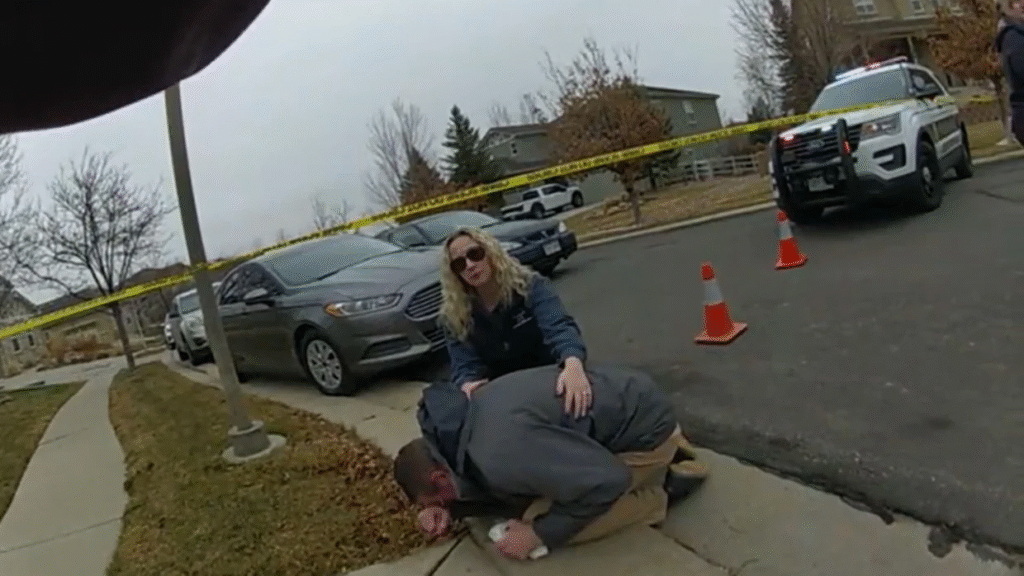
Two days after the murder, Detectives Martinez and King Sullivan concluded that they had enough evidence to charge Dan with stalking and murdering his wife. Officers followed him in about eight cars as he drove alone to a King Soopers grocery store.
When he parked in the lot, officers converged on his vehicle and ordered him to show his hands. They pulled him out of the car and told him he was being arrested for the murder of his wife.
One detective asked Dan a single question: whether he wanted to tell his children that he had killed their mother, or whether he would prefer that someone else do so.
Dan said that he wanted to speak with his attorney and looked away. The door was closed, and he was taken to the county jail.
Trial and Sentencing
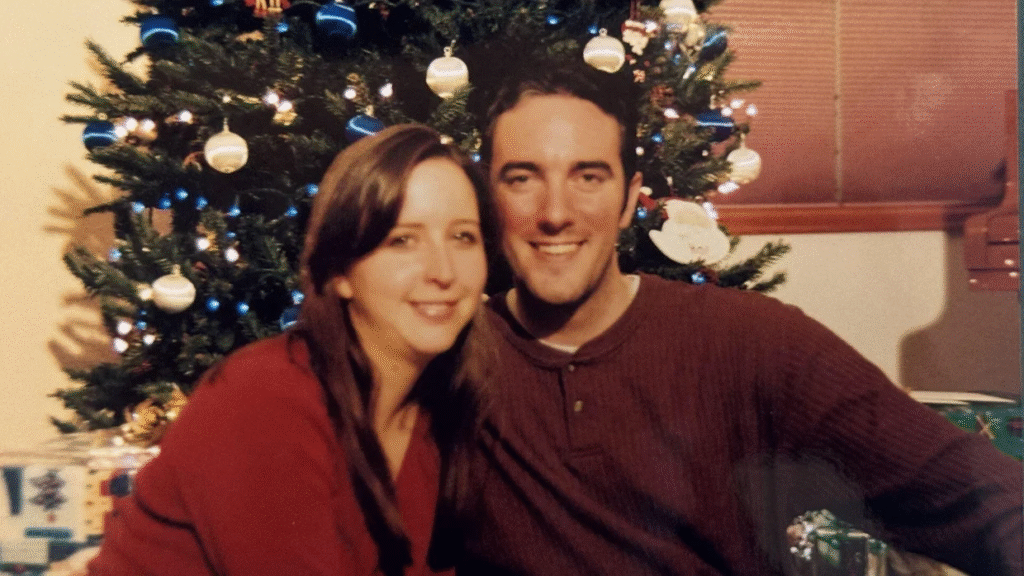
About sixteen months after Kristil’s death, the trial of Daniel Krug began in April 2025, with Deputy District Attorneys Kate Armstrong and Stephanie Fritts prosecuting the case. When Dan first entered the courtroom, he smiled at a member of Kristil’s family, who did not smile back.
Prosecutors told the jury that Dan had been losing his hold on Kristil for a long time and that he sent the threatening messages to drive her closer to him and keep her from leaving, hoping she would see him as her protector.
The stalking did not bring her back to him, they argued, and his attitude turned into one of “if I can’t have you, nobody can.” They said he faced exposure as the stalker and the loss of Kristil in any case.
They described the final stab as an act of rage and of control and power. Prosecutors said that Dan had tried to deceive his family and the police by impersonating Kristil’s former boyfriend.
The jury saw a long list of digital evidence, including the threatening texts and emails, the internet searches and the emailed photograph.
Cameras were allowed into the courtroom for the prosecution’s closing argument, in which Armstrong told jurors that the phone had been propped on the back of Dan’s vehicle beside him and that the defendant had sent the image to his wife.
Defense attorney Phillip Geigle disagreed with the prosecution’s case and argued that the investigation had been poor, noting that the blunt object and the knife used in the attack were never recovered by police.
He also pointed out that Kristil’s phone had not been tested for fingerprints or DNA, saying that investigators could not know what it held unless they tried. Geigle cited other forensic results as support for his claim that Dan was innocent.
Swabs taken from Kristil’s chest did not contain Dan’s DNA, even though he had lived in the house, eaten in the kitchen with her and shared the living room. No physical evidence was found on his clothing, and no blood was found on his car, inside or out, despite three searches.
The jurors began deliberating in the third week of the trial, and after a day and a half they reached verdicts on April 17, 2025. Judge Priscilla Loew read them in court.
The jury found Dan guilty of first-degree murder and of stalking involving extreme emotional distress. He was also found guilty of stalking with credible threat and of criminal impersonation.
On April 18, 2025, the day after the verdicts, the court sentenced Dan to life in prison without the possibility of parole on the murder charge, with an additional nine and a half years for the stalking and impersonation counts.
Immediately after the verdicts, Dan spoke to his family in a video call from jail. He said the jury had gotten it wrong, that the real killer remained at large and that his children could be the next targets.
Although he did not know who that person was or where he was, he asked that the children be taken out of Colorado.
In video calls with his parents and brother over the following days, he said he was sleeping about 16 hours a day because of depression and spent the rest of his time reading and crying. He also told them that prosecutors had never produced a single piece of hard evidence.
During one of these calls, his brother, Jeremy, told him that the family’s support was dwindling. Their parents wanted to believe him, and so did Jeremy, but a great deal had come out and some of it was beyond what he could explain, even with an imaginative effort.
Holland, whose identity had been used in the messages, said that police should have found him right away, come to his home and spoken with him.
Martinez said he had been concerned that a phone call could make the situation worse, and that the case had haunted him since it occurred. Given the chance, he said, he would make that call today.
Kristil’s parents sympathized with Martinez. They said they did not believe the outcome would have been different, because someone who has set his mind on such a plan would not have been stopped from carrying it out.
In a statement to ABC News’ 20/20 published in September 2025, Dan maintained his innocence and said he would fight the conviction on appeal.
In 2026, Oregon enacted Kristil’s Law, House Bill 4045, drafted by Kristil’s cousin, attorney Becky Ivanoff.
The law requires social media companies to answer search warrants in stalking and domestic violence cases within 72 hours, and other communications providers within five business days.
Lawmakers passed it without opposition, Governor Tina Kotek signed it on March 31, and it took effect on May 1. Oregon is the first state to enact such a law, and Colorado legislators have said they plan to introduce a similar bill in 2027.
Remembering Kristil Krug
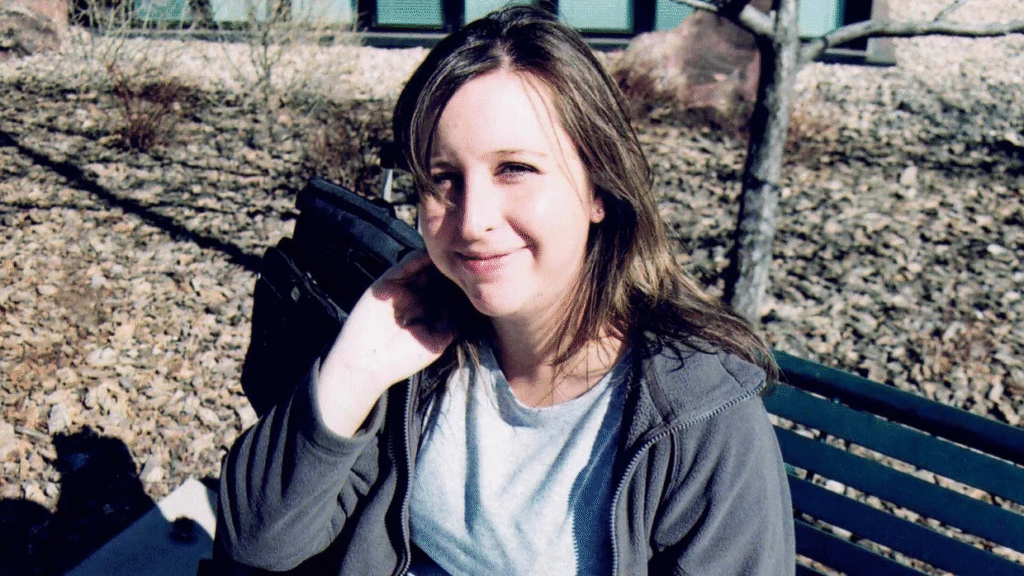
Kristil Krug was an engineer with exceptional skill in math and the sciences, including chemistry and physics. She also had talent in the arts. Her parents remember a woman who loved to get out and live life.
Throughout her life, Kristil spent countless hours with her father working on classic muscle cars in his colorful garage. They repaired the cars together and raced them.
The garage was also where she felt comfortable talking with him when she needed to discuss something, and where the two would simply sit and enjoy each other’s company.
Kristil’s death has left a hole in the lives of those who experienced her love and joy for life. Those who loved her describe what was lost in simple terms. Her family said it was her light.
Her father said he wishes she could jump out of a car and greet him as “Papa.” Anthony Holland said that, although he has had other girlfriends, he has never been in love with anyone else as he was with Kristil.
Lars continues to restore parts for vintage cars, and the hobby he shared with Kristil is now being passed down to her children. They use the same electric screwdriver and can take a carburetor apart.
Lars said that honoring her memory in this way is the whole idea, and that Kristil would have enjoyed seeing the children doing the things she once did. Her mother, Linda, finds a moment of peace in looking at her grandchildren, because she sees Kristil in them.
Jenna hopes that her sister’s story will serve as a cautionary tale and help at least one other person in a dangerous situation find the strength to make a move, because such situations can escalate very quickly.


Recent Comments