
In September 2012, Las Vegas cocktail waitress Shauna Tiaffay was killed inside her own home.
A Marriage Begins and Unravels
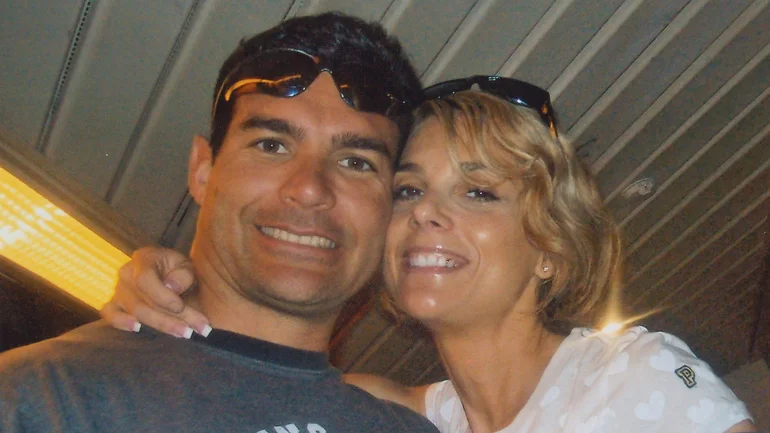
In 2002, Shauna met George at the Palms casino in Las Vegas, where she worked. George had been a star athlete and homecoming king at his California high school, and he went on to graduate from the United States Military Academy at West Point.
He served in the Army Corps of Engineers and later became a firefighter, a career that his friends and family linked to his desire to serve others. Outside his job, he regularly sent money to his mother to help her care for his disabled younger sister.
Shauna and George began dating soon after they met. In 2003, one year into the relationship, their daughter, Maddie, was born. Three years after Maddie’s birth, the couple married in a ceremony in Hawaii.
After about two years of marriage, the relationship began to change. George lost money when the housing market collapsed, and Shauna told friends that he became jealous, controlling and critical of her.
He made harsh remarks about the clothes she wore to work, sometimes in front of Maddie, which upset Shauna deeply.
Another source of friction was a homeless man whom George had befriended and paid to do odd jobs around the house. Shauna’s friend Stephanie Vargas heard her call the man creepy and ask why he was always near the property.
George’s friends from West Point saw nothing unusual in the arrangement. They noted that he had helped homeless people for years and served soup to them every Thanksgiving.
After nearly ten years together, Shauna decided she could not continue as things were. She moved into an apartment of her own, and she and George agreed to share custody of Maddie.
Shauna was reluctant to file for divorce, but George began divorce proceedings in December 2011. The breakup of her family saddened her, because she had always wanted a husband, a daughter and a settled home.
In an effort to repair the marriage, the couple agreed to see a marriage counselor. Those close to Shauna described her as an optimist who kept hoping that matters would improve.
About three weeks before her death, her apartment was burglarized. Her wedding ring was gone, along with a pair of her bathing suit bottoms.
The intruder also left something behind: a pair of men’s boxer shorts in a small size. The break-in unsettled Shauna, but she did not believe anyone intended to harm her.
The Night of September 29
In the early hours of September 29, 2012, Shauna finished her shift at the casino. Surveillance video recorded her clocking out at 3:01 a.m., the last images taken of her alive.
She drove for about thirty minutes, parked in the garage of her apartment and let herself in through the garage door. She stepped into a hallway where no lights were on.
As Shauna moved toward the stairway leading to her bedroom, someone attacked her with a hammer.
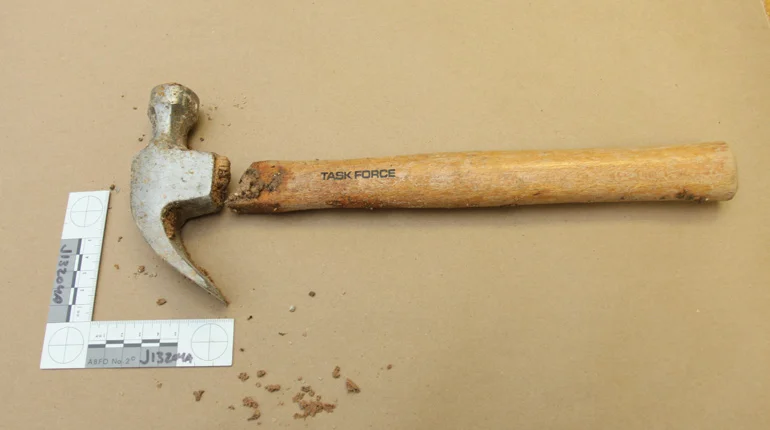
She raised her hands to protect her head and face, and several of her fingers were broken. The attacker kept striking her with the metal head of the hammer until she was dead. Her body lay in the living room.
Maddie had spent the night at her grandmother’s house while her mother worked. At about 9:00 a.m., George collected his daughter and the two went to the apartment to pick something up.
Inside, George found Shauna’s body and called 911. He told the dispatcher that he needed to report a break-in and a murder, and that his wife was on the floor, bloody and not moving.
Detectives Terri Miller and Dan Long of the Las Vegas Metropolitan Police Department led the investigation, supported by their entire team. Miller interviewed George in a police car outside the apartment.
He told her that he just wanted to die. He also said he had worked a 24-hour shift at the firehouse the day before and had been on call until he picked up Maddie. Investigators confirmed that he had been at the fire station, which ruled him out as the killer.
With no suspect, the detectives faced open questions about the attacker’s identity, including whether the killer was a man or a woman, and about the motive. The violence of the crime made them consider whether a sexual predator was at large.
The killing also alarmed Shauna’s coworkers at the casino, many of whom wondered whether someone had been stalking her or had become obsessed with her, and whether other women who worked there might be in danger.
A Tip From an Unexpected Source
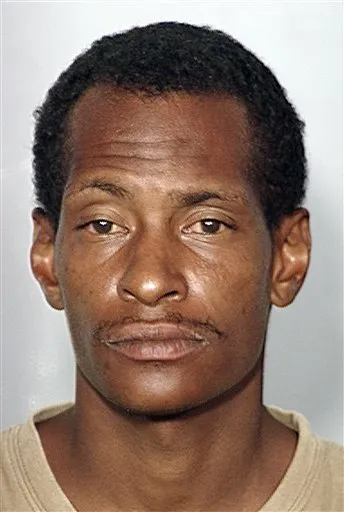
The day after the killing, detectives received a call from William Pennix, known as Big Will, a longtime Las Vegas resident who worked as a maintenance man at an apartment complex.
Pennix said that the previous evening a friend had asked to speak with him and, when they met, made a startling announcement: he had just killed a woman.
The friend was an ex-convict nicknamed Greyhound because he was lean and fast. He lived in a tent in the foothills, far from the lights of downtown, and Pennix had been helping him rebuild his life.
Greyhound had seemed pleased as he spoke, as though he had completed a mission. He laughed while saying that he had hit the woman with a hammer over and over until the hammer broke. After hearing this, Pennix contacted police.
Long and Miller were skeptical. A story about a homeless man living in a tent in the mountains seemed far-fetched, but they felt obliged to check it.
Pennix told them that Greyhound often walked miles from his desert camp to an Albertsons grocery store, where he had been seen stealing food. He went with officers to the store.
While police questioned employees about a man called Greyhound, Pennix looked next door at a Chevron station, where Greyhound was known to sell drugs.
Greyhound was there. Pennix told him to wait a minute and quietly pointed him out to an officer. Police approached, identified themselves and found drugs in his possession.
He agreed to go with them to police headquarters and offered to help with their investigation. There he gave his name as Noel Stevens. He denied any involvement in Shauna’s death and told detectives they had the wrong person.
He did admit that he lived in a tent in the desert. While he was held on drug charges, police launched a large search for his campsite in the rocky foothills about eight miles from the Las Vegas Strip.
The search involved a helicopter, a large team on foot and a climb through a fence, and detectives checked every hill in the area. The tent stood on top of a small hill.
Near the campsite, Detective Sam Smith walked past a small shrub and noticed a pair of pants rolled up beneath it. They were bloody.
Testing at the scene indicated blood, and further analysis showed that it was Shauna’s. Searchers also found a barcode tag that matched the style of hammer used in the killing. Lowe’s sold that type of hammer.
Back at headquarters, detectives confronted Stevens with the discovery. Investigators are permitted to mislead suspects, and they told him that someone had named him as the killer.
Stevens, who believed that George had told police where his camp was, then chose to cooperate and admitted that he had killed Shauna.
His cell phone supplied another lead. Among the contacts, detectives found the name George. When asked who George was, Stevens replied that he was his friend, the firefighter.
George was Shauna’s husband, and Stevens was the homeless man he had hired. The two had met years earlier on the same middle-class street. Stevens had been living at his sister’s house, and the Tiaffays lived a short distance down the block.
Stevens began doing yard work for George. Phone records showed that the two men had spoken by phone 87 times in September alone.
The Case Against George Tiaffay
Shauna’s sister, Paula Stokes-Richards, and her husband, John, had suspected George from the moment they heard of the death, although they could not work out how he could have been involved.
On the day of the killing, Paula called George while he was still standing outside the apartment with police, and she recorded the conversation. George told her that Shauna was on the floor with blood on her head. He then handed his phone to a grief counselor.
Before the call ended, she confirmed that no one else could hear what she was saying. Her suspicions rested on many conversations she had held with Shauna in the past. The couple flew from Nashville to Las Vegas the next day.
By the time they landed, both had shifted into an investigative mindset and begun looking into the death themselves, even as the detectives continued their own work.
Detectives soon had reasons of their own. Pennix told them that Stevens had said George gave him $600 in cash and a key to Shauna’s house, with the promise of thousands of dollars more to come.
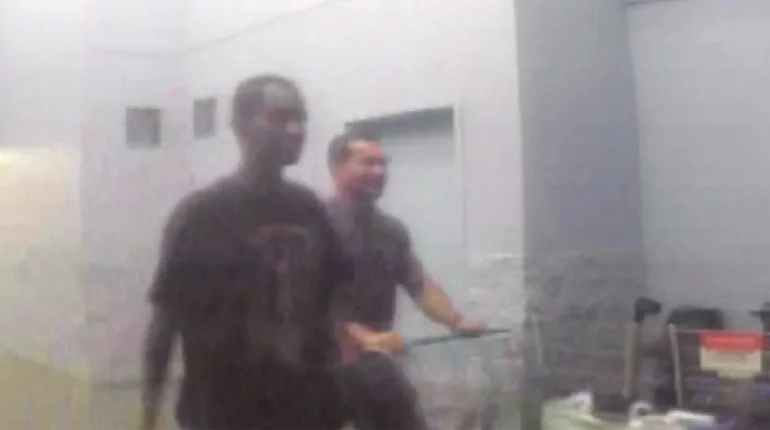
Investigators then reviewed hundreds of hours of store surveillance video. The footage showed George and Stevens shopping together for hammers. Stevens also led detectives to the place where he had buried the murder weapon. The weapon was in two pieces, and it had blood on it.
Investigators also looked into the couple’s finances. Shauna had spent money freely on home improvements, while George preferred to save. Some of his financial transactions appeared designed to hide money through his mother.
Nine days after the murder, detectives met with George’s mother and sister. They told the two women that they believed George had been involved in killing Shauna. The women were distraught and insisted that the detectives were completely wrong.
Police had George under surveillance and were monitoring his phone calls, and they overheard his sister calling him shortly after the meeting. George jumped into his truck and sped away, weaving through city traffic before turning onto the Summerlin Parkway.
He accelerated to 90 miles per hour and crashed head-on into a barrier. He survived because he was wearing a seat belt.
George was taken to a local hospital, where detectives arrested him. A detective told him that he was under arrest for the murder of his wife. George looked up from his hospital bed and said, “Okay.”
Stevens was also charged with the killing. Shauna’s family felt relief at the arrests, as all they had wanted was justice for her.
In 2013, Stevens pleaded guilty to Shauna’s murder. He agreed to testify against George after prosecutors promised, in a pretrial deal, not to seek the death penalty against him. George maintained his innocence.
Trial, Verdict and Appeals
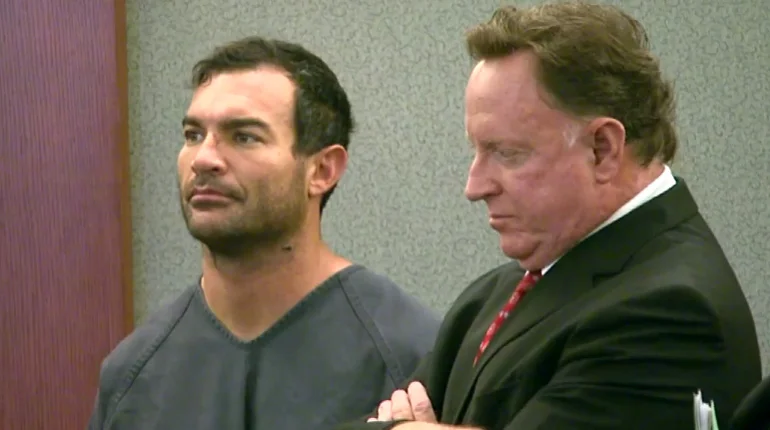
Three years after the murder, in 2015, George Tiaffay went on trial in Clark County. Shauna’s friends, including Lacey Green, were apprehensive as the proceedings began, and some feared that he might be found innocent.
His defense attorney, Robert Langford, argued that the case rested on circumstantial evidence rather than direct evidence. Stevens had admitted beating Shauna to death with a hammer, Langford said, but nothing showed that George had hired him to do it.
Langford also noted that George never mentioned Stevens in any communication with police. In his opening statement, the prosecutor argued that the two men were partners in the crime and pointed to the 87 phone calls between them in September 2012.
The prosecution’s case depended on Stevens, who carried a heavy burden of credibility. He was an alcoholic and a convicted felon several times over, and he had a violent criminal history and mental illness.
Pennix, testifying for the prosecution, was asked to rate Stevens’s honesty on a scale of one to ten, with ten being completely honest. He answered that he would place him at about one and a half. He added that his belief in Stevens’s account depended on the day.
The courtroom fell silent as Stevens took the stand, looking very different from the man detectives had arrested. Prosecutors guided him through the details of his relationship with George.
He said that he and George were friends and that they had worked on projects together. He testified that George offered him $1,000 and then $5,000 to kill Shauna, and that he received only about $600.
He admitted that he was the one who had broken into Shauna’s apartment during one of several dry runs before the killing and left the boxer shorts behind, and he said that George had told him to make the break-in look like a robbery.
He then described the killing without visible remorse. He said that he struck Shauna first on the hand, and that when he came through the door holding the hammer she asked him why he was doing this. When asked who had told him to kill her, he named George.
Langford cross-examined Stevens aggressively. Stevens acknowledged that he heard voices and saw visions, including seeing other people who were not there. The defense maintained that a witness with such a history could not be trusted.
Prosecutors also showed the store footage to the jury and noted that George had bought two hammers within five days, along with knives and other items.
George did not testify. The defense called only one witness, his sister Maria. She was asked whether, in all the years she had known him, she had ever seen him act violently. She said never. Friends from his childhood and his West Point days attended court to show their support.
The trial lasted a week, with about 40 witnesses and 400 exhibits entered into evidence. The twelve jurors then deliberated for three days, about 15 hours in total, and Shauna’s family waited anxiously through that time.
When the verdict was announced on September 3, 2015, some of Shauna’s relatives and friends sat on one side of the courtroom wearing pink, her favorite color. George’s supporters sat on the other side.
The verdict had to be reread after the court corrected a clerical error. His sister Bernadette bowed her head in prayer as the clerk prepared to read the decision.
The jury found George guilty on all seven counts, including conspiracy to commit murder and first-degree murder. George stood silent and showed the same lack of emotion he had displayed throughout the trial.
His family was devastated, and they maintained that the evidence had left reasonable doubt. Paula said she felt humbled and that the family was glad justice had been served.
The lead prosecutor, Marc DiGiacomo, had kept a casino chip that belonged to Shauna, given to him by her family. It had sat on his computer for three years, and he put it in his pocket the day the verdict came in. He said the chip represented the family’s hope for justice.
The next day, the same jury had to decide between life in prison with the possibility of parole after 20 years and life without parole. Paula testified at the sentencing hearing, describing how Shauna’s greatest joy had been motherhood.
She recalled how Shauna ran her fingers through Maddie’s ponytail and called her a little monkey. Shauna’s family and friends hoped the jury would impose the maximum penalty.
The prosecutor argued that the plot involved at least 30 days of premeditation and deliberation. George’s family and friends asked for mercy.
A fellow firefighter described him as hardworking, compassionate and one of the best people he had known, and his brother spoke of how George had led the family through hardship after their father died.
The jury sentenced George Tiaffay to life in prison without the possibility of parole. Pennix, whose call began the investigation, said he praised the Lord that justice had been served.
A prosecutor said Pennix had felt a moral obligation to make that call after hearing Stevens’s account. Juror Roy Wright said the panel believed Stevens because he did not seem capable of inventing an elaborate story that matched the timeline so precisely.
On December 1, 2015, the judge sentenced George on the remaining counts to a consecutive term of 388 to 972 months, roughly 32 to 81 years. Stevens was sentenced on January 7, 2016, to 42 years to life in prison.
George challenged his conviction in a handwritten court filing in July 2017, writing that prescription medication had altered his mind and led him to believe that God was directing him to commit a crime to protect his daughter.
Langford, who had since withdrawn from the case, said George had never shown signs of psychosis or abnormal behavior. The Nevada Court of Appeals affirmed the conviction, and a state court later denied his petition for postconviction relief after an evidentiary hearing.
The Nevada Supreme Court affirmed that denial in 2020, finding that his trial lawyer had made a reasonable strategic decision not to present the mental-health evidence. George then turned to federal court.
On September 22, 2025, a federal judge denied his petition and closed the case. The judge allowed him to appeal only one claim: that his lawyer should have investigated his mental health and prescription-drug use for the sentencing phase. He was held at Ely State Prison.
Remembering Shauna Tiaffay
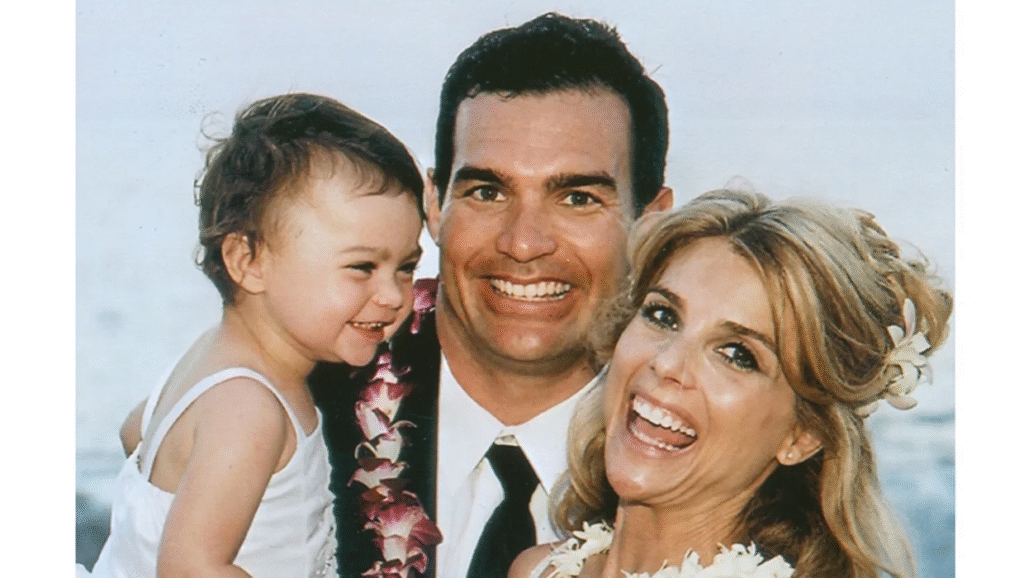
Shauna Tiaffay was born in Salt Lake City, Utah, and raised in the Mormon faith. At the age of 28, she moved to Las Vegas, where she lived until her death at 46.
To her, the city was more than a glittering party. It was a place of opportunity, and before long she had a job as a cocktail waitress at the Palms, one of the most popular casinos in town.
She stayed there for about ten years. Her colleagues Cindy, Randee and Siana worked alongside her throughout that time and said she loved cocktailing.
She earned close to $100,000 a year in salary and tips, and the tips were often paid in casino chips, which in Las Vegas are as good as cash. Customers loved her.
Her coworkers regarded the casino as a family-like place where people looked after one another, and Shauna was at the center of that feeling. They remembered her as bubbly, quick to laugh and almost never seen frowning.
Her daughter was her first priority, and Shauna was fully devoted to her. The two sang and laughed together, and when Shauna was with Maddie, nothing else seemed to matter.
Her sister, Paula, remembered her as someone who laughed at life and kept an innocence about her. Paula said that she still misses her and that something like this happening to Shauna is unimaginable.
When her father was convicted, Maddie was 11 years old and had lost both of her parents. She lived with George’s mother, and Paula and John visited her often.
They planned to explain to her someday why her father is in prison. When they talked about Shauna, Paula could tell from Maddie’s expression that she remembered laughing a great deal with her mother.

Recent Comments