
In January 2016, 13-year-old Nicole Lovell of Blacksburg, Virginia, became the subject of a major criminal investigation.
Connections Formed Online

Nicole spent much of her social time online, and her smartphone gave her access to a range of messaging applications. One of them was Kik, a chat service that appeals to teenagers partly because it allows users to communicate anonymously, without their parents’ knowledge.
Accounts on the service are tied to usernames rather than real names. At the time, the Canadian company behind it, Kik Interactive, which is reported to be worth a billion dollars, claimed that millions of American teenagers used the application every month.
Nicole’s father, David Lovell, said he had once made her delete it from her phone, but he believes she installed it again.
Through Kik, Nicole came into contact with an eighteen-year-old man named David Eisenhauer, who used the screen name Dr. Tombstone. The two exchanged messages for months.
Eisenhauer was a freshman engineering student at Virginia Tech, a large public university located in Blacksburg, in southwestern Virginia.
Before college, he had been a track-and-field standout in high school, and he once declared that he would not stop until he reached his peak performance. Those who knew him described a determined young man.
One high school classmate said that everything he did, he worked hard at, and that he wanted to be the best.
Another former classmate, Dorothy Callahan, remembered him as a celebrated student who earned straight A’s and was somewhat cocky. She recalled him telling people that he had just been on the local news and was a big deal.
His friend Natalie Keepers was also a freshman at Virginia Tech. She wanted to study engineering, like her father, who worked for NASA. Acquaintances described her as extremely smart and academically driven, and said she had connections to the space agency.
Eisenhauer also had a friend far outside his campus circle. Bryce Dustin met him on an online gaming site, and over six years the two built an internet friendship without ever meeting in person.
Dustin said he almost felt like Eisenhauer’s big brother, and that Eisenhauer kept returning to him for advice on everything, most often about girls. On one occasion, Eisenhauer described a problem with a particular girl, whom Dustin now believes was Nicole.
According to Dustin, Eisenhauer said he had found out she was underage, that she wanted to be with him, and that she would expose him if he did not stay with her. Dustin offered what he considered big-brother advice.
If she wanted to be Eisenhauer’s girlfriend, he said, Eisenhauer could let her, but he should not try to be the best boyfriend. He should stop texting her and ignore her, and she would eventually go away.
The Plan and the Night of January 26

Over a period of several weeks, Eisenhauer and Keepers discussed ways to kill Nicole. They considered shooting her, poisoning her, and making her death look like a suicide.
On Monday, January 25, Eisenhauer told Keepers that he feared Nicole was about to expose their relationship and ask other people for help. That day, the two brainstormed methods of killing her and discussed how they could get her into a car.
By the following day, Tuesday, January 26, the plan was taking its final shape. Eisenhauer and Keepers went to a Walmart store and bought a garden shovel. They then went out to dinner, after which Eisenhauer dropped Keepers at her dormitory. He had a date arranged in advance with Nicole.
At home, Nicole gave her mother a kiss and said she was going to bed. Once in her room, she pushed furniture against her bedroom door so that no one could enter.
She then took her phone and her favorite blue cartoon blanket, climbed out of her bedroom window, and stepped into the snowy night. Eisenhauer’s car was waiting.
At 12:39 a.m., just after midnight, she sent her last electronic message to the Dr. Tombstone account.
Meanwhile, back on campus, Eisenhauer’s roommate, Jeremy Pazdeo, noticed that Eisenhauer was behaving oddly that night.
Eisenhauer put on boots even though the rain was not falling hard enough to call for them. Pazdeo decided to let it go. Eisenhauer did not return to the dormitory room until two o’clock in the morning.
In the hours between, Eisenhauer drove Nicole into the woods and killed her.
On Wednesday, January 27, Eisenhauer and Keepers returned to Walmart. This time they bought cleaning supplies: a basic bleach cleaner, disinfecting wipes, and two pairs of cleaning gloves. Together, they then disposed of Nicole’s body.
A Missing Girl and a Regional Search
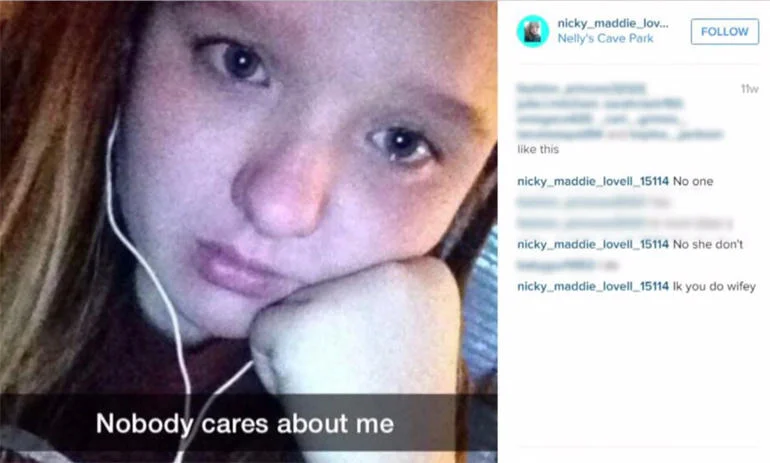
On the morning of January 27, Tammy Weeks pushed open her daughter’s bedroom door and found that Nicole was gone.
Tammy called her cell phone many times, but every call went straight to voicemail. She also sent text messages, and others who knew Nicole began calling and texting as well. None of them received a reply.
Tammy contacted the police and began searching the neighborhood herself. Before long, a neighborhood mother told her that Nicole had been playing with her daughters and had said she was going out on a date.
Like millions of teenagers, Nicole spent a great deal of time online, so Tammy feared that she had left to meet someone she had met on the internet. At that point, she said, she was panicked.
Nicole was last seen in the Lantern Ridge area between midnight and seven o’clock that Wednesday morning, and the urgency of the search grew with each hour. Tammy said Nicole would not stay away for so many hours without her daily anti-rejection medication.
The FBI joined regional and state law enforcement in the search, and officers began canvassing neighborhoods that afternoon. More than 1,200 searchers volunteered, and some of them brought an infrared drone, a device that can detect heat from the air.
The effort drew federal, state, and regional agencies and private citizens together. Police said they were examining whether an app popular with teenagers had been used to lure her from the house.
Nicole’s father posted a message on Facebook that was addressed directly to her. “Nicole, honey, if you see this, if you’re out there, you can come to me,” he wrote. “I’m not mad at you. I’m worried about you.”
Her disappearance sent shock waves through her hometown. By late in the day, as the winter light faded, her parents made a public appeal. “We love you, Nicole. We miss you. We want you home.”
The investigation soon found a lead in Nicole’s own room. On her bedroom wall, she had handwritten the usernames and passwords for all of her online accounts.
FBI computer forensics experts used that information to trace her account activity, and they quickly established that she had regularly used Kik.
The FBI then submitted an emergency disclosure request to the company, a procedure that allows investigators to obtain account information quickly when a person may be in danger, and asked to see her personal account.
The records revealed that during the last two days of her life, Nicole had been messaging with a person using the username Dr. Tombstone. Kik also supplied an IP address. Investigators traced it to the account’s owner: David Eisenhauer, the Virginia Tech freshman.
Arrests and a Discovery in North Carolina
Within three days of Nicole’s disappearance, police picked up Eisenhauer at his dormitory and took him in for questioning. Pazdeo walked into the aftermath.
He saw that the door to the room was open, and state police and FBI agents turned him away, telling him not to worry because the matter was not about him but about his roommate.
Pazdeo said that he had seen a knife in the room, which Eisenhauer usually left on his desk. When police arrived, it was not there, and officers could not find it.
During questioning, Eisenhauer soon admitted that he had spoken with Nicole outside her house on the night she vanished. He was arrested and charged with abduction. Investigators said he knew the girl and had used their relationship to his advantage to take her from her home.
Eisenhauer offered an account that Nicole’s Kik messages did not support. He told officers that he had recently met the girl on an anonymous chat app and that the two had moved their conversation to Kik.
He said he met her in person only once, on the night she died, that he quickly saw how young she was, and that he left her alive. Her Kik account indicated instead that they had been in contact for months and had met in person at least once before.
Eisenhauer then volunteered something the police had not asked about. He said he had just bought a new snow shovel, and he suggested that it might help to mention that someone else had been with him when he bought it for snow purposes. He named Natalie Keepers as that person.
Investigators also reached Bryce Dustin, through the online gaming site where he and Eisenhauer had first become friends. Officers brought Keepers in for questioning as well, and they recorded her statement.
She gave them a detailed account of the events of the previous days, and investigators strongly suspected that she had taken part in the crime.
With Eisenhauer in custody, police made a grim discovery. On Saturday, January 30, Nicole’s body was found about 90 miles from her home, in Surry County, North Carolina, along a curve in the road.
The remains were found off Route 89, about two miles inside North Carolina. A very preliminary determination of the cause of death was stabbing.
Surry County Sheriff Graham Atkinson told reporters that her throat had also been cut. Authorities then announced that they had located the remains of Nicole Madison Lovell.
It had been three days since her disappearance when her parents were told. Tammy said her whole world came crashing down. David Lovell said that her last moments are what flash through his mind, and that this is his nightmare. He added that if such a crime could happen to his family, it could happen to anyone.
Once the remains were found, the charges against Eisenhauer were upgraded from abduction to first-degree murder. Later on Sunday, January 31, police announced that Keepers had been arrested as well.
The case also drew public warnings about the risks of social media. Pamela Casey, a district attorney in Alabama, had begun speaking out on the subject long before Nicole disappeared, and her online safety videos have been seen by millions of people across the country.
In them, she asks parents whether they have picked up their child’s phone and found that they do not know the password, and she tells them that this is a problem. She has also pointed out that she can broadcast live from her office using a popular app, and that a child can do the same from a bedroom.
Casey warns that parents do not realize that a child can be taken, and a life lost, because of someone the child meets in her own bedroom through a phone. She says that offenders often use applications such as Kik because those are the places where children spend time online.
Before the cases reached court, Nicole’s mother said that she also blamed Kik, and that the company needed to do more. Kik’s chief executive, Ted Livingston, was asked at a technology conference in Brooklyn what responsibility he had to keep children safe on the application.
He said he felt a huge responsibility and that the case had hit the company’s office, and him personally, very hard. Like many social media companies, Kik publishes an online guide for parents, and the company said in a statement that it cooperates with law enforcement.
Livingston maintained that the application is no different from Facebook, Snapchat, or Instagram, and that people can behave badly on any of them.
The reporter replied that a parent can check a child’s Facebook and Twitter accounts by becoming the child’s friend there, and that this is not possible on Kik.
Livingston answered that Instagram also has a private mode and private messaging. He said that children will always use some messenger, and that if Kik were shut down, ten similar services would immediately take its place.
The Trials of Eisenhauer and Keepers
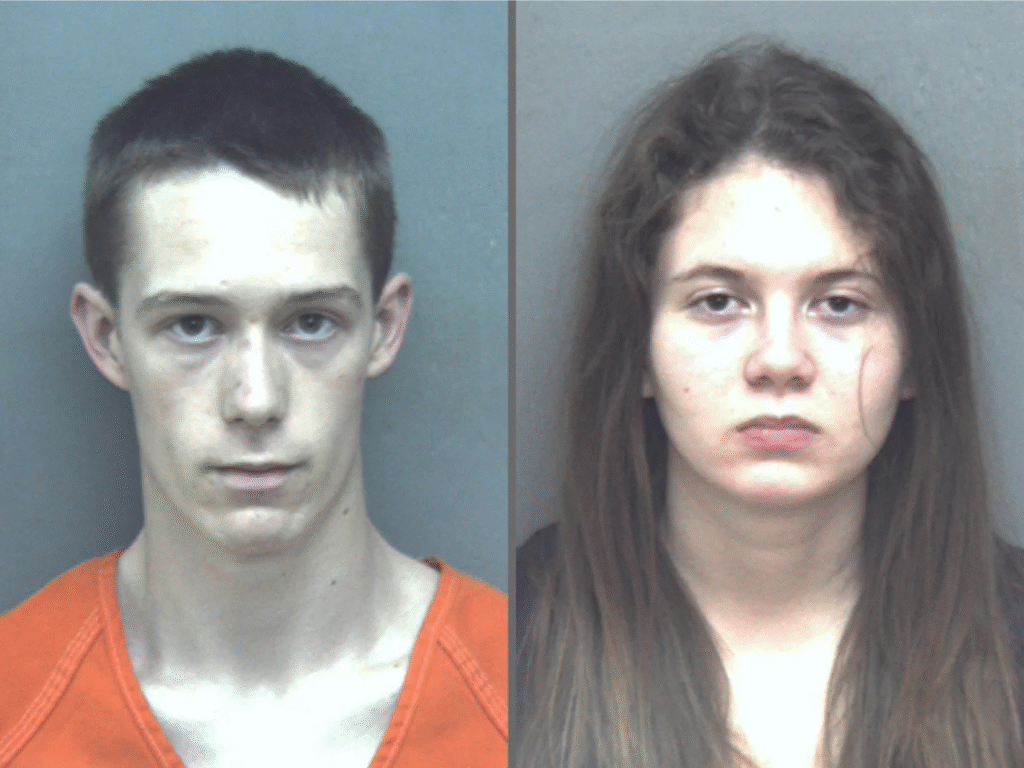
Kik itself was never on trial, but two college students who had once seemed promising were about to be. For Nicole’s family, a long wait followed the arrests. It took two years for the case to reach court.
In February 2018, Eisenhauer went on trial for murder. Prosecutors presented their account of Nicole’s final hours to the jury and called her mother to the witness stand, where she described the horror of finding her daughter gone.
Asked when she next saw her daughter after that night, Tammy Weeks answered that it was when Nicole lay in a coffin.
Security footage showed Eisenhauer and Keepers purchasing the shovel. Photographs displayed bloodstains, and a bloody shovel had been found in Eisenhauer’s car.
A Walmart employee read aloud the receipt for the cleaning supplies. Eisenhauer’s lawyer argued that Keepers had killed Nicole and pointed to a bloody handprint on the shovel as proof.
On the fourth day of testimony, Eisenhauer surprised the courtroom by changing his plea from not guilty to no contest. Facing a mountain of incriminating evidence, he chose that course.
Prosecutors then read one of his final Kik messages to Nicole into the court record. In it, he wrote that he could not stress enough how important it was that she tell no one about him, because they would find a way to hurt her.
She answered by asking who would hurt her, and why he was scaring her, and she asked him to stop. The judge accepted his revised plea and found Eisenhauer guilty on all charges, which were first-degree murder, abduction, and concealing a body.
On June 26, 2018, Eisenhauer was sentenced. Prosecutors asked for a life sentence, while his lawyers asked for a term of between about 24 and nearly 40 years. Judge Robert Turk imposed a sentence of 50 years.
Before the sentence was handed down, Eisenhauer apologized in court for the pain his actions had caused Nicole and her family. Under Virginia law, he must serve at least 85 percent of the sentence, about 42½ years, before he is eligible for release.
Nicole’s family still had one more trial to endure. Keepers went on trial in September 2018 on a charge of accessory to murder. She had already pleaded guilty in August 2018 to helping Eisenhauer conceal the body.
Prosecutors told jurors that Eisenhauer killed Nicole but that Keepers had helped him. They played audio recordings in which Keepers described the messages Eisenhauer had sent her on Kik. In the recordings, she said she knew what was happening was wrong. She also said she felt no emotions.
The defense called Dr. Jonathan Mack, a neuropsychologist who is a specialist in how the brain affects behavior and who had examined Keepers.
He diagnosed her with six mental disorders, including borderline personality disorder and post-traumatic stress disorder. He explained that people with such conditions may appear odd, with a sense of reality that is off and weak interpersonal skills.
He said her mental state could have made her interview with officers unreliable, and that a person like her would be highly impressionable, gullible, and easily led.
Keepers’ lawyers told the jury that she had played along with Eisenhauer to keep his friendship.
They said she had no idea that he would really kill Nicole and that she thought his talk of killing was a fantasy and the jury heard her say, “I thought he was joking. I didn’t think David could actually kill her.”
Prosecutors disputed that account, and they turned to the messages Keepers herself had written. They read out the Kik messages she sent to Eisenhauer after the murder, in which she told him he deserved a good night’s sleep.
They compared her tone to congratulating someone for getting through five final exams in a week: “You deserve it. Get some sleep.” They argued that the messages showed she was proud of what the two had done.
The jury deliberated for just over one hour before returning its verdict. It found Natalie Marie Keepers guilty of being an accessory before the fact. After the verdict, Keepers and her family took the stand to apologize to the Lovell family.
On November 27, 2018, Judge Turk followed the jury’s recommendation and sentenced Keepers to 40 years in prison.
He added five years for concealing the body but suspended them, and he ordered 10 years of supervised probation after her release and no contact with Nicole’s family. Keepers declined to speak when she was given the chance before sentencing.
In September 2019, Kik Interactive announced that it would shut down the messaging app to focus on its cryptocurrency and a legal fight with the U.S. Securities and Exchange Commission.
In October 2019, it sold the app to a holding company called MediaLab, which said it would keep Kik running.
In October 2019, the Court of Appeals of Virginia agreed to review Keepers’ case. Her lawyer argued in February 2020 that her trial had been unfair, citing the denial of a motion to suppress her statements to police and the refusal to remove two prospective jurors.
On April 14, 2020, the court affirmed her conviction. In December 2020, the Supreme Court of Virginia denied her petition for a further appeal.
Nicole’s mother said that no punishment was severe enough for either defendant, and she wanted both of them to suffer. Members of the family said they wished they could trade places with Nicole.
When the appeal was accepted for review, the family called it “demeaning to Nicole Lovell and our family.”
In Blacksburg, a community left in shock still does not understand how two intelligent college students with their lives ahead of them could take the life of a child.
Classmates of the defendants described the news as frightening, and one said that no one had ever expected a member of their class to be accused of murder.
Nicole Madison Lovell, Remembered

Nicole Madison Lovell was born with a damaged liver and underwent a transplant before her first birthday. The surgery and her treatment left her with scars on her stomach and neck, and those marks followed her into her school years.
Classmates picked on her about them, and she came to hate going to school. She would often ask her mother to write her a note excusing her from gym class.
Her family life was not simple. Her father had been convicted on a drug charge, served time in prison, and had other problems with the law. Her mother has said that Nicole not only had trouble fitting in at school but also had a difficult relationship with him.
He left Tammy before Nicole was born, and the two parents were never married. Nicole wanted his attention and his love, and her online posts spoke of loneliness, a longing for love, and a belief that nobody cared for her.
David Lovell has said he has regrets about not being there for her more often, and he still asks himself what he did wrong.
Yet those who knew Nicole remember a happy-go-lucky child who smiled and sang all the time. She loved pandas, music, and dancing. She was nominated for the ALS Ice Bucket Challenge, and she touched many people during her short life.
A friend recalled that she was constantly texting or on Facebook. When Tammy went to work, her own parents, who lived in the house, supervised Nicole, so she was never left alone at home.
Her life online, however, was conducted through the social media applications on her smartphone, and no one supervised it.
Both of her parents have spoken openly about their loss. To Tammy, she was everything. Each morning, Tammy visits Nicole and sits with her for an hour, still hoping, in what she has described as a nightmare, that her daughter will walk around the corner when she gets off the bus, or step out of her room.


Recent Comments