
In April 1989, worshippers at a small church in Lakeville, Indiana, learned that their minister’s family had been killed. The case would stay before the public and the courts for three decades.
The Weekend Before
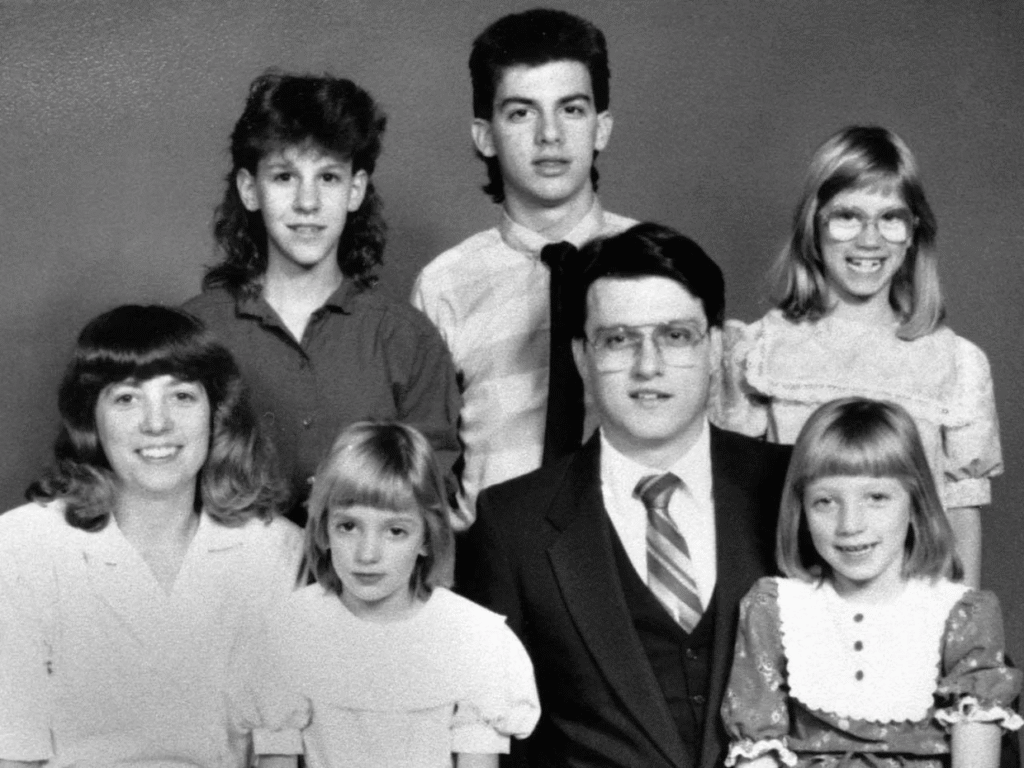
Olive Branch Church stood beside a parsonage, the home provided for its minister, Reverend Robert “Bob” Pelley. In April 1989, he lived there with his wife, Dawn, and her three daughters: Jessica, the eldest, who was nine; Janel, the middle child; and Jolene, the youngest.
Two of Bob’s older children, Jacque and Jeff, were not at home during the final weekend of the month. Jacque was attending a church camp, and Jeff was making plans for his high school prom.
Jessica had arranged to spend the weekend at a friend’s house, so she left for a sleepover on her own. Saturday, April 29, was a busy day at the parsonage.
Church members and teenagers headed to the prom came and went through the afternoon, and several stopped to show Bob their formal clothing. The visits continued until roughly five o’clock.
The family kept a fixed routine on Sundays. Jessica normally reached the church between nine and nine-fifteen, then crossed to the parsonage, where Dawn usually had breakfast ready. On that morning, she ran to the house and found the door locked.
It was a situation she had never encountered, because the family’s doors were never locked. Unable to get in, she hurried back to the church and told the adults that everyone must still be asleep.
By then, most of the congregation had assembled. Several members held a master key, and they went to look for themselves. When they returned, they instructed everyone to go to the altar and pray. Jessica was confused.
Soon afterward, police cars surrounded the property and yellow crime tape stretched across the grounds. Jessica, who was sitting in a van with her friend’s mother, watched an officer approach and ask the woman to step out.
The two spoke briefly, and tears began to run down the woman’s face. She then came around to the van and told Jessica that her whole family was gone.
A Community in Mourning
Detectives entered the parsonage through the garage door and climbed the stairs. In the upstairs hallway they found Bob, with his glasses lying beside him. He had been shot twice.
In the basement they found Dawn, Janel and Jolene, each of them shot in the head. One detective recalled that the girls lay as their mother had tried to protect them. Thirty years later, he said, he could still see the three people in the basement whenever he closed his eyes.
Investigators began discussing suspects almost immediately. The scene did not resemble a burglary or a home invasion. The killing of a minister and his family brought reporters and camera crews to the small town and placed it in the national spotlight.
Residents struggled to understand how it could have happened, and they said Lakeville was never the same afterward. At nine years old, Jessica was effectively an orphan.
The funeral took place on May 3, 1989, in the church where Bob had preached every Sunday, next to the house where the killings occurred. Every seat was taken, and mourners stood along the walls while news crews filmed those arriving.
Jacque and Jeff attended as well. Four caskets stood at the front of the sanctuary, all of them closed because of the way the victims had died.
Jessica sat with relatives in a pew near the front. A piano began to play “Amazing Grace” during the service. Jessica cannot say who else attended; the four caskets are the only part of the day she remembers.
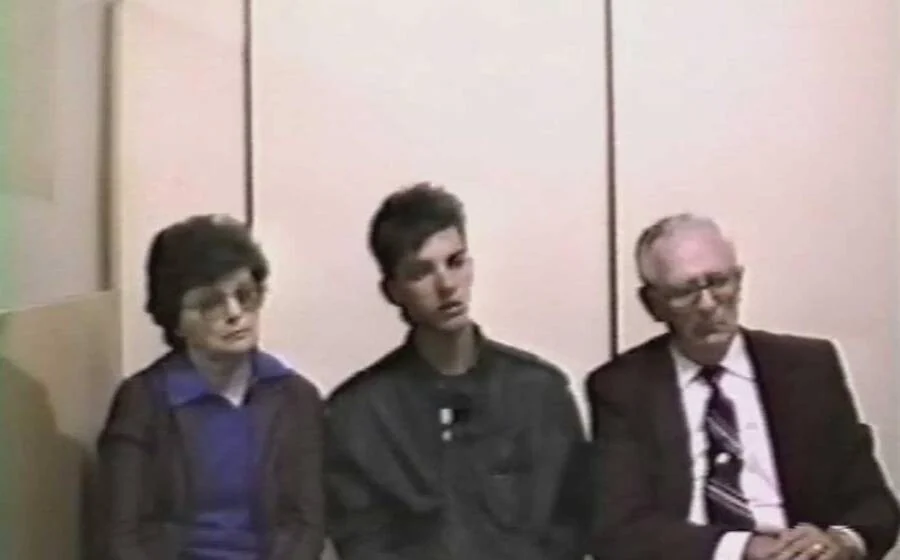
Police interviewed the surviving relatives, among them Jeff. On May 1, two days before the funeral, a detective questioned him in the presence of his grandparents. Jeff denied any involvement.
He said that he and his father sometimes disagreed and that he was sometimes upset with him, but that they always worked things out. The detective noted that Jeff never became emotional during the interview.
Investigators also considered whether Bob had shot his family and then himself. They dismissed the idea quickly, because of the nature of his injuries and because no weapon lay near his body.
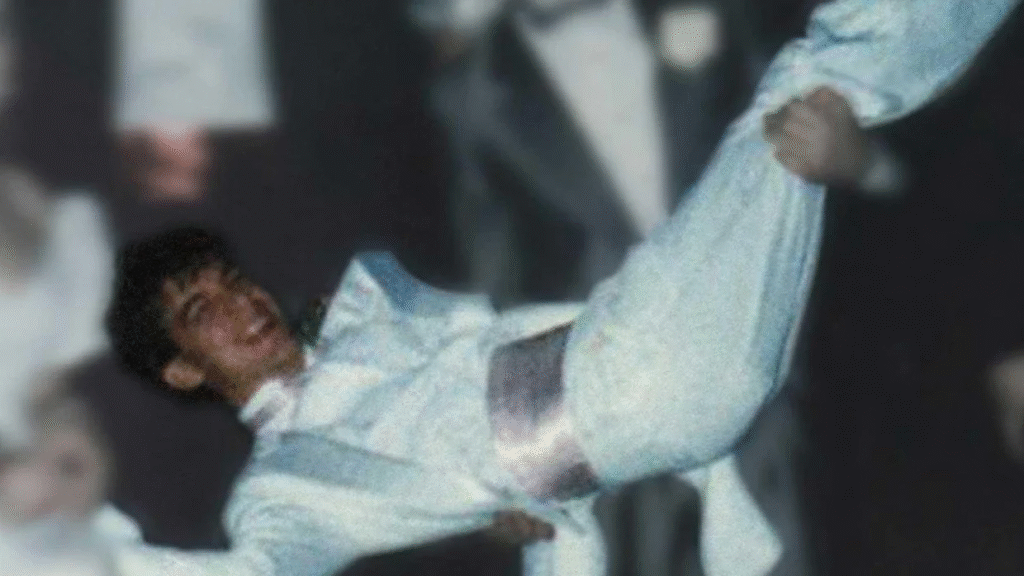
Detectives learned that only weeks before the killings, Jeff had been caught in a burglary case. Bob had grounded him as punishment. The prom was still permitted, but only if Bob drove him there.
Jeff could not attend the dinner beforehand or the after-prom events. Detectives regarded the arrangement as a deep humiliation for a teenager.
Acquaintances also described tension between father and son, including an occasion when Bob struck Jeff, and neighbors had noticed it too.
The timeline drew the most attention. The family was last seen alive shortly before police believed Jeff left for the prom. Beyond that, the evidence was thin. There was no forensic evidence, no murder weapon and no eyewitness.
The case rested on circumstantial evidence and the sequence of the afternoon. The prosecutor’s office decided not to file charges. The lead detective disagreed, believing the evidence was sufficient, but no arrest followed.
Years Apart

No one explained to Jessica who might be responsible. She reached her own conclusion, that her stepfather had killed her mother and sisters and then himself. He had spanked her often and had not been kind to her, and at nine she believed he was capable of it.
About a month after the funeral, relatives sent her to camp with her friend Stephanie Fagan, hoping to restore some normality to her life. The trip did not do that.
Stephanie remembers Jessica returning as a very changed person, often wearing what she calls a million-mile stare. In photographs from the camp, both girls are smiling, but Stephanie says neither of them was well.
After camp, relatives decided Jessica should start over and have no contact with the people who had shared the tragedy. Jacque and Jeff went to live with relatives on their father’s side, while Jessica went to her mother’s side of the family and stayed with her grandfather in Michigan.
She sent letters and was told to stop. She ran away and was placed in a foster home. She felt like a drifter with no place to call her own. She has described the arrangement as isolating rather than protective.
At 13, Jessica decided to take control of her life. She pushed down her feelings and became outgoing, with friends, and she avoided thinking about the past.
Stephanie, meanwhile, could not understand why she was not allowed to stay in touch. As a teenager she began researching the murders, and finding Jessica became an obsession.
She visited the cemetery often, thinking that if she came enough, Jessica would eventually appear. Jessica did not know anyone was looking for her. She assumed everyone had forgotten her and moved on, since it was not their family that had been lost.
When Jessica was 15, Jeff telephoned and invited her to visit him in Florida. He had a good job with a computer business, a wife named Kim and a house of his own.
The first thing he asked her was who she thought had killed the family. Jessica answered that she believed his father had done it. The subject was dropped.
At 16, Jessica received her driver’s license, and the first place she drove was the cemetery. She sat and talked to her family and began tending the graves, keeping them clean and scrubbed and free of moss.
She says that once the family was buried, the laughing, running and playing were gone, and the visits became a major way of coping with the loss.
In 1998, at 18, she used part of her inheritance to buy a house, her first home since the age of nine. She met a man named Tyson, who was taken with her immediately, although she was seeing someone else at the time.
When they reconnected a couple of years later, they began spending time together, and they have been a couple ever since. They have two children, who knew only that their mother once had a family and that it was gone.
The Case Reopened
In 2002, thirteen years after the killings, two detectives knocked on Jessica’s door. They told her the case was being reopened and asked whom she believed was responsible. When she named her stepfather, they replied that it could not have been him.
Asked again who she thought might have done it, she thought of Jeff. She told them he had frightened her when she was young, that he was quick to anger and used his fists. The detectives said that was exactly who they suspected. Jessica felt a pit in her stomach as they began to describe the case.
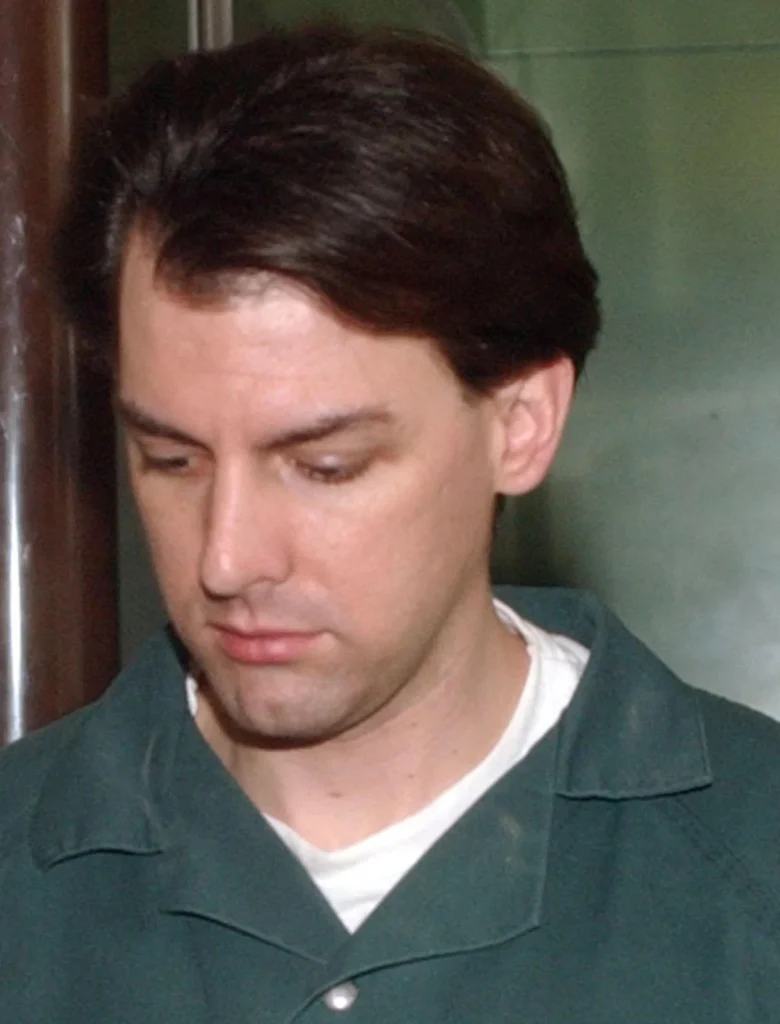
A new prosecutor believed the evidence was enough. Jeff was arrested and charged with four counts of murder. Jessica waited for the trial, afraid he might be released and come after her, because he was not a nice person when angry.
The trial took place seventeen years after the killings. Jessica traveled back to Indiana and felt like a stranger in a place she no longer considered her home.
She remembered little of it, and when people at the courthouse asked who she was, she understood how far she had drifted. She was frightened of seeing Jeff and of the memories the proceedings might bring back.
A jury of seven men and five women was seated. Stephanie had hoped for a reunion with Jessica during the proceedings, but she testified for only one day and was not allowed to see or contact her.
In opening statements, prosecutors described a case built on circumstantial evidence and a very small window of time. Their theory was that Jeff had killed his father in an argument over the prom and then had to eliminate the surviving witnesses.
They told the jury that the home had been full of visitors until roughly five o’clock, and that by 5:30 no one else could have entered. That left a span between five and about 5:20 in which the murders could have taken place.
Jeff had told investigators he left before five. Witnesses testified that they saw his car parked outside the Pelley home after that time.
His prom date testified that when he arrived at a nearby friend’s house at 5:30, he was not wearing his tuxedo, and that no photographs were taken with his parents.
She also recalled that at an amusement park on the day after the prom, shortly before news of the killings broke, Jeff seemed troubled. When she asked what was wrong, he told her he thought something bad had happened at home.
Jessica was also called to testify. She had hoped to tell Jeff that he had taken her whole family from her, but as she sat on the stand he did not look at her, and she did not get the moment she wanted.
She stayed composed throughout. She told the court that when she left for the sleepover, a bow and a shotgun had been on the gun rack on the wall.
Police photographs showed the bow still in the rack that Sunday morning. The shotgun was missing. Police never found the gun, which they believed was the murder weapon.
Officers also testified that Jeff had made a statement in an untaped interview, asking whether he would receive the death penalty if he told them what happened.
The defense argued that there was no motive, no opportunity and no murder weapon. It said police had assumed from the beginning that Jeff was guilty and had not looked into whether someone else had a different reason to commit the crime.
It also argued that the roughly twenty to thirty minutes in which Jeff’s whereabouts were unaccounted for could not have been enough to kill his family, dispose of a weapon and drive to his date’s house.
After calling more than 50 witnesses, prosecutors closed their case. In his closing argument, the prosecutor reminded the jury that the burden of proof was his.
He acknowledged that there was no murder weapon, no confession and no forensic evidence, and that the case depended mainly on the timeline and on Jeff’s anger over the prom.
Jeff faced life in prison, and the wait for a verdict was nerve-racking for Jessica, who hoped he would be imprisoned but knew he might not be.
The jury began deliberating on a Wednesday afternoon, at about two or three o’clock. It returned after eight o’clock on Friday night with a verdict of guilty on all four counts, for the deaths of Dawn, Bob, Janel and Jolene. Jeff was sentenced to 160 years in prison.
Jessica felt a sense of justice. She also felt for Jeff’s son, because Jeff had a wife and child and she knew what it was to lose a father. The image of Jeff being handcuffed has stayed with her.
The defense appealed and succeeded, and the convictions were set aside on a number of procedural grounds.
Jessica heard the news by telephone and began to cry, afraid that everything would start over. Jeff remained in custody. In February 2009, the Indiana Supreme Court upheld the conviction, and the sentence stood.
Reunions and Recovery

With the case seemingly behind her, Jessica decided her children were old enough to learn how she had lost her family. She took them to the graves of her mother, stepfather and sisters in Indiana and told them the family had been killed when she was nine.
One of her children recalled feeling sad, because the loss belonged to them as well, and said they had never seen their mother cry that way.
Stephanie was still searching. She typed combinations of names and keywords into search engines and eventually found Jessica’s profile on Facebook, where the photograph showed only part of an eye. She knew it was her.
Afraid that Jessica might not want her in her life, she wrote a message explaining who she was and left the decision to reply with Jessica. Jessica did not recognize the name, but she opened the message and read it.
Stephanie wrote that she had looked for her all her life, had cared for her parents’ graves and had talked to her in her sleep. Jessica did not remember Stephanie at first, but stories about their time at camp brought the memory back at once. They now call each other sisters.
Jessica’s cousin, Jamie Collins, also returned to her life. Jessica confided in her about her past, her fears and her dreams, and Jamie suggested that she write a book. Jessica doubted she could discuss everything with a stranger. Jamie asked whether she could tell her instead, and Jessica agreed.
While the book was being written, Jessica suffered a severe decline. The death of a close family friend from cystic fibrosis brought back feelings from her past. She had not lost anyone since her family and had not expected the reaction.
She remembers little of one week, during which she damaged her living room in anger and felt herself pulled into darkness. Jamie received a distressing call from her, and then the line went silent.
An ambulance came to the house, and Jessica was taken out on a stretcher. She woke in a hospital without knowing how she had arrived, and a doctor asked whether she had tried to end her life. She had.
She regards that point as her lowest. Afterward she told Jamie that she needed help, and she admitted herself to a hospital to begin treatment.
She learned that she has dissociative identity disorder. She believes that when she pushed down the sad, lonely girl she had been, she lost many of her memories, and that recovering them is difficult now that she is letting that part of herself return.
She changed her name to Jessi and dyed her hair pink, having decided she no longer wanted the name of a child she remembers as sad, lonely and angry.
She does not consider herself fully healed but says she is well on the way to recovery, and she now sees Jessica as part of herself rather than only a frightened little girl.
In 2019, Jeff’s new legal team filed a motion for postconviction relief. A hearing on the motion was held in March 2022, and on April 28, 2024, a St. Joseph County judge denied it.
The Indiana Court of Appeals affirmed that decision on August 13, 2025, and the Indiana Supreme Court declined to take up the case on November 18, 2025. Jessi tries not to dwell on it. She calls it a form of slow torture, but she believes he will not be released.
Her book, I Am Jessica, written with Jamie, was published on April 29, 2019, the thirtieth anniversary of the murders. Book signings have drawn strong support from the community.
Jessi says that reading it showed her how strong she is and gave her a purpose, which is to help others. Her children have watched her recovery, and one says it has taught them to value family and never give up.
Remembering the Pelley Family
Dawn, Bob, Janel and Jolene Pelley are remembered in Lakeville as a family that was loved dearly. The photograph of the four of them smiling is how most people who knew them want to remember them.
Jessi’s father died when she was five years old. Her mother, Dawn, later married Bob, who served as the minister of Olive Branch Church, and the family settled in the parsonage. Bob wanted to be someone the community could depend on and his parishioners could trust, and his home was always open to them.
Jessi grew up with her two younger sisters, Janel and Jolene. Their best friend, Stephanie Fagan, was close to Jessi and Janel and was treated as one of the family. The children played in the backyard and ran through the cornfields, which Jessi describes as typical country-girl pastimes.
To her eyes, the Pelley family seemed normal for the most part. When she first met Bob’s children, Jeff struck her as very tall and skinny, with big hair, while Jacque was quieter and more reserved.
Jessi now thinks often of the sisters she lost. She wonders what they would have been like and whether she would have had nieces and nephews through them.
She wonders how her mother would have been with her children, and whether they would have called her grandma or nana. She believes her mother is looking down on her and is proud. She knows they are not here, she says, but she knows they are with her.
Thirty years after the killings, Jessi remembers singing “Amazing Grace” with her sisters on the church stage. She did not know then that the hymn would one day apply to her. She now says she survived for a reason. “I once was lost,” she says. “Now I’m found.”


Recent Comments