
In May 2016, 27-year-old Jessie Bardwell went missing from her home in Richardson, Texas. Her father drove from Mississippi to find her, starting a search that would lead investigators across North Texas.
A New Romance and a Move to Texas

Jessie Bardwell had been living with a long-term boyfriend when she surprised the people closest to her by becoming involved with a new man, Jason Lowe. The relationship seemed to come out of nowhere.
Her friend Terri Ellis saw it begin and found Jason friendly and outgoing. He was handsome, held two college degrees and was ambitious.
When Jason accepted a six-figure job in the technology industry in Dallas, Jessie decided to join him and pursue her own dream of a career in cosmetology. She viewed the move as an adventure.
She did not mention it to her family when she saw them at Christmas. Her father, Gary Bardwell, said he had no idea she was about to leave for Texas and that he would have done everything he could to talk her out of it. Shortly after the holidays, she made the move.
The young woman who had always kept her iPhone within reach soon became hard to contact. Her phone number was disconnected, and the only ways to reach her were through Jason’s phone or the home phone.
Jason was monitoring all of her calls. Every time Gary called, he reached Jason, who told him Jessie would call back later.
About a month after the move, the couple had a serious argument. Jason attributed it to his discovery that Jessie had had a brief affair before leaving for Texas and had become pregnant. He said she eventually had an abortion.
Jessie called her father in tears. She told him he had been right, that she should never have gone to Texas, and that Jason had thrown her out of the apartment and she was freezing.
A friend of a friend took her in for the night, and Gary bought her a plane ticket to Alabama for the next morning. The following night, when she was supposed to be there, one of her friends went to the airport and waited seven hours. Jessie never arrived.
She later told her father that Jason felt bad about the fight and would try to trust her again. Because she was a grown woman, Gary reluctantly let the matter go. He has said the decision haunts him and that he keeps asking why he did not go to Texas sooner.
Two months after the move, Gary finally met Jason when the couple visited Mississippi. Gary tried to persuade Jessie not to return to Texas.
She hugged him more than usual, and when he asked whether she was all right, she said she was and that she wanted to go back because she wanted him to be proud of her. Jessie never let on that anything was wrong, but Gary had a bad feeling as he watched the car drive away.
In Texas, Jessie’s friends included Regina and Tommy Jordan, who described her as timid, quiet and shy. Jason gave them the impression that the couple was happy, and the Jordans grew so fond of the two that they treated them like their own children.
They trusted the couple enough to ask them to stay at their home and look after their dog while they traveled for a few days. The Jordans left on May 1.
In May, four months after Jessie moved, she stopped answering Gary’s calls altogether. Gary called Jason and insisted on knowing where she was. Jason replied that he did not know.
He said the two did not live codependently and that Jessie came and went as she pleased. When Jessie did not call her mother or stepmother on Mother’s Day, Gary decided he had waited long enough. He announced that he was leaving for Texas the next morning.
The Search in Richardson
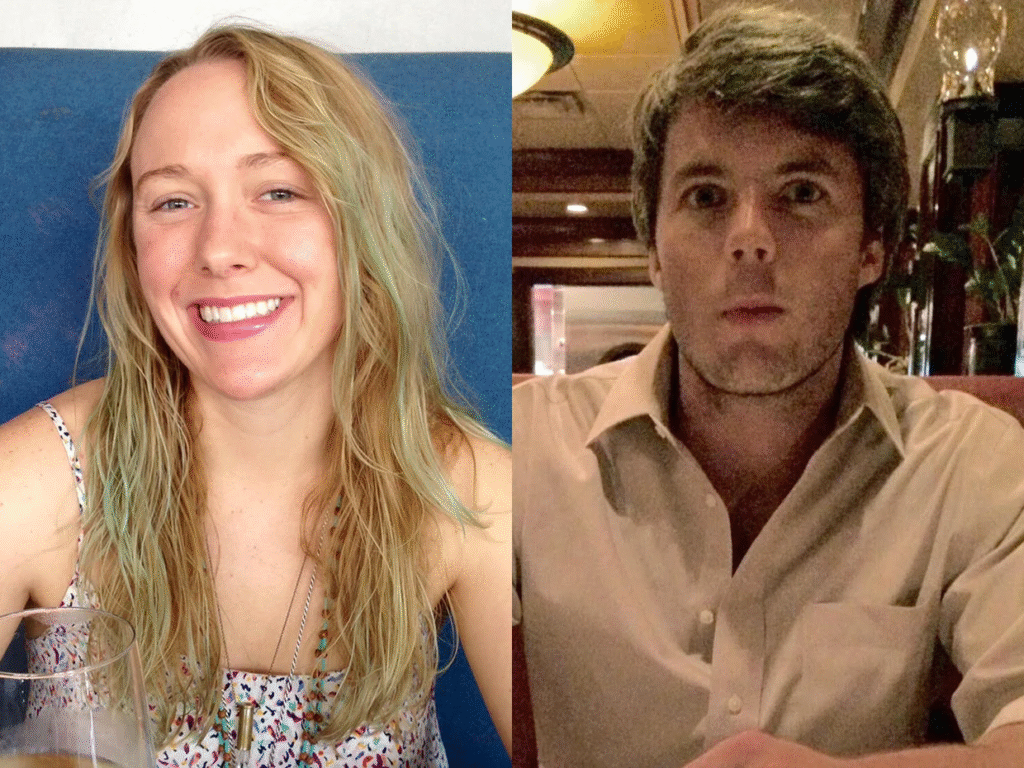
Gary set out for Texas angry. On the road, he sent Jason a text message saying that if Jessie was not at the apartment when he arrived, Jason would be in a tremendous amount of trouble.
When Gary reached the apartment, Jessie was not there. He immediately filed a missing person report with the Richardson Police Department.
Police visited the apartment repeatedly over the next 24 hours, and Jessie never appeared. The case was assigned to Detective Chiron Hale, who made first contact with Jason by phone.
Jason said the last time he saw Jessie was at 10 a.m. on May 8, when she left the apartment in her Acura. He said the car had not returned.
The next day, Hale went to the apartment and recorded a second conversation with Jason. By then, Jessie had been reported missing for three days, and no one had heard from her.
Jason told the detective that he and Jessie had always done their own thing, that he never questioned her, and she never questioned him. Hale looked through the apartment and saw no sign of a struggle.
Police then learned that Jason’s account of the Acura could not be accurate. He and Jessie had sold the car on April 19, almost three weeks before the day he said she drove away in it. Officers found it in the new owner’s driveway.
The following day, May 12, a team of detectives, including Hale and his partner, Eric Willadsen, returned to the apartment. On the kitchen countertop they saw what appeared to be a line of cocaine.
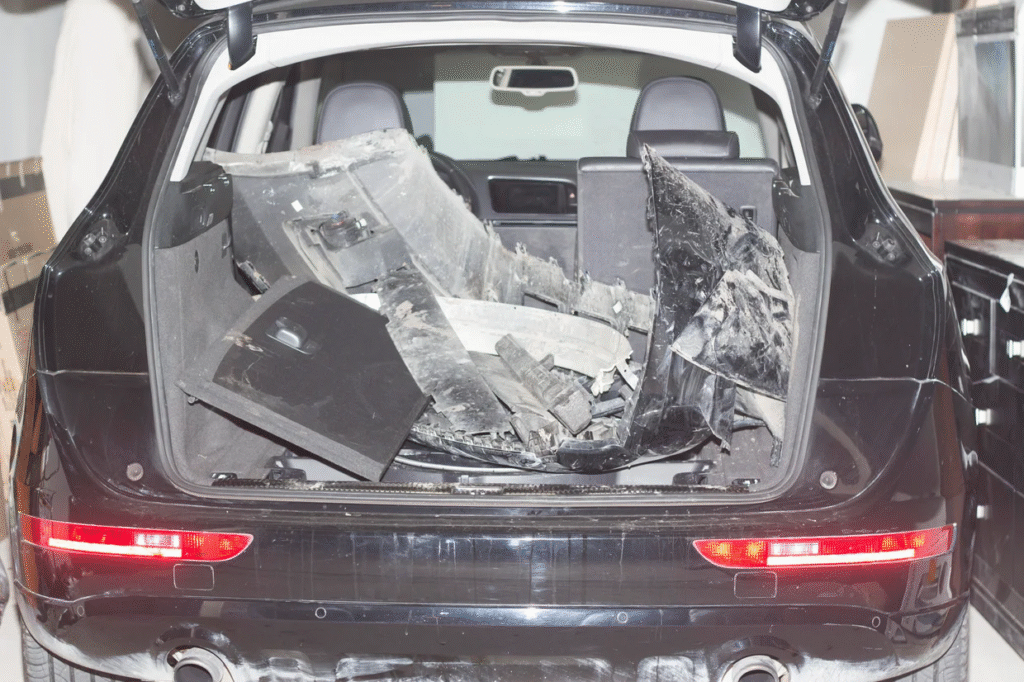
An odor coming from the garage held their attention far more. They recognized it at once as the smell of decomposition, and it was coming from the back of Jason’s black Audi.
Hale opened the hatch. Jessie was not inside, but a body had clearly been there. Fluid was standing in the cargo area, and the odor of decaying flesh was strong. The car had damage to the front end, its bumper was lying inside it, and there was a great deal of mud on both the interior and the exterior.
Jason told the detectives he had gotten stuck in the mud while searching for Jessie, and he continued to say he did not know where she was.
The detectives then sprayed a chemical called Bluestar, which is used to detect blood, in the cargo area. It lit up brightly, indicating that blood was present. The case had become a homicide investigation.
Detectives asked Jason to come to the police station to talk. He was arrested on drug charges and held in jail, and the detectives used the time to question him at length about Jessie.
They showed him her photograph, tried to connect with his emotions and asked about his feelings for the woman he had said he loved and wanted to marry. Nothing worked. Jason appeared irritated and said he would not be accused of things he had not done. He was finished talking.
Jason was charged with murder even though no body had been found. Investigators were not confident they would ever find one. Texas is a huge state, with countless rivers, lakes, ponds and fields in which a body could be hidden.
In Pascagoula, Mississippi, the community rallied around the family. Jessie’s grandmother, known as Miss Kitty, joined a candlelight vigil at the beach, where people prayed that Jessie would be found, perhaps safe somewhere.
A Discovery in Farmersville
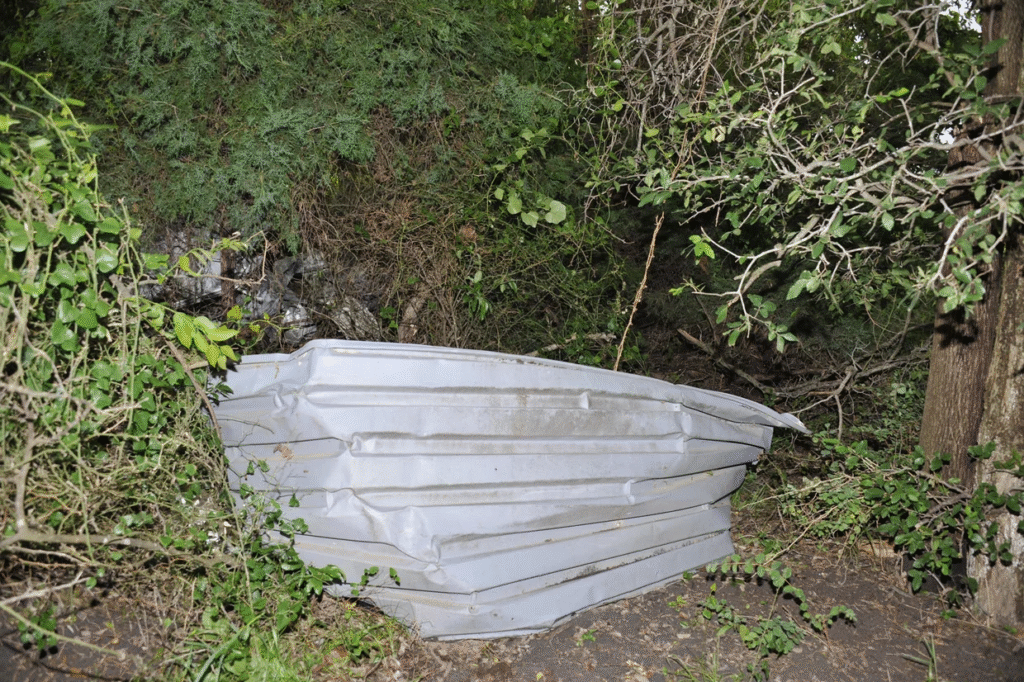
On May 19, almost three weeks after Jessie was last seen, police told the family they had reason to believe she was on a remote ranch in North Texas. They did not explain how they knew, saying only that the information came from a reliable source.
Police Chief Jimmy Spivey called the Bardwell family to the station and told them it would be a hard day, because officers did not expect to find Jessie alive.
A team of detectives, FBI investigators and prosecutors traveled to the ranch in Farmersville and arrived in the late afternoon. They walked through the fields and came to the spot where Jason had gotten stuck in the mud.
Car parts were still on the ground. Nearby they found a pile of metal that appeared to be shielding something, a makeshift burial area. As they approached, they could smell decaying flesh. Under a sheet, they could see the outline of a body.
Jessie Bardwell had been crudely wrapped in a blue fitted sheet and covered with a pile of debris that included a red blanket and two red and gold towels. Investigators described her condition as one of the worst they had seen.
It took seven days to officially identify her. The medical examiner ruled her death a homicide, but the body was so badly decomposed that officials could not say how she had been killed.
Gary chose to read the autopsy report himself, against his better judgment, because he felt it was his responsibility as her father. A hearse was sent to Texas to bring Jessie home, and Gary and several of his friends loaded her into the back of it.
More than 900 people filled First United Methodist Church to mourn her death and celebrate her life.
Preparing for Trial
The Bardwells spent the next year grieving. Gary printed pictures of Jason’s face, set them on a stump outside his house and struck them with a 12-pound sledgehammer until he could no longer swing. One thing kept him going: the prospect of seeing Jason face a judge and jury.
Jason spent that time in the Collin County jail in McKinney, Texas, where his court-appointed attorney, Andy Farkas, was preparing his defense. Farkas, who has practiced law for 42 years, maintained that his client was not guilty of murder.
A key question for the defense was whether Jason should testify. Farkas believed that allowing Jason to tell his own version of events could help win an acquittal. Jason declined requests for interviews, saying he was saving his story for the witness stand.
The defense also faced a serious problem. When the Jordans returned from their trip, everything in their home seemed normal. Then they learned that Jason had been arrested for murdering Jessie. They believed he was innocent.
Tommy Jordan went to the jail to talk to him, and the conversation was videotaped. Jason told him it had been an accident, that he had made a mistake, and that the only thing he was guilty of was criminal negligence. The recording would become a key piece of evidence.
In August 2017, Farkas did something he had never done in his career. He held a mock trial, a simulated proceeding with pretend jurors. His co-counsel, Maria Tu, played the prosecutor and seized on Jason’s words from the recording as proof of guilt.
Farkas then presented Jason’s entire story to the pretend jurors, a story the real prosecutors had not yet heard.
The jurors deliberated over lunch and returned a unanimous verdict of 15 to 0, not guilty of murder. After hearing the result, Jason believed there was a good chance he would walk out of jail a free man.
The real prosecutors, Wes Wynne and Cynthia Walker, acknowledged that their case was mostly circumstantial. They could not say how Jessie had been killed, why she had been killed or exactly where it had happened.
The Trial
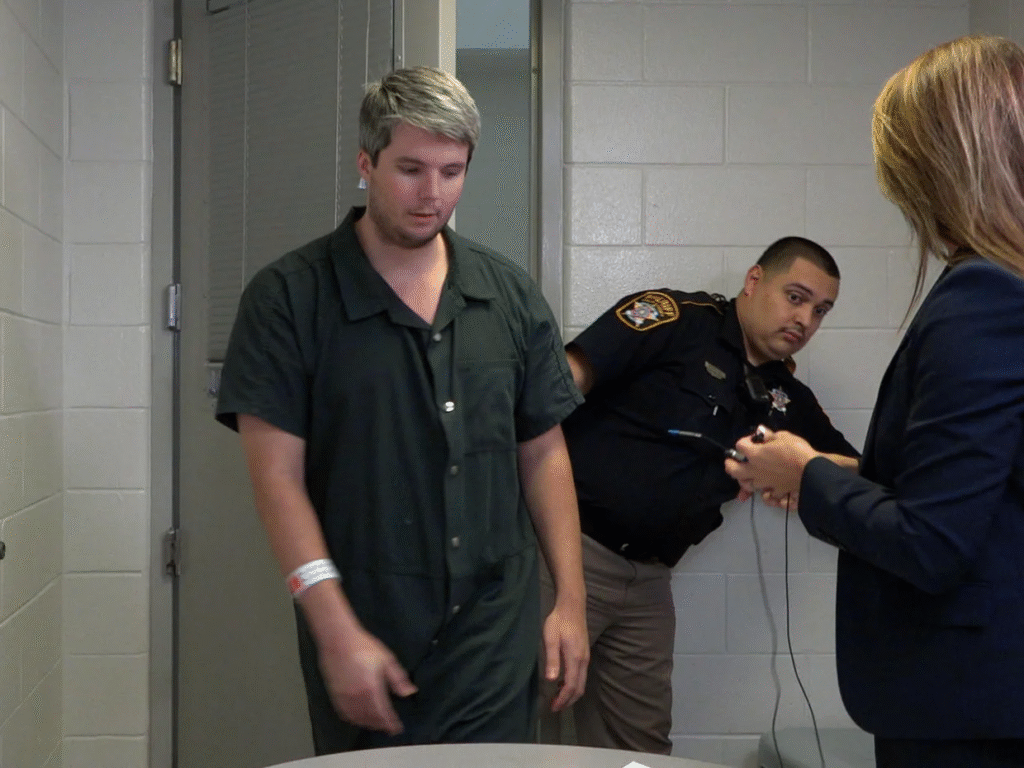
Gary had waited a year and four months for the trial to begin. Before leaving Mississippi, he said goodbye to his fellow firefighters and then to his mother, who told him he was doing this for Jessie. For the first time in 30 years, he boarded an airplane, flying to Texas with his wife, Gina.
Wynne called Gary as the state’s first witness. Gary was shaking so badly that he feared people could see it. Wynne showed him a photograph of Jessie, and Gary confirmed it was her. The prosecutor told him to take his time.
The state portrayed Jason as a man with a long history of drug abuse and a habit of lying. Prosecutors said he often told people he was a Navy SEAL even though he had never served in the military.
They also located two of his former girlfriends, Hayley McDaniel and Chrissie Chambers. Both said Jason had driven a wedge between them and their families, just as he had with Jessie, and that he became furious and accused them of cheating.
Chrissie said that on one night he pushed her to the floor, sat on top of her, and covered her mouth and nose with his hands while telling her he was killing her. Jason denied that any of this happened.
The jury never heard from either woman, because prosecutors decided their testimony was unnecessary and would likely not be allowed as evidence.
Prosecutors instead focused on what Jason did after Jessie’s death. While her body lay in the back of his Audi, they said, he used her phone to send text messages pretending she was still alive.
They believed Jessie was killed on or about May 1, the last day the Jordans saw her, and that Jason kept her body in his car for eight days before dumping it. They argued that a man who had lost someone he loved in an accident would not have left her body that way.
The physical evidence led back to the Jordans’ home. The red blanket, the red and gold towels and the blue fitted sheet that covered Jessie had all come from the house where the couple had been staying. In her linen closet, Regina Jordan still had the top sheet that matched the blue one.
The defense then called Jason to the stand. His parents listened from the courtroom as he admitted that he became hooked on drugs at age 13, including oxycodone, heroin and Xanax.
He described growing up as an only child in a well-off family and working toward a master’s degree. He said he and Jessie had planned to marry and buy a house.
Jason testified that on the evening of May 1, he and Jessie were staying at the Jordans’ home and had taken GHB, a sedative often called a date rape drug. They were being intimate in the shower, he said, when he slipped, and then Jessie fell and struck her head on the porcelain tub.
She sat on the edge and told him she felt hot and dizzy, and he thought she was acting strangely. Instead of seeking medical help, they went to sleep. When he woke in the morning, he said, Jessie was lying on his chest.
He tried to shake her, and the dog kept barking, but she did not move. She was dead. The defense suggested that a brain injury may have caused her death.
Jason said that he panicked when someone knocked on the door. It was his drug dealer, Robert Guinn, who is known as Cowboy. According to Jason, Guinn took the sheet from the linen closet, wrapped Jessie in it, and together the two men carried her to the Audi.
Wynne asked whether Jason had simply watched as the love of his life was bagged up in a fitted sheet, carried outside and tossed into the back of his car. Jason answered yes. Prosecutors did not call Guinn to testify.
Jason said he parked the Audi in the garage and left Jessie’s body there for days. During that time, he contacted at least five other women by text, sending sexual messages and explicit photographs.
Wynne pressed him on the fact that he never told anyone there had been an accident and never called the police. Jason replied that he did not know what to say and that he had never willingly and intentionally killed anyone.
Jason also testified that he was the one who showed police where Jessie was buried. His lawyer said he did it for the sake of her family. Prosecutors said he did it because he had struck a deal.
The agreement capped any sentence at 50 years, instead of the maximum penalty of life in prison. Walker said the agreement was offered because it was important to the family that Jessie be found.
After five days of testimony, the lawyers delivered their closing arguments. The prosecution told jurors they could not trust a word Jason said. The defense argued that the state had not proven murder rather than accident.
It said the state’s case rested on the facts that Jason had lied to police and hidden the body, which did not amount to proof beyond a reasonable doubt.
The jury deliberated for six hours before handing its verdict to Judge Scott Becker on September 20, 2017. The jury found Jason guilty of murder as charged in the indictment. Before sentencing, Gary had a chance to face Jason directly.
He said he looked him in the eyes and saw nothing in them. Jason’s former girlfriends stood beside Gary for support. Judge Becker then sentenced Jason to 50 years in prison, the negotiated maximum.
In an interview at the Collin County jail after the sentencing, Jason denied having anything to do with Jessie’s death and said he did not murder her.
He said he was reaping what he had sown, that he had lied because he was scared and thought he could fix the situation, and that he had thought only about himself and not about Jessie or her family. Asked what he would say to her parents, he said he was sorry.
Jason appealed his conviction, arguing that the evidence was not sufficient to support a murder verdict. On August 9, 2019, the Fifth Court of Appeals in Dallas rejected that argument and upheld the conviction. Jason will be eligible for parole in May 2041.
Remembering Jessie Bardwell
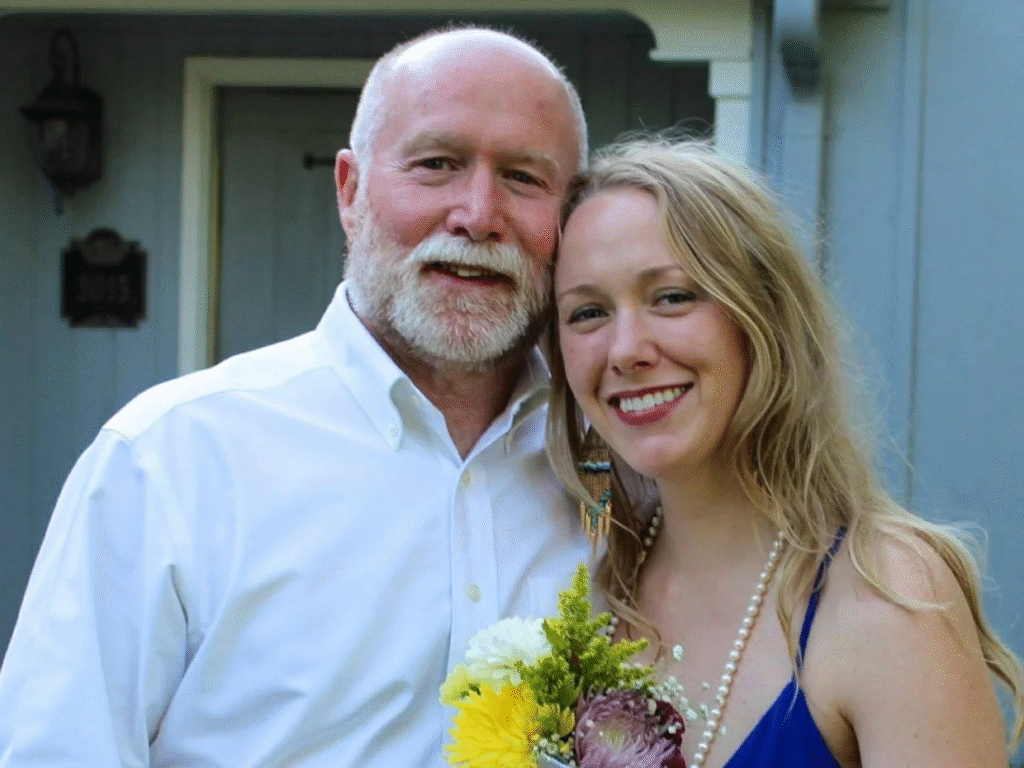
Jessie Bardwell was born on September 10, 1988, and her life began with joy. When she was born, she cried immediately, and her father recalls it as a happy moment.
She grew up alongside her older brother, Brandon, and the two were as close as two peas in a pod. Jessie was a daddy’s girl. Her father loved being a dad, and she did not like him out of her sight and always wanted to know where he was.
When Jessie was 14, Gary and her mother, Carla, divorced. She loved her mother very much, but she spent her high school years with her father and her stepmother, Gina.
After a few tries at college, she found she was having more fun outside the classroom than in it. She moved to Orange Beach, Alabama, where she worked as a waitress at Cobalt, a popular beachside restaurant.
Jessie loved the water. She spent time in the water, enjoying the waves and having fun, and when her father visited, the two went boating and fishing. They spoke every day, and she texted him daily.
Kimberly Asbury, the restaurant manager and Jessie’s good friend, learned that Gary was an accomplished musician and booked him to play at Cobalt. Jessie went to his shows. They were friends as well as father and daughter.
After the trial, Gary and his family returned to Mississippi, where he had spent long summer days on the water with his daughter. Only now is he able to get back into a boat and visit some of the places they used to go.
He has set up a scholarship in Jessie’s name at First United Methodist Church in Pascagoula, and he has said he plans outreach programs to help students avoid abusive relationships.
A fundraising page he created says he hopes to record and distribute his song about Jessie, “Taken Away,” and to open a safe house for women and children in dangerous relationships, to be called Jessie Merle’s House.
He says Jason took away a beautiful soul, a beautiful heart, the life of the party and a smile that could light up a dark room. He still calls her his beautiful little girl.


Recent Comments