
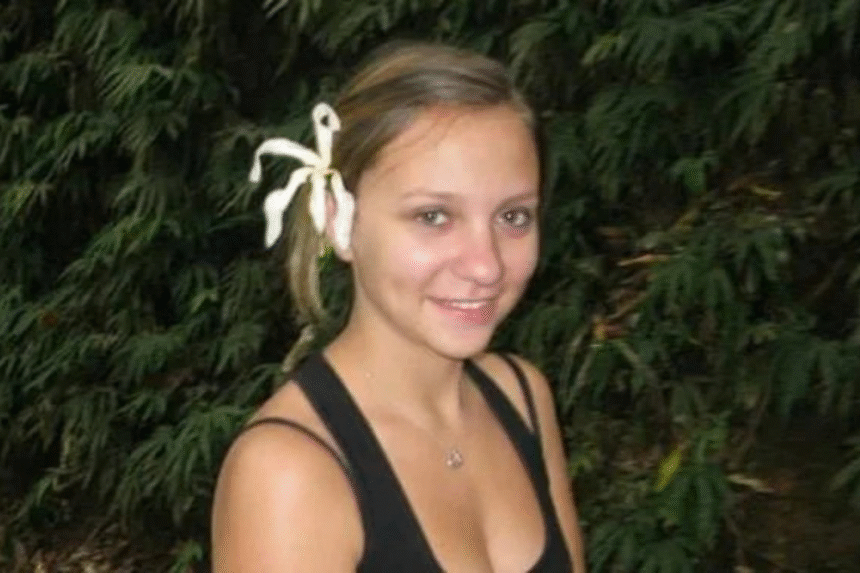
In the summer of 2013, Diana Duve met Michael David Jones at a bar in Vero Beach, Florida.
Chelsea DiMaio, Diana’s close friend and former roommate, said Diana was not immediately taken with Jones. He, by contrast, made it clear that he was interested in her, and Diana eventually came around.
Diana’s mother and stepfather, Lena and Bill Andrews, knew little about Jones except that he worked in wealth management at PNC Bank.
He was polite, well dressed and well spoken, and he seemed like an ideal boyfriend to them. Diana appeared happy, so they had no objection to the relationship.
The couple soon became inseparable. DiMaio said Diana was rarely seen without Jones, which was unlike her behavior in earlier relationships. As the months passed, DiMaio grew concerned.
On one occasion, the two friends planned to meet for lunch, and Diana asked to go somewhere Jones would not see her or her car. DiMaio said Diana acted as though she would be in trouble for having lunch with a friend.
On April 30, 2014, before DiMaio could raise her concerns in a serious conversation, a domestic dispute officially ended the relationship. A neighbor of Jones called 911 that day to report that a man and woman in the next apartment had been yelling and screaming for about an hour.
The neighbor told the dispatcher that it sounded as if the man was trying to dominate the woman. No slaps could be heard, the neighbor said, but the situation was not good.
Officers went to the apartment and spoke with both Jones and Diana. Jones told them the noise had come from rough sex. Diana said everything was fine, but she asked the police to wait while she gathered her belongings, and she then left.
She called DiMaio in tears, and DiMaio told her to come straight over. Diana arrived still in her pajamas and hysterical, more upset than DiMaio had ever seen her.
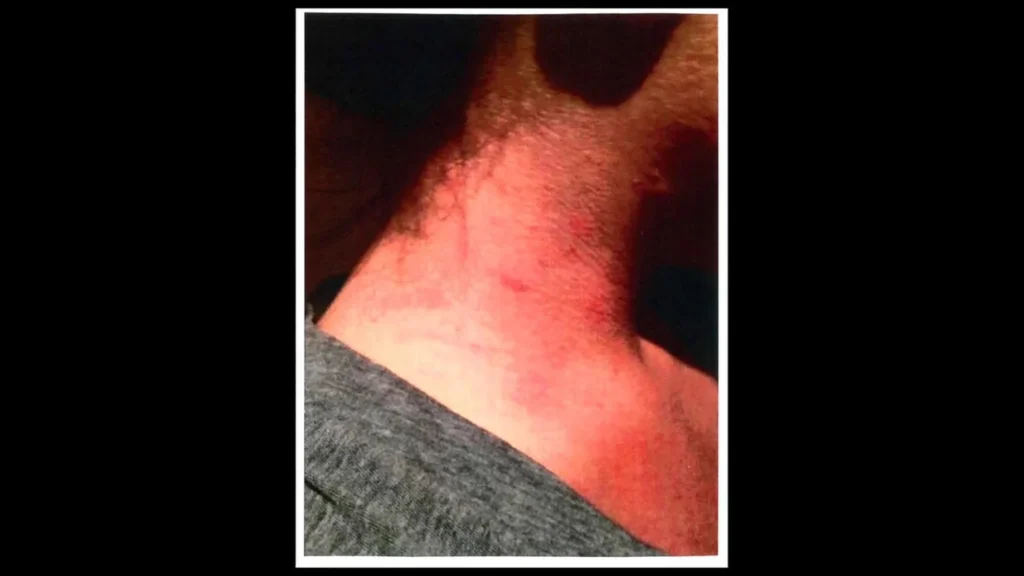
Diana explained that Jones had screamed at her for what felt like hours and that he had finally put his hands around her neck and started strangling her.
DiMaio could see marks on Diana’s neck and photographed them, saying she needed to document the injuries and protect her friend. The photographs show what appear to be hand marks.
DiMaio urged Diana to make a formal report, but Diana chose not to press charges. She wanted only to move her belongings out of the apartment and remove herself from the situation.
She moved back in with her parents and did not tell them that Jones had tried to strangle her. Lena has said she believes Diana kept it from her to spare her from worry, and that Diana considered the matter finished.
Jones, however, continued to pursue her. Lena said Diana told her that he kept texting and seemed not to understand that she had broken up with him.
A Night Out in June
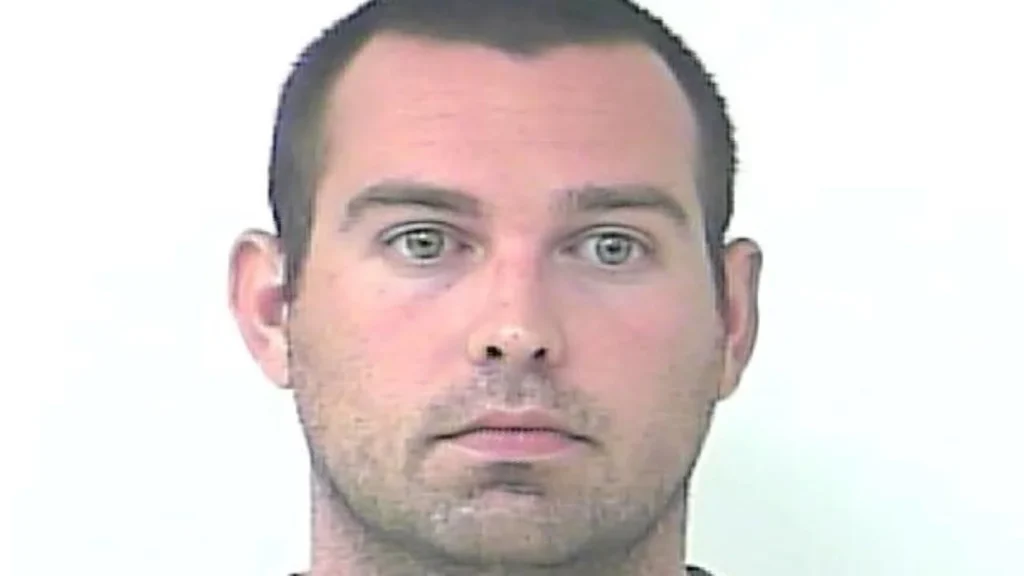
On the night of Thursday, June 19, 2014, Diana, then 26, went out with a group of friends. They described her as enjoying herself, though they noticed she was texting more than usual, which struck them as slightly out of the ordinary. At some point she left the group and went to meet Jones at a tavern in the area.
Those who saw the couple there said they appeared to be enjoying themselves and having quite a few drinks. At one point Diana seemed to be crying and visibly upset, but that soon passed.
As the couple left at about 1:30 a.m. on Friday, bar staff asked whether they had a safe way to get home. Jones replied that he would drive Diana home and that there was no cause for concern.
At 1:45 a.m., a text message from Diana arrived on her mother’s phone. It was written in Russian, the language mother and daughter spoke with each other, and it read, “I won’t be home.”
Lena had not waited up for her and saw the message when she woke. She replied, asking where Diana was and asking her to call. Lena then left for work at about 11:30 a.m.
Diana did not call that day. She phoned her mother every day, and Lena said the silence alarmed her immediately.
As Friday went on without any word from Diana, Lena became increasingly desperate and called Jones. He told her not to worry, that Diana was with him and everything was fine.
Lena said she was worried sick and needed to hear her daughter’s voice, and she asked to speak with her. Jones said Diana was sleeping. Lena told him to wake her.
He then offered another explanation: Diana was at his apartment, but he was not. Lena told him to go home, wake Diana, and call her back within 30 minutes. Jones never called back, and Lena never heard from him again.
The Search Begins
By Saturday, June 21, Lieutenant Matt Harrelson and Sergeant Brad Kmetz of the Vero Beach Police Department were pursuing leads in several directions to find Diana and Jones.
Police had described Diana as 5 feet 3 inches tall and 120 pounds, with brown hair, and had given Jones’s age as 32. Both phones had been turned off.
The officers went to Jones’s apartment, but no one answered the door, and they obtained a search warrant the same day, which allowed them to collect physical evidence and look for Diana.
When they returned with the warrant, they found Lena and Bill sitting outside in their car. Lena had come in the hope of seeing her daughter, and she was so distraught that she wanted to kick the door in herself.
The officers searched the apartment but found nothing that appeared to belong to Diana and no sign of her. Kmetz promised Lena that he would get her daughter back, one way or another. The promise motivated him as the investigation continued.
Attention turned to Jones’s movements. About 12 hours after he was last seen with Diana at the tavern, surveillance cameras recorded him at a PNC Bank branch in Vero Beach, where he withdrew $2,500 in cash.
He also told many of his co-workers that he was not feeling well and would be away for a couple of days to take care of some matters.
Investigators also learned that Jones was on probation. In 2012, near Fort Lauderdale, he had been charged with aggravated stalking for threatening to kill a former girlfriend.
In her call to 911, the woman said that Jones had threatened to kill himself and, when she told him they would not be getting back together, had threatened to kill her.
He pleaded no contest and, under a plea deal, received five years of probation instead of jail time. The terms required him to remain in the Vero Beach area, and he could be arrested if he left without permission from his probation officer.
That officer told investigators that any contact with Jones would give them probable cause to arrest him for a probation violation. Lena and Bill said the news was completely unexpected, and that nobody they knew had been aware of it.
With few leads left, Kmetz studied the cell tower data for both phones, overlaying two separate maps to compare where Diana and Jones had each been.
Late in the process, he noticed a single ping from Jones’s phone off a tower in the Fort Pierce area, roughly 25 minutes from Vero Beach. Kmetz alerted police in Fort Pierce to watch for Jones’s gold Honda and Diana’s black Nissan.
Fort Pierce police found Jones’s Honda in the parking lot of a Hampton Inn. Surveillance footage showed that Jones had checked in alone almost 24 hours after Diana went missing.
He paid cash for two nights and told the front desk staff not to tell anyone he was there and not to transfer any calls to his room.
Around 11:30 p.m., Kmetz and Harrelson, who had been working for two days straight, used a key card provided by the front desk to enter the room. Jones was sitting on a bed, talking on a cell phone, and was surprised to see them.
The phone was a burner, a type of phone that is difficult for police to trace. Kmetz told Jones that his girlfriend was missing and that he should help law enforcement find her. Jones said he did not know where she was.
Kmetz told him that, if he was not willing to provide any information, he was going to jail for violating his probation, and Jones was taken into custody.
A Discovery in Melbourne
Even with Jones in jail on the probation violation, investigators still did not know where Diana or her car was. They traced the purchase of the burner phone to a Walmart about an hour north of the Hampton Inn.
Surveillance footage from the store showed Diana’s Nissan entering the parking lot on the morning after she went missing. A man who appeared to be Jones, wearing a red baseball cap, walked into the store, bought the phone and left. Diana was not visible in the footage.
Jones had occasionally switched on his main phone, used it briefly, and turned it off again. Kmetz and Harrelson went through its tower records once more, this time looking for activity near the Walmart.
They found a ping from the Melbourne area, almost an hour north of Vero Beach, where the phone had picked up a call. Local police were asked to search that area for Diana’s car, and about 30 minutes later, detectives received the call they had been waiting for.
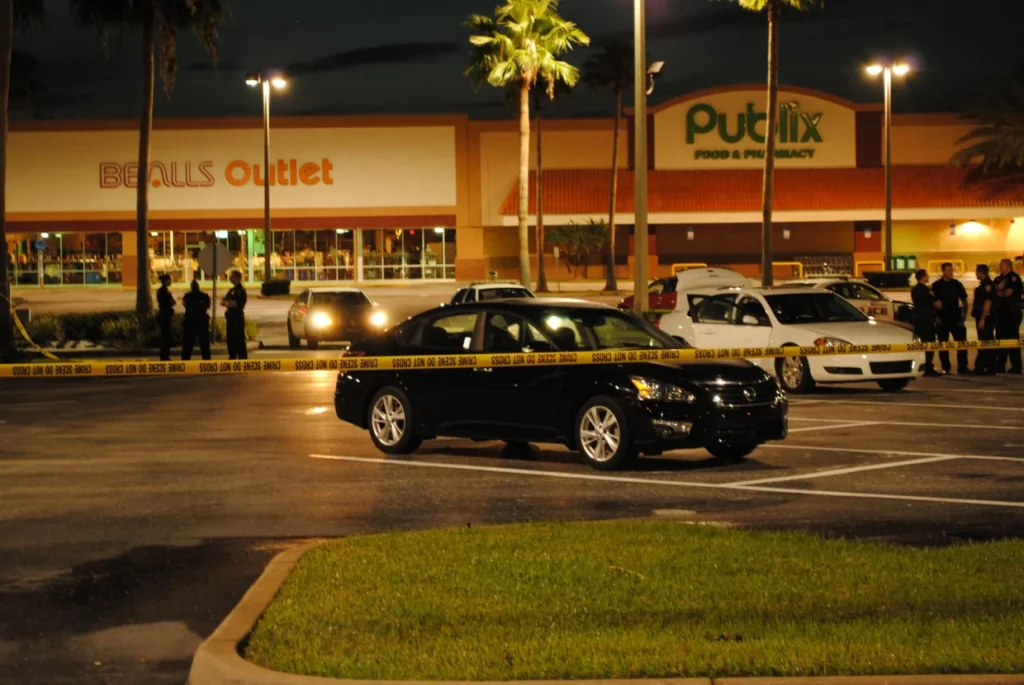
The vehicle was in a Publix parking lot in Melbourne, three days after Diana had disappeared. Harrelson and Kmetz arrived at about 4:30 a.m. When they opened the trunk of the Nissan, they found Diana’s body. The police chief went to Lena’s home in full uniform to give her the news.
An autopsy showed that Diana had been strangled to death and had also suffered blunt force trauma to the head. The case was no longer a missing person investigation but a homicide.
Investigators believed they had a strong case connecting Jones to the parking lot, but one question remained: how he had left Melbourne without a car. They began calling taxi companies to ask whether any had taken a fare to Vero Beach in the previous couple of days, and one had.
At about 8 a.m., after Diana’s car had been left in the lot, a man called for a taxi from down the street. The driver who responded found a man in a red hoodie outside, and he got into the passenger seat.
During the hour-long ride, the driver asked what had brought him to the area, and the passenger said he had come with a friend.
Asked why he was not riding back to Vero Beach with that friend, he said they had argued and that she was very angry with him. The ride ended at Jones’s apartment in Vero Beach, and the driver was also able to pick Jones out of a lineup.
Two days after Diana’s body was found, Jones was formally charged with her murder. He pleaded not guilty and showed no visible emotion in court.
The Case Goes to Trial
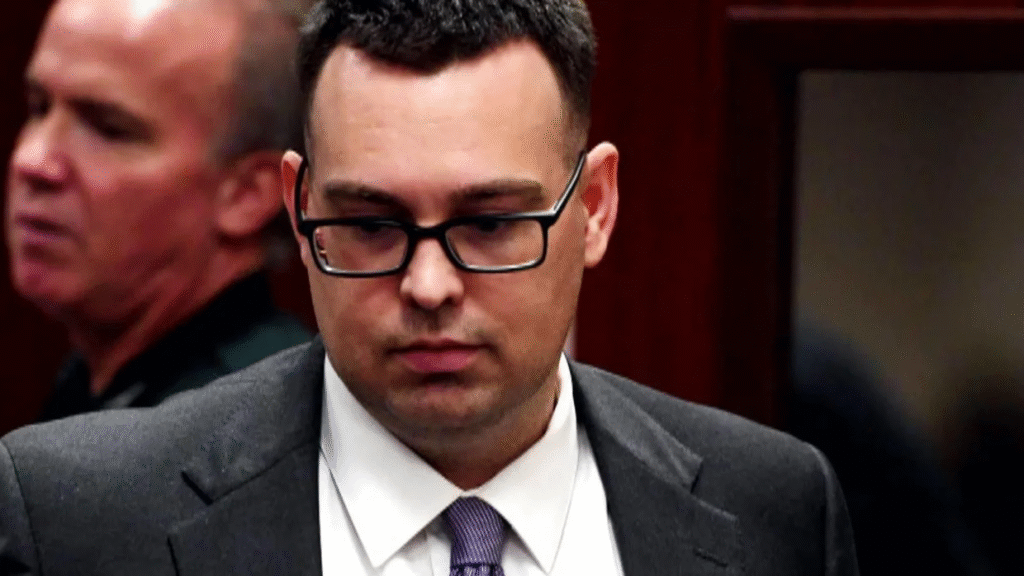
As the investigation widened, investigators learned more about Jones. He held a master’s degree and a law degree and was active in the Vero Beach community.
Stewart Pierce met him at a networking luncheon shortly after Jones moved to Vero Beach in the summer of 2013 and saw him at local charity events, including a walk for the domestic violence organization on whose board Pierce serves.
Pierce described him as clean-cut and likable, and said the murder charge shocked many of those who knew him. He also frequented the local bar scene and made many friends in a short time.
Friends interviewed by investigators described him as ambitious and as one of the smartest people they had dealt with. One friend said he trusted Jones with matters he would entrust only to family.
He had brought wealthy clients to the bank, and internal emails among his employer’s staff praised his performance and leadership. PNC declined to comment when asked whether it knew of his criminal record.
Ellie Sexton dated Jones for a few months shortly before he began seeing Diana. She recalled that he said his sister was dating the country singer Jason Aldean and that he had been adopted by the son of Ronald Reagan.
Another woman who dated him said he claimed to own a penthouse in Fort Lauderdale and a Porsche he did not want to damage, although the car he drove was about 10 years old.
One of them also said that Jones claimed to have played minor league baseball. Sexton said Jones never became physical with her but sometimes showed jealous behavior. On one occasion he screamed in her face while standing very close, and she felt afraid.
Prosecutors said they found a pattern in how Jones treated his former girlfriends. He began as a charming partner and then started telling them what to wear and which friends to see, calling them constantly, appearing at restaurants where they were, and reading their phones.
A couple of the women told prosecutors that he had held them in place for long periods. One of them said her family told her she had escaped death.
Investigators also looked into what Jones had said about his own past. In a personal essay written for a college application, he claimed to have been born into poverty to uneducated and abusive parents, placed with several foster families, and eventually adopted.
Investigators found that his parents had bought him motorcycles and sent him to private school, and that he cut ties with them when they refused to pay for any further education, meaning law school.
In a 2010 email to fellow students in a graduate law program at the University of Miami, Jones claimed that he was battling prostate, pancreatic and stomach cancer, along with other conditions, and could not attend classes regularly. There is no record of any cancer diagnosis.
Prosecutors then had to decide whether to seek the death penalty. They met with Lena and explained that the proceedings could last for years and that if even one juror did not believe Jones deserved death, he would receive a life sentence instead.
Lena wanted the death penalty, saying Jones had lost his right to live when he killed her daughter, and prosecutors pursued it.
In April 2016, a judge in Fort Lauderdale sentenced Jones to five years in prison for violating his probation.
Jones’s trial began in Vero Beach in October 2019, more than five years after Diana’s death. In opening remarks, prosecutors told the jury that Jones had abused Diana mentally and physically during their relationship of about six months.
When Diana raised the things he had done, they said, he turned the blame on her and suggested that the fault was hers.
DiMaio testified, and the jury saw the photographs she had taken after the April incident. Prosecutors said Diana had secretly resumed seeing Jones on and off afterward, which they attributed to the control he held over her.
Prosecutors told the jury that no one knew what the two discussed in the early hours of June 20, after they went to Jones’s apartment. They believed that Diana told Jones that night that the relationship was over.
Diana also had plans to visit a friend out west, and prosecutors said that when Jones learned of them, he lost his temper and beat and strangled her.
They said he had beaten her so badly that he knew he could not let her leave, because she would have been covered in bruises. The state acknowledged that it did not know the time of the killing.
Investigators found two very small drops of Diana’s blood at the threshold of Jones’s garage, where the concrete meets the garage door, and prosecutors said the blood showed that he placed her body in the trunk of her car while it was parked there.
The defense told jurors that no one knew exactly what happened after Jones and Diana left the tavern and raised the possibility that her death could have been an accident.
The jury found Jones guilty of first-degree murder after about 45 minutes of deliberation. Nearly a month later, the same jury met to decide whether he should receive the death penalty.
A prosecutor had warned Lena that the hearing would be hard to sit through, because it would focus on the problems Jones had faced in his life and not on her daughter.
During the sentencing hearing, the defense called medical experts who testified that Jones had suffered multiple blows to the head, possibly from motocross riding as a teenager, and that he had brain damage.
One expert said that damage to his frontal lobe, which regulates decision-making and impulse control, had caused a significant mental impairment.
Prosecutors countered that a person with such an impairment could not balance a checkbook or pay rent, yet Jones had managed multimillion-dollar accounts.
In her victim impact statement, Lena surprised those in the courtroom by addressing Jones directly, asking how anyone could use their bare hands against a person they claimed to love.
Eleven jurors voted in favor of the death penalty and one voted against. Because a death sentence required a unanimous vote, Jones was sentenced to life in prison. As the sentence was read, his attorneys put their faces in their hands, while Jones sat still.
Jones appealed, and on May 26, 2021, a three-judge panel of Florida’s 4th District Court of Appeal upheld his conviction. The panel ruled that the trial judge did not err in admitting evidence of the April 2014 incident, which it found relevant to motive and premeditated intent.
Remembering Diana
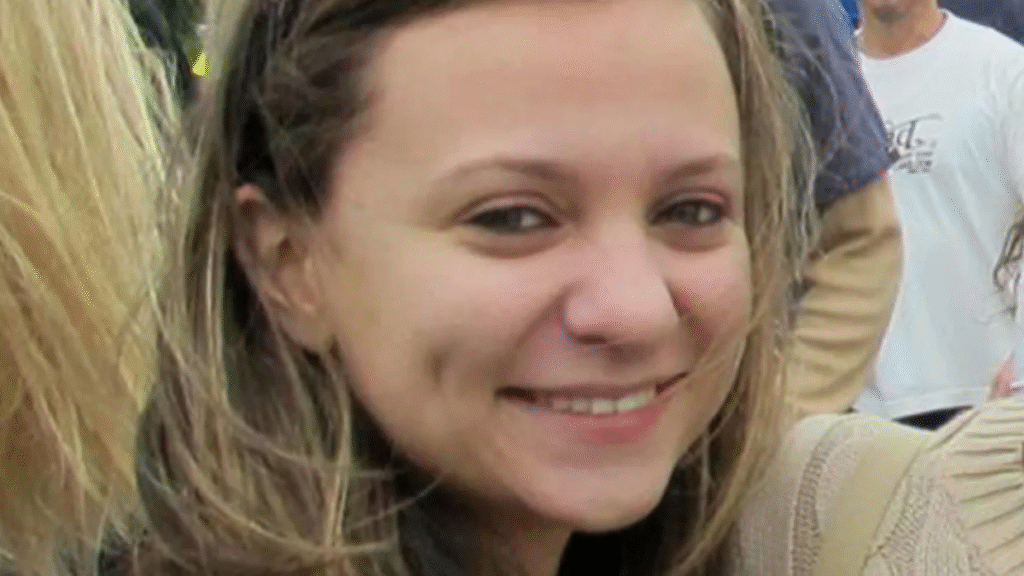
Diana Duve was born in Moldova, a small country in Eastern Europe. At 13, she moved to the United States to join her mother, who had married an American. Diana arrived speaking no English.
Within two months she was attending regular classes, and within a few years no one could have guessed that she was not American.
She earned a nursing degree in 2011. At the time of her death, she worked with cancer patients at Sebastian River Medical Center, where she cared deeply about her patients and their families.
Those who knew her described her as highly intelligent and always motivated, and DiMaio remembers her as easygoing and fun to be around.
Lena has said that Diana was her world. Diana is the first thing Lena thinks of each morning and the last each night, and Lena expects that to be so forever. Diana’s bedroom remains exactly as she left it.
Lena keeps an early photograph of Diana as a baby, in which she looks a little grumpy because she did not want her picture taken. Lena also remembers Diana’s graduation day as a happy one, the start of her adult life.
Lena wants Diana’s story to serve as a lesson to others. If this could happen to Diana, she says, it could happen to anyone, and people who feel that something is not right should listen to themselves.


Recent Comments