
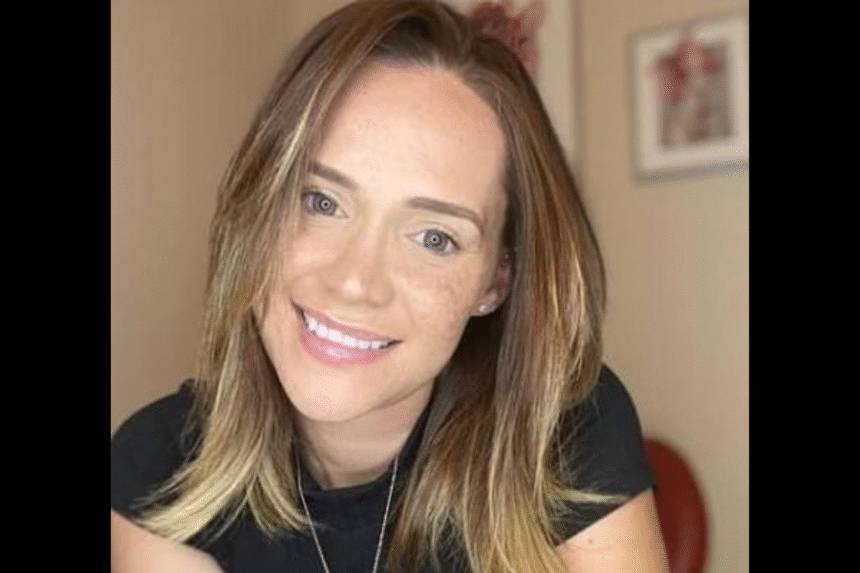
A 911 call from a home in Laredo, Texas, on a September night in 2020 set off a police investigation that would take more than two years to reach a courtroom.
A Marriage Under Strain
Joel Pellot and Maria Muñoz lived on Canyon Oak Drive in Laredo with their two young sons. Joel worked in a lucrative position as a certified registered nurse anesthetist at Doctor’s Hospital, where he used the same medications and techniques as physician anesthesiologists to provide anesthesia to patients of all ages.
A fellow nurse anesthetist described him as smart, hardworking and family-oriented, a man who always wanted to improve and who often showed pictures of his wife and children at work.
By 2018, those who knew him had begun to notice changes. A co-worker recalled that Joel lost weight and then gained muscle, and that he became friendlier with women and flirted more openly.
On social media, he deleted pictures of Maria and began posting images of himself alone, without his sons. He also bought sporty cars for himself and Maria and bragged about them to friends.
Around the time Maria gave birth to the couple’s second son, Joel began pursuing Janet Arredondo, a surgical nurse he had met at work. He took her on vacations to Europe, first to Spain and later to France and Greece.
Maria’s suspicions about her husband’s infidelity were confirmed while he was abroad with Janet, when she found a plane ticket for one of the trips.
Maria was deeply hurt by the discovery. She was treated for severe depression and anxiety and was prescribed medication, and she also turned to a pastor at her church for support.
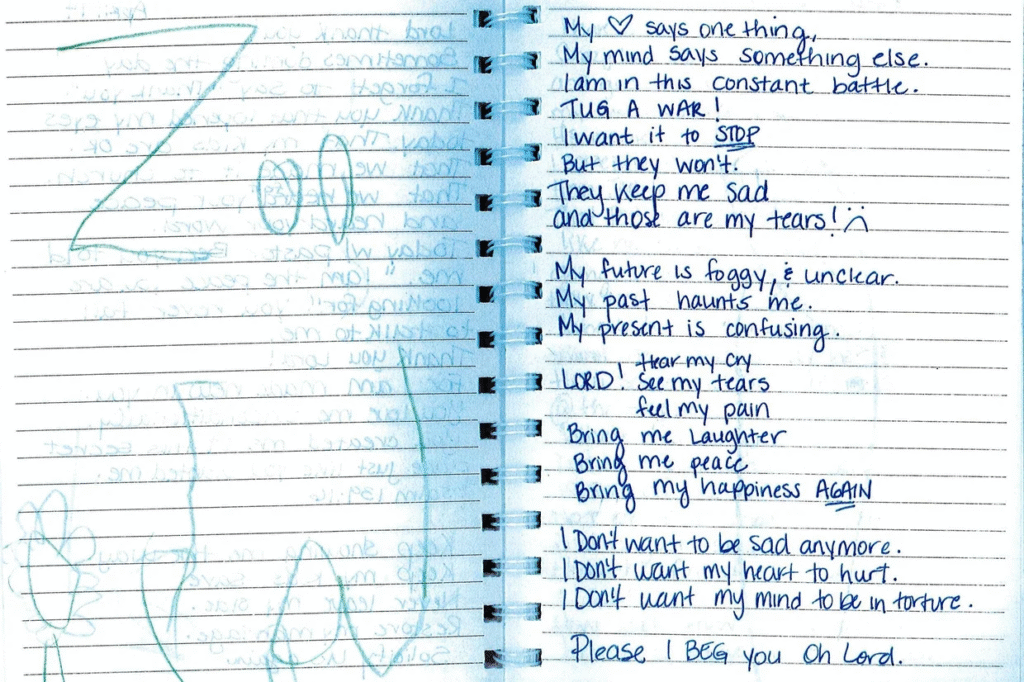
She kept daily journals, in which she wrote about her pain. “I don’t want to be sad anymore,” she wrote in one entry. “I don’t want my heart to hurt. I don’t want my mind to be in torture.” Another entry listed her fears: losing her family and her husband, damaging her children and making the wrong choice.
Maria remained hopeful that her faith could repair the couple’s ten-year marriage. “Lord, this is a lot for me,” she wrote. “All I really want to do is see change in him.” Months after Joel’s European trips, he treated her to a lavish getaway in Las Vegas and bought her Louis Vuitton goods.
The gesture did not end his relationship with Janet. About five months before September 2020, Joel moved out of the family home and into Janet’s residence. About a month later, Maria secretly recorded a conversation with him on her phone, asking what he expected from the marriage.
A Weekend Confrontation and a 911 Call
On Saturday, September 19, 2020, Maria saw her husband’s car outside Janet’s home. She stepped out of the car and rang the doorbell. Janet’s doorbell camera recorded Maria asking Joel, “Do you choose her, or do you choose me?” He answered, “I choose Janet.”
Janet then called the police, and an officer who responded to the home phoned Maria, who had by then left with Joel.
The officer’s body camera captured the sound of Joel berating her in the background. Maria later told her friend Angela Montoya that Joel became violent and punched a windshield, breaking it.
On Sunday morning, Maria texted Joel about hiring a divorce lawyer. He replied, “We can do this with minimal lawyer intervention. It’s too much money.”
Later, he sent her an email that read, “I’m so sad. I’m hurting inside. I want to sit down with you to talk without arguing, a heart to heart.” They agreed to meet on Monday night.
Before Joel arrived that night, Maria sent a message to her friend Yazmin Martinez asking her to pray for her because the couple was going to talk. Yazmin replied that she would. It was the last message Maria sent her.
In the early hours of Tuesday, September 22, Joel called 911. He told the dispatcher that his wife was not breathing and that she might have taken some pills.
The alert that went out to officers described a possible overdose, with a man performing CPR. Laredo Police Officer Gregorio De La Cruz arrived several cycles into the resuscitation attempt.
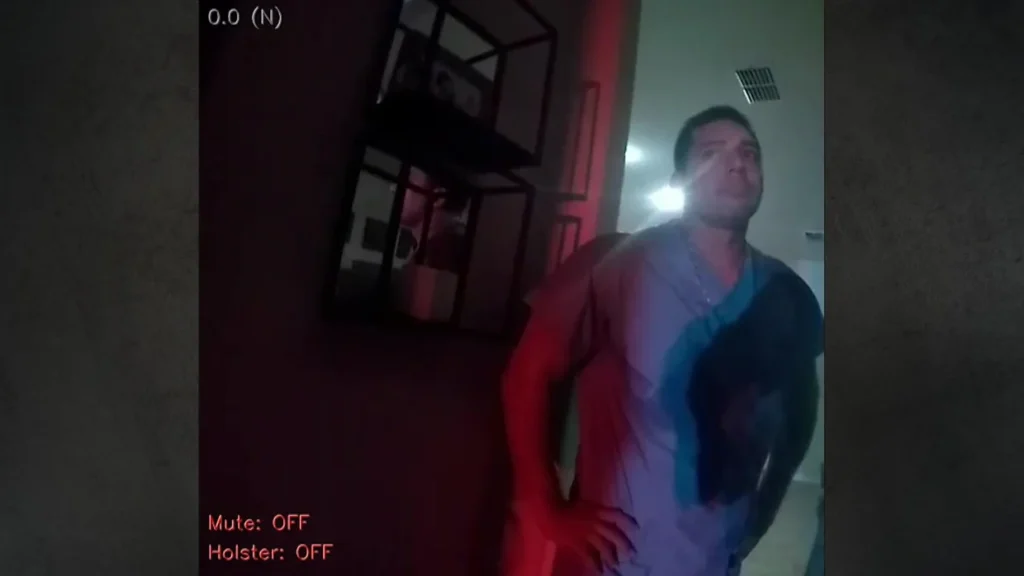
De La Cruz wore a body camera that recorded the events that followed. When he reached the house, Joel appeared at the door, then turned and ran inside and up the stairs.
The officer followed. At the top of the stairs, near the main bedroom, Joel, dressed in teal surgical scrubs, was performing CPR on his wife.
Because Joel was wearing scrubs, De La Cruz assumed he had a higher level of medical training and asked whether he should help. Joel stopped at once, and the officer took over the chest compressions.
Maria was still warm to the touch. When De La Cruz asked what she had taken, Joel said she had been very depressed lately. The officer saw no drugs nearby, although in overdose cases pills or syringes are usually close by.
Joel then went to the bathroom, opened a medicine cabinet and returned with a container of clonazepam, a drug often used to treat anxiety. The prescription belonged to Joel, not Maria. De La Cruz tossed the container aside and continued CPR.
Joel also told the officer that the couple’s sons were asleep in separate bedrooms nearby. More paramedics and officers arrived, and De La Cruz sent Joel downstairs to the kitchen.
De La Cruz then noticed that the pill container he had tossed aside was missing. He asked Joel about it, and Joel came to the first landing of the stairs and tossed it to him.
De La Cruz also noticed that Joel was sweating heavily, far more than the officer, who was wearing a vest, a gun and nearly 20 pounds of gear. The officer considered whether Joel was under the influence of drugs.
At 3:58 a.m., roughly three hours after Joel’s call to 911, Maria, 31, was declared dead inside the home. Officers escorted the boys, including five-year-old Alejandro, outside.
Questions and an Autopsy
Authorities immediately opened a death investigation. Sergeant Luis Mata Jr., the lead detective, reached the home about 30 to 45 minutes after being called. De La Cruz briefed him, and Mata began questioning Joel.
He found Joel’s answers incomplete, and when he asked what had happened, Joel replied that he lived a very private life and did not want those questions coming out.
Mata did not yet know whether Maria had died by suicide or accidental overdose, or whether her husband was somehow involved. He wanted to search the house, but Joel first refused, saying he was a very private man.
Mata told him that was his right but that the detective would then ask the district attorney for a search warrant. Joel eventually gave his consent. During the search, investigators also found Maria’s daily journals.
Mata directed officers to place Joel in a police cruiser and take him to the station. Before the interview began, Mata watched him on camera hitting walls and moving furniture. The noise was loud enough to alarm people in the dispatch room down the hall.
Meanwhile, Angela Montoya and her husband, Louis Ayala, went to the house to care for the boys.
Shortly after 4 a.m., Mata interviewed Joel, who said he had given Maria the clonazepam. Asked whether Maria could have swallowed them all, he said he did not know how many pills the container had held.
When Mata asked him to walk through his actions step by step, Joel responded several times with the question “What did I do?” When Mata asked about Janet, Joel said that Maria had known about the relationship for a long while.
Joel’s account was that he and Maria had been intimate, that he then took a shower and believed she had fallen asleep, and that about ten minutes later he found her unresponsive on the bed, though he said he was not entirely sure of the timing.
Investigators examined the master bedroom shower, which he said he had used, and found it completely dry.
Elsewhere in the house, investigators found a syringe wrapper on the floor and a needle catheter on the stairs. Syringes and IV equipment in a medical bag were also found in the home. When Mata asked why syringes would be in the house, Joel said he did not know and then tapped his bicep.
Mata called Janet Arredondo at 6:30 that morning and asked her to come to the station. She described Joel as her boyfriend and said they had been dating for almost two years.
Mata told her that Joel’s wife had died the night before, that nothing so far suggested foul play and that an autopsy was pending. Janet said she knew of no drug use by Maria, only that Joel had described his wife as very depressed.
She asked if Mata was saying Maria had overdosed. Mata told her that Maria’s family might suspect either Joel or Janet of involvement, so investigators had to rule her out. Asked whether Joel had ever said he wanted to harm his wife, Janet said no.
An autopsy was performed about eight hours after Maria was declared dead. The medical examiner found no pill residue in her stomach.
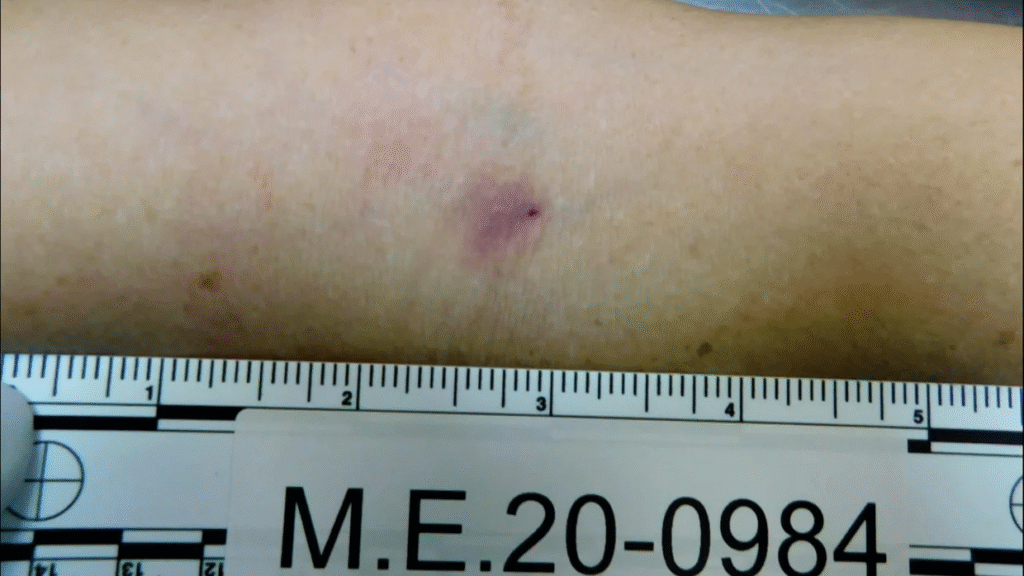
The only notable mark on her body was a tiny puncture in the crease of her right elbow, similar to a blood draw, which puzzled both the medical examiner and the investigators. There were no other signs of drug use.
The autopsy report listed the cause of death as mixed drug intoxication. The medical examiner could not say how the drugs had entered Maria’s system, but she ruled out suicide after speaking with Maria’s friends and reading her journal.
In an entry from the day before her death, Maria wrote about what she wanted and about moving forward.
Toxicology Results and an Arrest
When the autopsy results became known, Dr. John Huntsinger, an anesthesiologist and Joel’s former boss, became suspicious. He called Mata with his concerns and urged him to order a detailed toxicology screening to determine which drugs had killed Maria and how they had entered her body.
A large crowd of family and friends gathered at First Baptist Church in Laredo on a Sunday afternoon to mourn Maria.
Joel, her estranged husband, attended, weeping beside the casket and kissing her. Yazmin said she was angered by the display, because Maria had suffered and cried so much.
Investigators also reviewed De La Cruz’s body camera footage from that night. The footage showed that after De La Cruz tossed the container aside, Joel reached over and put it back in his shirt.
Mata shared his concerns with the Webb County District Attorney’s Office. Prosecutors there knew the case would be hard to prove, since even the medical examiner could not say exactly how Maria had died.
The medical examiner told them she could not say for certain that the death was a homicide, only that Maria’s bloodstream contained a combination of dangerous drugs. She did not know who had given them to her, or whether Maria had taken some earlier.
Nearly four months after Maria’s death, Mata and De La Cruz finally received the toxicology results they had been waiting for. They showed no trace of clonazepam, the drug Joel had said she took.
Instead, the report listed seven other drugs in her system: morphine, Demerol, Versed, propofol, ketamine, lidocaine and naloxone. Most of them are drugs used during surgery.
Dr. Huntsinger was especially surprised to see propofol on the list. It cannot be bought at a drugstore and must be obtained from a hospital. Most of the other drugs could be taken by mouth, but propofol is usually injected through an IV by someone else.
The drug relaxes a patient deeply, wears off quickly and can stop a person’s breathing if too much is given. The level in Maria’s blood was the highest he had seen. He said he believed Maria’s death was caused by propofol.
Authorities obtained an arrest warrant, and De La Cruz, who had tried to save Maria, returned to Joel’s home to carry it out.
When officers knocked and announced themselves, Joel came to the door, said “I’m here” and put his hands behind his back. He did not resist arrest. At the station, he was booked on a murder charge and told officers to call his attorney.
Authorities believed Janet Arredondo knew more than she had shared in her first interview, and they obtained a warrant to search her home. They then offered her immunity from prosecution in exchange for more information. Janet agreed to a second interview, attended by her attorneys.
Janet told police that Joel had often brought medical drugs to her home, some for his own recreational use. They included ketamine, morphine, lidocaine, fentanyl and propofol.
Her information about propofol moved the case forward. Janet said Joel had described the night Maria died. He had gone to the house for a heart-to-heart talk and then injected her, not to kill her, he said, but to calm her down because she was erratic.
He also told her he had gotten rid of some of the medical equipment he used on Maria before first responders arrived.
Joel had been released on bail, and after Janet’s interview, prosecutors had him arrested again and added a charge of tampering with evidence. He posted bail again and wore an ankle monitor while awaiting trial.
The Trial, the Verdict and the Appeal
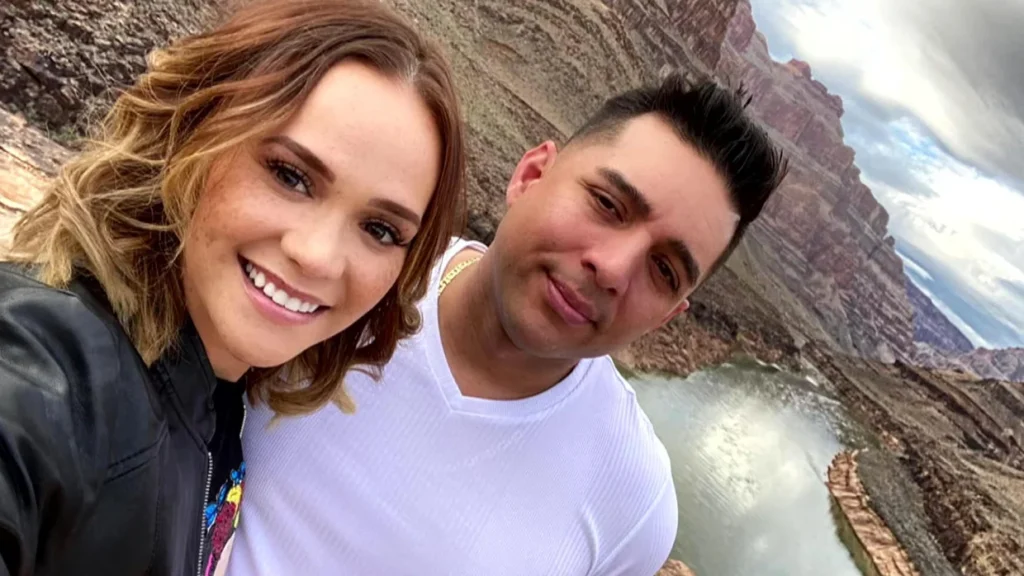
After Joel’s second arrest, the district attorney assigned a team of four prosecutors, led by the chief assistant district attorney, to the case. They became convinced that Joel had methodically planned Maria’s death and that she had suffered emotionally in the months before it.
They saw more than a marriage troubled by an affair: in their view it was domestic violence, a power struggle in which Maria had no power. They pointed to her journals and her recording as evidence.
One entry read: “Life is so unfair. My husband, the man I love so much, is causing me so much pain. I want to know what it is that you want me to do.”
Prosecutors knew the journals and the recording would not be enough on their own, and the central question was how Joel had gotten Maria to take so many drugs. Their theory was that Joel first put four sedatives into Maria’s favorite drink, coffee: ketamine, Versed, morphine and Demerol.
After she passed out, they said, he put an IV needle in her arm and injected a deadly dose of propofol. They also believed he waited to call 911 until it was too late for anyone to bring her back.
Joel’s trial began in Webb County in March 2023, two and a half years after Maria’s death. Many members of the medical community attended the proceedings.
Prosecutors told jurors that the evidence would show Joel had the motive, the intent and the means to kill his wife, and they called 15 witnesses to argue that he had carefully and intentionally selected the drugs.
Their star witness was Janet Arredondo, who told the jury what she had told investigators. They said his motive was financial: he did not want to pay for a divorce and split his assets.
Joel, wearing a blue suit and a dark gray tie, listened as his defense team presented its case. The defense acknowledged that Joel was with Maria when she died, but said he was trying to save her, not to kill her.
His attorney told jurors that Maria had been terribly depressed and had been drinking and abusing drugs for months, and that she was already on something when Joel arrived.
They said Joel gave her medication to calm her down and, upon finding her unconscious, gave her naloxone, a drug used to reverse opioid overdoses.
They argued that the naloxone showed Joel had not wanted her dead, and they called her death a terrible accident caused by whatever Maria had taken combined with the medication he injected.
Prosecutors countered that naloxone does not reverse propofol, which was what stopped Maria’s heart. The defense never explained to the jury how the propofol got into her system.
They said the amount of medication in her body was enough to carry a person through two major surgeries and could not have been accidental.
In their view, Joel gave her that much to be sure. Prosecutors added that there was no evidence that Maria abused alcohol or drugs, and that she loved her sons too much to leave them behind.
Joel did not testify, but his mother did, appearing for the defense. Under cross-examination, she acknowledged that Maria had told her how sad she was about the marriage.
She said she had told Maria that everyone has a limit, and that her own home was open to Maria once she decided she no longer wanted to be with Joel.
After eight days of testimony, the jury received the case. It took jurors less than an hour to find Joel guilty of murdering his wife and of tampering with evidence.
The verdict came on March 30, 2023, and he was sentenced the same day to life in prison for murder, ten years for tampering with evidence and a $10,000 fine.
He was escorted out of the courtroom in handcuffs. His attorney, Roberto Balli, said afterward that the defense would appeal.
Joel’s appeal went to the Fourth Court of Appeals in San Antonio. He argued that the evidence did not prove he intended to kill Maria, that the trial court should have excluded the statements he made to police on the night of her death because he had been unlawfully detained, and that the court should have allowed the jury to consider a lesser offense.
On March 19, 2025, the court affirmed the trial court’s judgment, leaving both convictions and the sentence in place.
On September 25, 2026, Joel filed a petition in the U.S. District Court for the Southern District of Texas, asking a federal court to review his state conviction. As of early October 2026, the court’s docket listed only the petition and a supporting memorandum.
Remembering Maria Muñoz
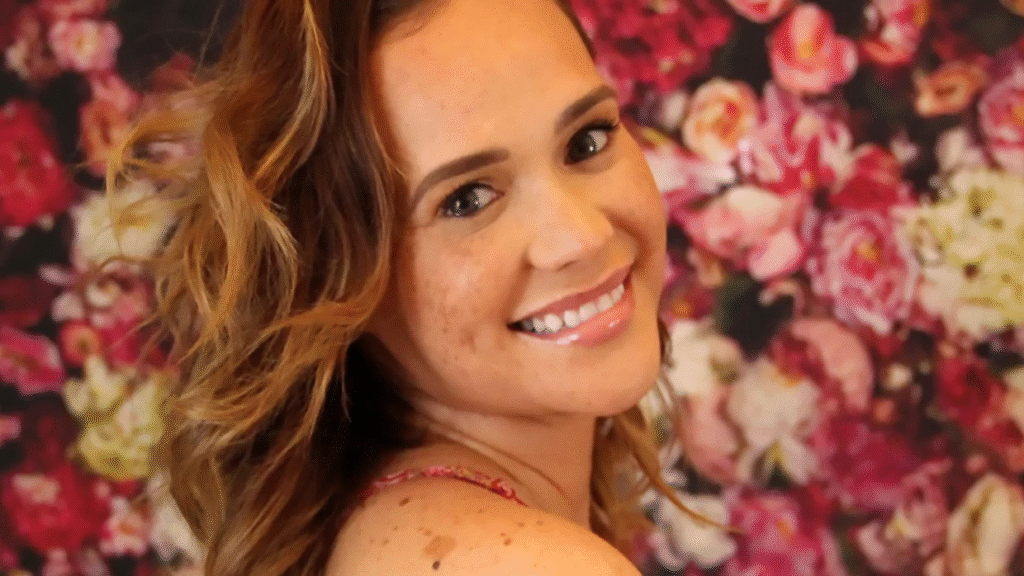
Maria Muñoz was a nurse in Puerto Rico, where she met Joel, a nursing student who was 11 years older. The couple married, and a few years later they moved to Laredo for Joel’s new job.
In the United States, Maria planned to return to her profession. She told Yazmin that she was studying for the test that would allow her to work as a nurse there. In the meantime, she enjoyed being a stay-at-home mother.
She took her sons to the park, read to them before bed and was learning to play the piano. Her younger son, Valentino, was about to turn two, and Yazmin remembered a dedicated mother who adored her boys.
Her journals also recorded her hopes. She wrote that she wanted to be a good mother, one who was present, engaged and involved in her sons’ lives, and that she could not wait to do more with them in the future.
She also wrote, “I want a life that’s mine, different and unique, a life that’s balanced with every emotion, but a happy, fulfilling life.”
Prosecutors said that Maria herself became the most important witness at the trial, because her journals showed that the scars she carried from the relationship were healing.
As one of them put it, the worst injuries sometimes leave no mark, and the injuries to the heart and the mind cannot be seen, but Maria had told them about hers. Those who knew her called her a wonderful soul, a great mother and an amazing person.


Recent Comments