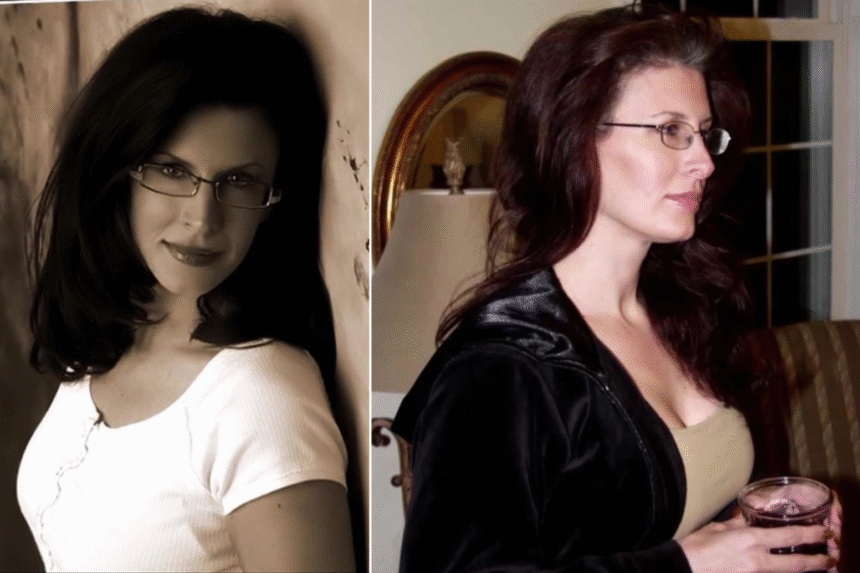
On a December night in 2001, a shooting inside a small Iowa home was ruled self-defense. Ten years later, new evidence turned the case into a first-degree murder conviction.
The Night of the Shooting
On the afternoon of December 13, 2001, twenty-year-old Dustin Wehde, a neighbor of the Roberts family, visited their home. Wehde lived nearby, regularly mowed the family’s lawn, and attended the same church as the Roberts.
A family friend named Marie also stopped by that afternoon; she had originally planned to spend the night, since both her husband and Tracy’s husband, Michael Roberts, were traveling for business, but a scheduling conflict involving her son’s baseball commitments led her to leave earlier than planned.
Tracey later said she had never felt entirely comfortable having Wehde in the house, though she allowed him to stay that afternoon. Marie’s arrival briefly interrupted the visit before Wehde left; he returned to the house later that evening.
With Michael away, Tracey was alone with her three children: eleven-year-old Bert, from her first marriage, and two younger children from her marriage to Michael, a son named Noah and a daughter named Mason.
Around 6 p.m., while bathing Mason, Tracey said she heard a noise downstairs and assumed her husband had returned early. Instead, she said she encountered Wehde and a second, unfamiliar man inside the house.
She gathered her children into one bedroom but was pulled away by her hair before she could join them. She said she attempted to reach a gun safe but was choked unconscious with a pair of pantyhose.
When she regained consciousness, she could hear her children screaming and the two men attempting to force the bedroom door open.
Tracey said she then made her way to the gun safe and, after several failed attempts, retrieved a handgun. She opened fire, and Wehde was pronounced dead at the scene from multiple gunshot wounds.
She said the second man fled the house before help arrived. Bert later told investigators that he had grabbed a baseball bat to defend the room and nearly struck his mother when she reached the door; his account of the night otherwise matched the version his mother gave to police.
When police and emergency medical personnel arrived at the home, they found the children crying and Tracey in visible distress, though all three were physically unharmed.
Officers immediately began working to identify the second man Tracey described, treating the case as an active home invasion. Tracey was taken to the hospital for breathing difficulties and gave officers a description of the unidentified man.
Investigators noted that jewelry worth an estimated $20,000 to $30,000 had been left untouched throughout the house, and Tracey told police that the intruders had not seemed interested in money.
She said she believed the men had come specifically for her and described the shooting as an act carried out to protect her family.
A Public Story Takes Shape
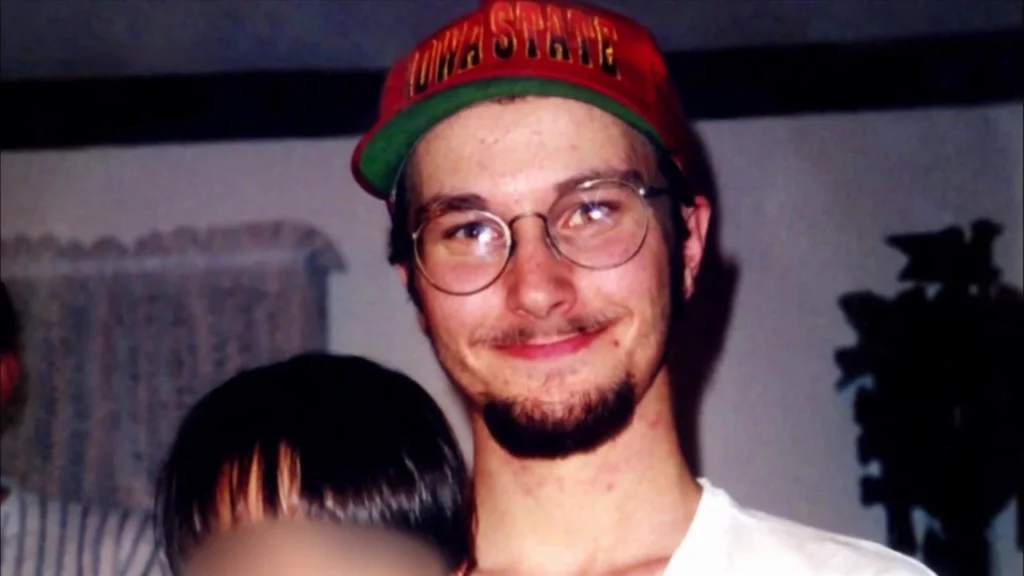
Tracey was released from the hospital a few days later, and the family soon left for a trip to Australia, Michael’s home country, which had been planned before the shooting took place.
While the family was away, investigators searched Wehde’s car, parked outside the Roberts home, and found a pink spiral notebook containing handwritten entries that described a man named John Pitman, a plastic surgeon and Tracey’s first husband, as having arranged for Wehde to kill Tracey and her son Bert.
After returning from Australia, Tracey began speaking publicly about the shooting, first with the publisher of the Storm Lake Times and later in an appearance on the Montel Williams Show, telling both that she believed Pitman was behind the attack.
Michael offered a $10,000 reward for information about the second intruder, and police issued public alerts describing the man, though he was never identified or located.
In the days after the shooting, several residents of Early regarded Tracey as having bravely defended her children, and local and regional media outlets covered the case extensively as her account spread.
Investigators found it difficult to establish any connection between Pitman, who lived at a distance and had no known relationship with Wehde, and the shooting itself.
Without evidence to contradict Tracey’s account, the case was closed as an act of self-defense, and no charges were filed. Tracey and Michael remained married, and the family continued to live in Early.
Cracks in the Case
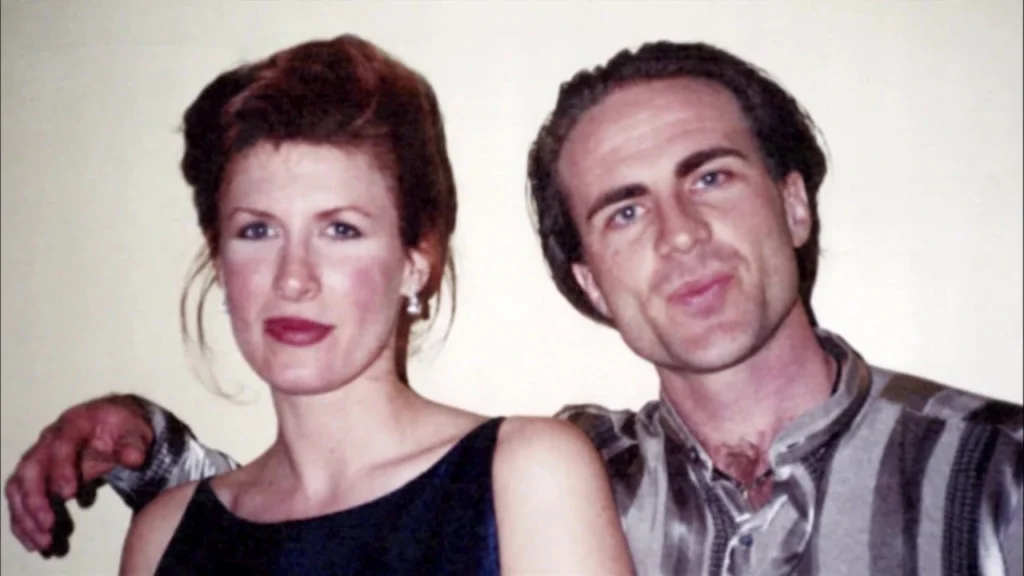
Nearly a year later, on Thanksgiving Day 2002, Wehde’s father, Brett Wehde, was found dead by suicide near his son’s grave. He left behind a note describing the grief he felt over his son’s death.
In late 2003, the Wehde family filed a wrongful death lawsuit against Tracey, though the case was dismissed in 2005.
During this same period, Tracey and Michael’s marriage began to deteriorate. Reports of infidelity became frequent, and disputes between the couple sometimes escalated into physical altercations that caused damage inside their home.
On several occasions, these incidents led to Michael being taken into police custody, only for Tracey to arrange his release soon afterward. Michael later said that on several occasions during the marriage, he believed he had come close to losing his life.
As the marriage continued to unravel, he began to question the account Tracey had given of the 2001 shooting.
He raised his concerns directly with investigators, who confirmed that no fingerprints had ever been recovered to support the presence of a second intruder inside the house.
In 2004, Michael filed for divorce. Tracey responded by accusing him of abuse, and separately told police that Michael had confessed, while talking in his sleep, to arranging the 2001 attack himself.
The divorce was finalized in 2007, with Tracey retaining custody of the children and relocating to Omaha, Nebraska. Michael moved to the area to remain close to his children but eventually sought a restraining order against Tracey.
In 2009, Tracey told the local sheriff’s office that Michael had planted a photograph of Wehde’s body inside her car.
Investigators found no evidence to support the claim and concluded that Tracey had likely fabricated it ahead of upcoming child support proceedings. She later told the lead detective on the case that he had “made her list.”
Around the same period, Tracey was convicted of welfare fraud and sentenced to probation. By 2010, she had legally changed her name to Sofia Therese Corina Baroni Edwards and had begun using a British accent in her personal and business affairs.
These growing doubts, combined with Michael’s account to investigators, would later become central to a renewed examination of the 2001 shooting.
The Case Reopens
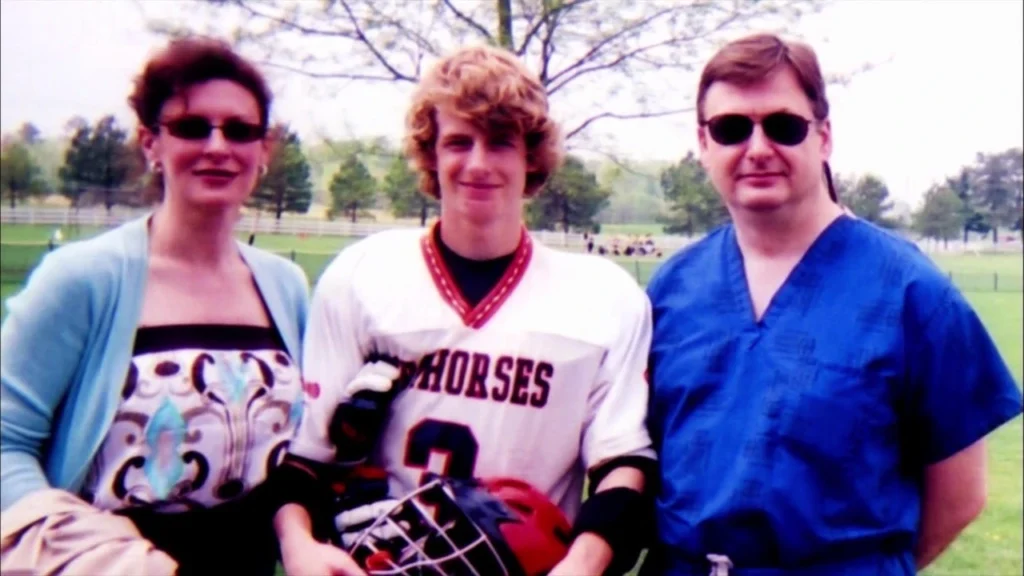
Several years after the shooting, Sac County Attorney Ben Smith reopened the investigation into Wehde’s death, drawing on a fuller review of forensic evidence that had not been closely assessed during the original inquiry.
The decision to revisit the case followed years of accumulating doubt, including the concerns Michael had already raised with investigators.
This review determined that Wehde had been shot in the back of the head while lying on the floor, a finding inconsistent with a claim of self-defense.
Investigators also established that, unlike many of their neighbors, the Roberts family routinely locked their doors, and the doors showed no signs of damage or forced entry on the night of the shooting; by Tracey’s own account, the two intruders had also entered unarmed.
On July 27, 2011, Tracey Richter, then forty-five, was arrested in Omaha and charged with first-degree murder, a class A felony, in Wehde’s death. She was held at the Douglas County Jail.
The arrest complaint stated that Wehde had been shot with two separate handguns and alleged that Tracey had orchestrated the contents of the notebook discovered in his car years earlier.
Although the handwriting in the notebook matched Wehde’s own, investigators concluded that he had written the entries under duress, at Tracey’s direction, rather than kept them voluntarily, and that she had planted the notebook to implicate Pitman.
According to the sheriff’s office, only investigators and Tracey knew the specific details of that planted evidence. Members of Tracey’s family, including her brother, a police detective in Chicago, publicly maintained that her original account of two intruders was accurate.
At the time of her arrest, Tracey was found in possession of documents to legally change her name once more, this time to Heidi Joanna Frostbakker, a name nearly identical to that of Michael’s new wife.
Her arrest set the stage for a trial that would examine the events of December 2001 in far greater detail than the original investigation had.
Trial, Conviction, and Its Aftermath
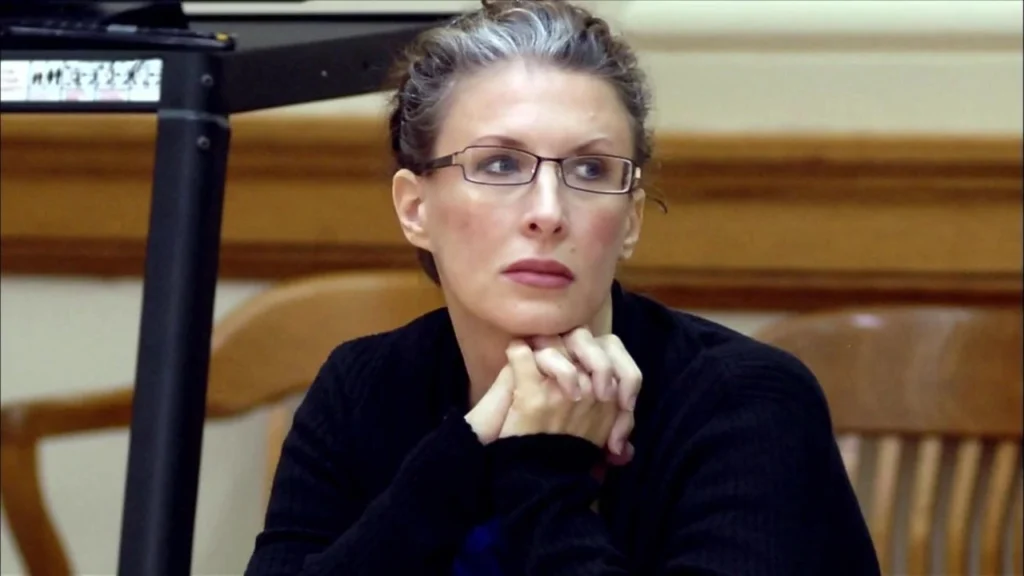
Tracey’s trial opened in Fort Dodge, in Webster County District Court, after her defense won a change of venue from Sac County; the trial lasted roughly two weeks.
Prosecutors argued that she had not wanted to lose an ongoing custody dispute with John Pitman and disliked him, and that she devised a plan to implicate him using Wehde’s presence in her home that day.
According to the prosecution, Tracey had invented a reason for her friend Marie to leave the house that afternoon, clearing the way for her plan, and had purchased the notebook found in Wehde’s car in advance.
She invited Wehde back to the house later that day and, at gunpoint, forced him to write entries describing two possible plans attributed to Pitman: to kill Tracey and Bert outright, or to stage what would appear to be a murder-suicide in which Tracey had killed her son and then herself.
The entries were undated, which prosecutors said indicated they had been written to order rather than kept as an ongoing record. Prosecutors said Tracey then killed Wehde and placed the notebook in his car to support her account.
They noted that Wehde had been shot nine times, including three times in the head, and that the final head shot had come roughly ten minutes after the earlier wounds, suggesting Tracey had waited to ensure he was dead before officers arrived.
They also pointed out that her injuries from the night of the shooting did not match her claim of having been choked with pantyhose.
At trial, Pitman testified that he had never known Wehde, and the defense countered by suggesting the second intruder might instead have been a man with whom Wehde’s mother had had an affair, though no such person was ever charged.
On November 7, 2011, a jury found Tracey Richter guilty of first-degree murder. At her sentencing on December 5, 2011, she told the court that she had considered every possible version of events and believed the Wehde family deserved justice, but she maintained that she had not killed their son.
She was sentenced to life in prison without the possibility of parole, the mandatory sentence for first-degree murder under Iowa law.
While incarcerated, Tracey wrote to James Landa, a Wisconsin inmate serving time for sexually assaulting a 12-year-old girl, in an apparent attempt to solicit testimony that would help her win a new trial; the letter included diagrams of the crime scene and personal information about her children that alarmed investigators, though prosecutors said it did not amount to a separate crime.
She also used an online complaint website to publish negative claims about people she believed had wronged her, including Pitman and Roberts; the site required a non-refundable fee to remove any post, regardless of its accuracy.
Tracey also maintained a close relationship with her son Bert, who continued to gather information about Pitman and Roberts on her behalf.
Richter’s fight to overturn her conviction has so far failed at every stage. The Iowa Court of Appeals affirmed her conviction on direct appeal in January 2013, and the Iowa Supreme Court denied further review that March.
She later filed for postconviction relief, arguing her trial attorney had been ineffective; the Iowa Court of Appeals rejected that claim as well in March 2017, finding “overwhelming evidence” of her guilt.
In the years just after her conviction, a judge also ordered that her two younger children continue periodic visits with her in prison while her appeal was pending, a ruling the prosecutor who convicted her publicly called “mind-boggling” given the nature of her conviction; Michael Roberts appealed the visitation order.
Following Tracey’s conviction, Michael was granted full custody of Noah and Mason and moved with them to California, while Tracey retained visitation rights. In 2014, after further legal proceedings, Michael and the children relocated to Brisbane, Australia.
Bert, whose legal surname is Pitman, testified in his mother’s defense at trial and has continued to maintain that her original account of the shooting was accurate.
As of the most recent reporting, Tracey Richter remains incarcerated at the Iowa Correctional Institution for Women in Mitchellville, serving her life sentence without the possibility of parole.
Early Life
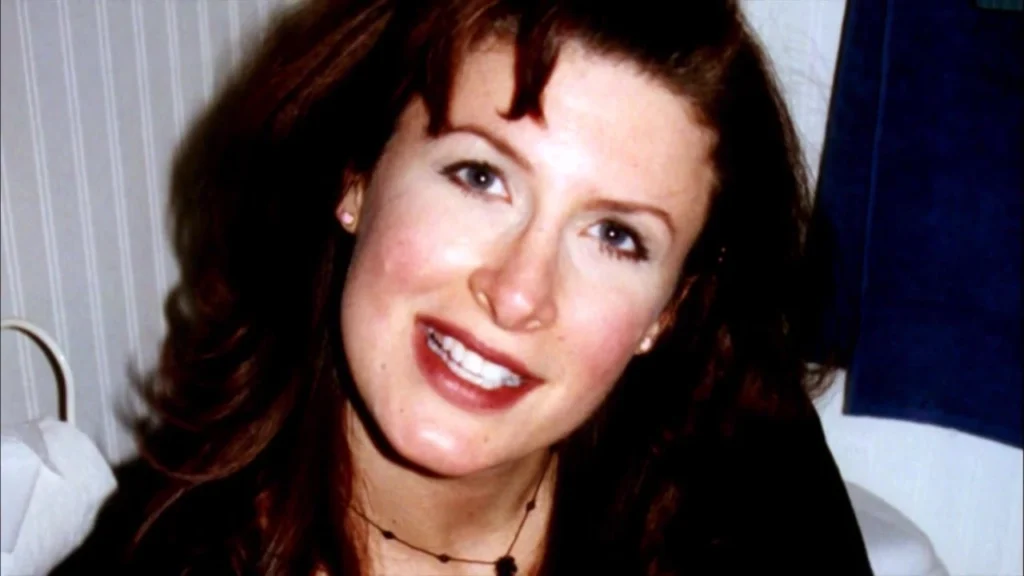
Tracey Richter was born in Chicago in May 1966. She was an academically strong student and earned a scholarship to study radiography, a field involving medical imaging; it was through this work that she would later meet Chicago oral surgeon Joseph LaSpisa.
During her studies, she met John Pitman, a plastic surgeon in training, and the two soon became engaged. The couple later moved to Denver, Colorado, where John began his medical residency.
Tracey and John married in 1988. Soon afterward, John’s parents reported that their credit cards had been stolen and thousands of dollars spent; investigators’ suspicions centered on Tracey, and the incident created lasting friction between her and John’s family.
John’s medical training required long hours, and the strain this placed on the marriage led to frequent arguments. In 1990, the couple had a son, Bert.
Two years later, in 1992, during an argument with John, Tracey retrieved a handgun and fired it; she later pleaded no contest to discharging a firearm and received a probated sentence, with six months of psychological treatment as part of her case.
John later grew suspicious that Tracey wanted to increase his life insurance policy and hired a private investigator to observe her activities; the investigator’s findings indicated that Tracey was involved with other men during this period.
That same year, the family relocated to Chicago. During the move, the family’s three dogs and four cats, which Tracey had been responsible for transporting, were instead sold to a research laboratory.
Around this time, Tracey accused John of sexually abusing their three-year-old son, Bert; a judge later dismissed the allegation for lack of evidence. The marriage ended with the divorce finalized in 1996.
Tracey was awarded custody of Bert, and John was ordered to pay $1,000 a month in child support. In the years that followed, Tracey focused on raising Bert while beginning new relationships.
In 1997, she began dating Joseph LaSpisa; the relationship soured into a four-year legal dispute in which Tracey accused him of sexual assault and sought a $150,000 settlement, while LaSpisa accused her of extortion and forgery.
The case was eventually settled out of court, and LaSpisa said the dispute damaged his career and led to a temporary suspension of his dental license.
Around the same time, Tracey met Michael Roberts, an Australian entrepreneur, online, and the two married just eighteen days after meeting in person. Michael relocated permanently to the United States.
Early in the marriage, Tracey was unfaithful, but Michael remained supportive of her through her ongoing custody disputes with John.
In 1998, Tracey and Michael moved to Early, Iowa. The couple had two children together, Noah and, in 2000, Mason.
They opened an information technology business and became active members of the local community and church, appearing to their neighbors as a stable, well-established family.
It was against this outwardly settled life that Dustin Wehde arrived at the Roberts home on the afternoon of December 13, 2001.