
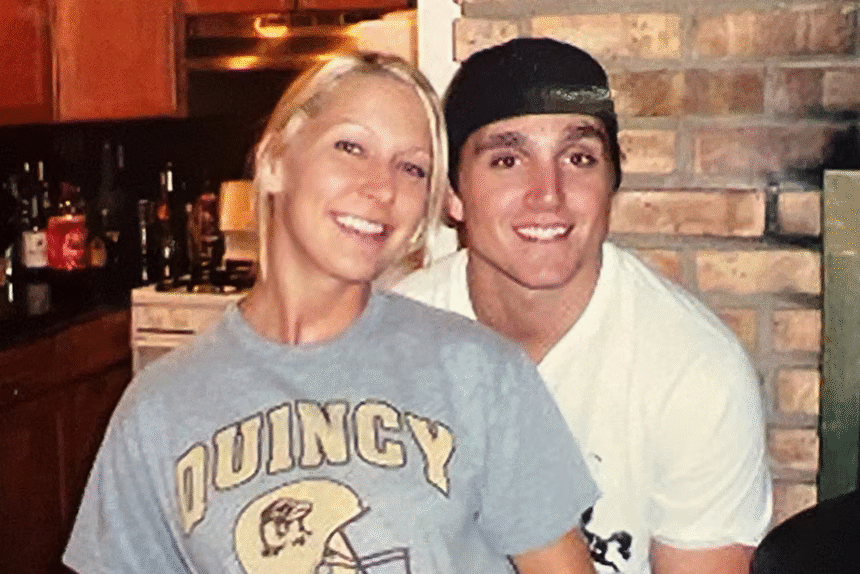
In February 2023, a Quincy, Illinois nurse and mother of three was found shot to death inside her own home, setting off a monthslong investigation into who was responsible.
A Marriage Unravels
Becky and Tim Bliefnick met as students at Quincy University, though they did not begin dating until two years after graduation. The couple later married, moved in together, and started a family that would grow to include three sons.
Becky left her career in pharmaceutical sales to become a stay-at-home mother, while Tim built a career in the recycling industry. For the first several years of the marriage, the relationship was described as happy.
That began to change over time, and tension increased further after Becky decided to return to school to become a nurse.
Tim later said his decision to file for divorce stemmed partly from concern over the stress her nursing career placed on her, saying she had grown more impatient, particularly with their children, and that the change had created conflict between them.
In January 2021, after eleven years of marriage, Tim filed for divorce. According to divorce filings, the couple disputed nearly every aspect of the separation, including finances, the marital home, and custody arrangements for their sons, who split time between both parents’ homes under a temporary agreement while the case was pending.
A close friend of Becky’s, Shannon Zanger, later said that during the marriage, Becky often described feeling as though she carried the household responsibilities largely on her own.
In the months that followed, Becky began telling friends she was afraid of Tim. In text messages, she described him screaming in her face, shoving her in front of their children, and throwing objects across the room.
She also wrote that she believed he had serious mental health problems and was becoming increasingly vengeful and unpredictable.
Tim, for his part, sought a protective order against Becky, alleging that she had stalked and harassed him and pointing to a confrontation between the two at a school parent-teacher event.
As evidence, Tim submitted a video he had recorded of the argument, which showed the two disagreeing but did not show any physical contact between them. A judge declined to grant that order.
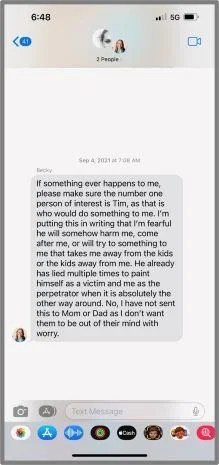
Days after Tim filed for that protective order, and more than a year before her death, Becky sent her sister, Sarah Reilly, a text asking that if anything ever happened to her, authorities make Tim the first person of interest.
She made similar comments to friends, a fear that intensified after a nurse she knew was killed by her own partner. Sarah encouraged Becky to contact a domestic violence organization, and Becky eventually filed for her own protective order against Tim, alleging that he had entered her home without permission and misrepresented their interactions to others.
That request was also denied, though a judge did order the two to stay away from each other’s residences except when exchanging their children. The same order directed Tim to return a 9mm handgun, a CZ 75 pistol, that Becky had given him years earlier as a gift for recreational shooting, since the weapon was registered in her name.
Tim did not return it, later stating he had not had possession of the gun in three years. The couple’s divorce case was scheduled to go to trial in the final week of February 2023. The Illinois Appellate Court later noted that Becky was expected to be a witness in the upcoming divorce proceedings.
Signs of Danger
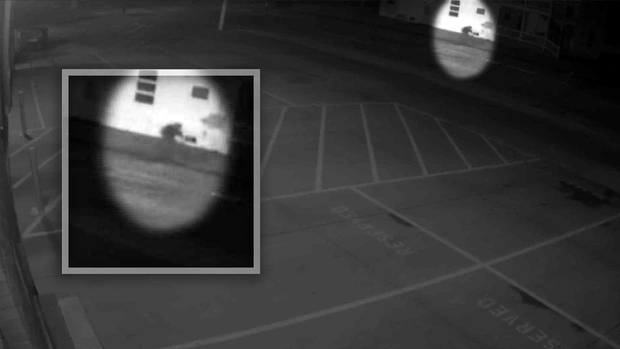
In the weeks before Becky’s death, her neighbors began noticing something unusual. The family next door, the Hymans, had installed a security camera pointed at their shared driveway after a car break-in more than a year earlier.
On Valentine’s Day, that camera recorded someone walking through the driveway late at night, appearing to wear gloves and staying out of clear view of the lens.
Becky’s neighbor texted her the next morning to say they had seen a person outside, and Becky replied that she had not seen anyone herself but had begun hearing voices in her backyard and had grown paranoid.
At the time, the Hymans assumed the figure was simply a prowler looking for something to steal. A similar figure appeared on the same camera again about a week later, walking toward the back of Becky’s house shortly after one in the morning and then walking away roughly 48 minutes afterward.
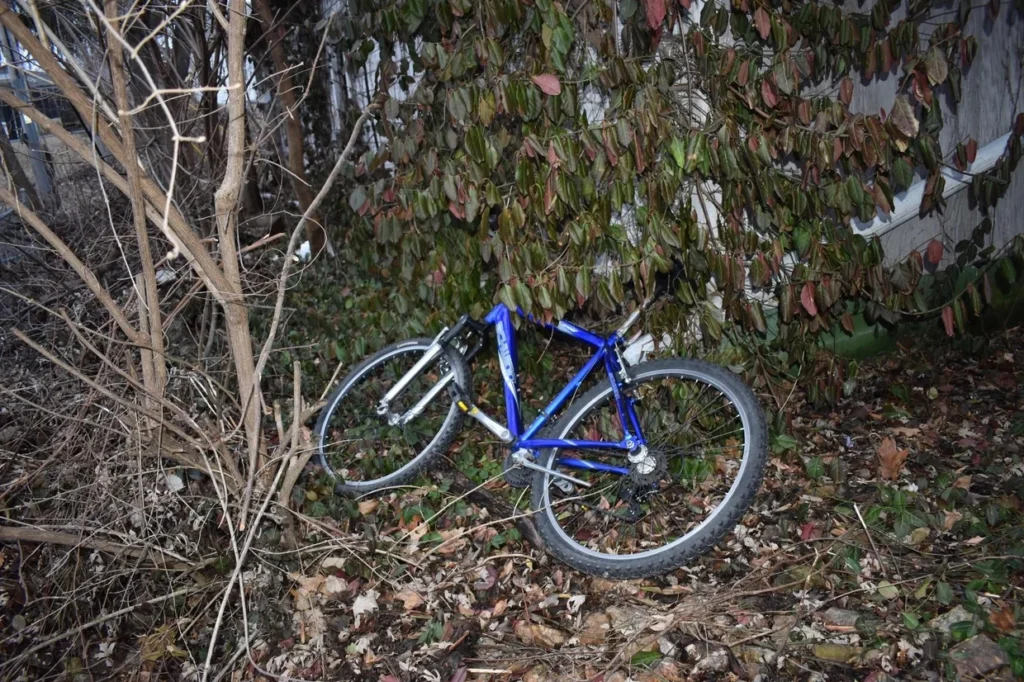
Investigators later located separate footage from a nearby bus facility showing a person riding a bicycle, which did not appear to have reflectors on its wheels, traveling in the direction of Becky’s neighborhood at almost the same times the figure appeared on the driveway camera.
At the time, Becky did not report either sighting to police, mentioning them only to her neighbor and her sister.
The Night Becky Died
Sometime after one in the morning on February 23, 2023, an intruder pulled a patio chair against the side of Becky’s house and used it to climb up to the second floor. Rather than entering through any of the windows along Becky’s own bedroom, the intruder continued past them to a window in one of her sons’ rooms, pried it open, and climbed inside.
From there, the intruder crossed the house toward Becky’s bedroom and broke through her door. Becky ran into her bathroom, where she attempted to dial 911 at 1:11 a.m. Her phone was knocked from her hand before the call could go through and was later found behind the bathroom door.
She was shot a total of fourteen times, out of fifteen rounds fired, though none of the wounds killed her immediately, meaning it took her several minutes to die.
Quincy is a small city along the Mississippi River where violent crime is uncommon, and news of the killing left many residents on edge.
In the days that followed, local police received separate reports of attempted break-ins on cars and homes in neighborhoods near Becky’s house, which briefly raised the possibility that a random prowler, rather than someone she knew, could have been responsible.
Officers advised residents in the area to lock their doors and keep exterior lights on while the investigation continued.
Becky had asked Tim to keep their three sons, then ages 12, 10 and five, at his home that night because she said she was not feeling well. When Tim could not reach her by phone the next day, he contacted her father, who went to check on her.
That afternoon, Becky’s father discovered her body on the bathroom floor. She had been dead for several hours. Investigators found no signs that anything had been stolen from the home.
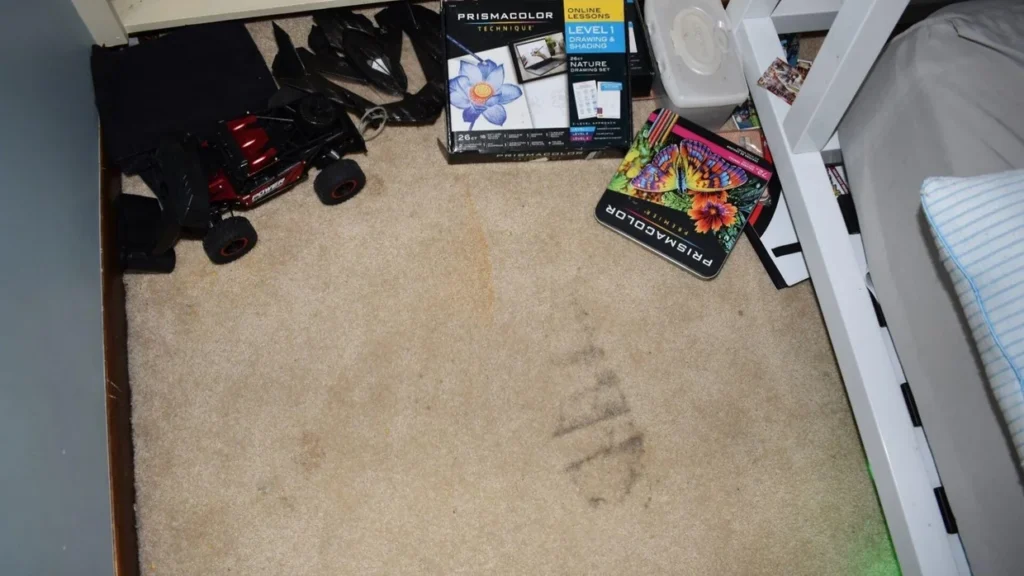
At the scene, they recovered a partial shoe print near the point of entry, eight spent 9mm shell casings, and small pieces of plastic scattered near Becky’s body that were later identified as fragments of an Aldi grocery bag.
The Illinois Appellate Court’s later review confirmed that Becky had been found on the floor of her upstairs bathroom with multiple gunshot wounds.
The Investigation Widens
To understand how the intruder had gained access to the house, investigators later had an officer reenact the likely path taken that night, climbing from the patio chair to the roof and moving along the upper floor toward the children’s bedroom window.
Detectives also canvassed the neighborhood for additional surveillance footage and matched the timing of the bicycle sightings to the driveway camera images, though neither showed enough detail to identify a face, build, or even the rider’s gender.
When Sarah learned of her sister’s death, she told police about Becky’s history with Tim, including the earlier text naming him as a person of interest, and Tim quickly became the focus of the investigation.
Officers eventually located a bicycle matching the one seen on camera, a blue Schwinn, less than half a block from Tim’s home.
After obtaining data extracted from Tim’s cellphone, investigators also discovered that he maintained a Facebook account registered under the name John Smith, which had been used to search for a bicycle matching that same description.
A search warrant was executed on Tim’s house and car as he looked on, and on March 13, 2023, just over two weeks after Becky’s death, he was arrested and charged with murder and home invasion. He was ordered held without bond while awaiting trial.
Tim requested a speedy trial, a legal right that required prosecutors to bring the case before a jury within 90 days of his arrest. The Illinois Appellate Court later confirmed that he was charged with two counts of first-degree murder and one count of home invasion.
The arrest drew national attention in part because of an appearance Tim had made on the game show Family Feud with his parents and brothers, which aired in January 2020, during which he answered a question about wedding-day regrets by joking, “I do.”
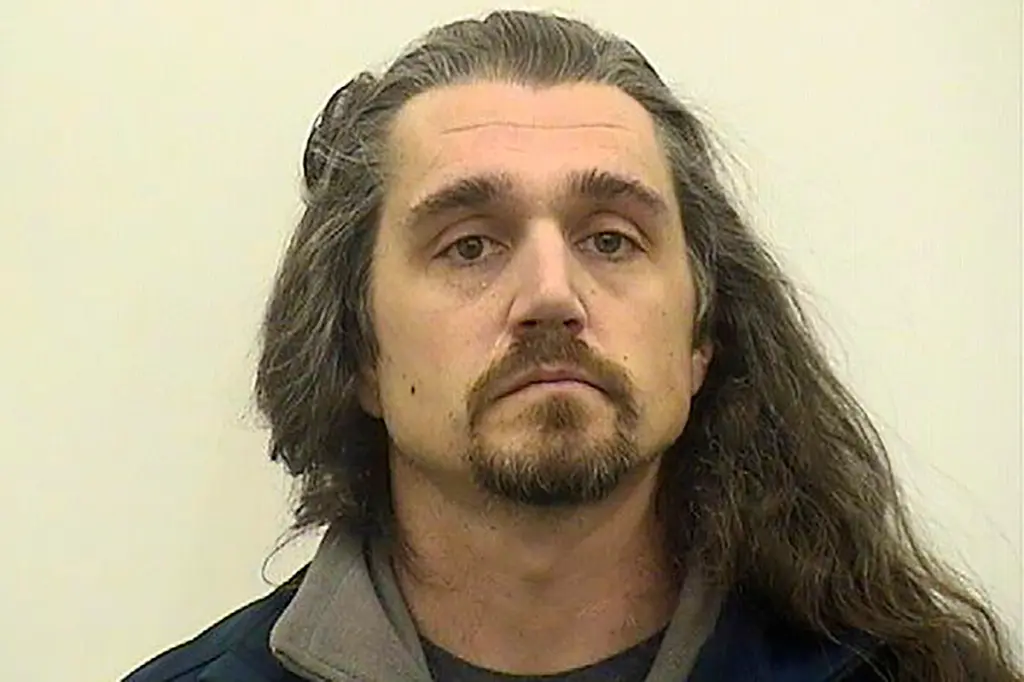
Commentators also noted a change in his appearance between the show and his booking photo, which Tim attributed to growing out his hair for a cancer research fundraiser.
The Trial
Tim’s trial began on May 23, 2023, three months after Becky’s death, and was handled by Adams County prosecutors Josh Jones and Laura Keck, who together had prosecuted hundreds of cases over their careers.
They told jurors that the plastic fragments found near Becky’s body appeared to have come from a bag that the shooter may have used either to muffle the sound of the gunshots or to catch the spent shell casings as they were fired.
They said DNA recovered from those fragments could not exclude Tim as a contributor, and that investigators had found stacks of similar bags inside his house.
They also presented DNA evidence recovered from beneath Becky’s fingernails, which an expert testified was three times more likely to have come from Tim or a male relative in his family line than from someone unrelated to him.
A crowbar recovered from Tim’s basement showed microscopic similarities to tool marks left on the window that had been pried open, though the forensic expert could not say with certainty that it was the same tool.
Several of Becky’s friends also testified about the fear she had expressed to them in the months before her death.
Some said afterward that they had known Tim for years and never imagined him capable of violence, and that they wished they had encouraged Becky to seek more help at the time.
Jurors also heard that Becky had gathered witnesses who intended to testify, during the upcoming divorce trial, about decades-old allegations that Tim’s father, Ray, had abused minors many years earlier, well before Tim and Becky had married.
The individuals involved were not connected to Becky and Tim’s own children. A protective order Becky sought against her father-in-law over those claims had been denied, and his attorney maintained he had never been criminally charged.
Prosecutors noted that on the day of Becky’s murder, before anyone but the killer knew she was dead, Tim delivered a children’s basketball hoop to his father’s house.
They also presented phone records showing searches on Tim’s device for how to pick a door lock with a crowbar, how to build a homemade firearm silencer, and how to remove gunpowder residue from skin, along with more than 200 searches for the license plate and vehicle identification number of a man Becky had begun dating, whose truck had been parked at her house on Valentine’s Day.
The prosecution’s final piece of evidence involved the shell casings collected from the crime scene. A firearms expert testified that 27 casings recovered from Tim’s own residence had been fired from the same gun used to kill Becky.
The defense, led by attorney Casey Schnack, who had also represented Tim during his divorce proceedings before taking on his murder case, argued that no murder weapon, bloody clothing, or definitive forensic match had ever been tied to Tim.
Investigators had seized numerous pairs of athletic shoes from his home in an attempt to match the partial print found near the point of entry, but none were found to be consistent, and every glove recovered from his car and house tested negative for any connection to the crime.
No DNA linking him to the patio chair used by the intruder was ever found. On the question of the Aldi bag fragments, the defense noted that such bags were common in area households and suggested the DNA could have been transferred through items the family regularly exchanged between homes for their children.
Schnack called no witnesses, resting the defense on the argument that the prosecution’s evidence fell short of proof beyond a reasonable doubt.
Tim maintained that he had been home with his sons the entire night and denied ever physically abusing Becky, noting that no photographs or documentation of injury were ever presented at trial.
After six days of testimony, the case went to the jury. An initial vote among panel members showed at least one juror undecided, but after roughly four hours of deliberation, the jury returned a unanimous verdict on May 31, 2023, finding Tim Bliefnick guilty of two counts of first-degree murder and one count of home invasion.
Tim remained in custody awaiting sentencing, and in an interview conducted about a month after his conviction, he said he planned to appeal the verdict.
On August 11, 2023, several of Becky’s family members delivered victim impact statements, including her mother, Bernie Postle, and her brother-in-law, Brett Reilly, who addressed Tim directly about the effect of the killing on the couple’s three sons.
Defense attorney Casey Schnack asked Judge Robert Adrian to set aside the verdict or grant a new trial, arguing that some of the internet search history used as evidence had never been proven to belong to Tim, and separately asked the judge to weigh Tim’s college education, steady employment and clean criminal record before sentencing.
Adrian denied the request for a new trial. The trial court sentenced Bliefnick to natural life in prison on August 11, 2023.
The Appeal
Tim’s appeal proceeded over the next two years.
In the spring of 2024, his attorneys asked the Illinois Appellate Court, Fourth District, to overturn the conviction, arguing that the trial court had wrongly admitted hearsay statements about Becky’s fear of Tim, that the prosecutor had referenced matters not in evidence during closing arguments, and that the judge should have removed the lead prosecutor over an unrelated conflict-of-interest matter.
On November 8, 2024, the appellate court affirmed both the conviction and sentence.
Tim’s attorneys then petitioned the Illinois Supreme Court for leave to appeal that ruling. On January 29, 2025, the Illinois Supreme Court denied his petition for leave to appeal.
His attorneys filed a motion for reconsideration on February 3, 2025, arguing that the appellate decision raised questions concerning the admission of hearsay evidence and attorney-client privilege.
Bliefnick remained incarcerated at Menard Correctional Center. In February 2025, he gave a 70-minute interview to Muddy River News from prison and continued to maintain his innocence.
In Memory of Becky
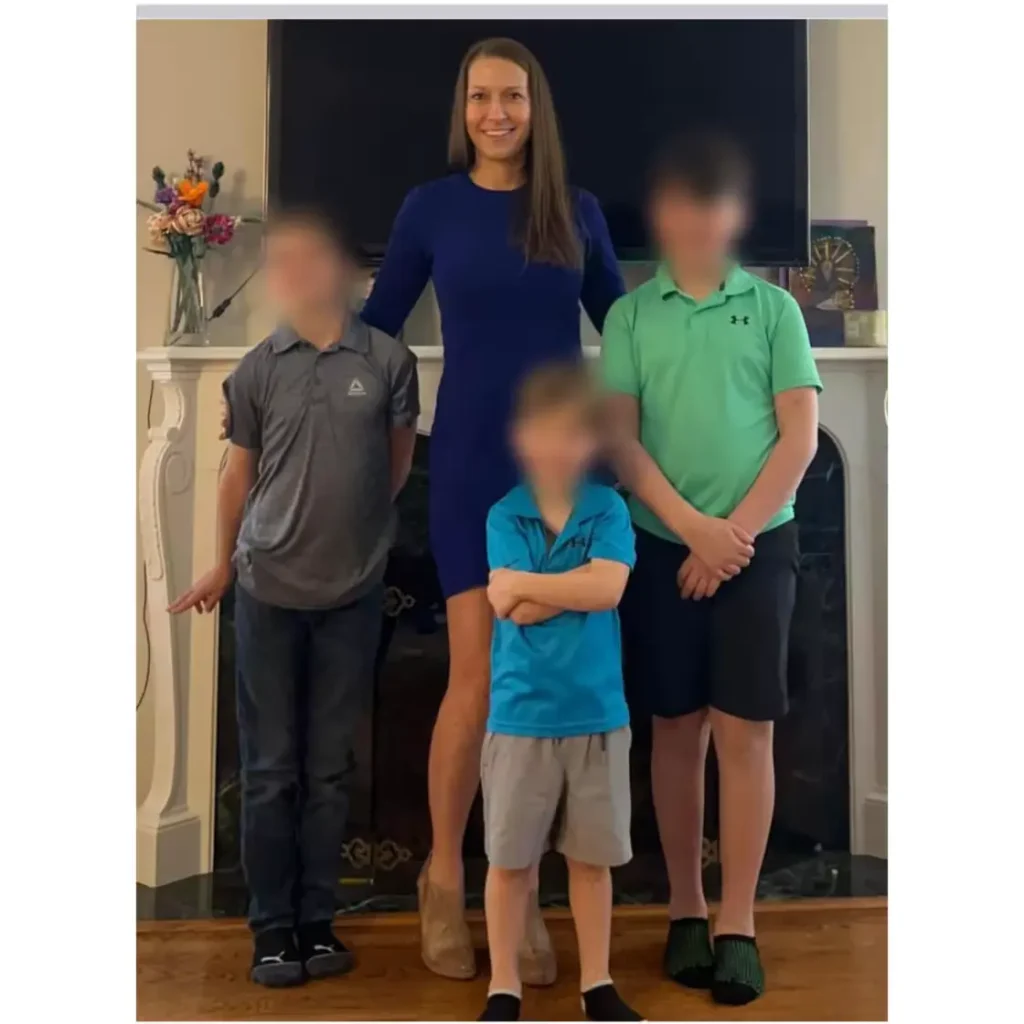
Those closest to Becky remembered her as a selfless woman who made everyone around her feel important and special.
Family members described her as an outstanding nurse who pursued the career out of a genuine desire to help others, though those closest to her said motherhood was always what she valued most in life. Friends recalled her as warm, kind, and full of life, and said she cherished her three sons above everything else.
Becky was 41 years old at the time of her death. Sarah, who lived out of state and was away on vacation when she got the news, remembered rushing to get back to Illinois the moment she learned what had happened, describing the days that followed as some of the hardest of her life.
Colleagues who worked alongside Becky in nursing said she brought the same care to her patients that she gave her own family, and friends said she had a way of making the people around her feel valued, no matter how big or small their place was in her life.
Even amid the strain of her divorce, those who knew her said she remained focused above all on giving her sons a stable and loving home. Following her death, her three sons, who had not been home at the time of the murder, went to live with her parents.
A fund was established in her name to help support the boys in the years ahead. Sarah described her sister as endlessly kind, saying she could not imagine anyone looking at someone so full of warmth and goodness and deciding that her life should be taken from her.
Those closest to Becky said they hoped her story would encourage others facing similar fear in their own relationships to reach out for help and be taken seriously before it is too late.


Recent Comments