
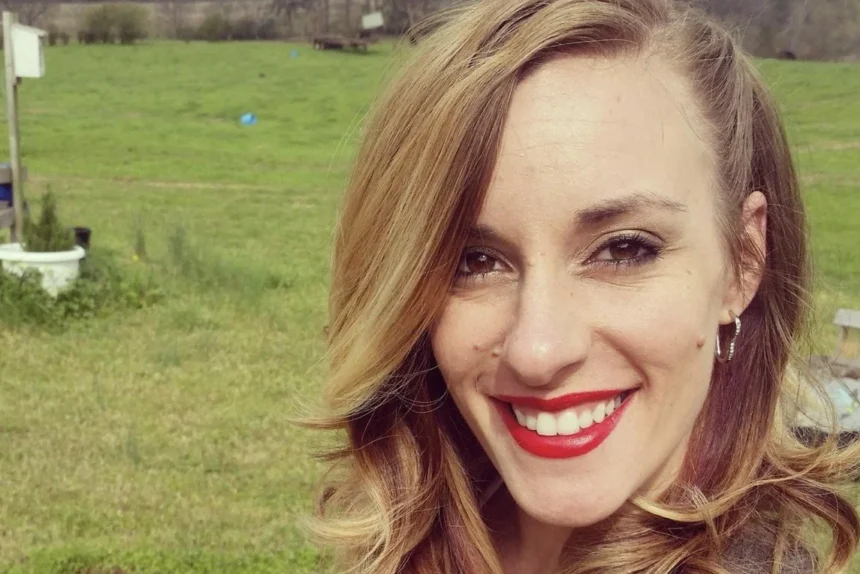
On the night of May 2, 2017, Tiffiney Crawford was found fatally shot inside her van outside her family’s home in Cullman, Alabama. What followed was a lengthy investigation into how she died and who was responsible.
A Marriage That Began Under Strain
Jason Crawford’s first marriage ended several years before he met Tiffiney, after he learned that his first wife had been unfaithful. When he and Tiffiney began seeing each other, she was still married to someone else, so their relationship did not begin under ordinary circumstances.
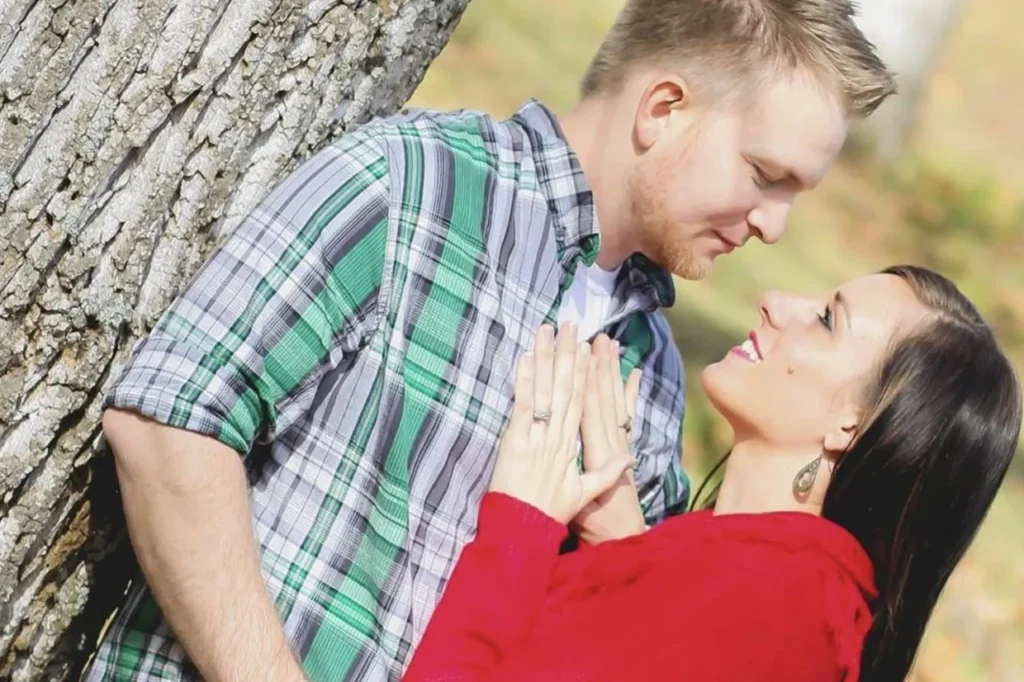
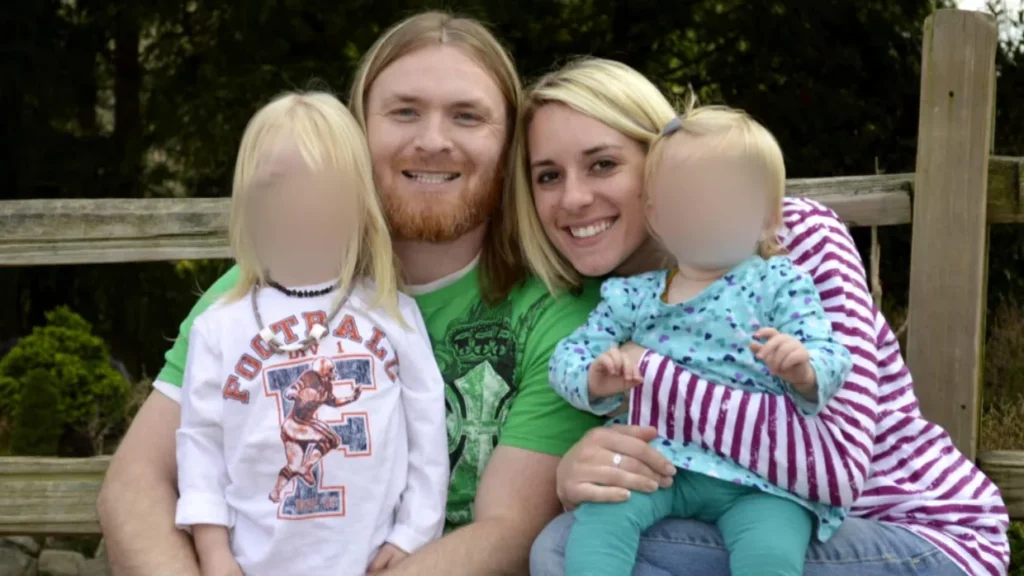
Tiffiney later divorced, and she and Jason married soon after. The couple went on to have two children together, a son and a daughter, who were five and four years old at the time of Tiffiney’s death.
Jason also had an older son, Logan, then fourteen, from a previous relationship; Tiffiney served as his stepmother. By 2017, Jason and Tiffiney had been married a little more than six years.
In the months leading up to Tiffiney’s death, Jason noticed a change in his wife. She had grown more distant, he said, and had begun drinking more heavily, sometimes consuming two to three bottles of wine a week. He later said he sensed something was wrong but could not identify the cause.
Outside the marriage, Tiffiney had built a reputation for generosity and community involvement.
She had founded an online support group for mothers that had grown into a nationwide network, and friends described her as someone devoted to helping others navigate the challenges of parenthood. One day before her death, Tiffiney began seeing a counselor.
Confrontation on a Spring Night
On the evening of May 2, 2017, Jason discovered messages on the family computer suggesting that Tiffiney was having an affair. He began calling her, hoping she would explain what was happening, but she denied that anything was going on.
He told her she needed to come home. That afternoon, Tiffiney called her mother, Cheryl McGucken, to let her know she was on her way and that she and Jason needed to talk about problems in their marriage; Cheryl said her daughter sounded anxious rather than afraid.
Tiffiney had, in fact, been planning to leave Jason. A friend, Lyndsy Luke, later said Tiffiney had confided in her about the affair and about wanting to start a new life on her own; Tiffiney had taken a job at a local grocery store to save money toward that plan.
She had not told Jason about the affair because she did not want to hurt him. Cheryl said she had already known about the affair before that night.
When Tiffiney arrived home, Jason confronted her about what he had found. He refused to let her back into the house, and the two argued outside for more than an hour. Jason later described his anger during the confrontation as controlled rather than out of control.
During the argument, Jason called her a degrading name, later telling the jury he had wanted her to feel as much emotional pain as he felt. Tiffiney asked why she could not stay, but Jason remained firm that she would not be spending the night.
At one point, she asked him to bring out her clothes for work. He went inside, gathered them, threw them to her, and told her he was done talking before going into the house.
Shortly after going inside, Jason said he heard a gunshot, followed by a scream, and then a second gunshot. He said the van’s door had been closed at that point.
He went back outside and called 911, telling the dispatcher that his wife had been shot. During the call, the dispatcher repeatedly asked him who had shot Tiffiney; he did not answer the question.
Deputies Respond
Deputies from the Cullman County Sheriff’s Office arrived at the home, located about fifty miles north of Birmingham, shortly before 11 p.m. Jason was 37 at the time, and Tiffiney was 32.
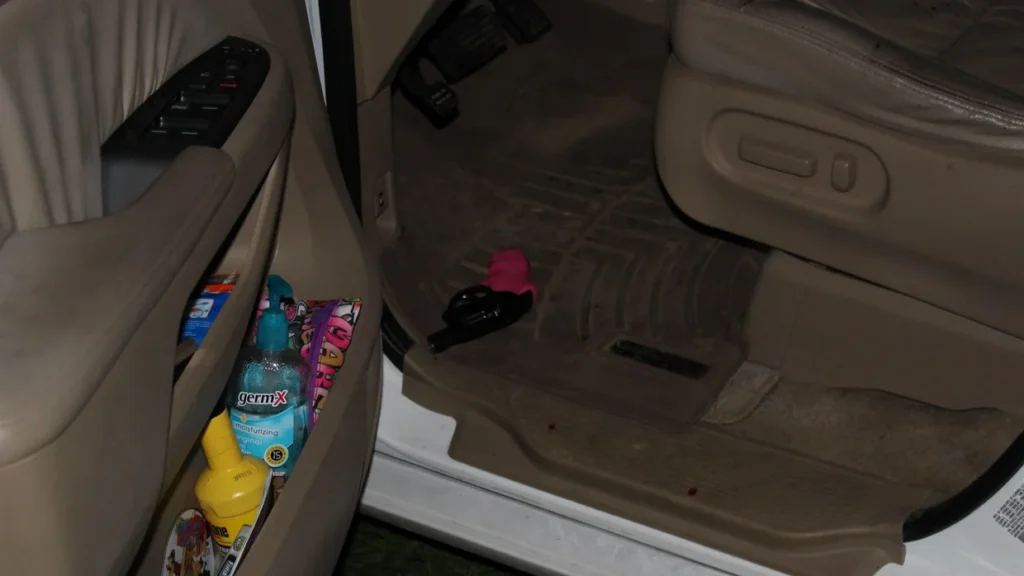
Deputies found her slumped in the driver’s seat of her van, a pink revolver in her left hand. Jason said Tiffiney normally kept the gun in the driver’s side door for protection. When one of the deputies checked her for a pulse, the gun fell from her hand.
She had been shot twice in the head. Paramedics attempted to revive her, but she could not be saved and was pronounced dead at the scene. Jason later said that learning she was gone made him feel sick to his stomach.
Based on what they observed, at least one of the responding deputies believed the death appeared to be a suicide. It was not long before deputies realized that Jason was the son of Ronda Crawford, who worked as an office manager for the Sheriff’s Office.
Sheriff Matt Gentry was notified and went to the scene, where Ronda had already arrived. Ronda called Cheryl McGucken to tell her what had happened to her daughter. Tiffiney and Jason’s two youngest children had been asleep in the house at the time of the shooting, and Logan had also been home.
Because of Ronda’s connection to the Sheriff’s Office, Gentry decided the case needed to be handled with particular care. He ordered an autopsy and instructed his investigators to process the scene as though it were a homicide, even though it appeared to be a suicide; evidence was collected accordingly.
The next morning, to ensure full transparency, Gentry transferred the case to the Alabama State Bureau of Investigation. Agent Joe Parrish was assigned to lead the inquiry.
One of Parrish’s first steps was to seek a search warrant for the van in which Tiffiney had been shot. By the time he gained access to it, less than twenty-four hours after her death, the vehicle had already been cleaned by members of the Crawford family.
The Sheriff’s Office had authorized the van’s release to the family, citing a desire to keep the children from having to see it. Parrish found this unusual, given how quickly it had happened after a violent death.
An Investigation Builds
Parrish interviewed Jason about the events of that night, including the discovery of the affair and the argument that followed. During the conversation, Jason confirmed that Tiffiney was right-handed, a detail investigators considered significant because the gun had been found in her left hand.
Parrish also reviewed the 911 call Jason had made and found his tone notably calm; he was struck in particular by the fact that Jason never answered the dispatcher’s repeated question about who had shot Tiffiney. Investigators did not learn about the affair until the day after the shooting.
About a week after Tiffiney’s death, with the results of her autopsy still pending, Parrish brought Jason in for a formal interview. Roughly a week after that, Jason was brought in again, this time by one of Parrish’s colleagues, and he agreed to take a polygraph examination.
Investigators told him his physiological reactions during the test were highly unusual and indicated deception, and the conversation grew tense before it concluded.
Polygraph results are not admissible as evidence in court, and defense attorneys would later argue that investigators sometimes use them as a tool to pressure a suspect rather than as reliable proof of guilt.
A backlog delayed the completion of Tiffiney’s autopsy for nearly a year. When the results were finalized, the medical examiner, Dr. Valerie Green, ruled the manner of death a homicide. Her findings centered on several details.
The gunshot wound to Tiffiney’s left temple showed no gunpowder residue, indicating the weapon had been fired from a distance of at least ten inches, something Green said would have been difficult to accomplish if Tiffiney had shot herself, particularly inside the confined space of the van.
Neither of Tiffiney’s two wounds, one to her left jaw and one to her left temple, showed signs of being a contact wound, a characteristic Green said was present in most suicides.
Green also noted that photographs of the van showed no blood on the driver’s side door, window, or glass, leading her to conclude the door had likely been open at the time of the shooting, contrary to Jason’s account that it had been closed.
Following the autopsy ruling, Assistant District Attorney Jeff Roberts, working with Parrish, presented the case to a grand jury, which returned an indictment charging Jason with murder.
On May 21, 2018, just over a year after Tiffiney’s death, Jason surrendered to authorities. He was arrested and later released on bond.
He retained defense attorneys Robert Tuten and Nickolas Heatherly, who pointed out that investigators had never tested Jason for gunshot residue on the night of the shooting, never searched his home for bloody clothing, and found no blood on his body or clothes at the scene.
Roberts later said he believed the forensic findings from the autopsy had been the deciding factor in the grand jury’s decision to indict.
The defense also retained its own medical examiner, Dr. James Lauridson, a former chief medical examiner for the state of Alabama, who reached a different conclusion than Dr. Green.
Lauridson believed Tiffiney’s hair could have filtered gunpowder particles around the temple wound, making it impossible to determine with certainty how far away the gun had been when that shot was fired. He concluded the evidence was consistent with Tiffiney having shot herself first in the jaw and then in the temple.
Separately, investigators tested the revolver for DNA. An analyst found too little female genetic material on the weapon to make a comparison to Tiffiney, but detected male DNA on both the grip and the trigger.
According to the defense, that finding was explained by the gun’s history: it had originally been given to Tiffiney by her father, and her brother had also fired it in the past.
The Case Goes to Trial
More than five years after Tiffiney’s death, Jason’s trial began in November 2022. Prosecutor Jeff Roberts recognized he faced a significant obstacle: officers who had responded to the scene the night of the shooting had initially described it as consistent with a suicide.
Defense attorneys Tuten and Heatherly acknowledged their own challenge, noting there was no way to establish with certainty exactly what had happened inside the van.
Cheryl McGucken attended only the first day of the trial, to testify, saying she did not want to hear further details about how her daughter had died.
She testified as the prosecution’s opening witness, telling the jury she had never had issues with Jason, a statement that one juror, Megan Brock, found striking given that Cheryl’s own daughter’s accused killer was on trial.
Prosecutors also presented testimony aimed at establishing a motive. A friend of Tiffiney’s testified that after learning about the affair, Jason called her and said he could not go through the situation again, a comment she understood as a reference to his previous marriage. Jason later denied making that statement when he testified in his own defense.
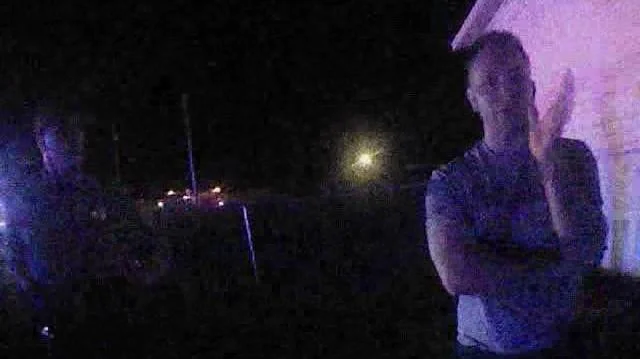
The jury heard Jason’s 911 call and viewed police body camera footage recorded that night. DNA analyst Angela Fletcher testified about her findings on the revolver, confirming that only male genetic material had been detected in sufficient quantity for comparison.
Prosecutors argued that if Tiffiney had fired the weapon herself, her own DNA should have been detectable on it. Dr. Green testified that, in her assessment, the shot to Tiffiney’s temple was more consistent with someone standing outside the vehicle firing the weapon than with Tiffiney holding the gun herself and firing from more than ten inches away.
The defense countered with a recorded deposition from Dr. Lauridson, who maintained his belief that Tiffiney had shot herself, explaining that her hair likely obscured evidence that would normally indicate a closer-range shot.
The defense also introduced testimony describing Tiffiney’s emotional state before her death. Witnesses said she had been drinking heavily in the weeks prior and had become distraught after the man with whom she was having the affair ended their relationship.
A journal entry Tiffiney had written the day she died was read into evidence; in it, she described struggling to figure out what to do with her life and trying to keep herself from falling apart.
Logan, by then older, testified for the defense that he had heard his father come inside the house just before the first gunshot was fired.
Prosecutors questioned whether a young witness’s account might shift after being retold many times over several years, but the defense maintained that Logan’s story had remained consistent since he first spoke with investigators on the night of the shooting.
Jason also testified, denying that he had killed Tiffiney. He acknowledged calling her a degrading name during their argument and said he had wanted her to feel as hurt as he did.
After four days of testimony, the case went to the jury on November 18, 2022. During deliberations, jurors asked to review the body camera footage and to listen to the 911 call again.
Their attention focused on a discrepancy between what Jason told the dispatcher and what the recordings showed: Jason had said the gun was lying beside his wife, but the recordings confirmed it had actually been in her hand. The jury found Jason Crawford guilty of murder.
At a sentencing hearing on March 10, 2023, Cheryl McGucken addressed Jason directly in the courtroom, telling him she hoped he would one day find the strength to tell the truth about what happened.
His and Tiffiney’s children were present in the courtroom for the hearing. Judge Martha Williams sentenced Jason to 99 years in prison, and under Alabama law he will be eligible for parole in fifteen years.
In the time after the trial, Cheryl said that reviewing the evidence presented in court had led her to believe Jason was responsible for her daughter’s death.
Jason’s attorneys appealed the conviction, but the Alabama Court of Criminal Appeals denied the appeal, and a subsequent request for rehearing was also rejected in late 2023.
As of the most recent published reporting on the case, Jason Crawford was being held at the Kilby Correctional Facility in Montgomery, Alabama.
Remembering Tiffiney
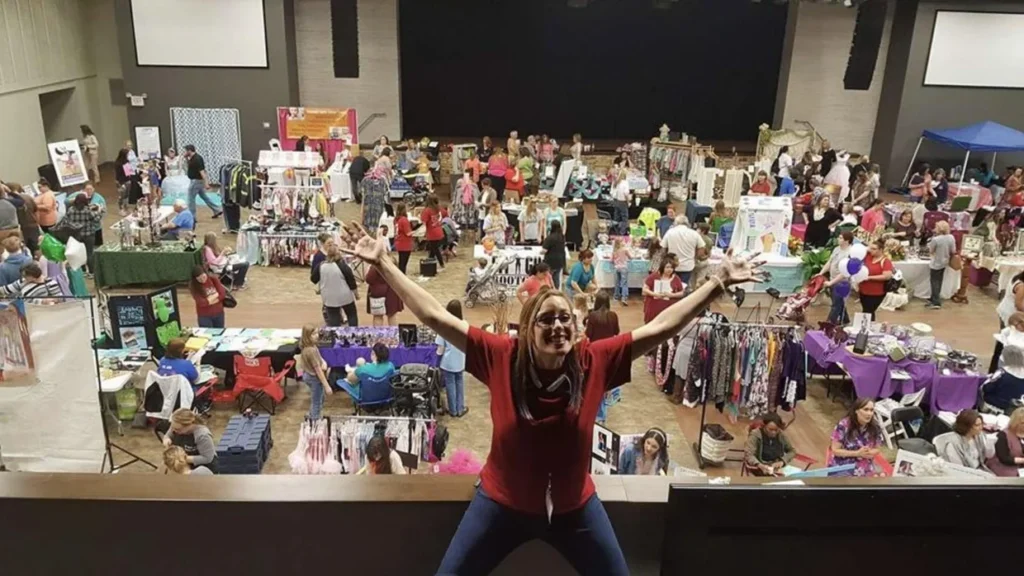
Tiffiney Joy Crawford was the firstborn child and only daughter of Cheryl McGucken. Those who knew her described her as spontaneous and outgoing, someone with a large personality and equally large ambitions; she hoped one day to travel and see the world.
A close friend said Tiffiney had been one of the best friends she had ever had. As a mother, Tiffiney was remembered for dancing and singing with her children and for the warmth she brought into their home, remaining closely involved in their daily lives.
Friends recalled that Tiffiney’s greatest gift was her ability to bring people together. That quality led her to start Mothers Helping Mothers, an online community she created to support mothers from all backgrounds.
What began as a small group grew quickly, eventually connecting mothers across the country who found in it a place to talk, encourage one another, and feel less alone in the work of raising children.
Those closest to Tiffiney said she was defined by her devotion to others, a trait that shaped both her friendships and the community she built.
She was remembered as someone who wanted nothing more than to help the people around her find joy, and whose absence left a lasting void among those who loved her.

Recent Comments