
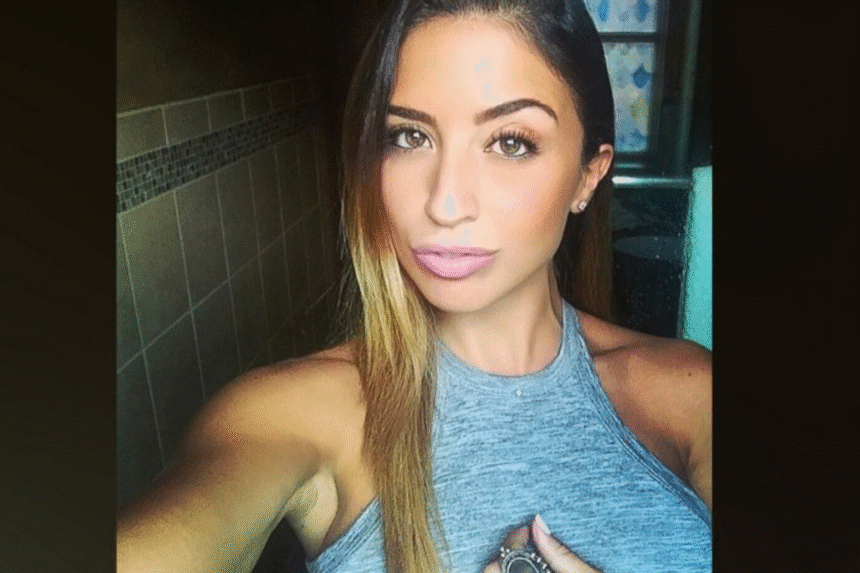
Karina Vetrano, a 30-year-old speech pathologist, was killed while jogging in Howard Beach, Queens, on August 2, 2016.
Karina Anne Vetrano was born on July 12, 1986, to Phillip and Cathie Vetrano. She grew up in Howard Beach with a brother and a sister. Her father was a retired New York City firefighter who had worked at Ground Zero after the September 11 attacks.
Karina attended Archbishop Molloy High School in Queens and later earned a master’s degree in speech pathology from St. John’s University. She worked with autistic children in Manhattan and hoped to become a writer, keeping a personal website where she posted essays and short reflections about her life.
In 2013, she appeared in a short film inspired by her writing, made by a friend who worked as a screenwriter. In her free time, she loved to travel and to run. She usually jogged with her father through Spring Creek Park, a marshy stretch of land near their home that borders both Howard Beach and Brooklyn.
On the afternoon of August 2, 2016, Karina finished a day of work and got ready for her usual evening run. Her father normally joined her, but he was recovering from a back injury that day, so Karina went alone.
She entered Spring Creek Park at about 5 p.m., and a home security camera near the park recorded her running past.
Karina texted her father while she ran, then stopped responding. Her father had already been uneasy about her running by herself, and as the evening wore on with no word from her, his worry grew.
He reached out to a neighbor who worked for the New York Police Department, and the two men called for help. Police began searching Spring Creek Park at around 7 p.m. Hours passed, and darkness fell over the park.
Just before 11 p.m., Karina’s father found her body about 15 feet off the main trail, in a marshy, weed-covered patch of the park. Weeds were still clutched in her hands, as if she had grabbed at them while being pulled off the path.
She had been beaten badly, with bruises across her face. Her running pants had been pulled off, and medical examiners later determined that she had been sexually assaulted and strangled to death.
Officers immediately began canvassing the surrounding blocks for anyone who might have seen the attack, but no witnesses to the assault itself came forward that night.
News of the killing spread quickly through Howard Beach, a quiet residential neighborhood where many people knew the Vetrano family personally.
The night after the murder, dozens of people gathered in the parking lot of a bar where Karina had once worked part time, lighting candles in her memory. Karina’s funeral was held on August 6 at St. Helen’s Church, drawing a large crowd of mourners.
Ten days later, friends and family retraced her running route through the neighborhood in her honor, and the family later established a scholarship in her name at Archbishop Molloy High School.
In the days after the murder, the family and community members also set up a GoFundMe page to raise reward money, supplementing an NYPD reward that grew in steps from $10,000 to $20,000, then to $25,000, and finally to $35,000.
The GoFundMe campaign, which started with a goal of $100,000, eventually collected more than $290,000, with any leftover funds promised to charity.
Karina’s parents spoke publicly and directly to their daughter’s killer at several news conferences. “By this evil coward. Her last moments were horrible,” Cathy Vetrano said at one appearance, describing what her daughter had gone through.
At another, she called the killer a “pathetic, puny, weak piece of filth.” Phil Vetrano made his own appeals, telling the killer, “I know that you’re tormented. I know that you’re being driven crazy.”
Investigators quickly cleared Karina’s immediate family and looked closely at people in her life, including a coworker at a part-time job who had reportedly made unwanted advances toward her, but he was ruled out after providing an alibi.
On August 24, 2016, the NYPD installed eight surveillance cameras along the edge of Spring Creek Park, funded by the Queens Borough President’s office, in hopes of preventing further crime and aiding any future investigation.
Investigators recovered DNA from underneath Karina’s fingernails and from her cellphone, but running it through state and national databases turned up no matches, even after testing more than 600 samples.
Detectives also reviewed more than 1,700 investigative reports and followed over 250 separate leads in the weeks after the killing.
Surveillance footage showed Karina entering the park by herself, with no one trailing her, which led police to suspect her attacker had approached from another direction, possibly from the Brooklyn side of the park.
On August 31, 2016, police released a sketch of a possible witness, a man a utility worker had seen coming out of the weeds near the park around the time Karina was killed. Tips poured in based on the sketch, but none led anywhere.
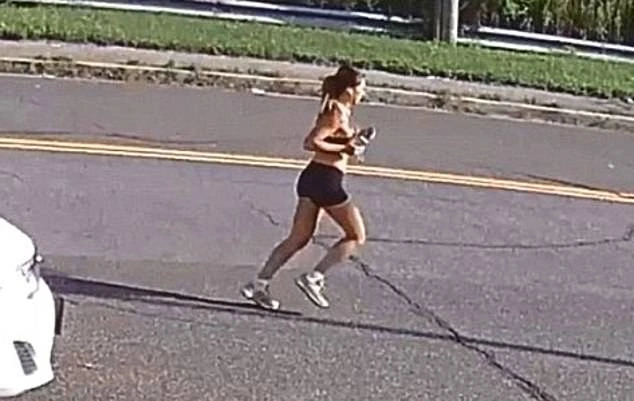
On September 12, 2016, the security footage of Karina’s run was broadcast for the first time on a television crime program; it remains the only video ever recorded of her alive after she entered the park that day.
In December 2016, with the case going cold, the Queens District Attorney’s office requested state authorization to use a specialized form of DNA testing that searches for genetic relatives of a suspect, and investigators worked with the FBI to build a profile of the kind of person who might have committed the crime.
The investigation’s turning point came in early 2017, when Detective Lieutenant John Russo remembered an encounter from several months earlier.
In May 2016, Russo, who lived in Howard Beach, had noticed a young man wearing a hooded sweatshirt and sweatpants despite the warm weather, peering into parked cars and lingering near homes in the neighborhood.
Around the same time, other residents had reported a similar man carrying a crowbar and wandering through backyards. Russo had gotten the man’s name during that encounter: Chanel Lewis, a 20-year-old who lived with his mother in the nearby Brooklyn neighborhood of East New York.
In early February 2017, detectives located Lewis and asked him to provide a DNA sample, which he agreed to give voluntarily at his home.
The sample matched DNA found on Karina’s fingernails, on the back of her neck, and on her cellphone, with investigators later saying the odds that the DNA belonged to someone other than Lewis were about one in 6.8 trillion.
As detectives built their case, they learned that Lewis had gone to a hospital the day after the murder for treatment of an injured hand. The examining doctor described the wound in his notes as a “classic boxer’s injury.”
According to a police detective involved in the investigation, the doctor also recalled removing a small foreign object from Lewis’s hand, which investigators believed to be a broken piece of Karina’s front tooth.
Lewis had told hospital staff that he had been attacked by muggers, but no police report of such an incident existed anywhere in the area.
On February 5, 2017, Lewis was brought to the 107th Precinct for a recorded interview with Queens prosecutors and police. During that interview, he admitted to attacking Karina, saying he had been walking in the park when she jogged past him and he grew angry over an unrelated dispute at home.
He said he grabbed her, punched her in the face several times, and choked her until she stopped moving, and that he then dragged her off the trail. Following the interview, Lewis was arrested and formally charged with murder and sexual abuse, more than six months after Karina’s death.
Lewis’s family strongly denied that he was capable of the crime. His sister, Teresa Forbes, said publicly that she did not believe her brother had killed anyone and suggested he was being wrongly blamed.
Lewis had no prior criminal convictions, though he had received three minor summonses in 2013 connected to Spring Creek Park, including citations for violating park rules and for public urination.
His defense attorneys later argued that his confession had been coerced during hours of police questioning, and they also questioned whether the initial stop that led detectives to him had been based on little more than a vague description of a man in a hooded sweatshirt.
Lewis was held at Rikers Island while he awaited trial. Jury selection and testimony finally began on November 5, 2018, before a jury of seven women and five men.
Prosecutors presented the DNA evidence, the confession tape, and the hand injury, while the defense challenged how the confession was obtained and questioned the reliability of the lab that had analyzed the DNA.
The defense also argued that the crime scene had been disturbed, since Karina’s father had held his daughter’s body before police arrived. Karina’s father testified about the moment he found his daughter, recalling that he “let out this sound” he had never made before.
After a day and a half of deliberation, the jury told the court it was split, with seven jurors favoring conviction and five favoring acquittal. On November 21, 2018, Justice Michael Aloise declared a mistrial.
The Legal Aid Society, representing Lewis, said afterward that “the rush to criminalize our client is not the answer nor is it justice.”
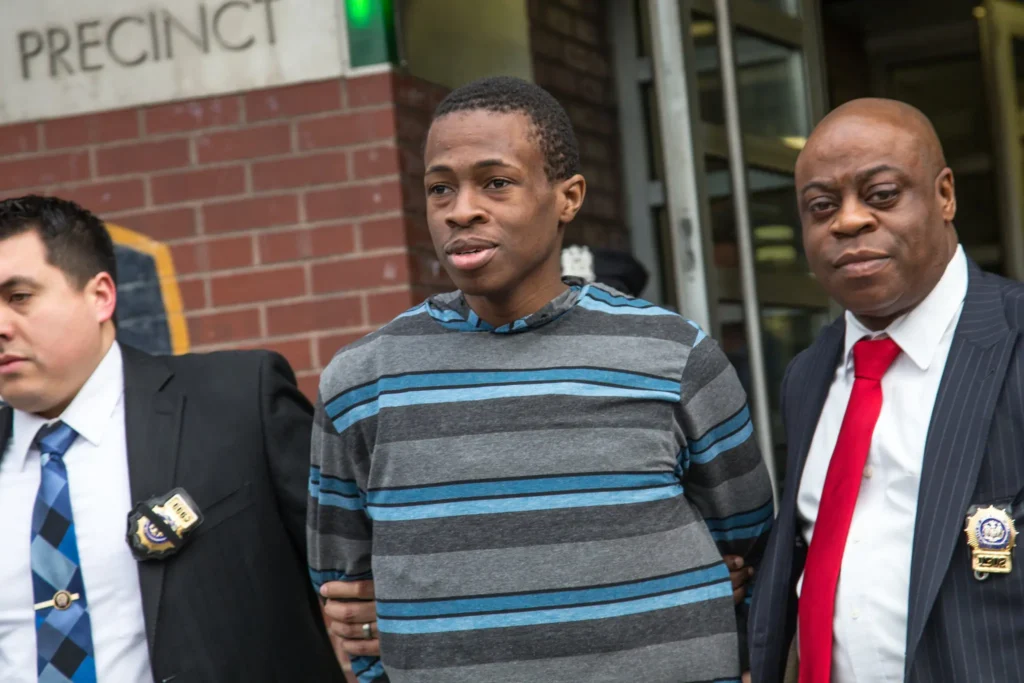
A retrial began in March 2019. This time, prosecutors introduced additional evidence, including records showing that Lewis had searched online for information about the case, about plea deals, and about what happens to people who are arrested, in the weeks after the murder.
A forensic examiner also testified about bacteria found in the wound on Lewis’s hand, which prosecutors argued supported the sexual-assault charge. On March 28, 2019, both sides rested their cases.
That night, a three-page typed letter arrived at the offices of Lewis’s defense attorneys and the Queens District Attorney, reportedly written by a law enforcement source.
The letter claimed that in the early days of the investigation, an NYPD deputy chief had told colleagues at several meetings that they were “looking for two jacked up white guys who are from Howard Beach,” and alleged that related evidence had not been shared with the defense.
On April 1, 2019, Justice Aloise denied a defense request for a hearing on the letter’s claims and also denied a motion for a second mistrial, allowing closing arguments to proceed as scheduled.
Jurors began deliberating that afternoon, and by around 9 p.m., they returned guilty verdicts against Lewis on three counts of murder and one count of sexual abuse. “Jubilation. Justice has been served,” Phil Vetrano said as he left the courtroom.
Lewis was sentenced on April 23, 2019, to life in prison without the possibility of parole. Speaking before the sentence was handed down, Lewis maintained his innocence, telling the court, “I’m sorry to the family. I didn’t do this.”
Karina’s parents delivered victim impact statements. Her mother, holding a pair of Karina’s work shoes as she spoke, described the lasting emotional damage the killing had caused her and the rest of the family.
Phil Vetrano told the court that his daughter’s killer “killed four people that day,” referring to the effect the loss had on the surviving family members. Justice Aloise, who a day earlier had rejected a separate defense motion alleging juror misconduct, called the case a “lose-lose situation for both families.”
Lewis’s legal team continued to challenge the conviction after sentencing. In 2023, attorney Ronald Kuby filed a 65-page court motion arguing that the DNA evidence used to identify Lewis had come from an improper process.
The motion pointed to the NYPD’s use of Parabon NanoLabs, a company that analyzes DNA to estimate a person’s likely physical traits and ancestry, which was operating without a required New York license at the time it worked on the case.
Kuby argued that investigators had used a broad, racially targeted DNA collection effort, testing large numbers of Black men in the area, before ever identifying Lewis as a suspect.
On February 19, 2026, Justice Aloise rejected that motion, ruling in a 20-page decision that the timeline of the investigation did not support the claim, since Lewis had first come to detectives’ attention through Detective Russo’s recollection of the May 2016 encounter rather than through the DNA lab’s work.
Queens City Council Member Joann Ariola, who represents Howard Beach, welcomed the ruling, saying “the evidence has been compelling from the start.”


Recent Comments