

Maribel Ramos was an Army veteran and college student who vanished from her Orange, California, apartment in 2013. Her disappearance led to a murder investigation and the conviction of her own roommate.
Maribel Manriquez Ramos was born on November 22, 1976. She grew up close to her family and often acted like a second mother to younger relatives, since her own mother worked two jobs to support them.
From a young age, Ramos wanted a career in law enforcement. After finishing school, she worked as a security guard before enlisting in the United States Army in August 2001.
She served two combat tours in Iraq, rose to the rank of sergeant, and was honorably discharged in 2008. She then enrolled at California State University, Fullerton, to study criminal justice and moved into an apartment with her mother.
Ramos’s mother died in 2009. Needing help with rent, Ramos posted an ad on Craigslist looking for a roommate. Many people answered, but she chose a man named Kwang Chol Joy, who went by KC.
Joy described himself as an easygoing, tidy, social drinker who got along well with others. He told Ramos he had recently lost both of his parents and was looking for a fresh start.
Records later reviewed by investigators showed that Joy had relocated to California from Tennessee after his parents’ deaths, had fallen out badly with his sister over an inheritance, and that she had once taken out a restraining order against him because of his temper.
He had also faced assault charges in 1986 and 1987, both later dismissed, and was arrested on suspicion of drunk driving in 2011. None of this history was known to Ramos when Joy moved in, about a year and a half before she disappeared.
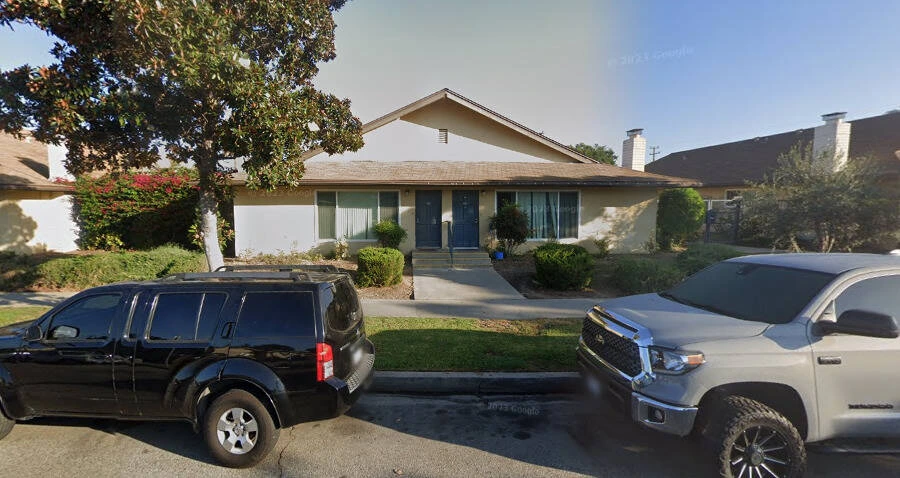
Ramos and Joy quickly grew close. They went dancing and sang karaoke together, walked their dogs around the neighborhood, and Joy paid for an Alaskan cruise for the two of them.
Ramos felt for him, since he seemed lonely in a new city with no close friends, and she began including him in family gatherings. Her sister, Lucy, later said the family took him in because they sympathized with his isolation.
Joy tutored Ramos’s niece in math and rarely spent time with anyone outside Ramos’s circle of family and friends.
In the summer of 2012, Joy called Lucy and told her he had fallen in love with Ramos and wanted to marry her and have children with her.
Lucy passed the message on to her sister. Ramos then told Joy directly that she did not share his feelings and that their relationship would remain platonic.
Joy appeared to accept this at first, but soon began making major changes to his appearance. He bought a new wardrobe, got a tattoo, and paid roughly $12,000 for cosmetic surgery meant to make him look younger.
By the spring of 2013, Ramos was preparing to graduate from Cal State Fullerton with a degree in criminal justice. She had started dating a new boyfriend, Paul Lopez, and their relationship was going well, though it was still new.
She had been asked to speak at a veterans’ conference in Chicago about her transition out of military life, and her family said she was looking forward to traveling more, spending time with loved ones, and eventually settling down.

On April 21, 2013, about eleven days before she vanished, Ramos called 911 in tears. She explained that she and Joy had argued and that he had developed romantic feelings for her that she did not return, which was part of the reason he was expected to move out by the end of the month.
She admitted to the dispatcher that she had lied to Joy about owning a gun because she felt frightened of him, and that she kept a machete near her bed.
She said, “I did it because I was trying to defend myself,” worried that if Joy came near her again, she might use the machete against him. No further action was taken at the time.
On the evening of May 2, 2013, Ramos and Joy argued again, this time over unpaid rent. Joy had fallen behind on his share for weeks, and Ramos had already asked him more than once to move out.
During the argument, Ramos called Lopez and put him on speakerphone so he could hear what was happening. Lopez later told police he heard Ramos tell Joy that he needed to be out by the next day.
Joy asked for two more weeks but refused to pay rent in advance for that time. Lopez offered to come over, but Ramos said she could handle it and told him she was going to bed.
Surveillance cameras at the apartment complex’s rental office recorded Ramos dropping off a rent check around 8:30 p.m. that night. She was wearing pajama pants and a tank top. It was the last time she was seen alive.
The next day, Joy contacted Lucy to ask if she had heard from Ramos, saying her car was still parked outside the apartment and that she had not come home the night before.
Ramos also missed her weekly softball game and a shift at her campus job, both unusual for someone known for arriving early to everything. When Lucy and a cousin went to the apartment that evening, they found it locked, Ramos’s car still outside, and her dog inside.
They called the Orange Police Department, which forced entry but found no signs of a break-in. Inside Ramos’s bedroom, officers noticed her bed had not been made and a pillowcase was missing, details that stood out because Ramos was known for always making her bed and keeping a strict routine.
Investigators treated the case as suspicious from the start and brought in homicide detectives.
Although the apartment complex had several security cameras, most did not directly face Ramos’s building, and residents could park along the street rather than in the monitored lot, which limited what investigators could see of her movements that night.
Detectives first looked closely at the people in Ramos’s life, including Lopez. He told them he had worked from 4 p.m. to midnight on May 2, an account confirmed by his employer and by tracking data from his truck.
He was ruled out as a suspect, but in his interview he described the tension between Ramos and Joy over the unpaid rent, which shifted investigators’ attention toward the roommate.
Ramos’s family launched a public campaign to find her, distributing flyers around Orange County and holding a vigil at a local church. They appealed to anyone who might have seen something the night she disappeared, while continuing to hope she would be found safe.
As detectives looked more closely at Joy, new details raised suspicion. A neighbor told police that Joy had asked about filing a missing person report just a few hours after Ramos was last seen, far earlier than expected if he genuinely believed she might simply be out for a while.
The same neighbor noticed deep scratches on both of Joy’s arms. When asked about them, Joy gave conflicting explanations, first saying he had fallen into bushes while walking his dog, and later saying he got them freeing a fishing line while watching ducks at a park.
Investigators also learned that Joy had been sitting in his car near the apartment rather than actively searching the area, despite telling others he had been out driving around looking for her.
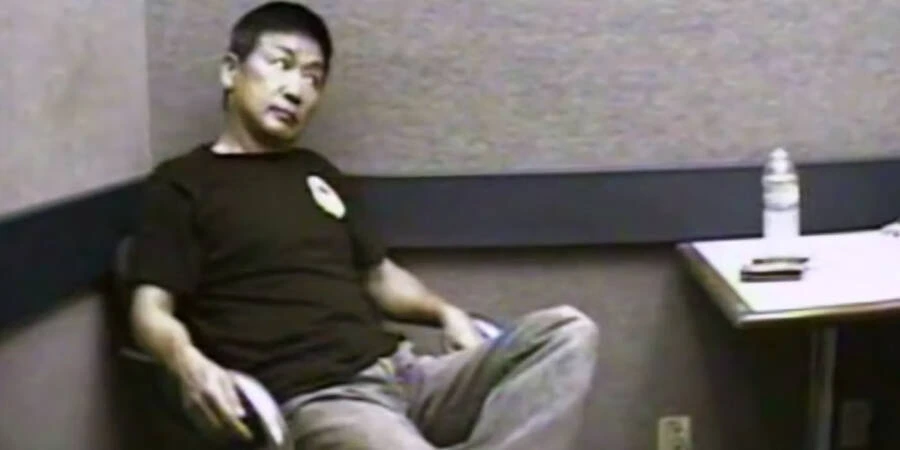
When Joy sat down for a formal interview, he admitted the two had argued but blamed the conflict on Ramos’s drinking, saying alcohol made her either friendly or hostile. He said he had recently lost his job, which was why he had fallen behind on rent.
He voluntarily gave investigators a DNA sample, allowed them to photograph his body, and let them search his apartment, car, phone, and laptop.
A cadaver dog alerted to the trunk of Joy’s car, and investigators removed eleven bags of evidence from the apartment the two had shared.
That search turned up a pajama shirt matching the one Ramos wore in the surveillance footage, with a small bloodstain later confirmed to be hers, though no other person’s DNA was found on it.
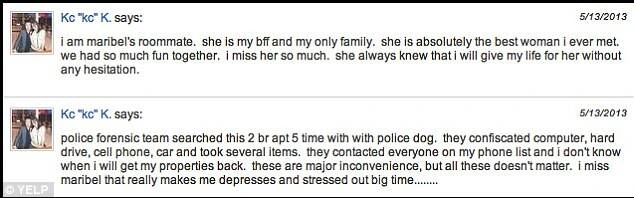
On May 13, 2013, Joy posted about his missing roommate on Yelp, repeatedly referring to her in the past tense. Some people who saw the post warned him it looked suspicious, though others noted that English was his second language and may have affected his wording.
With Joy remaining the only person of continued interest, investigators placed him under 24-hour surveillance. He continued speaking with local reporters during this time, describing Ramos as his best friend and only family.
On May 16, 2013, detectives followed Joy to the Orange Public Library and arranged to watch his activity on a specific computer in real time. He checked social media, reviewed emails, and submitted a job application before searching online for how long it takes a human body to decompose.
After viewing a Facebook post from Ramos’s family announcing an awareness walk in a canyon area she used to hike, Joy opened a satellite map.
He moved it away from the walking route and into a remote stretch of Santiago Canyon Road near Jackson Ranch Road, zooming in repeatedly on one specific, isolated spot far from any marked trail.
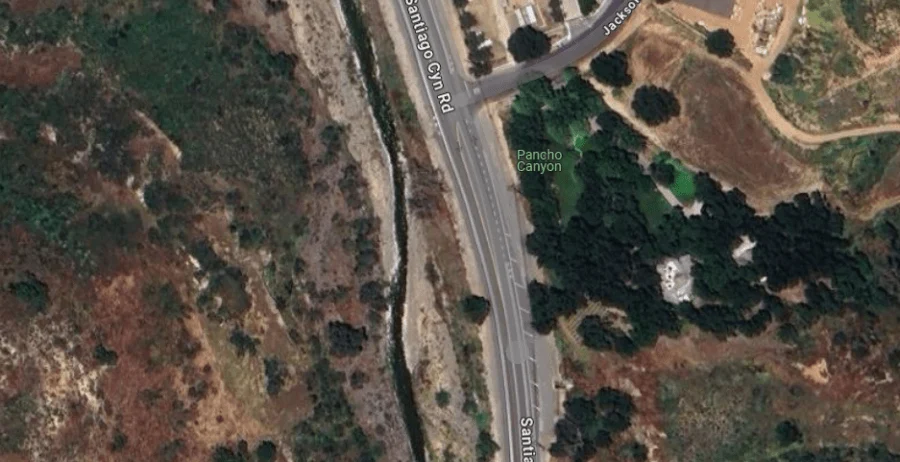
Detectives left for that location before Joy had even finished at the library. On May 17, 2013, they found Ramos’s body in a shallow grave in the Modjeska Canyon area of the Santa Ana Mountains, covered with rocks.
Searchers located her within about 45 minutes of arriving and recognized a star tattoo on her shoulder. Her body was too decomposed for investigators to determine a cause of death. Later that day, detectives brought Joy back in for further questioning.
When they pressed him, he grew uneasy and stood up to leave the room, at which point he was taken into custody. He was found to be carrying Ramos’s military identification tags and was booked into the Orange County Jail on one million dollars bail.
Joy was charged with murder. At his first court appearance, prosecutors said his motive may have involved feelings for Ramos that she did not return. His arraignment was continued to June 7, 2013.
Days after her body was found, Ramos was still awarded her degree from Cal State Fullerton; her niece, Jazelle, accepted the diploma on her behalf at the graduation ceremony.
The university later issued a statement calling her a devoted student and veteran who had been an active, valued member of its campus community.
Joy’s trial opened on July 8, 2014, more than a year after his arrest.
Prosecutor Scott Simmons argued that Joy suffocated Ramos in her sleep shortly after she gave him an ultimatum to move out, then drove her body to the canyon using a route that required crossing barbed wire, which explained the scratches on his arms.
Joy’s public defender, Adam Vining, acknowledged that Ramos had died inside the apartment but argued that Joy had only disposed of her body and had not killed her.
The defense suggested she may have died from a medical issue or taken her own life, pointing to her history of PTSD and describing her lifestyle as one that included heavy drinking.
Because no official cause of death was ever established, the defense told jurors they could not be certain a murder had taken place at all. “How did she die? It’s a mystery,” Vining said in closing arguments. Simmons countered that Ramos meant everything to Joy and that losing her was something he could not accept.

Jurors received the case on July 23, 2014, and returned a verdict on July 29, 2014, finding Joy guilty of second-degree murder.
At his sentencing on September 12, 2014, Joy continued to deny killing Ramos. He told the court he thought about her every day and said he could not apologize for something he maintained he did not do.
A member of Ramos’s family asked the court to make sure Joy never had the chance to harm anyone else. Joy was sentenced to 15 years to life in prison. His request for a new trial was later denied.
Joy has remained incarcerated at the Correctional Training Facility in Soledad, California. He became eligible for parole in 2022 after serving nine years of his sentence, but parole was denied that year and again in 2023.
His next hearing is not scheduled until 2026. He has said he is writing a book titled “Suspect: Guilty Until Proven Innocent,” though it has not been published. Ramos’s case was later featured in an NBC “Dateline” special and in the Netflix documentary series “Worst Roommate Ever.”
Sources:



Recent Comments