
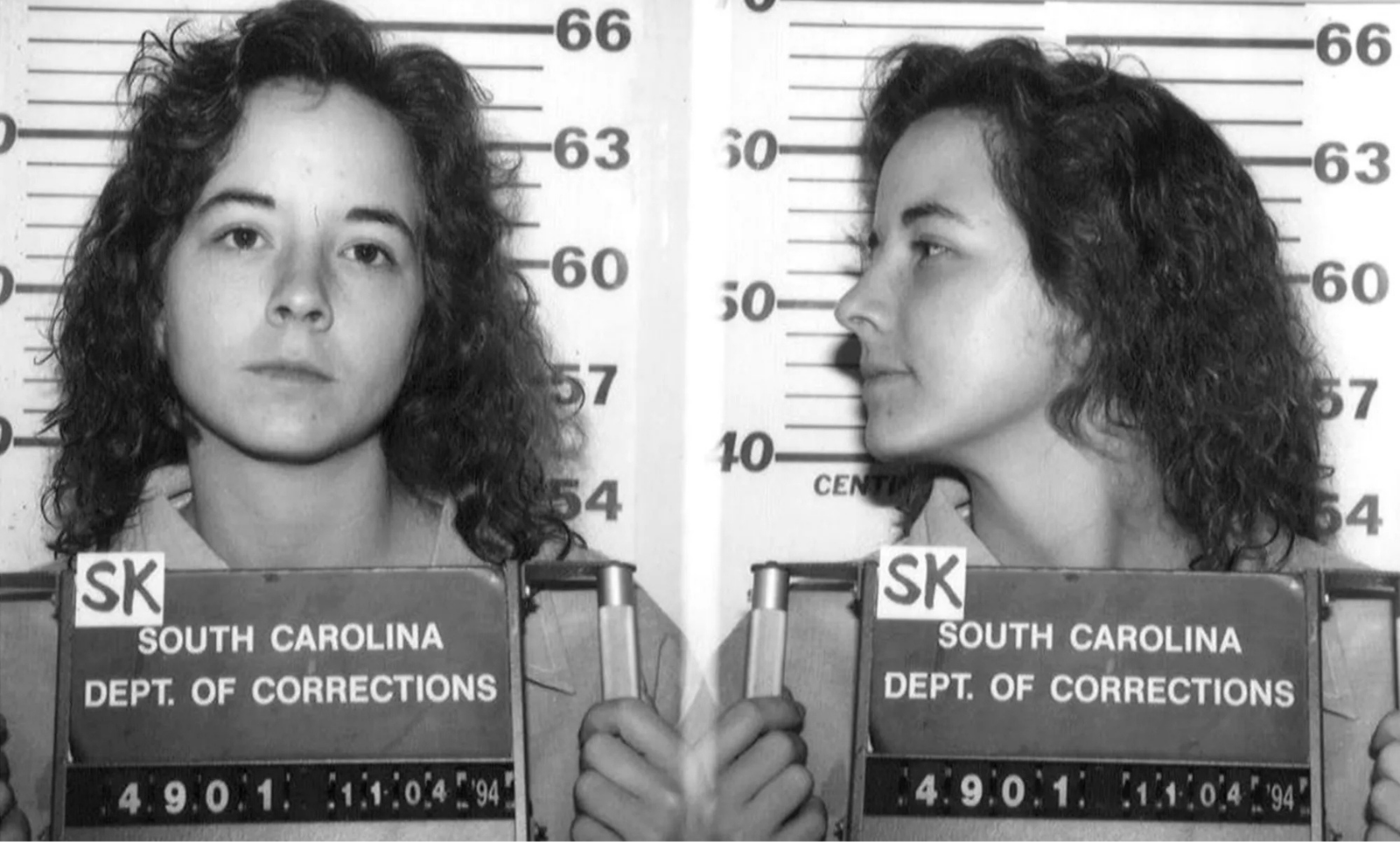
Susan Smith drowned her two young sons in a South Carolina lake in October 1994 and then told police a Black man had stolen her car with the children inside. The lie held for nine days before the truth came out, and the case became one of the most talked-about crimes in American history.
Susan Vaughan was born on September 26, 1971, in Union, South Carolina. Her childhood was genuinely difficult. Her parents fought constantly, and they divorced when she was six.
Even after the divorce, things did not settle down. Her father Harry made repeated threats to kill her mother and then himself, and the children witnessed all of it. He followed through on taking his own life in January 1978, leaving Susan and her brothers to deal with that loss at a very young age.
Despite everything happening at home, people who knew Susan described her as happy, social, and a good student. She was involved in clubs at Union High School and her teachers remembered her as outgoing with no visible signs of trouble.
Her mother Linda remarried not long after Harry’s death. The man she married was Beverly Russell, a local businessman and politician who was also a member of the Christian Coalition. As Susan got older, Russell began sexually molesting her.
She reported it to a school counselor, but when the information got back to her mother, Linda did not support her daughter. Instead, she was angry and embarrassed. Russell was sent to counseling for about a month and then allowed to return home, where the abuse started again.
Susan attempted to take her own life several times after that. Those close to the situation believed these were expressions of how trapped and alone she felt rather than a genuine wish to die, because nobody was standing up for her, not even her own mother.
She eventually got a job at a local grocery store and started dating. Her relationships tended to be unstable. One of the men she was involved with was a married coworker.
Then David Smith joined the store as an assistant manager and the two of them got together. Things moved fast. Susan got pregnant and they married on March 15, 1991. Their first son, Michael Daniel Smith, was born on October 10 that same year.
The marriage started off well enough. Both of them were described as good parents early on. But over time, both Susan and David were unfaithful to each other, and that caused a lot of conflict. They kept breaking up and getting back together.
Susan got pregnant a second time, and both she and David were happy about it. They bought a house together and seemed to be trying to make things work. Their second son, Alexander, was born not long after.
Susan felt like she was finally getting some stability in her life, something she had never really had growing up. Unfortunately, the relationship still did not hold together. The jealousy and distrust had built up too much, and Susan filed for divorce in 1993.
That same year, she started a new job at a manufacturing company called Conso Products. There she began a relationship with Tom Findlay, the 27-year-old son of the company’s owner.
He was good-looking and came from money, and Susan got very attached to him quickly. For Findlay, it was casual. The more time they spent together, the more he felt they were not a good long-term match, mainly because he had no interest in raising children.
While Susan was seeing Findlay, she also quietly resumed a sexual relationship with her stepfather Beverly Russell, something Findlay was completely unaware of.
From Susan’s side, things with Findlay felt serious. She genuinely believed he was the right person for her. So when he sent her a letter in October 1994 ending things, it hit her hard.
The letter was blunt. He told her she would make a good wife for someone, but that someone would not be him, and he pointed directly to her children as the reason. He did not want them and did not want the responsibility that came with them.
Susan did not accept it quietly. She went to his office to confront him and, in an apparent attempt to make him jealous or regain his attention, told him she had been sleeping with his own father, J. Cary Findlay, among others.
It had the opposite effect. Findlay wanted nothing to do with her after that, and any chance of rekindling things was completely gone.
In the weeks that followed, Susan’s state of mind got worse. On the evening of October 25, 1994, she put her two sons in the backseat of her car and started driving. At some point she pulled up to a bridge and thought about jumping, but she kept driving.
She eventually reached John D. Long Lake. She drove onto the boat ramp, put the car in neutral, and intended to let it roll into the water with all three of them inside. She engaged the emergency brake twice, hesitating both times.
On the third attempt, she got out of the car and watched it roll into the lake. Michael, who was three years old, and Alexander, who was fourteen months old, were still strapped into the backseat as the car went under.
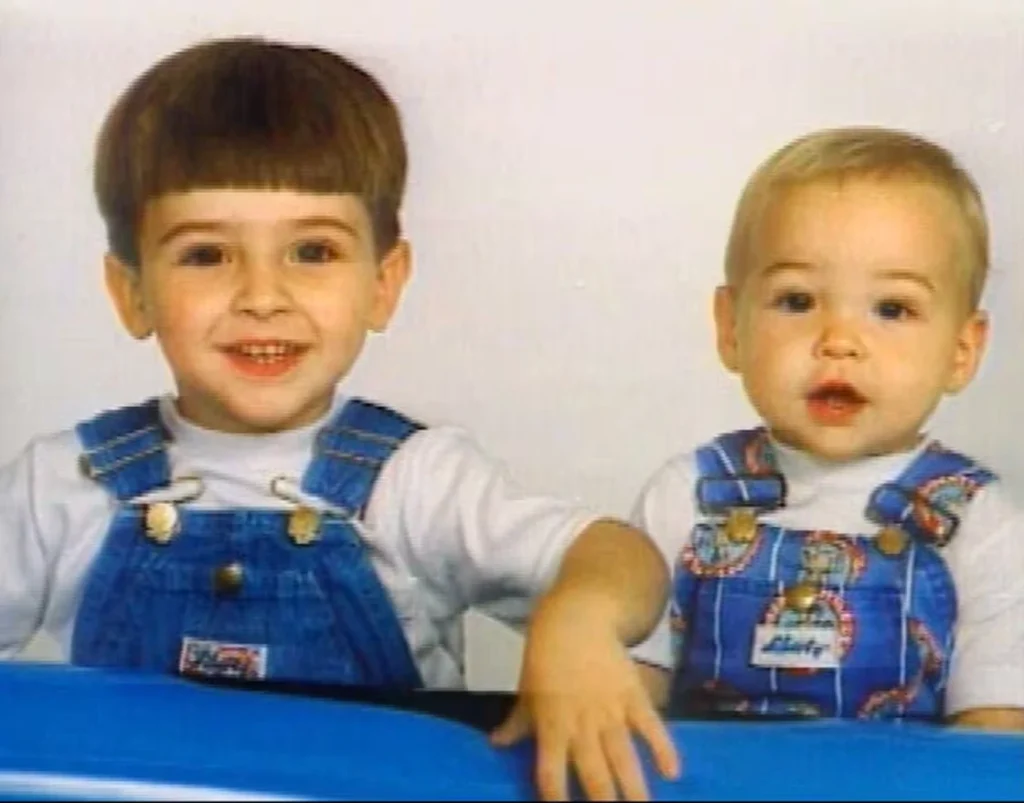
Between leaving the lake and reaching the nearest house she could find, she came up with a story. She showed up at the home of Shirley and Rick McCloud, a couple she had never met, in a visibly distressed state.
She told them that a Black man had approached her car at a red light with a gun, forced his way in, and driven off with her children still inside. She said she had begged him to let the boys out, but he refused and sped away. The McClouds called the police immediately.
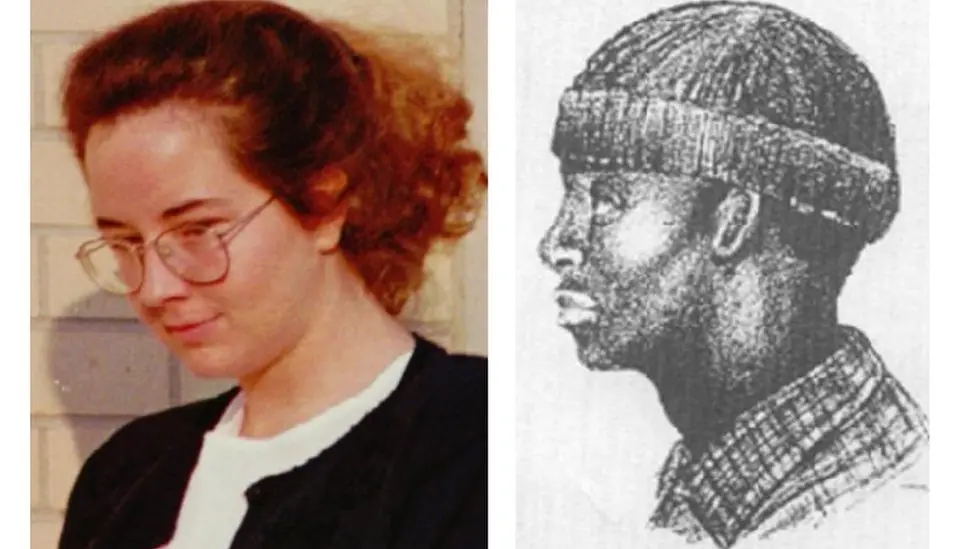
When officers arrived, Susan gave them a full account. She described the man as a Black male around 40 years old, wearing a dark shirt, a plaid jacket, jeans, and a dark knit cap.
Police put together a composite sketch based on her description and launched a massive search. The Union County Sheriff’s Department led the investigation, with support from local, state, and federal agencies.
Helicopters, search dogs, divers, and ground teams were all deployed. A tip line was set up and drew in a huge number of calls from the public. National media picked up the story fast. Major news outlets across the country ran it. The case became enormous.
Susan and David appeared together in front of cameras multiple times to appeal for the safe return of their sons. David believed everything Susan told him and stood by her completely throughout the early part of the investigation.
The community in Union rallied around both of them. People organized search parties, handed out flyers, and held vigils. Most of the country sympathized with what appeared to be a grieving mother desperate to find her children.
But not everyone was convinced. Some people closer to the situation, particularly in Union itself, noticed something was off.
Those who observed Susan closely during media appearances said she showed no real tears and seemed to be performing grief rather than experiencing it. Investigators were also starting to find problems with her story.
The traffic light at the intersection where she claimed to have been stopped only turned red when triggered by another vehicle approaching from a side road. Susan had said there were no other cars around, which made her account of stopping at a red light impossible.
On top of that, law enforcement officers who had been stationed near that same intersection as part of a separate operation reported seeing neither Susan nor anyone matching the description she gave.
And despite the case receiving wall-to-wall national coverage, the car had not been found anywhere in the country, which was hard to explain.
Both Susan and David were asked to take polygraph tests on October 27. David’s results were clear and consistent with truthfulness. Susan’s came back inconclusive, and that was the result across multiple tests.
The investigation continued, but so did the scrutiny on her story. During this time, police were also going door to door in Union based on Susan’s description and detained around half a dozen Black men.
The community responded with anger and frustration, with many residents pointing out that the description could have applied to a large number of people and that the response reflected deeply rooted stereotypes.
On November 3, Susan appeared on CBS This Morning and was asked directly whether she had any involvement in her children’s disappearance. She denied it completely, describing whoever was responsible as sick and emotionally unstable.
Later that same day she was brought in for further questioning by the sheriff, who laid out the specific evidence that contradicted her account, including the traffic light issue and the officers stationed nearby.
Overwhelmed by the evidence and in tears, Susan asked Sheriff Wells if they could pray together. He took her hands and prayed with her. When the prayer ended, Wells looked at her and told her it was time to tell the truth.
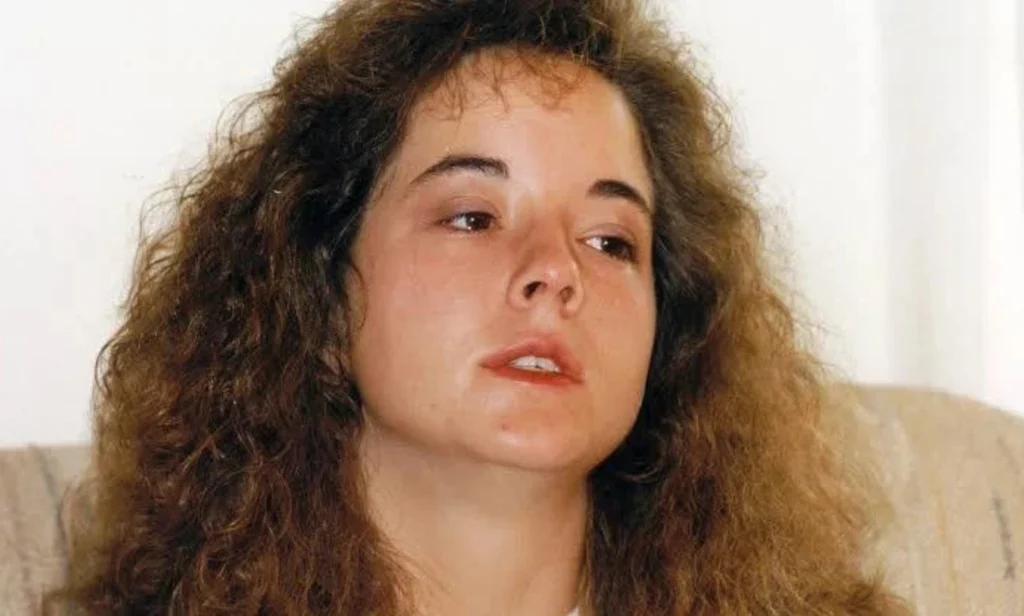
Susan confessed. She told investigators what had actually happened at John D. Long Lake on the night of October 25. She was arrested immediately and charged with two counts of murder.
Sheriff Wells announced the charges publicly. Using the information she provided about the car’s location, divers went into the lake and found the vehicle approximately 120 feet from the shoreline. Michael and Alexander were recovered from inside.
The car also contained Susan’s wedding album, her wedding dress, and Tom Findlay’s breakup letter, which investigators immediately recognized as central to understanding why this had happened.
Susan’s brother publicly apologized to the Black community the following day. A funeral for the two boys was held on November 6, and they were buried together in one casket. The turnout was enormous, and the entire community mourned.
Susan’s trial began in July 1995. Cameras were not allowed in the courtroom. The prosecution, led by Tommy Pope, argued that Susan had killed her children specifically to remove the obstacle their existence posed to her relationship with Tom Findlay, and used his letter as the primary piece of evidence supporting that argument.
The defense argued that Susan had intended to die alongside her sons, and that stepping out of the car was an impulsive decision made in the moment, not a calculated choice to save herself while letting them drown.
Defense psychiatrist Dr. Seymour Halleck testified that Susan had been diagnosed with dependent personality disorder and had been experiencing suicidal thoughts in the weeks leading up to the deaths. He described her as mentally ill but not legally insane.
Beverly Russell also testified and admitted to molesting Susan when she was fifteen, acknowledging that his actions had played a role in the psychological damage she carried into adulthood.
Evidence presented at trial established that it took approximately six minutes for the car to completely fill with water after entering the lake. That was six minutes during which Susan stood at the shoreline and did nothing.
David, who had supported Susan through the entire early phase of the case, testified against her at trial. He told the jury he wanted her to receive the death penalty.
After two and a half hours of deliberation, the jury found Susan Smith guilty of murder on both counts.
They chose not to impose the death penalty, deciding instead that a life sentence was more appropriate given that living with what she had done would be a harder punishment than death. She was sentenced to life in prison.
Her conduct in prison drew further attention over the years. In 2000, it was discovered she had been in sexual relationships with two prison guards, both of whom were fired as a result.
She was also disciplined for drug possession and for providing information to a documentary filmmaker. In 2010, she applied for a new trial, which was denied.
In 2014, she wrote a letter to a South Carolina newspaper insisting she was not the monster people believed her to be and that she had been a good mother who was not in her right mind on the night her sons died. David Smith later remarried and had two more children.
He has spoken publicly about believing Susan killed Michael and Alexander so she could pursue a life with Tom Findley. Susan is held at Leath Correctional Institution in Greenwood County, South Carolina.
She became eligible for parole in November 2024 after serving thirty years, as required under South Carolina law at the time of her sentencing. She was denied at that hearing and is eligible for another hearing in November 2026.



Recent Comments