
In September 2015, Kelley Clayton was found beaten to death inside her home in Caton, New York. What initially appeared to be a botched home invasion was uncovered as a calculated $10,000 murder-for-hire plot orchestrated by her husband.
A Marriage Built on Public Charm and Private Trouble
Kelley Stage met Thomas Clayton in Elmira, New York, where he had settled after a career as a professional hockey player with the Elmira Jackals, a minor league team.
The two married and eventually built a life together in the town of Caton, New York, settling into a home at 2181 Ginnan Road with their two young children, a daughter and a son.
Thomas transitioned from hockey into business ownership, running Paul Davis Emergency Services of the Southern Tier, a fire and water damage restoration company, before later acquiring a ServPro franchise in the same industry.
Both companies employed a man named Michael Beard, who worked closely with Thomas for several years and came to be regarded as a dependable employee.
Beard’s steady employment with Thomas would later become one of the most consequential relationships in the case, though at the time it appeared to be nothing more than an ordinary employer-employee arrangement.
Weeks before the murder, Thomas fired Beard, citing concerns about his conduct on the job. Beard, who was supporting his girlfriend and their children, was left without income at a time when he was already struggling financially.
Investigators would later determine that this financial pressure, combined with his ongoing connection to Thomas, placed Beard in a position that made him vulnerable to being drawn into a criminal plan.
The Night of September 28, 2015
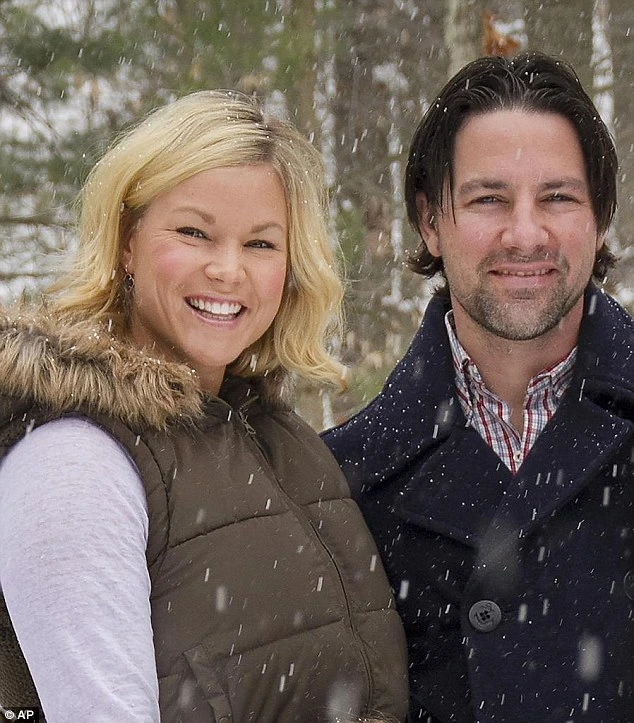
On the evening of September 28, 2015, Thomas Clayton left his home in Caton to attend a weekly poker game with friends in Corning, New York. Kelley remained at home with their two children.
Phone records introduced at trial later showed that during the course of that evening, a call was placed from a phone belonging to a woman at the poker game to Michael Beard at approximately 10:53 p.m.. Beard left his own home around 11:30 p.m. and did not return for roughly an hour and a half.
Thomas remained at the poker game until around 12:15 a.m., then drove his marked company truck back to his home, arriving at approximately 12:30 a.m. on September 29. Within minutes, he placed a 911 call.
“Help me, help me, my wife — she’s dead,” Clayton told the 911 operator. “I just got home. The kids were up and they said there was a robber in the house”.
James Cosgrove, a supervisor at the Steuben County 911 center who took the call, testified that when he asked Clayton whether he had attempted CPR or checked his wife’s vital signs, Clayton responded, “No… you’ll see when you get here”.
At one point during the call, the line remained open, and Clayton could be heard in the background asking his children whether there had been a robber. He then told the dispatcher he was taking the children to a neighbor’s house.
A Body Camera Captures the Scene
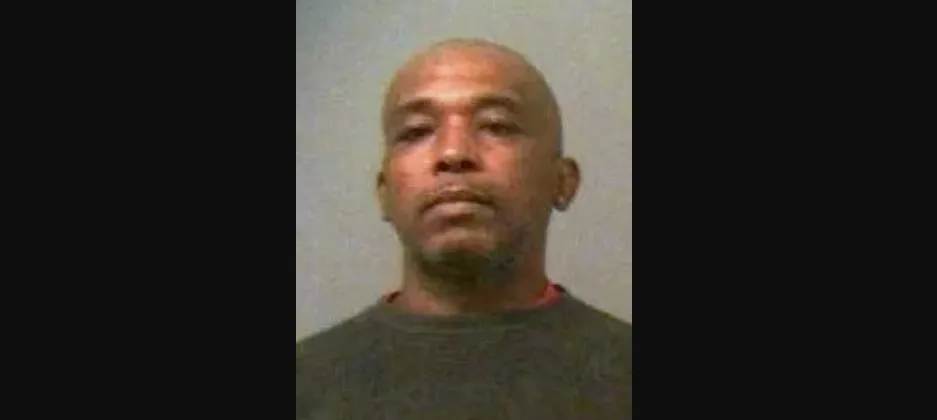
Steuben County Sheriff’s Deputy Dean Swan was the first officer to arrive. Wearing a body camera, he entered the home and documented what he found. “She’s been beat to death,” Swan said as he moved through the residence.
He later described the scene further, noting the extent of the injuries and the blood throughout the home. Investigator Donald Lewis of the Steuben County Sheriff’s Office, who responded to the scene that night, said, “This was an extremely brutal attack, a very gruesome situation”.
Kelley had sustained severe blunt force trauma. Investigators determined she had been struck first upstairs before making her way toward her children’s bedroom, then falling or being forced down the staircase, where she continued to be attacked in the area near the kitchen.
Lewis later confirmed that she had died from blunt force trauma inflicted with a fiberglass maul handle, a tool with a wooden handle typically attached to a splitting axe.
Investigators noted immediately that there was no sign of forced entry into the home, and nothing had been taken, undermining the robbery narrative Thomas had raised in his initial statements.
The Clayton’s seven-year-old daughter had witnessed the attack. She was brought to a neighbor’s home immediately afterward, and law enforcement began speaking with her within hours.
She told Steuben County Sheriff Jim Allard that she had seen a man “hurting mommy” and described her mother screaming “Run!” as the man chased her down the stairs. She described the intruder as wearing dark jeans, a long-sleeved shirt, and a mask.
Her account, along with the physical evidence at the scene, became central to the investigation from its earliest hours. In part because of her statement, Thomas Clayton was arrested later that same day, September 29, 2015, on a charge of second-degree murder.
New Suspect
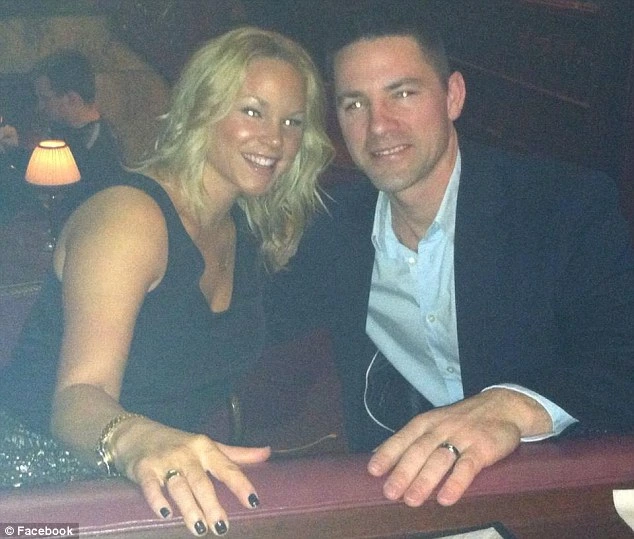
Despite his arrest, investigators quickly corroborated that Thomas Clayton had genuinely been at the poker game throughout the window during which the murder occurred, confirmed by the friends who hosted the game.
This left investigators with a central problem: if Thomas had not physically committed the murder, someone else had, and that person needed to be identified. Attention turned toward Michael Beard, the employee Thomas had fired weeks earlier.
The break in the case came when a woman at the poker game recalled that Thomas had asked to borrow her phone during the evening, stepping away to make a call before returning it.
When she later checked her call log, the record of that call had been deleted. Investigators traced the call and determined it had been placed to Michael Beard at 10:53 p.m., less than two hours before the murder.
Beard was brought in for questioning. He initially denied any involvement, agreed to take a polygraph examination, and failed it.
His girlfriend told investigators that Beard had left their home around 11:30 p.m. that night and had not returned until approximately an hour and a half later, a window that aligned with the time of the murder.
Confronted with this information, Beard confessed. According to investigators, “Beard confessed to being hired by Tom Clayton to murder Kelley Clayton… from what we were able to gather was [for] $10,000 cash,” Lewis said.
Beard directed investigators to the murder weapon, the fiberglass maul handle, which he said he had discarded after fleeing the scene.
He also led them to a location where he had disposed of a bag containing his bloodstained clothing, as well as to a creek where he had thrown away a set of house keys Thomas had reportedly given him.
On October 2, 2015, Michael Beard was arrested and charged with first-degree murder in connection with Kelley’s death.
Shortly after Beard’s arrest, a third man, Mark Blandford, came forward, stating he had accompanied Beard on the night of the murder and had acted as a lookout outside the home. Blandford was also charged in connection with the case. He later pleaded guilty to manslaughter in the second degree.
Two Trials
Michael Beard’s case proceeded to trial first. Prior to trial, Beard withdrew his earlier confession, instead claiming that Thomas had hired him only to burn down the house for insurance purposes and that he had discovered Kelley already dead when he arrived that night.
Prosecutors presented evidence including Beard’s own DNA found mixed with Kelley’s blood at the scene, along with his detailed knowledge of the location of the murder weapon, the bloody clothing, and the house keys, evidence that would have been difficult to explain if his revised account were true.
In late October 2016, following his trial, Beard was convicted of one count of first-degree murder and two counts of second-degree murder.
On February 27, 2017, Steuben County Judge Peter Bradstreet sentenced him to life in prison without the possibility of parole for the first-degree murder conviction, along with an additional 25 years to life for each second-degree murder count.
Chemung County District Attorney Weeden Wetmore said of the case, “Murder for hire, especially with a home invasion, killing the mother of two young children, so we’re very satisfied with the outcome”.
Beard, addressing Kelley’s family at sentencing, said he was “deeply sorry for their loss” and that he felt their “pain and grief,” while continuing to maintain that he did not kill Kelley Clayton.
Thomas Clayton’s trial began in January 2017 and lasted nearly seven weeks, during which more than 70 witnesses testified.
Because there was no direct communication between Thomas and Beard explicitly discussing murder, prosecutors built their case using circumstantial and forensic evidence, including phone records, surveillance footage, and testimony regarding a series of vehicle exchanges in the days before the killing.
Evidence presented at trial showed that in the days leading up to the murder, Thomas had arranged to swap vehicles with associates, resulting in Beard having access to a truck that would not be recognized in the area, while Thomas himself drove his marked company truck on the night of the murder, a detail he repeatedly emphasized to investigators when first questioned.
Surveillance footage showed Thomas leaving a parking lot in his work truck on the night of September 28, followed shortly afterward by Beard leaving in a different truck; that same truck was recorded returning after 1:00 a.m.
On February 23, 2017, following approximately six hours of jury deliberation, Thomas Clayton was found guilty of first- and second-degree murder. Tina Yazdani, reporting on the verdict, described the moment as one in which “the tears being shed by [Kelley’s] family are those of relief” for the first time since the murder.
On April 24, 2017, Thomas Clayton was sentenced to life in prison without the possibility of parole on the first-degree murder count, along with 25 years to life on the second-degree murder count.
At his sentencing, Clayton maintained his innocence, telling the court, “I had absolutely nothing to do with the murder of Kelley. One hundred percent. Nothing. All of this propaganda that has been spewed over the past two years will come to an end”.
He also stated regarding his children, “I know they are hurting and miss their mom and dad very much”. Kelley’s sister, Kim Bouris, responded to the proceedings by stating, “This was not justice for Kelley, and it’s not justice for Charlie or Cullen”.
In 2019, Clayton’s attorneys appealed his conviction. The Appellate Division of the State Supreme Court, Fourth Department, affirmed the jury’s verdict following an appeal hearing, upholding his conviction for first-degree murder.
In Memory of Kelley Clayton
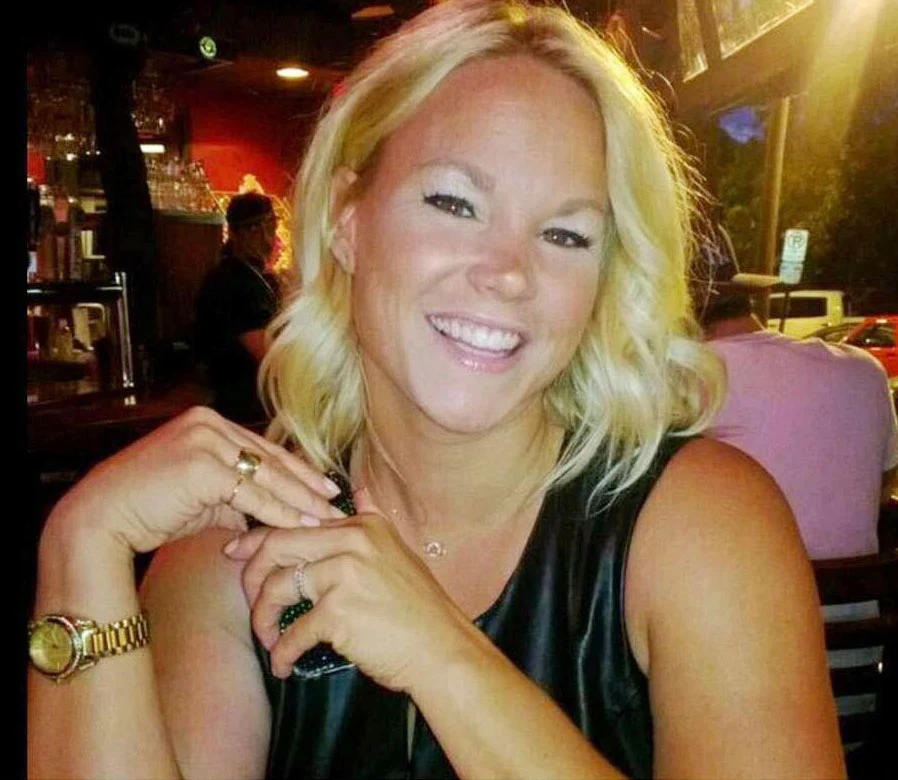
Kelley Stage Clayton was remembered by those closest to her as a devoted mother of two young children, a woman whose warmth and generosity left a lasting impression on the community around her.
She had built a life centered on her family, raising her daughter and son in their home in Caton after settling there with her husband.
Colleagues, family members, and investigators who worked her case consistently described the crime that took her life as one of the most disturbing they had encountered, a description echoed by District Attorney Weeden Wetmore when he called it “one of the most heinous crimes” of his career.
Kelley’s death left her two children, Charlie and Cullen, without their mother, their father convicted of orchestrating the very crime their mother’s daughter had witnessed as a seven-year-old.
In the years following her death, Kelley’s family continued to advocate for her memory, working to ensure that the case’s legal proceedings reflected the severity of what had occurred, and standing before the court at multiple sentencing hearings to speak on her behalf.