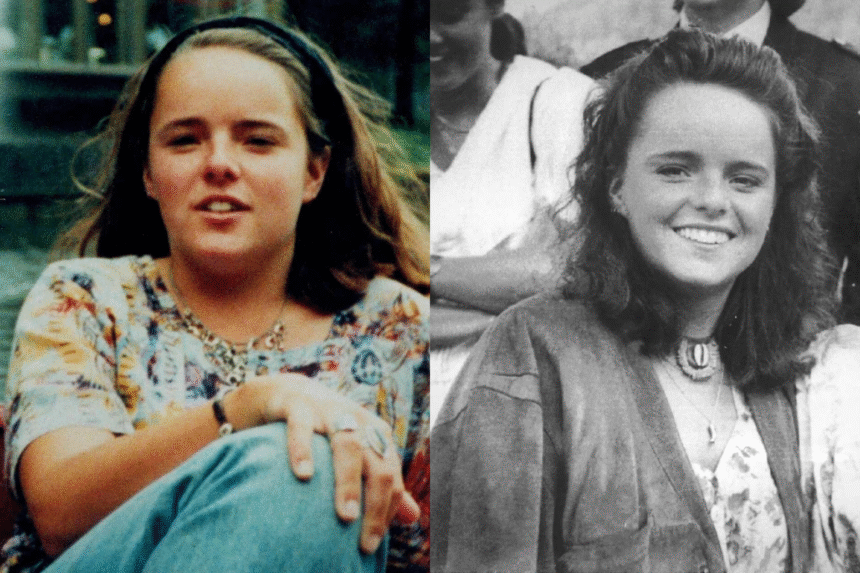
On the night of 14 June 1992, 22-year-old Helena Andersson left a night out in Mariestad, Sweden, to walk the short distance home. She never arrived.
The Last Night Out
The evening began not in Mariestad but in the nearby community of Töreboda, at a housewarming party held by Helena Andersson’s friend Pernilla Wadebäck. Helena went with her older sister, Ulrika.
As the night wound down, Ulrika rounded off her evening and travelled to their parents’ home in Mariestad, while Helena chose to keep celebrating and moved on to the nightclub at the Stadshotellet in central Mariestad, a town of roughly 15,000 people.
It was there, on the night of 13 June leading into the early hours of 14 June, that Helena spent the final confirmed hours of her life among people who knew her.
During the evening she telephoned her sister. She had misplaced her belongings and wanted to know whether her sister had seen her wallet. Her sister told her not to worry about the cost and offered to pay for a taxi to bring her home safely.
Helena chose instead to make her own way back. At around two in the morning she left the Stadshotellet on foot, setting out along the walking and cycling path that led toward the home she shared with her parents.
From the moment she stepped away from the lights of the town centre, no one who knew her ever saw her again.
A Scream in the Dark
Shortly after two in the morning, a woman out walking her dog near the same route heard sounds she did not recognise. At first she thought it was nothing more than revellers returning from the nearby beach.
“I heard there was a commotion up by the main road. It wasn’t one, but several voices, and I thought it was people who had been down at the beach.
But I didn’t hear a car; they were standing still in the same spot,” she told police, in testimony that would remain classified for years and that she gave only on condition that she never appear by name, image, or voice.
Then the tone changed. Investigators recorded that the dog-walker heard a woman shriek, and the cry was described as “desperate and heartbreaking.” What she said she heard next has become the most chilling account in the case.
“I stopped and listened for maybe five minutes. The girl was crying loudly: ‘No, you can’t do that.’ Two male voices I definitely heard. It sounded unpleasant and I actually got scared,” she recalled. After a pause, she said, the woman spoke once more.
“After that it was quiet for a while, and then I heard the woman: ‘Oh, no.’ Then I didn’t hear her any more.” The male voices, according to her statement, were aggressive, and the episode ended with the sound of a car door closing.
The witness told the radio series that revisited the case that she was one hundred per cent certain it was Helena Andersson she had heard.
She was not the only person near Helena’s home that night. A neighbour, sitting in a car at about half past two, saw a light-coloured car come speeding along the cycle path in the direction of the wooded grove; a short while later, the same car returned the way it had come.
That neighbour said he had not reacted to any screams. A third witness, later in the night, reportedly saw someone park a car in the nearby hospital car park and then hurry away on foot.
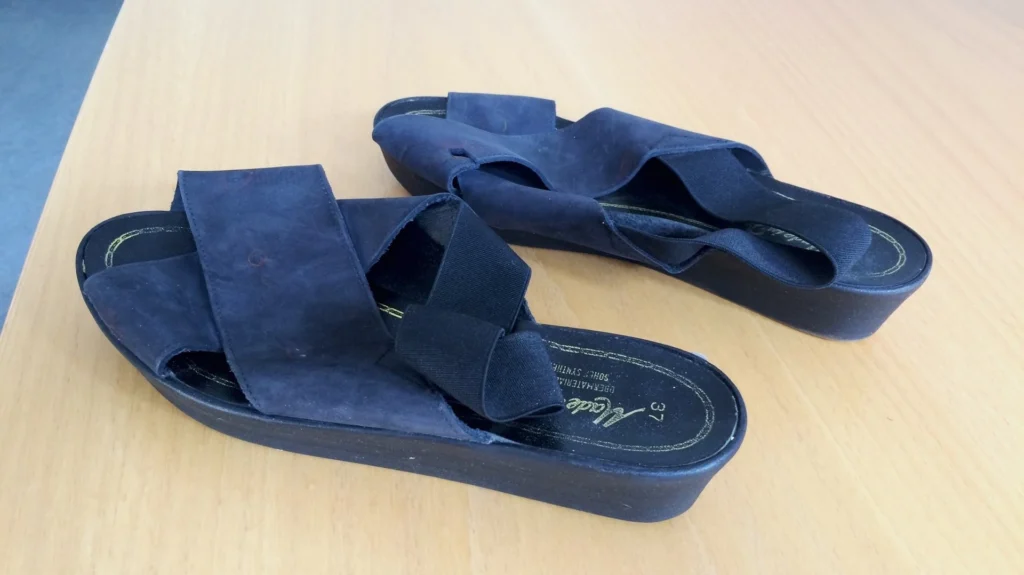
When morning came, the ground told part of the story. In a wooded grove close to her home, Helena’s bloodied shoes were found, and her rings lay nearby — roughly 100 metres, about 330 feet, from her parents’ house, along the road she would have walked to get home.
The belongings were clustered together, as if they had fallen or been dropped in a single moment of struggle. Police searched the surrounding fields, paths, and woodland, and divers were sent into the water to look for any trace of the missing woman.
Nothing was recovered. Because the physical evidence pointed so strongly to violence, police treated the matter not as a routine missing-person report but as a murder, even though Helena’s body was never found. That absence of a body would frustrate every stage of the investigation that followed.
The dog-walker’s account, however, carried a complication that would shadow it for decades. The retired officer Pelle Jenvén, who investigated the disappearance in its early years, noted that her testimony surfaced only at her second interview.
“Of course it could be an entirely correct observation, but at the first questioning she had neither heard nor seen anything, even though she knew that a woman in particular was missing. I even think she knew that it was Helena Andersson who was gone,” Jenvén said.
Early Suspects and False Trails
Attention turned first to a Danish man. Witnesses reported having seen him driving a white car near the Stadshotellet, and some believed he had picked Helena up and driven away from the nightclub.
He was arrested on suspicion of involvement in her disappearance, but the case against him did not hold, and he was released without charge.
The description of a white or light-coloured car, however, would echo through the investigation for years, because several witnesses independently placed such a vehicle near the spot where Helena’s belongings were found.
Other leads emerged and faded. In 2010, acting on tips from the public, investigators examined a white Volvo 744. The car had once belonged to an 80-year-old man who had since died in a house fire.
After analysis, the vehicle was determined to have nothing to do with Helena’s disappearance and was ruled out. Then, in 2017, a new figure came to prominence in the press: a man the media dubbed “the man in the pilot glasses,” who had been seen with Helena at the Stadshotellet.
From that year he was formally regarded as a reasonable suspect in her murder. He gave an unsettling account of his own conduct to the radio programme P4 Skaraborg that year.
“I know I behaved strangely and gave different information in the interrogations. I don’t know why and can’t explain it,” he said. Like those before him, he was arrested and later released, and the suspicion against him would ultimately be undermined by advances in forensic science rather than confirmed by them.
A Case Turned Cold, Then Reopened
For much of its history the case survived on fragments of physical evidence, and in June 2019 those fragments were finally subjected to modern testing. DNA analysis of Helena’s sandals revealed traces from three different people — one woman and two men.
The female profile could plausibly have come from Helena herself, while the male traces were run against forensic registers in the hope of a match. The analysed ring yielded no DNA at all.
Crucially, none of the profiles matched “the man in the pilot glasses,” and the suspicion that had attached to him for two years now looked likely to collapse.
The investigator overseeing the work, Lars Johansson, was cautious about how far the new findings could be pushed. “I want to know if they have established an identity. I want it in writing first before we do anything with it,” he said, describing his insistence on a formal report before drawing conclusions.
He acknowledged that the older suspicion might have to be set aside, noting that the man in the pilot glasses was not being formally cleared even as the ground shifted beneath the theory.
For Helena’s family, forensic science was never the whole of the story. Her sister Gabriella Andersson made clear where her hopes lay. “I want the suspect to start talking. That is what I hope for, rather than DNA,” she said, adding, “For my parents’ sake I wish he would tell what he knows.”
She wanted the case handed to the cold-case unit in Gothenburg, frustrated that everything had come to hinge on a silent man. “Because I think we are standing still. The fact is there is a chief suspect and now a great deal is locked to this person not saying what he has done,” she said.
Momentum returned in 2020, when the Swedish police cold-case group based in Gothenburg took over the investigation. Their review moved the focus onto a man who had appeared in the case files years earlier, though never as a suspect.
On 23 August 2021 — more than 29 years after Helena vanished — that man, a Mariestad resident then in his 60s and described as being in poor mental condition, was arrested on reasonable suspicion of murder.
He had been in his 30s at the time of the disappearance and had owned a small, light-coloured hatchback matching the vehicle witnesses described, a car that had since been scrapped. Commissioner Peter Thylén said the man’s behaviour around the time of the crime had drawn investigators’ attention.
“We know the man tried to make contact with women around the time of Helena’s disappearance. And by that I don’t mean just that evening but also months and even years both before and after the disappearance,” he said.
For Helena’s family, the arrest reopened wounds that had never healed.
“If it’s the right person, then that’s a good thing, because that is one of the parts of all this that you live with — that someone should not be allowed to do this and just carry on as if nothing had happened,” Gabriella Andersson said. Yet she refused to frame the arrest as a resolution.
“Whoever is guilty really makes no difference to the fact that my sister didn’t get a chance to live her life,” she said, describing how the renewed attention set her mind turning “like a tumble dryer” as she wondered how her sister’s life might have looked.
The detention hearing was held two days later, on 25 August 2021, at the Skaraborg District Court in Skövde, behind closed doors and before some twenty journalists.
A reporter present in the courtroom, Bosse Carlqvist, described the moment the suspect appeared: “He staggered into the courtroom with a white blanket over his head.”
Through his defence lawyer, Thomas Berner, the man denied any involvement, and although prosecutors had sought his detention on the stronger grounds of probable cause, he was released after the hearing.
Prosecutor Jenny Karlsson made clear that his release did not mean his exoneration. “He is still a suspect,” she said, and “we will continue the investigation.”
In the weeks that followed, the police searched his home and a wooded grove, sent material including the blood traces from the sandals for renewed analysis, and fielded twenty to thirty fresh tips from a public whose interest the arrest had reawakened.
“We are continuing the investigation the same way as if he were in custody,” Thylén said, adding that the tips were “both old and new information.”
Competing Theories and a Final Closure
Few figures shaped public understanding of the case as much as the criminologist Leif GW Persson, who travelled to Mariestad a year after the disappearance and was for a time involved in the investigation.
He devoted more than a thousand hours to the case over some twenty years and became one of the fiercest critics of how the early inquiry had been handled.
“You make every conceivable mistake you can make in the initial stage of a police investigation,” he said of those first crucial days, before delivering a verdict that became notorious: “A collection of idiots. You’re welcome to quote me.”
His central complaint was that people close to Helena were not questioned promptly, which in his view gave those responsible time to coordinate their accounts and secure alibis.
Persson’s reconstruction differed sharply from the official line. He argued that there were two perpetrators, not one, who offered Helena a lift after she left the Stadshotellet.
A conflict then broke out in the car; she asked to be let out; one of the men, intoxicated, struck her to the ground, and the second helped carry her back into the vehicle.
“An assault that turns into causing another’s death, that’s roughly how I think it went,” he said. It was in that struggle, he believed, that her rings and other small belongings spilled from the car, which explained why they were found gathered in one place.
He was convinced her body had been dumped in Lake Vänern. Of the man held in custody, he was dismissive: “I don’t believe this. I think there are two perpetrators and I have a firm idea of who they are. It’s not the person who was in custody.”
The investigators pushed back. Lars Johansson observed that “GW has had as many theories as there are fingers on your hands,” acknowledging the criminologist’s deep attachment to the case while stressing that he had held no access to the investigation for many years.
Johansson also identified the enduring obstacle at the heart of everything: “Our biggest problem in the investigation is that we don’t have a body. But the case is very much alive.”
His colleague, Commissioner Peter Thylén, directly rejected the two-perpetrator theory in November 2021, warning that it risked discouraging witnesses who had seen a single person from coming forward.
“We are fairly sure the suspect acted as a lone perpetrator,” he said. “But it doesn’t take two perpetrators for what happened. A lone adult man can lift a body weighing just over sixty kilos into a car. We are not looking for any additional perpetrator.”
Thylén described a chilling sequence pieced together from the witness sightings of the light-coloured car: “Something happens on the path where the car drives up. Then the car is gone for five to seven minutes and then it comes back on the same cycle path but in the other direction,” a movement he suspected marked the removal of Helena’s body.
The case drew wider attention still. It was linked to the convicted murderer Anders Eklund, though no charges connecting him to Helena were ever brought.
It inspired documentaries by the Swedish programmes Efterlyst and Veckans Brott and by Sveriges Radio, and in April 2021 the Danish author Lotte Dalgaard published a book about it, Mardrömmen i Mariestad — Historien om Helena Anderssons försvinnande (“Nightmare in Mariestad — The Story of Helena Andersson’s Disappearance”).
Helena’s sister Ulrika Andersson, reacting to Persson’s published theory, voiced the family’s frustration with speculation that led nowhere. “I don’t know which men he’s referring to in his theory; it’s not something he has shared with us in the family,” she said.
“If GW believes so strongly in his theory, I don’t understand what’s stopping him from going all the way and investigating it for real.”
The end, when it came, offered no answers. On 20 June 2022, prosecutor Jenny Karlsson announced that the investigation into the murder of Helena Andersson was being closed, after the man who had remained the chief suspect died.
“It’s sad not to get an end to a case like this,” she said. “We have really tried to take the investigative measures we could, and it’s clearly sad when you can’t get any further, especially in a case like this that goes so far back.”
She held out only the faintest possibility of revival, saying the matter could be reopened if something entirely new were to emerge. Thirty years after a young woman walked home from a night out, the road near her parents’ house had given up its few clues and no more.
Remembering Helena
Helena Andersson was born in 1970 and grew up in Mariestad, the small lakeside town where she was known and loved and from which she vanished at 22.
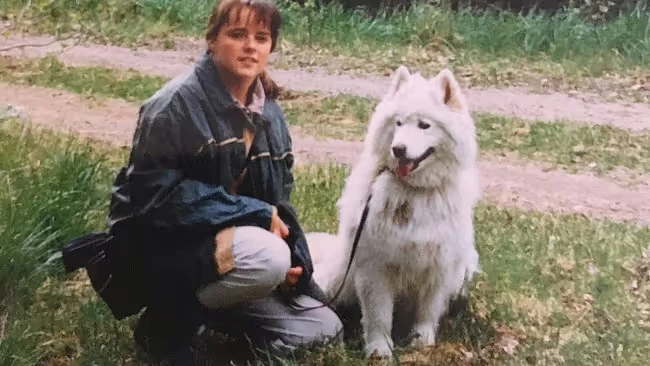
Friends and family remembered a young woman who was carefree and full of life, with her future still open before her, the kind of person for whom an evening of dancing with friends was simply the ordinary pleasure of being young; photographs from her family show her with her dog, Dunita.
What she left behind was measured not only in the searches and theories that followed, but in the quiet permanence of her family’s grief. Her sister Ulrika described a life split cleanly in two by that June night.
“I have a life before Helena disappeared and then I built a new life afterwards. I live with a constant longing for her,” she said. “I have found meaningful things to fill my life with, but the grief for her can never be replaced. It is something I have had to learn to live with.”