
In April 2018, three people from the Miami area stopped at a small motel on Florida’s Gulf Coast during a long road trip. Within two days, a sheriff’s office in a quiet county was investigating a violent crime.
A Relationship Under Strain

Zachary Abell and Christina Araujo met a boat captain named Mike Picavet by chance at a bar around 2011. Picavet remembers Abell as outgoing and entertaining. Araujo, who was eight years older than Abell, was his girlfriend, and the two had been dating for about four years.
They also ran a used car dealership together. Picavet says Araujo told him almost at once that her father was a major with the Palm Beach County Sheriff’s Office and could settle any trouble with the law.
Picavet became a regular companion of the couple, and their evenings were filled with parties and heavy drinking. He says Araujo directed the relationship while Abell followed her lead.
In 2016, Abell reconnected with Aileen Seiden, a friend from his teenage years, after she returned to Miami from an extended visit to Los Angeles. Soon afterward, he arrived at Picavet’s boat with Aileen instead of Araujo, and Picavet understood that Abell now had two women in his life.
Abell, however, could not make a clean break from Araujo. Picavet says she often made unsettling remarks when she was drunk, including that she could make Abell disappear.
Aileen’s older sister, Franceasca Seiden, says Aileen found Abell fun in the beginning, but that this changed quickly. The relationship between Aileen and Abell remained secret.
Aileen’s friend of 25 years, who asks to be identified only as Allie, says she hoped Abell would eventually choose her, and that he kept her hopeful by telling her he was trying to end things with Araujo.
In 2017, Aileen unexpectedly lost her job as a property manager, and she soon began working at the dealership that Abell and Araujo ran. Allie says the arrangement left Aileen feeling that she was losing control of her own life.
Aileen continued to press Abell to leave Araujo for good. When he finally tried, Araujo responded with an unexpected proposal: the three of them should try a romantic relationship together.
Aileen initially rejected the idea, telling Allie that it could never succeed. After a few weeks of silence on the subject, she changed her mind, and the three agreed to try it. Allie was surprised, but she also hoped it might work. It did not work.
Picavet says the arrangement soon fell into jealousy, with one person always feeling like the odd one out, and that alcohol fueled frequent fights. He says Aileen and Araujo traded punches, often leaving one or both with black eyes that they hid behind large sunglasses, and that this happened nearly every other day.
Allie remembers the situation differently. She says Abell was the main aggressor, and that Aileen would call her to say he had hurt her again. Allie would hurry over, photograph the injuries, and plead with Aileen to go to the police.
Aileen refused, afraid that Araujo’s connections in law enforcement would be used against her. Allie once took her to an emergency room, but Aileen would not say how she had been hurt.
Franceasca was furious when she learned of the abuse. She wanted Aileen out of the situation, and she believed Araujo was more violent than Abell. Aileen, however, felt trapped financially.
In 2018, she moved into the home that Abell and Araujo shared, so that the three lived and worked together. Aileen saw it as one last chance to make the relationship work, with a trial period of one or two months. Within a few weeks, she had had enough and told Allie she planned to move out.
A Road Trip Across the South

Aileen’s plans to leave were interrupted on April 7, 2018, after Abell and Araujo had a violent fight. Aileen called Allie from Abell’s phone and said she intended to get Abell out of the house and stop at a coffee shop.
The next call Allie received was from Araujo, who was furious and threatened to report the car Aileen and Abell were driving as stolen. Allie immediately warned Aileen and Abell.
Instead of returning as Allie expected, the pair drove to Georgia. Allie asked what she was thinking, since Aileen had neither her phone nor her wallet, but Aileen told her they were on a road trip and that it was a good thing.
Araujo, who had been left behind, sent more than 150 text messages to Abell’s phone in roughly 24 hours. None was answered. One read, “You two deserve each other.” Another said her father would be calling them later, and a third declared, “You effed me over and now I’m effing you over.”
About 48 hours into the trip, as Abell and Aileen headed toward Texas, Araujo’s tone shifted. She wrote, “If you want to come back home, come back. You never have to question my love.” Abell instead invited her to join them, and she flew to Dallas.
With the three together again, the earlier problems returned. Aileen began calling Allie from Abell’s phone at night, saying that things were getting bad and that she did not know what to do. Allie says the calls began after Araujo arrived, and she worried that someone would get hurt.
By the tenth day of the trip, Franceasca had not heard from her sister in a while. When the group reached New Orleans, Aileen finally called Franceasca and said she thought they were going to kill her.
Franceasca told her to run to the nearest gas station and ask someone to call 911. Aileen replied that she could not. Franceasca asked for details about where they were, but Aileen had to end the call before giving an address. Without an address, Franceasca had no way to send help. She says she was frightened and frustrated.
The road trip continued into its second week, and the group then headed for Panama City, Florida. A missed exit led them instead to the Forgotten Coast, as the counties along that stretch of Florida’s Gulf Coast are known.
On the evening of April 21, surveillance cameras recorded the three at a popular restaurant, the Red Pirate. They also played miniature golf and spent the night partying.
On the recommendation of a local, they went on to the nearby Sportsman’s Lodge Motel in Eastpoint, where they took the last vacancy of the night, Room 15.
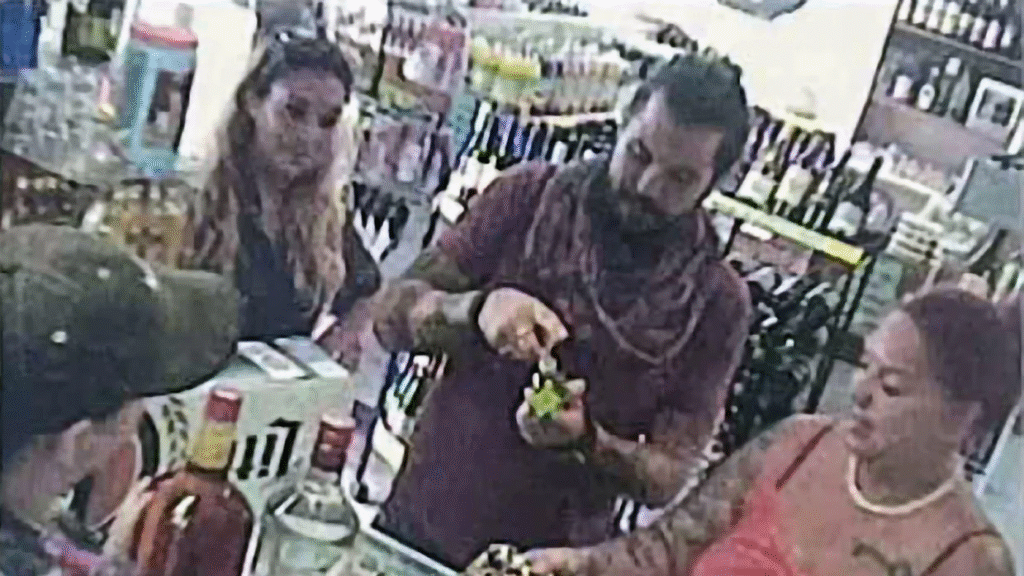
The next morning, April 22, the three decided to spend another day at the motel instead of getting back on the road and to make it a party. At a liquor store, where surveillance cameras again recorded them, they bought large bottles of vodka and Fireball whiskey.
Later that day, Aileen spoke with Allie. She said she needed to leave Abell, that she felt like a sex slave, and that he had a different and very frightening look in his eyes. The two friends made an escape plan.
Allie bought Aileen a Greyhound ticket, because Aileen had no wallet, for a bus leaving from Tampa, the group’s next destination. The bus would drop Aileen off near Miami, where Allie would take her home. Aileen only needed to board it. Allie did not hear from her again.
The Night in Room 15
The only detailed account of what happened in Room 15 that night comes from Araujo, who described it in sworn testimony. She said the three were relaxing in the room after a day of heavy drinking, and that Abell becomes very aggressive and mean when he drinks.
Aileen looked at Araujo and said, “Christina, guess what?” but never finished the sentence. Abell, she said, immediately got up, went over to Aileen, and began hitting her while yelling that she always started problems.
She admitted that she also hit Aileen while demanding to know what she had been about to say. No answer came, and a frustrated Araujo left the room.
After a few minutes outside the room, Araujo said, she returned and found Abell and Aileen in the bathroom. Abell held something white, as if he were poking Aileen with it.
The assault continued near the bed, where Abell reached for his wooden walking stick and struck Aileen several times. When he hit her in the back, the stick broke.
Araujo said she watched in terror as Abell began using the broken stick to sexually assault Aileen. She eventually put herself between them, and the attack stopped.
Araujo said Aileen was badly beaten but still alive when the exhausted trio fell asleep, and that she did not realize Aileen had died until she woke the next morning.
She said she took part in the cleanup of the room that followed only out of fear of what Abell might do to her. She and Abell then left the motel, taking Aileen’s body with them.
Discovery on Highway 98
On April 23, 2018, a couple heading to a nearby fishing pond discovered a body off Highway 98. Lieutenant Ronnie Jones of the Franklin County Sheriff’s Office, the lead investigator, received the call.
The woman’s body lay stretched across a roadside ditch. Bruises covered her from head to toe, and she had lacerations on her face, stomach, and legs.
Jones had never seen anything like it; he describes the violence as extreme and excessive. It appeared that whoever left the body had been in a hurry.
That night in Davie, Florida, Picavet was home alone when someone knocked at his door. It was Araujo, accompanied by Abell. Picavet asked where Aileen was, and Araujo immediately replied that she had run away.
Picavet did not believe her and pressed the question. Abell began to choke up and said she was dead. Once Araujo was out of earshot, Picavet says, Abell told him what had happened.
Abell said that Araujo had killed Aileen, that he had woken up to find Aileen dead beside him, and that he had tried to give her CPR. He wanted to call 911, but Araujo would not allow it. Abell kept saying that he had to protect Araujo.
Picavet says he did not want either of his friends to be hurt and feared a violent outcome if he called 911. Instead, he decided to speak with Araujo’s father, Colonel Tony Araujo, a man he had never met.
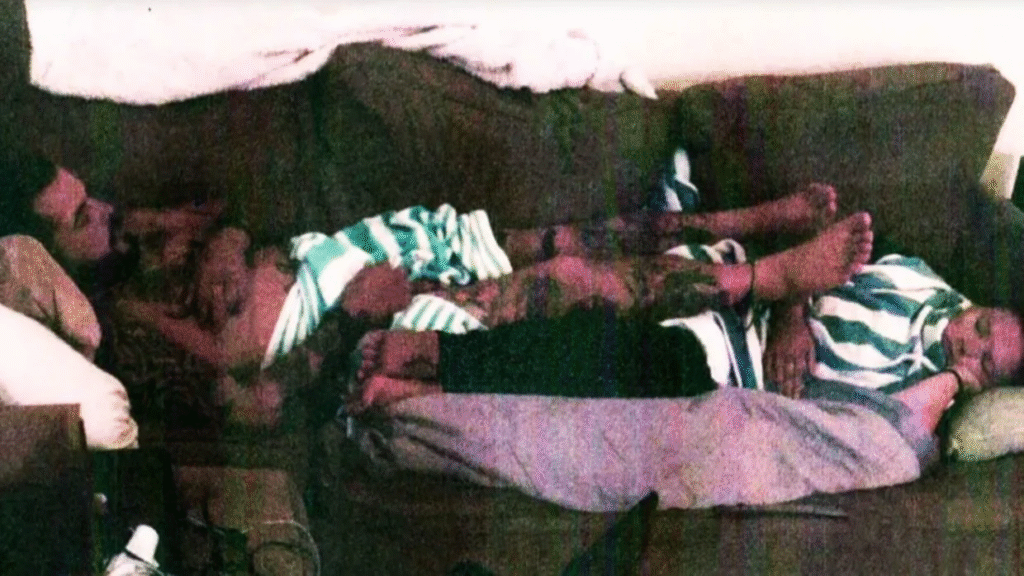
While Abell and Araujo were asleep, Picavet took a photograph of them and searched online for the colonel’s phone number. When he reached the colonel, he withheld the news at first, saying only that he needed to talk about Christina and that it was very important.
The colonel directed him to meet at a gas station. There, Picavet told him that Christina had killed someone. The colonel, a law enforcement officer, told him to wait, then took him to the Sheriff’s Office to give a formal statement.
Later that day, Picavet was shown a photograph of the body found on Highway 98 and identified the woman as Aileen Seiden. She was 31 years old and lived in the Miami area.
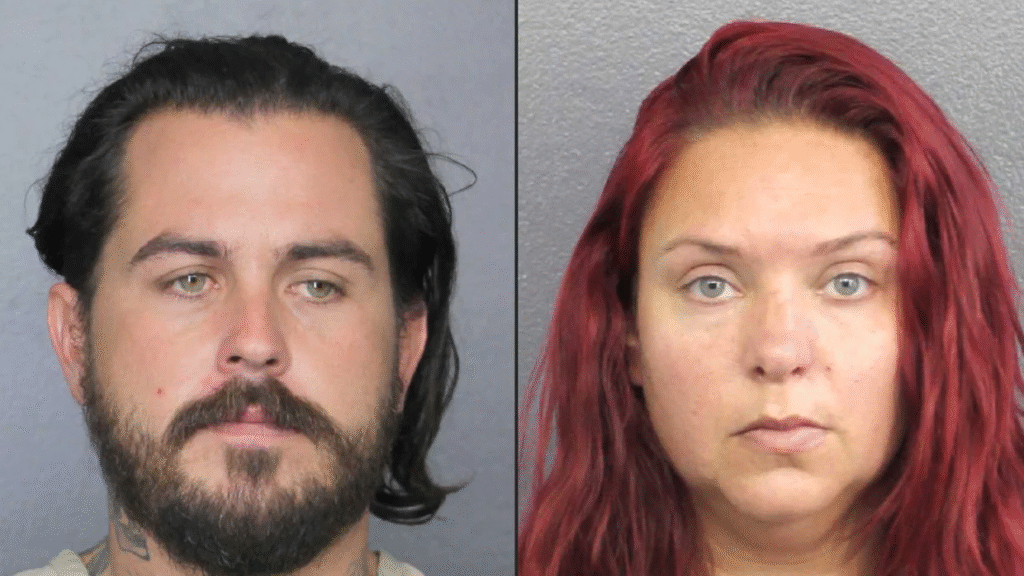
Police arrived at Picavet’s home as Abell and Araujo were about to leave and arrested them on the night of Tuesday, April 24. Abell was returned to Franklin County on May 2, and Araujo followed by mid-May. Both were first booked on charges of second-degree murder and tampering with evidence.
Meanwhile, the Sheriff’s Office received a call from the Sportsman’s Lodge Motel, where housekeepers had found Room 15 in disarray as they began cleaning. Furniture had been knocked over, and some items, including bedding, were missing.
One bed was covered in a large bloodstain. Jones connected the amount of blood to the body found the day before and concluded that whoever had lost so much was probably dead.
The room smelled of vinegar, which indicated that someone had tried to clean it. A chemical test for traces of human blood then lit up the entire bathroom.
A shower curtain rod in the bathroom, which Jones noted was a possible weapon, held a palm print and blood. Testing confirmed that the blood was Aileen’s, and the palm print belonged to Abell.
Pieces of a broken wooden walking stick were also found in the room. Investigators did not grasp their significance until they found another piece, carrying Aileen’s DNA, in the vehicle that held her body.
The medical examiner documented small circular bruises on Aileen’s body that were consistent with the curtain rod, and compared her injuries to those he had seen in motor vehicle crashes. Investigators also determined that three people had entered Room 15 and only two had left, carrying a body.
Investigators then notified Franceasca of her sister’s death. She says she did not understand why she was being given yet another loss to handle.
The Trial and Sentencing
Nearly six years passed before the case reached a courtroom. Having two defendants complicated the proceedings, and repeated delays kept Franceasca in what she describes as agonizing limbo.
In September 2021, a grand jury raised the charges against both defendants to first-degree murder, alongside counts of accessory after the fact and tampering with physical evidence.
In May 2023, Araujo accepted a plea deal to the lesser charge of second-degree murder, admitting that she had taken part in the beating of Aileen. Abell pleaded not guilty to first-degree murder, and in January 2024 he stood trial alone at the Franklin County Courthouse in Apalachicola.
Assistant prosecutor Jarred Patterson maintained that Abell bore greater responsibility for Aileen’s death than Araujo.
Because Araujo was the only person who had told investigators what happened in Room 15, the state’s case depended on the jury believing her, and she was its star witness. Abell’s attorney, Alex Morris, presented the jury with a very different explanation.
Morris argued that Araujo acted alone and was the killer. He pointed to the photograph Picavet took at his home after the crime, which shows injuries to Araujo’s hands and feet.
He also cited the messages she sent to Abell’s phone before joining the road trip, which threatened bodily harm to both Abell and Aileen.
Morris said Araujo wiped down the motel room with vinegar after the murder, and that Abell’s palm print reached the curtain rod only because he was told to move it during the cleanup.
A toll booth photograph taken after the killing shows Araujo, not Abell, behind the wheel of the car, which, Morris said, put her in control. He argued that Araujo had manipulated Abell for years by invoking her father’s influence, and that Abell was afraid of her father.
Abell chose not to testify. In his closing argument, Morris told the jury that prosecutors had not proven any motive for Abell to want Aileen dead, while Araujo had a clear one: jealousy of the woman who had taken her partner.
In his own closing, Patterson noted that Araujo had already accepted her role in the crime and asked the jury to hold Abell accountable for his part by finding him guilty of murder. He told jurors that the two had lived, worked, run away, and been arrested together; the only thing they did not do together, he said, was kill Aileen.
The jury deliberated for about five hours. Ten of the twelve jurors initially favored first-degree premeditated murder, while two held out.
On January 26, 2024, the jury found Abell guilty of the lesser included offense of second-degree murder, the same charge to which Araujo had pleaded.
It also convicted him of tampering with evidence and of being an accessory after the fact. The jurors could not agree that Abell had intended to kill Aileen.
Abell was sentenced on April 10, 2024. Before the hearing, Judge Frank Allman dismissed the accessory conviction after Morris argued that a defendant cannot be convicted of both a crime and of being an accessory to it.
Abell then addressed the court. He said that during the trip he had stopped, picked up a Ring Pop candy, and proposed to Aileen, who accepted, and that the two had planned to go their own way and leave Araujo behind.
He also apologized and said he took full responsibility for his actions. The judge told Abell that in 40 years in the justice system he had rarely seen injuries like those Aileen had suffered and that he wished he could impose a harsher punishment.
He then sentenced Abell to the maximum of life in prison, with a concurrent five-year term for tampering with evidence; Florida has no parole.
Araujo was sentenced on June 7, 2024. Her father said he had never used his influence to benefit his daughter. He recalled telling her after the murder that she would own up to the truth, accept responsibility, be the voice of the victim, and testify under oath.
He said no agreement had set the length of her sentence, and that she gave her statement knowing she could still receive life in prison.
Judge Jonathan Sjostrom, who had accepted her plea, acknowledged her cooperation but rejected a defense request for less than the guideline minimum of 20 and a half years, and sentenced Araujo to 25 years in prison.
Jones, now retired from law enforcement and running a bar in Apalachicola, says the question that still troubles him is not what happened in Room 15 but why. He has heard a rumor that Aileen was about to disclose a pregnancy, but the autopsy he attended showed that she was not pregnant.
Remembering Aileen Seiden
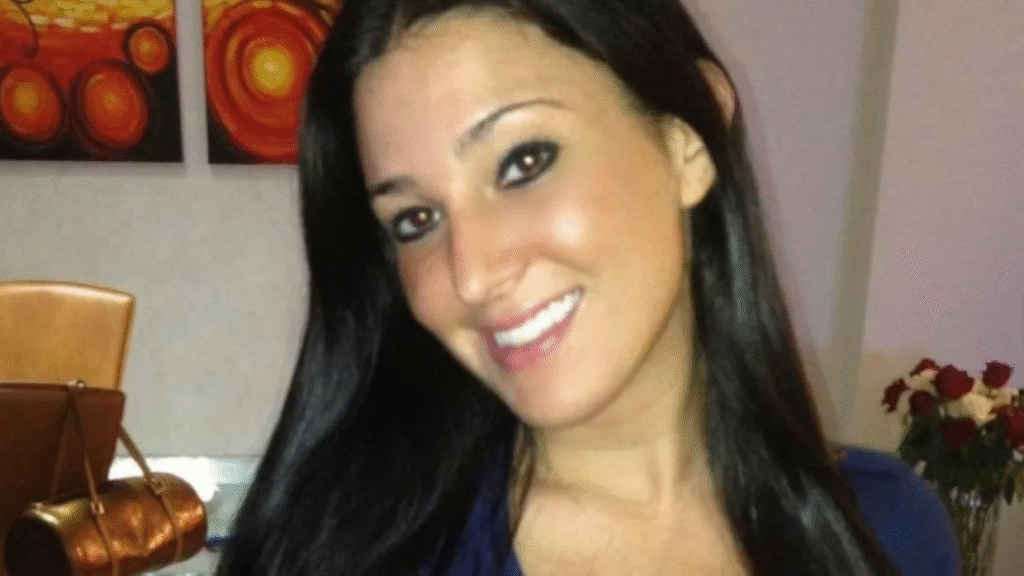
Aileen Seiden grew up in Miami. When she was nine, her mother, Mera, died of cancer, and Franceasca was 16. The loss came so quickly that the sisters never spoke about it.
Their father, Frank, a successful furniture manufacturer who shared a special bond with Aileen, died suddenly of a heart attack when Aileen was 14 and Franceasca was 22.
Aileen was left an orphan, and Franceasca signed the papers to become her legal guardian. She took on a parent’s responsibilities, taking Aileen to school and picking her up while finishing her own studies and working. She says she had no time to grieve, and she does not think Aileen did either.
Seven years later, Franceasca moved to Los Angeles on her own. Aileen, by then in her twenties, began to grieve their parents, and she became more sensitive.
Allie remembers her as strong and determined, a woman who paid her own rent and bills in Miami. Franceasca wishes that Aileen had stayed with her in Los Angeles instead of returning to Miami.
Although Aileen never lived in Franklin County, its residents have embraced her as one of their own, and Jones says they will long remember her. Franceasca asks that her sister be remembered as a sweet and loving person who, despite losing her parents so young, remained kind.
Allie hopes Aileen’s story will bring greater compassion for people trapped in abusive relationships, where apologies and promises of change are easy to believe when things are good most of the time.



Recent Comments