
In April 2015, Heather Bogle, 28, went missing in Sandusky County, Ohio. The search for answers would take years and test an entire community.
A Quiet Community and a Difficult Spring

The county lies in northwest Ohio, a rural area that residents describe as warm and welcoming, the kind of place where families choose to raise their children. Few considered it a likely setting for a violent crime, and fewer still expected what unfolded that spring.
Heather worked the midnight shift at the Whirlpool Corporation plant in Clyde, Ohio, a schedule that required her to clock in at roughly 10:00 or 10:30 each night. In the days before her disappearance, she was coping with several setbacks.
She had recently finished nursing school but failed her licensed practical nursing board exam, and a text message from her brother, who called her too stupid to pass it, left her upset.
Her personal life was unsettled as well. For the previous year, Heather had been in her first same-sex relationship, with Carmella Bedillo, a woman she had met at Whirlpool.
The relationship was ending badly. The two had a serious argument on Wednesday, April 8. Their text messages and phone calls grew bitter, and threats were made.
That evening, Heather reported for her shift as usual and worked through the night. She clocked out at 6:17 on Thursday morning, April 9, and was last seen leaving the Whirlpool parking lot.
She then failed to pick up her daughter, five-year-old Mackenzie, from school, a task she had never missed. Her family realized that something was wrong.
Within hours, relatives were posting signs and sharing appeals on Facebook and other social media, saying that whoever had her needed to bring her home. They knew of no enemies and could not imagine how this could have happened.
The Sandusky County Sheriff’s Office, then led by Sheriff Kyle Overmyer, began working to track down every potential lead. Detective Sean O’Connell was the lead investigator.
Local news reports described the department as working to solve the mystery of where Heather had gone. As the hours passed without any sign of her, worry spread through the community.
A Grim Discovery
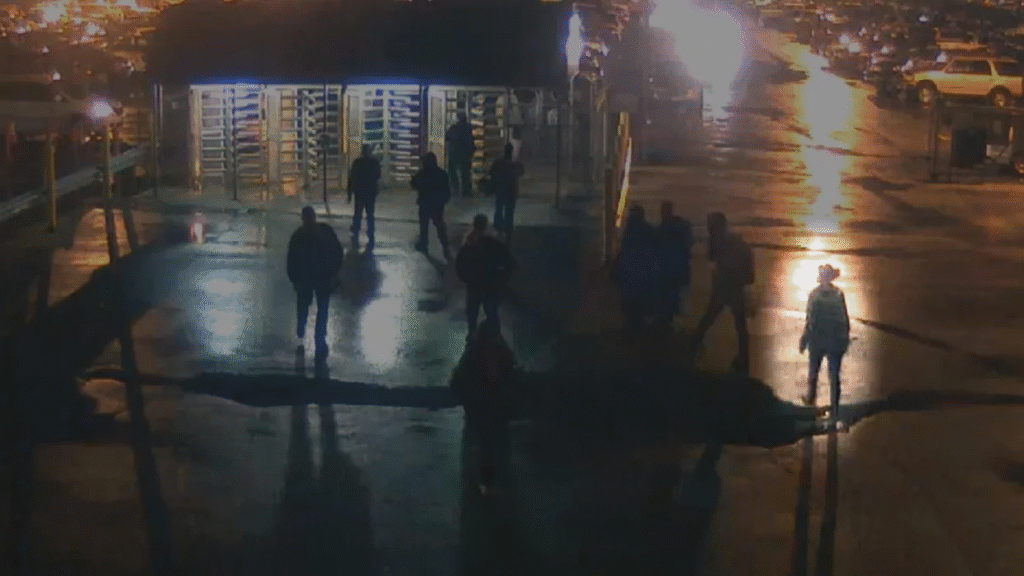
The day after Heather vanished, the sheriff’s office telephoned O’Connell with news that her car had been located at an apartment complex. He had a road patrol unit unlock the vehicle, and the trunk was opened.
Inside was Heather’s body. She had been savagely beaten. Defensive wounds on her hands showed that she had fought back, but she had been overpowered and handcuffed. The cause of death was two gunshots to the back that had penetrated vital organs in her chest.
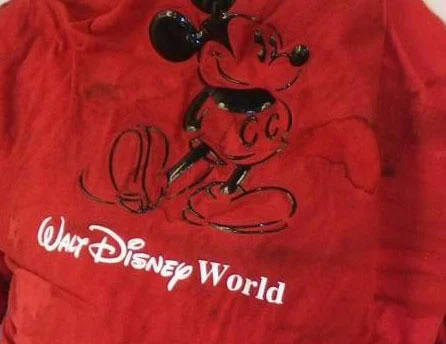
Her body had been placed in the trunk in a semi-fetal position, and she was wearing an oversized red Mickey Mouse T-shirt. Her hands were coiled up, so that she appeared almost like a sleeping child, as though she had been posed.
Her hair had been chopped off at the scalp, and her fingernails had been cut down to the cuticles. Someone had cleaned her body with extreme care after she died.
Those who compared photographs of Heather in life with the scene in the trunk said it was as if they were two completely different things.
The news left residents shocked, frightened and grief-stricken. They turned out in large numbers to pray for Heather’s family and to ask for wisdom, and many demanded justice. Benefit events were held to raise money for her young daughter.
The First Suspects
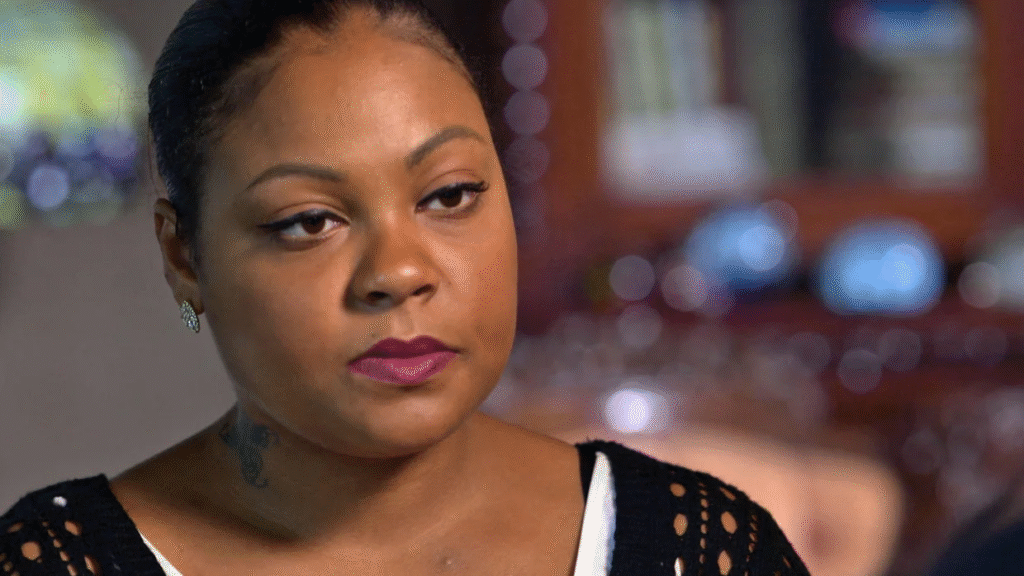
O’Connell’s early work centered on the people closest to Heather during her final days. Among the first he examined was Carmella Bedillo, given the conflict between the two women. After reviewing her phone records and speaking with her several times, he determined that she was not the killer and ruled her out.
His attention turned to Keyona Bor, a single mother who lived in the apartment complex where Heather’s car had been found. O’Connell said her demeanor and her reluctance to speak with investigators raised his suspicion immediately.
The Mickey Mouse shirt on Heather’s body added to his concern, because there was speculation that Bor had been seen wearing the same type of shirt. Her Facebook posts drew further scrutiny.
One said she could not believe what had just happened. Another, written the day Heather disappeared, mentioned serving eight to ten years for murder and pleading insanity.
O’Connell also took an interest in Omar Satchel, a man who had served time on home invasion and firearms charges and who was inside Keyona’s apartment on the night Heather’s body was found.
O’Connell believed Satchel knew Heather and had sometimes sold her marijuana. He also learned that Satchel might have stolen a small-caliber firearm, which he regarded as a possible link to the weapon used in the killing.
A source told O’Connell that Satchel’s friend, Kayree Jeffrey, had walked along a riverbank and tossed a black bag containing the weapon into the water. A dive team searched the river but found nothing.
O’Connell could not name a motive for the three, and he did not have enough evidence to make an arrest, but he continued to build a case against them.
Bor says the investigation upended her life. Before Heather’s death, she had a home for herself and her children and a good job at a nursing home. She says O’Connell targeted her from the night Heather’s body was found.
According to Bor, detectives raided her apartment and threw her family’s photographs in the trash, and they arrived at the nursing home with weapons drawn and a warrant for her DNA while she was helping a resident prepare for bed.
After O’Connell publicly named her a suspect, she lost her job, her apartment and her reputation. She kept her son out of school, and strangers sent messages calling her a monster and saying she and her children deserved to die.
She describes herself as an easy target, poor, Black and voiceless, and says O’Connell never asked whether she had an alibi because he was interested only in finding facts that fit his theory.
Bor explained that her post about eight to ten years referred to her child’s father, who had just been sent to prison for a mandatory ten years on his first drug offense, a case in which O’Connell had played a part.
She said she owned only one Mickey Mouse garment, a sweatshirt rather than a T-shirt, and denied any involvement in Heather’s death.
The Sandusky Register reported in May 2025 that Julian Kiser, who was sentenced to ten years in a 2014 drug trafficking case and says O’Connell treated him unjustly, had completed his prison term and was on five years’ probation.
Desperate to clear her name, Bor contacted Matt Westerhold, managing editor of the Sandusky Register, which had spent years reporting on O’Connell and Sheriff Overmyer.
The paper had published numerous accusations of corruption and incompetence, including a headline stating that the two had a history of botching high-profile cases.
Westerhold said he and his paper doubted that O’Connell could conduct a legitimate investigation, and that his staff had documented about half a dozen cases in which families complained bitterly about their treatment by law enforcement.
He had never before had a criminal suspect come to him claiming that police were targeting her for a murder she did not commit.
He found Bor believable and came to believe that O’Connell was framing her. Westerhold featured her story on his webcast several times, determined to keep the pressure on the detective.
O’Connell spent a year and two months pursuing his theory that Bor, Satchel and Jeffrey had acted together. Meanwhile, authorities had found DNA under Heather’s fingernails, which they believed her killer had left.
It did not match Satchel, Bor or Jeffrey. O’Connell said the result did not rule them out. When he sent his report to the prosecutor seeking an indictment, he did not mention that the DNA failed to match any of them. A week later, he was taken off the case and placed on leave in June 2016.
A New Sheriff and a Digital Trail
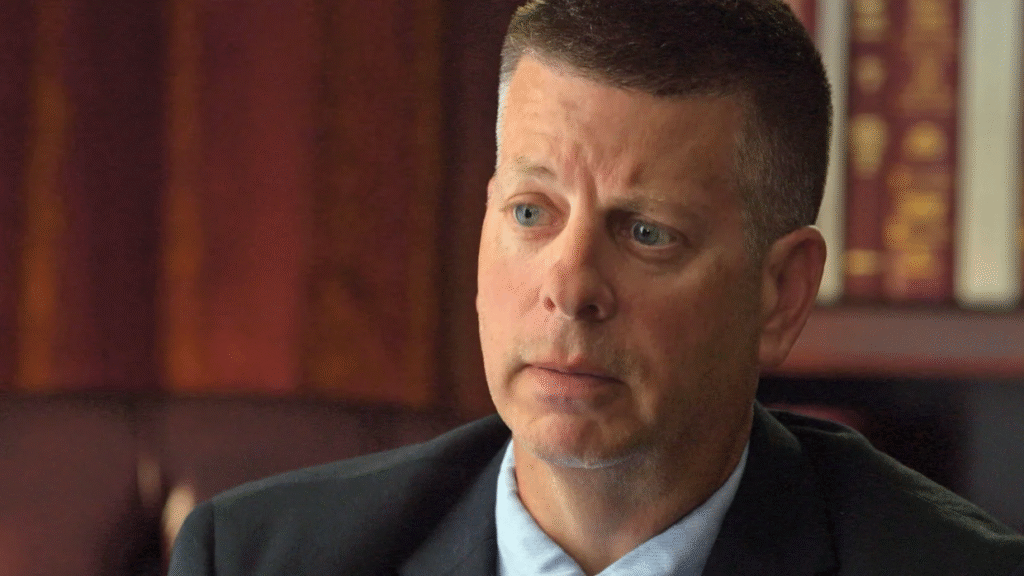
O’Connell was soon forced to resign, in September 2016, ahead of a disciplinary hearing. He was not the only member of the department in trouble. Sheriff Overmyer, who oversaw the county’s drug task force, was arrested for stealing drugs and sent to prison, accepting full responsibility for his actions.
He pleaded guilty to felonies including theft in office and deception to obtain dangerous drugs and was sentenced to four years in prison in December 2016; he completed his term in 2020.
Chris Hilton took over as sheriff, and O’Connell’s file on the Bogle case was handed to a state investigative bureau. Hilton announced in January 2017 that the sheriff’s office would once again lead the investigation.
The bureau’s review showed that Satchel, Jeffrey and Bor had never known Heather, never met her and never sold her marijuana.
Hilton called what the bureau discovered shocking and criminal: O’Connell had attempted to indict people for murder who had nothing to do with it. Hilton said there was no reason to focus on Bor after the first day or two.
Newly elected prosecutor Tim Braun opened a criminal investigation of his own. It ended in O’Connell’s arrest and December 2017 indictment on eight counts, four of them felonies (three counts of tampering with evidence and one of improperly accessing a confidential state law enforcement database) and four misdemeanors.
The state Bureau of Criminal Investigation conducted the investigation, and the Henry County prosecutor handled the case at the Sandusky County prosecutor’s request. Braun said that O’Connell had lied and falsified police reports while trying to push through a case he did not have.
O’Connell denied mishandling evidence, making false statements or altering or removing any evidence, and said the accusations rested on speculation. He also said that detectives are wrong all the time and that he never had the opportunity to close out the investigation.
Heather had been dead for nearly two years when Hilton and his team began their own investigation. They had no suspect, but they were convinced the killing was not random, believing that whoever did it held something personal against Heather.
Hilton believed the case was solvable if it was done right, and he intended to solve it the old-fashioned way, bit by bit. He resolved to pursue every lead and to treat everyone as a suspect until they could be eliminated.
That approach brought Carmela Bedillo back into view. An angry note from someone Heather had recently fought with had been found in her car, and Hilton saw passion and anger in the condition of her body.
Bedillo moved to the top of his list, and she was brought in for questioning. She later described the experience as horrible and unpredictable. Hilton would soon rule her out.
Investigators then combed through Heather’s social media and Gmail accounts and found location data stored by Google. For the first time, they could say definitively where she went that morning.
It traced her movements from the moment she left the plant. Thirteen minutes after she clocked out, at 6:30 a.m., her phone’s GPS placed her inside a trailer home a few miles from the Whirlpool plant.
The trailer belonged to Daniel Myers, a name that meant nothing to the team at first, though Hilton said they knew they had something. They quickly learned that he worked at Whirlpool, had been on shift with Heather that night and had left at about the same time.
Investigators visited Myers at his home and recorded their conversation. He was cooperative, though not overly so, and he distanced himself from Heather, saying he knew her very little and had only limited conversation with her.
He also asked why the case was still being investigated, noting that two years had passed and describing the effort as grasping at straws. When investigators asked for a DNA sample, he declined, saying he did not really know the girl. He was the first person to refuse.
Two days later, investigators returned with a warrant and collected the sample. Five days later, the results showed that the DNA from beneath Heather’s fingernails was his. Hilton said his team nearly broke into tears.
Investigators also learned that Myers had donated $125 to Heather’s GoFundMe page with a warm condolence note and had signed the registry book at her funeral.
A Whirlpool employee, meanwhile, had emailed O’Connell shortly after the murder to say she knew someone capable of the crime and believed it was Myers. O’Connell, focused on his three suspects, never followed up.
The Arrest of Daniel Myers
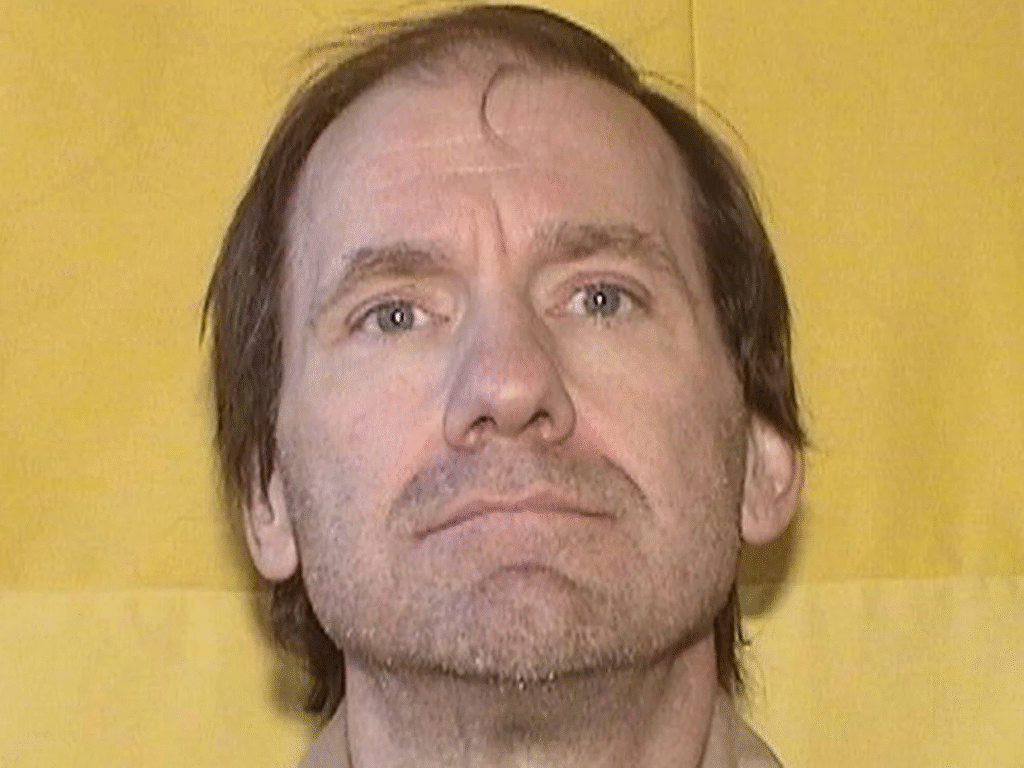
Five months after the new investigation began, Hilton’s team arrested Myers, a single father, at a summer campground, the Wooded Acres Campground in Lindsey, in 2017. His only remark to officers was, “Oh my God, they’re here to get me.”
Hilton said that was pretty much the last thing Myers said to them. He was charged with two counts of aggravated murder and one count each of kidnapping, aggravated robbery and tampering with evidence, and a judge set his bond at $2 million.
A search of his trailer turned up no gun or bullets, but it yielded other evidence. Floorboards had been bought less than a week after Heather’s death, and investigators believe the trailer was where she was killed and the subfloor was replaced because it had been covered in blood.
Myers also replaced his mattress at the end of that month, and he had a cracked tooth and a broken tooth that he repaired with Super Glue.
The search also revealed that Myers kept women’s underwear in a safe and had videos of himself with women. Investigators described a pattern of sexual fetishes focused on control, domination and humiliation.
After his arrest, ten women came forward to say that he had raped them, none of whom had gone to the police before. Investigators said Myers selected women he believed would stay silent, and the women told them they had been too embarrassed and ashamed to speak out.
Braun’s account of the crime held that Heather went to the trailer expecting a friend. In his view, Myers made a sexual advance that she rejected, and she punched him in the face when he grabbed her. He then overpowered her, handcuffed her, beat her and tortured her for a long time before shooting her.
Braun said the trimmed fingernails and the cleaning of Heather’s body appeared to be attempts to destroy DNA. Most people who kill for the first time are overcome by emotion and make mistakes, he said, but Myers tried to cover up the crime rationally and meticulously, which usually takes experience.
Myers’s past also drew attention. Nearly six years before Heather’s death, his former girlfriend, Leigh Ann Sluder, the mother of his son, had been found dead with a single gunshot wound to her chest.
A .22-caliber rifle lay beside her. Authorities ruled the death a suicide. Her sister, Loriann Haley, never accepted that conclusion. She had spoken with Leigh Ann about twelve hours earlier and saw no sign of distress.
She also knew that Leigh Ann hated guns and did not allow one in her house. Myers admitted giving Leigh Ann the gun for her protection, but Haley doubted that her sister could have shot herself in the chest with such a long barrel.
Braun said the scene of Sluder’s death was not properly processed: it was not photographed well, evidence was not collected correctly, and no gunshot residue test was done on Myers’s hands.
At the time, he said, the sheriff’s office was not a professional agency, and he believes investigators took Myers at his word. Haley is certain that Myers killed her sister but says it can no longer be proved, and she believes Heather would still be alive had the earlier case been handled correctly.
She hoped that a conviction in Heather’s case would bring some measure of justice for Leigh Ann as well. Investigators who reviewed Sluder’s death again concluded it was a suicide, after determining she could physically reach the trigger.
Sandusky County officials announced in March 2019 that they had closed the case, ruling Sluder’s death a suicide.
An undated letter that authorities say is in her handwriting, and which reads like a suicide note, also surfaced. Myers’s relatives said they found it in his home after he was sentenced, and Haley doubts it was fully authenticated.
Braun believed that before he could try Myers, O’Connell’s three suspects had to be officially ruled out and O’Connell himself discredited, because the original investigator’s accusations against others would give any defense lawyer a convenient alternate suspect.
Until then, O’Connell had maintained that he owed no apology to Satchel, Bor or Jeffrey. In July 2018, on the day his own trial was set to begin, however, he pleaded guilty to one felony count of tampering with evidence, for leaving out the DNA results that excluded the three.
At his sentencing hearing, on Sept. 13, 2018, O’Connell appeared with his wife and family, hoping for probation. He told the court that he had not purposely left anything out and had only been trying to highlight what he had at that point.
Judge Patricia Cosgrove asked why he had not included the DNA results. He replied that she was right, that he took full responsibility, and that he apologized. Bor then addressed him, saying she had lost time with her children and family, friends and nearly everything she had, and that she was still trying to get it back.
The judge said she had given consideration to his 25 years of service, his military service and his volunteer work, but that he had to go to prison to send a message to other officers to look at all of a case and present all of it.
He was sentenced to two years in state prison. O’Connell was released on July 2, 2020, a few months before his full term would have ended, after receiving credit for jail time and for classes he took in prison; Cosgrove had denied his earlier requests for early release.
Westerhold said the sentence was a moment of vindication for the families O’Connell had hurt. Hilton said that anyone who wears a badge and breaks the law must pay for it, and that he believed O’Connell was where he should be.
With O’Connell’s case resolved, Braun prepared to take Myers to trial. He described the case as a very good one and was confident that the evidence was more than enough to prove guilt beyond a reasonable doubt.
Within days of the trial’s start, however, Myers was found face down, dazed and incoherent, in what proved to be a failed suicide attempt. Braun believed Myers was trying to create a medical emergency and buy time.
On Feb. 13, 2019, Myers ultimately chose to plead guilty rather than face the possibility of a death sentence, and he told the court that he understood a guilty plea was a complete admission of guilt.
He pleaded guilty to aggravated murder, kidnapping and firearms charges, along with a specification that the crime was sexually motivated. At his sentencing, several speakers addressed him directly, including Carmela Bedillo, who had once been a suspect.
One told him that he had taken away a mother, a friend and a loved one whom no one could ever get back. Myers was sentenced to spend the rest of his life in prison with no chance of parole, a sentence imposed by Judge John Dewey, who also ordered him classified as a sexually violent predator.
Remembering Heather Bogle
Heather Bogle was a single mother who worked hard to provide her daughter with a wonderful life. She was well liked by those around her, and she did not look down on her work at the plant, but she held dreams of a better life and wanted something more for herself and for her daughter.
Her family describes her as an amazing woman who was always there for them. During the search, they said they wanted her to know that they were there for her.
The people of Sandusky County are now free to remember Heather as the beautiful young mother she was and to imagine the life that could have been hers. It took nearly four years for the county to see justice done.
Sheriff Hilton, who called the county a great place, said that he believes it is a little better now and that he is proud of that. In May 2025, the Sandusky Register marked ten years since Heather’s murder and eight since her killer was identified.


Recent Comments