
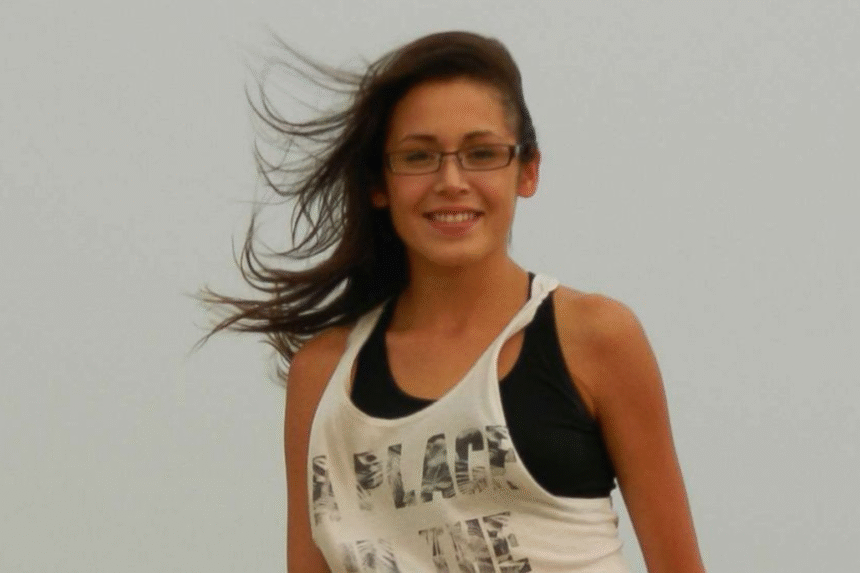
A 20-year-old Blackfeet woman vanished in June 2017. Years later, her family still has no answers.
The Night She Was Last Seen
Ashley Loring HeavyRunner was 20 years old when she was last seen on the Blackfeet Indian Reservation in Browning, Montana, on June 5, 2017. A video circulated online that evening showed her at a house party on the reservation.
She was five feet two inches tall, weighed approximately 90 to 105 pounds, and had brown hair and brown eyes.
On the night of the party, Ashley made a brief and alarming stop at her parents’ home before arriving at the gathering. Her father later described how she entered the house quickly, closed all the blinds, and repeatedly told him she had done something, though she refused to explain what.
A vehicle soon pulled up outside the property. She left with whoever was inside without identifying them and proceeded, based on the timeline pieced together by her family, directly to the party hosted by a man known as Vernon.
At the gathering, a witness named Timmy stated that Ashley had tried to leave with a group of partygoers but was turned away because she was too intoxicated.
She then made her way to a second location, a home belonging to a man named Big Al, where she encountered a 50-year-old man named Sam McDonald. The two spoke in the kitchen, and by McDonald’s account, Ashley asked to leave with him that night.
He claimed the two of them drove to his remote cabin near a lake and remained there for six days, using drugs and, by his account, engaging in a sexual relationship. He said she would periodically walk into the surrounding woods for hours at a time and offer no explanation when she returned.
On June 11, McDonald said he drove her back down the mountain so she could go home. During that drive, he claimed, Ashley received a message from someone and told him to pull over at a road junction because she had arranged a separate ride.
The person coming to pick her up was someone she referred to as “V-Dog,” later identified as Paul Valenzuela, a man with prior convictions for burglary and weapons offenses.
McDonald said he reclined his seat and fell asleep while she waited, and that when he woke up roughly 40 minutes later, she was gone. He claimed to have driven up and down the road calling her name for an hour before concluding she had been collected and returning home.
A Family Searches Alone
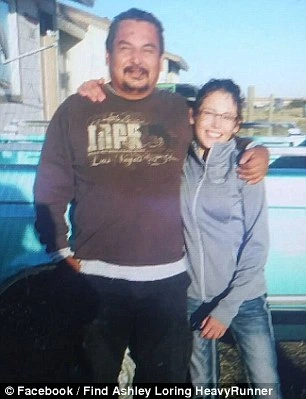
Ashley’s older sister, Kimberly Loring HeavyRunner, had been away in Morocco for three months and returned on the night of June 8, 2017. The two sisters had made plans for Ashley to move to Missoula, where she intended to transfer to the University of Montana.
When Kimberly could not reach her sister upon arriving home, she initially assumed Ashley had lost her phone, something that had happened before.
It was only when their father was hospitalized with a liver condition and Ashley still did not respond to anyone that the family understood something was seriously wrong. It was completely unlike her not to respond when her father’s health was at risk.
Kimberly contacted Blackfeet Law Enforcement Services and the Bureau of Indian Affairs. The response was immediate and dismissive. “No one took it seriously,” Kimberly later told The Guardian.
“They just said: ‘She’s of age, she can leave when she wants to.'” Two months into the investigation, a BIA agent repeated that same position to the family despite leads indicating she was in danger or had been taken into the mountains.
Blackfeet Law Enforcement conducted an initial three-day search and found nothing. The reservation spans more than 1.5 million acres, and the agency had fewer than 20 officers available.
With no meaningful progress from authorities, Kimberly took over the search herself. “If me and my family didn’t search for Ashley, I don’t think anybody would be looking for her,” she said. Over the following months, she organized approximately 100 searches across the reservation.
Two weeks after Ashley was last seen, a tip came in from someone who reported seeing a young woman running from a vehicle on U.S. Highway 89. The family searched the area and found a gray sweater covered in red stains and torn in multiple places, alongside a pair of red-stained boots.
A witness confirmed Ashley had been wearing that exact sweater the night she went missing. The family bagged the items and turned them over to law enforcement as evidence.
Evidence Ignored, Suspects Identified
The sweater and boots sat untouched in a BIA evidence room for months. On December 12, 2018, Kimberly testified before the U.S. Senate Committee on Indian Affairs and described exactly what had happened to the physical evidence.
“The BIA agent stated multiple times that he sent the sweater to the crime lab,” she said. “When we questioned the results of the testing of the sweater he then changed the story and said he couldn’t send it out due to testing reasons after eight months of being in evidence with the BIA.
We later found out the sweater has never been sent, and is still currently sitting in BIA evidence.” She also disclosed that a Blackfeet law enforcement officer working on Ashley’s case had been in a romantic relationship with a prime suspect and had been sharing case information with him.
She concluded her Senate testimony with a direct statement: “From the very beginning, both Blackfeet Tribal Law Enforcement and the BIA have ignored the dire situation that Ashley is in and have allowed the investigation to be handled in a dysfunctional manner.”
The family was eventually granted permission to search a trailer that Paul Valenzuela and his wife, Tosha Running Crane, known as “T,” had regularly used, and where Ashley had spent time in 2017.
Despite law enforcement having already claimed to search the property, the family found dried blood beneath the carpet, cut out a section of the flooring, and submitted it as evidence. No DNA results from that sample were ever shared with them.
Three people became central to the investigation, and all three pointed blame at one another. McDonald claimed he was being framed by Valenzuela and his wife.
Valenzuela claimed T had killed Ashley after learning of the relationship between him and Ashley. T, for her part, told Kimberly in text messages that “Paul’s got her,” then later changed her account, claiming that McDonald’s own son had told her McDonald had choked Ashley out of jealousy over her involvement with Valenzuela.
The three continued shifting blame without any of the physical evidence being properly processed to resolve the conflict.
A separate and notable development arose at the funeral of Ashley’s father, Roy Loring HeavyRunner, who died of a seizure in January 2018. A funeral attendee approached Kimberly and said only that “Big Al knows something.”
Shortly after, the man known as Big Al was found dead. Tribal police recovered his torso but never located his head or hands. His killer, Jason Matson, contacted police himself and confessed to the murder.
Matson had been in prison for four years after shooting a man during an altercation in 2013, an incident that Ashley had witnessed. He was released from prison around the time she disappeared, which led some in the community to suspect he may have targeted her because of what she had seen.
Federal Involvement and Continued Failure
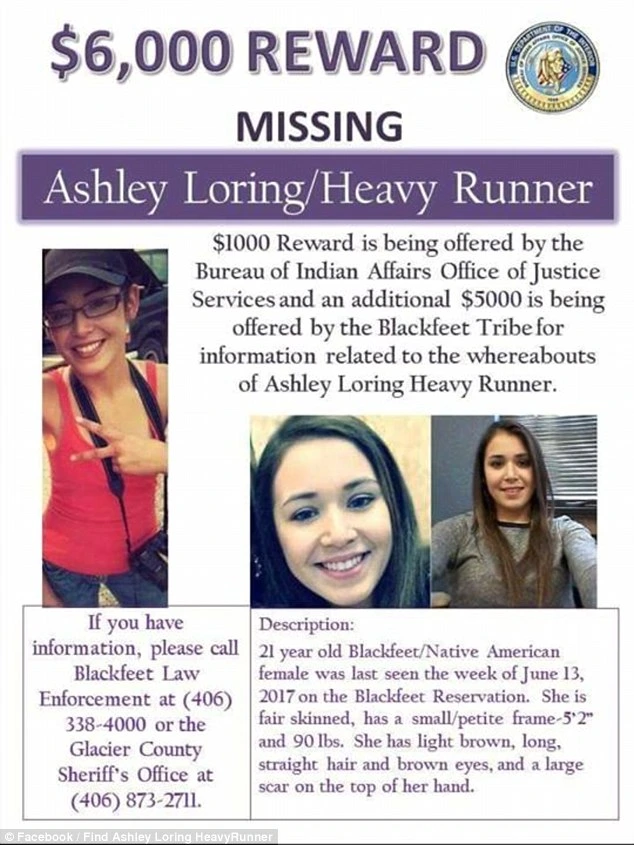
The FBI’s Salt Lake City Field Office joined the investigation in February 2018 at the BIA’s request. By that point, more than eight months had passed since Ashley vanished, and the case was already cold.
The family had spent that entire period conducting searches on their own while law enforcement offered minimal assistance. Kimberly said she continued searching because she had no other choice. “If I was the one in Ashley’s place, I know she wouldn’t stop looking for me,” she said.
In December 2018, human remains were discovered on the reservation, raising immediate hope and fear within the family. The FBI confirmed the remains were historical in origin and belonged to a Native American male.
Ashley was not among them. Kimberly described the moment with painful clarity: “You don’t want it to be her, but then you want it to be her because you want peace. We just want her home.”
Since then, the case has not been formally resolved. Kimberly left Montana in late 2018 at the request of her father before his death, who feared losing another daughter to the violence of the reservation.
She has continued advocating for Ashley from outside the state. Sandra Barker, an FBI spokesperson in Salt Lake City, declined interview requests over the years, citing an ongoing investigation.
Blackfeet Law Enforcement Services denied records requests related to Ashley’s case. No arrests have been made, and no charges have been filed.
A Search Without End
Kimberly Loring HeavyRunner has carried the weight of her sister’s disappearance for nearly a decade. In 2025, she told NBC Montana: “It’s just constantly going through all the cycle of grief, but there’s no acceptance.
It’s like going through the cycle, but there’s no end.” She also revealed, for the first time publicly, that Ashley had been pregnant at the time of her disappearance, information the family had previously found too painful to disclose.
Jonathan HeavyRunner, connected to the family by marriage and someone Ashley considered an uncle, recalled her as “all smiles” and said his 2025 interview with NBC Montana was the first he had given since she disappeared.
“It’s like I’m going through something, it’s like we’re going through some kind of storm,” he said. “You just have to have tunnel vision to get through the storm, like emotions and all that.”
The Loring family and the Blackfeet community have held an annual event called Ashley’s Walk every year since her disappearance. It is a two-day gathering that honors Ashley and draws attention to other missing Indigenous people from the reservation.
Kimberly told NBC Montana that her family intends to carry out one final organized search, after which she said they will “leave it in God’s hands.”
The FBI’s Salt Lake City office continues to accept tips at 801-579-1400. Information can also be submitted by texting “BIAMMU” to 847411 or by calling 1-833-560-2065.
Who Ashley Was
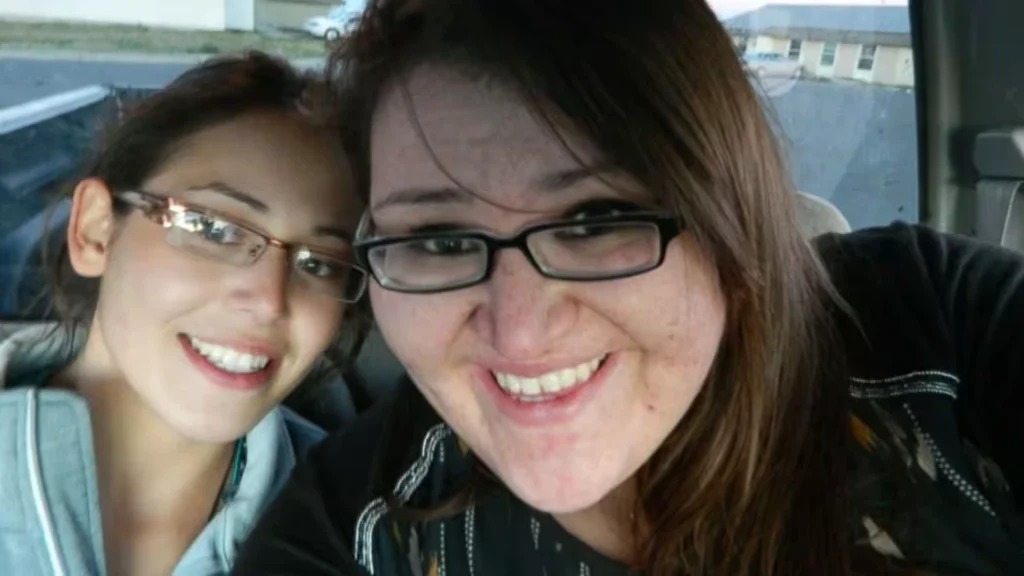
Ashley Loring HeavyRunner was born in November 1996 on the Blackfeet Indian Reservation in Browning, Montana, to parents Loxie and Roy Loring HeavyRunner.
She grew up on a ranch near Heart Butte alongside her sisters Kimberly and Johnny Lynn, where she developed a lifelong love for horses, the outdoors, and nature. She was active in high school sports, competing in both volleyball and cross-country, and graduated in 2015.
Those who knew her described her as intelligent, humble, and instinctively kind. She was not someone who drew attention to her own achievements. When she received good marks, she would express genuine surprise rather than pride.
She was enrolled at Blackfeet Community College studying environmental science at the time of her disappearance, with firm plans to transfer to the University of Montana in Missoula.
She had also become aware of the crisis of missing and murdered Indigenous women and had expressed a desire to one day work toward addressing it.
Her sister Johnny Lynn spoke of her publicly with grief and admiration: “Ashley is a beautiful and amazing person, my inspiration, my protector and my angel. Every time I think about my sister, I just think about her smile. Everybody wanted to talk to her.
She was so beautiful and outgoing. Ashley knew no stranger.” Her sister Kimberly, who has spent years searching for her, said: “I just don’t want her to be alone in the mountains anymore. We just want to bring her home.”



Recent Comments