
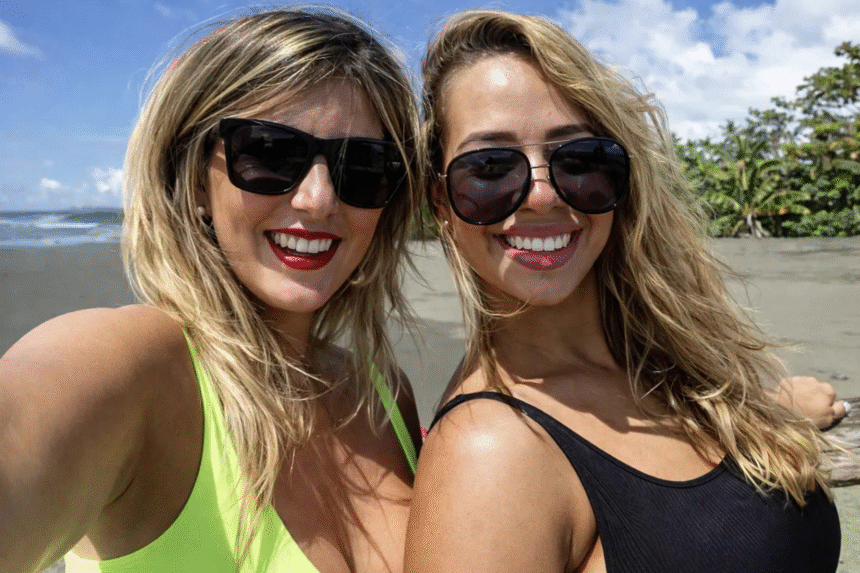
Carla Stefaniak was a 35-year-old woman from Venezuela who had made Florida her home. In November 2018, she traveled to Costa Rica for a birthday trip and never came back.
Carla was born in Venezuela and was one of four siblings. When she was 19, her whole family moved to the United States and settled in Florida.
They stayed for four years before deciding to go back to Venezuela, but Carla chose to stay. She had a job at an insurance agency, a good group of friends and a life she genuinely loved. Leaving was never something she considered.
People who knew her described her as loud, fun, and full of energy. Her brother Mario said she was always getting into something as a kid and keeping her parents on their toes.
A friend named Greg said she had a personality that was impossible to forget. She was the kind of person who said yes to everything and meant it every time.
Travel was one of the biggest parts of her life. She had been to Iceland, Switzerland, New York, Cuba, Spain and the Caribbean, among other places.
Every trip was documented and shared on social media, and she hoped to one day turn that into a full-time career. Her sister-in-law, April Burton, who was married to her brother Carlos, was her closest friend and frequent travel companion.
Carlos used to joke that his sister talked to his wife more than he did. So when Carla’s 36th birthday was coming up, it made complete sense that she and April would plan something special together. They chose Costa Rica.
Carla handled all the planning herself. She put together a full itinerary so that nothing would be missed. They booked several hotels throughout the trip, and for the final stretch, they reserved an Airbnb unit called Apartment 8 at Villa Lamas, a gated complex in the mountains of Escazú, about ten minutes outside San José.
The place had a pool, balcony views, and security guards on site. It looked like the perfect way to end the trip.
They landed on November 22, 2018, which happened to be Thanksgiving Day. The next few days were exactly what they had hoped for. They visited beaches, tried local food, and stayed active on social media throughout.
On November 25, Carla posted a photo of herself by the pool. Everything was going well. April was booked on a return flight one day before Carla, which meant Carla would have one final night at the villa on her own.
The plan for her last day was simple. She would spend the evening relaxing, fly home the next afternoon and meet her friends in Florida for a birthday dinner that same night.
On the morning of November 27, Carla said goodbye to April at the airport at around 11:30 a.m. She then spent the afternoon on a city tour with an Uber driver who had taken her around earlier that day.
She sent photos to her family, bought a purse and some jewelry, and was dropped back at the villa in the early evening. She started getting ready to go out to a jazz café, but a large tropical storm was rolling in fast, and going out soon became impossible.
By 8:00 p.m., she was alone in the apartment. She messaged her family’s WhatsApp group saying she was tired and thinking about staying in. Then the power went out across the complex.
She messaged again, telling them the rain was heavy and that it felt unsettling. The power came back briefly, and she told April it felt creepy. With her phone battery running low, she was on a FaceTime call with a friend in New York.
She told him she was thirsty. He suggested boiling water, but she only had a skillet and had no way to safely go outside. She said she was going to ask one of the security guards on site for a bottle of water instead. At around 9:00 p.m., her phone died and the call cut off.
That was the last time anyone heard from her.
The next morning was her 36th birthday, but there was nothing from Carla. Every message sent to her after 9:00 p.m. the night before had gone unread. Her Facebook was completely quiet.
The Uber driver she had arranged to pick her up at 8:30 a.m. arrived on time, but she never came down. April called the villa and spoke to a security guard, who told her that Carla had already left just after 5:00 a.m. with all her luggage.
That evening, Carla’s flight from Costa Rica landed at Fort Lauderdale Hollywood International Airport at 5:30 p.m. Her friends were there, ready to take her out. She was not on the plane.
Her family contacted Costa Rican authorities straight away. They were told to wait 48 hours because Carla was an adult and the situation did not yet qualify for an active investigation. Her family refused to slow down.
They organized a group of around 60 people, with each person assigned a specific task. Some were calling the police repeatedly, others were contacting Airbnb, and others were working social media and reaching out to news reporters.
The story spread fast. A GoFundMe was created to help family members travel to Costa Rica, and the hashtag FindCarla began circulating widely online. The US Embassy eventually got involved, and the FBI joined shortly after.
When the family spoke with the Airbnb property owner, he said the security team had reported that Carla left around 5:00 a.m. in an Uber with her bags. But her Uber account showed no transaction matching that time.
There were also no security cameras anywhere on the property to back up the claim. Her family pointed out that leaving at 5:00 a.m. made no sense regardless, since her flight was not until 1:30 p.m. and the airport was only 30 minutes away.
The Uber driver she had booked confirmed he had arrived only at 8:30 a.m. as arranged and had never been near the complex at 5:00 a.m. His account was verified.
On top of that, phone data showed that Carla’s device had briefly reconnected to the internet at 12:17 a.m., roughly three hours after the FaceTime call ended but it had not moved from the property at all.
Police eventually agreed to take action. When officers arrived at the villa six days after Carla was last heard from, they found that the entire apartment had been scrubbed with bleach and vinegar.
Despite the heavy cleaning, forensic teams still recovered Carla’s blood and semen from the bed and the floor. The apartment had already been re-let to new guests before police first visited, which raised serious concerns about contamination of potential evidence.
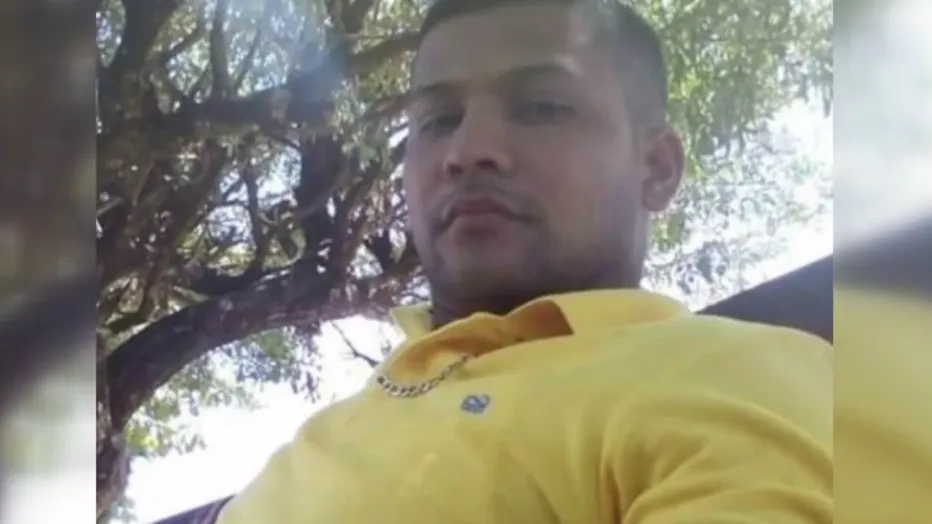
During interviews with people connected to the property, one security guard drew immediate attention. Bismark Espinoza Martínez was 32 years old and was responsible for looking after Apartment 8. He lived in the building directly next door to the villa.
Officers noticed fresh scratches on his body. His story changed every time he was questioned. He first said he had seen Carla leave in an Uber, then said he had been asleep and knew nothing about her movements at all.
The 5:00 a.m. departure story could be traced entirely back to him. No one else had seen it, and nothing else supported it.
Bismark had unrestricted access to every unit in the complex and to the surrounding grounds, which were not open to the public. He had arrived in Costa Rica in June 2018, only a few months before the incident, and was in the country without legal documentation.
He was placed under arrest. DNA recovered from beneath Carla’s fingernails and from inside the villa matched him. It also came to light that he had called his wife after the incident and told her what he had done.
Shortly after the investigation intensified, sniffer dogs led officers to a wooded area in the San Antonio Desamparados neighborhood, roughly 300 meters from the villa.
There they found the decomposing body of a woman, partially unclothed, half-buried, and covered in plastic. Nearby were Carla’s phone, passport, laptop, and suitcase. Dental records confirmed the body was Carla Stefaniak.
She had been killed by a severe blow to the head and had been stabbed multiple times. Her arms and neck were covered in wounds. Her jaw was dislocated and her neck was broken.
A forensic pathologist found that a knife had been driven into her back with enough force to fracture two vertebrae. The DNA under her fingernails showed she had fought back hard.
The autopsy determined she had died at around 10:00 p.m. on November 27, shortly after she had mentioned going to ask a security guard for water.
Her brother Carlos, who had flown to Costa Rica on a one-way ticket and refused to leave until he had answers, said he already knew it was her before any official confirmation came through.
Police stated the motive appeared to be sexual, based on the forensic evidence recovered from the villa, though no formal public confirmation regarding sexual assault was released.
Carla’s family and their legal team also raised the possibility that more than one person had been involved, noting that the time between her death, the disposal of her body, and the thorough cleaning of the apartment seemed far too short for one person to manage alone.
Bismark Espinoza Martínez went to trial in Costa Rica in 2020. The country does not use a jury system, so three judges handled the entire case. His defense team maintained throughout that he was innocent and that the investigation had been poorly handled.
Before the trial began, prosecutors upgraded the charge from simple homicide to first-degree murder, largely due to sustained pressure from Carla’s family and their legal representatives.
However, the three judges acquitted him of first-degree murder and convicted him instead of simple homicide. He was sentenced to 16 years in prison.
Carla’s family filed a civil lawsuit in the United States against Airbnb and Villa Lamas. The lawsuit alleged that neither the platform nor the property had run any background checks on Bismark, despite the fact that he was working there without legal documentation.
It also alleged that Airbnb had removed negative guest reviews of the property going back to 2013 from its platform and had failed to inform guests of safety advisories issued by the US State Department regarding the area.
A Costa Rican court separately ordered Bismark and Villa Lamas to pay the family just over $50,000 in civil damages.
The US lawsuit against Airbnb did not produce a detailed public outcome, and it is understood the matter was settled privately. The listing was removed from the platform following the case.


Recent Comments