

A 21-year-old Ohio State senior was abducted, assaulted, and murdered by a released felon wearing an unmonitored GPS ankle device.
Reagan Delaney Tokes was born on March 13, 1995, in Lucas County, Ohio. She grew up in a close family with her parents, Lisa and Toby and her younger sister, Makenzie.
From a young age, Reagan was full of energy and genuinely cared about the people around her. Her family lived by a strong belief — if you have the power to make someone’s life better, you should.
Reagan took that seriously. She volunteered through her church, helped serve meals to people in need, and was always looking for ways to be useful to others.
She was also a hard worker in every sense. Reagan graduated high school with a 4.5 GPA while playing two varsity sports. She had wanted to attend Ohio State University since her father took her to a football game there when she was young, and she followed through on that.
She enrolled at OSU as a pre-medicine student, though she later switched to psychology after struggling with organic chemistry. Her plan was to one day open her own mental health practice.
By early 2017, she was in her senior year and just weeks away from finishing her degree. To help cover her expenses, she had been working part-time for about six months at a restaurant and bar called Bodega in Columbus.
She kept in close contact with her parents, especially after late shifts, sending them messages to let them know she had made it home safely.
February 8, 2017, started like any other day. Reagan worked her regular evening shift at Bodega. After her shift ended, she briefly considered going to a sister restaurant with a coworker but decided to just go home instead. She left work at around 9:45 p.m. That was the last time anyone who knew her saw her alive.
When Lisa and Toby did not receive their usual check-in message that night, they stayed up for four hours trying to reach her. Her phone eventually stopped ringing and went straight to voicemail.
The next morning, her roommates noticed her bed had not been slept in. Because it was midterm season, one roommate thought maybe Reagan had gone to the library early.
But by early afternoon, with still no word from her, it was clear something was very wrong. Her roommates went to Bodega to ask questions, and an employee there called 911 to report her missing.
What nobody knew at that point was that Reagan had already been found. Earlier that same morning, a driver entering Scioto Grove Metro Park spotted a body on the ground. He was not sure at first if it was real. It was.
The victim was a young woman with no clothes on and two gunshot wounds to her head. Investigators found no phone, wallet, or any form of identification near the body.
The only things that stood out were a necklace she was wearing and a small circular tattoo on her side. For several hours, she remained unidentified.
Investigators initially wondered whether the victim could be a teenage girl reported missing from a nearby town, but that possibility was ruled out quickly. Around the same time, word came in that a senior at Ohio State had been reported missing.
Her description matched. Detectives went to Bodega, spoke with Reagan’s coworkers, and learned that the tattoo and necklace matched Reagan’s exactly. Her identity was confirmed.
Lisa and Toby, still in Florida, received the call no parent should ever have to get. Because they were not in Ohio, Reagan’s uncle, who lived a few hours away, was the one to formally identify her body.
Investigators immediately began retracing Reagan’s movements from that night. Surveillance footage from when she left her home and when she left work showed nothing unusual.
No one followed her out of Bodega, and nothing suspicious appeared outside the restaurant. The footage of her leaving work was the most important, but even that did not point to anything obvious right away.
One early focus was Reagan’s ex-boyfriend, Jake. It is standard for investigators to look at people close to the victim, but he was cleared quickly. The two had ended things on good terms, and he had a solid alibi for the entire night.
The next major break came through Reagan’s car. It had not been found with her body, and investigators knew locating it could be critical. A garbage truck equipped with a license plate reader scanned the area and picked up Reagan’s silver Acura parked near a children’s hospital.
When investigators reached the car, they found burn marks on the passenger seat, a strong smell of gasoline, and a gas can in the trunk — signs that someone had tried to set the car on fire to destroy evidence.
Cigarette butts were found both inside and outside the vehicle. Everyone who knew Reagan confirmed she did not smoke and would never have allowed anyone to smoke in her car.
ATM receipts were also recovered, showing a total of sixty dollars had been withdrawn across multiple attempts at two different banks.
Surveillance footage from those ATM locations filled in more of the picture. Reagan appeared at each machine attempting to withdraw money. In one piece of footage, a shadowy figure was visible in the passenger seat.
Evidence indicated that between the second and third ATM visit, the car stopped in an alley for about twelve minutes. The autopsy later confirmed that Reagan was sexually assaulted during that time.
After the final withdrawal, the car was seen near a gas station, though the footage there was too grainy to clearly show who was inside.
The cigarette butts recovered from the car were sent to a crime lab immediately. The lab put everything else aside to prioritize the analysis. Within hours, a DNA match came back: Brian Lee Golsby. Investigators recognized the name right away.
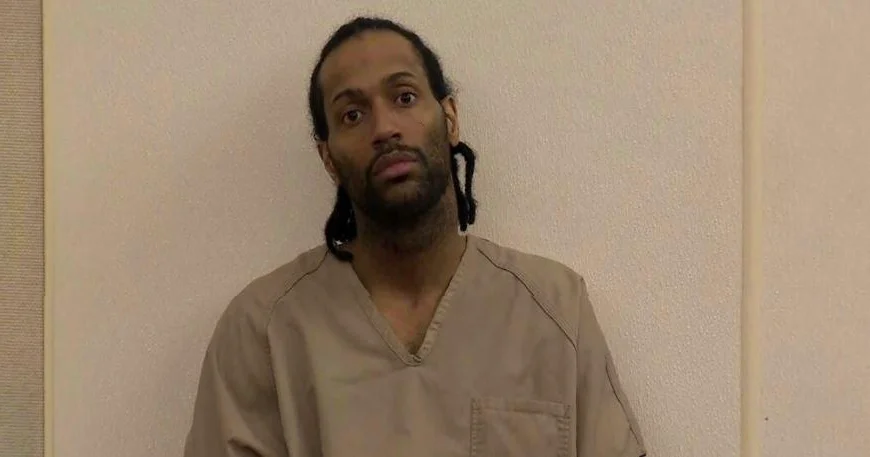
Six years and three months earlier, Golsby had been convicted of aggravated robbery and attempted rape. In that case, he had held a woman at knifepoint in front of her child and forced her to withdraw money from an ATM — strikingly similar to what had been done to Reagan.
The victim in that earlier case did not testify against him, which allowed him to accept a plea deal and serve only six years. He had been released just three months before Reagan was killed.
His identity was further confirmed through gas station surveillance footage that captured him purchasing a gas can at a Speedway location in Columbus. The face on camera matched the DNA profile. At 4:00 a.m. on February 11, 2017, Golsby was arrested.
During questioning, Golsby was uncooperative from the start. He refused to say anything until investigators allowed him to smoke a cigarette. They partially accommodated the request, and he began giving limited information.
He acknowledged being in Reagan’s car that night. He confirmed the ATM visits and the amounts of money involved. But he denied having anything to do with her death. He claimed he had simply dropped her off at the park and left. He also denied that Reagan had been forced to undress and denied ever firing a weapon.
When investigators pressed further, Golsby changed his story. He introduced a fictional second person he called TJ, claiming this individual had threatened to harm his family unless he brought him two to three thousand dollars that night, and that TJ was the one who actually killed Reagan.
Investigators looked into the claim thoroughly but found no evidence that TJ existed. Golsby had invented him entirely. He eventually told investigators where the murder weapon was hidden — in a storm drain in another part of the city — after they agreed to bring him two double cheeseburgers. The weapon was recovered. Golsby was charged with aggravated murder, rape, kidnapping, and robbery.
After his arrest, one of the most alarming details of the entire case came to light. Golsby had been wearing a GPS ankle monitoring device since his release from prison.
When he was discharged at the end of 2016, corrections officials had difficulty placing him in a re-entry program because of his history and the 52 infractions he had accumulated while incarcerated.
He was eventually accepted into a Columbus facility called the EXIT Program, and wearing the GPS device was a condition of that placement.
However, the device had never been programmed with any restrictions. No curfew, geographic boundaries, and no alerts of any kind. For three full months, the device was essentially useless. It recorded his location, but nobody was actively watching.
A review of the stored GPS data after his arrest showed that Golsby had committed six robberies and attacks in Columbus’s German Village neighborhood between January 23 and February 7, 2017 — one day before Reagan was killed.
Four women and two men had been robbed at gunpoint or knifepoint during that period. One woman was pistol-whipped. Six additional counts of aggravated robbery were added to his charges based on the GPS data alone.
That same data traced his movements on the night of February 8. Bus surveillance footage showed him boarding and later getting off near the area where Reagan was taken. The ankle monitor then tracked him on foot until he reached her location.
After that, his movement speed increased significantly, indicating he was in a vehicle. The device placed him at every ATM location, in the alley, and at Scioto Grove Metro Park.
Beyond the monitoring failure, Golsby had also accumulated three strikes under the rules of his re-entry program before the murder. His scheduled meeting with his parole officer was not until the end of February, and no action had been taken before that date.
Golsby’s trial began in March 2018. Prosecutors pushed for the death penalty. Two women who had visited Golsby in jail after his arrest each testified that he had nodded yes when asked directly whether he had been the one to pull the trigger.
One of them also testified that Golsby had returned to her after the murder and handed over Reagan’s wallet and purse. The physical evidence was extensive — surveillance footage, DNA, ATM records, GPS coordinates, and the recovered weapon.
Despite having maintained throughout the trial that TJ was responsible for the shooting, Golsby was found guilty on all counts.
During the penalty phase, his defense presented testimony about his difficult childhood in an effort to persuade the jury to spare his life. The jury was not unanimous on the death penalty and instead sentenced him to life in prison without parole, plus 66 years.
When given the chance to speak, Golsby apologized to Reagan’s family and admitted that TJ had never existed.
In 2018, Lisa and Toby filed a wrongful death lawsuit against the Ohio Department of Rehabilitation and Correction and several other entities. The lawsuit argued that the failure to properly supervise Golsby after his release had directly led to Reagan’s murder.
A judge dismissed the case, ruling that the state had no legal duty to protect Reagan under the applicable legal framework. The family appealed to the Ohio Supreme Court, which declined to hear the case.
Rather than stopping there, Lisa and Toby directed their energy toward changing the laws that had failed their daughter. In 2018, the Reagan Tokes Act was introduced in both the Ohio House and Senate, and in December of that year, Governor John Kasich signed the first portion of it into law.
The part that became law changed how judges sentence people convicted of first and second-degree felonies. Instead of a fixed term, judges must now impose a sentencing range with a minimum and maximum term.
For a single offense, the maximum is set at 150 percent of the minimum. Inmates are presumed released at the end of their minimum term, but the ODRC can hold a hearing to extend it if the inmate engaged in misconduct or remained a threat to society.
The act also allows sentence reductions of five to fifteen percent for exceptional conduct, though a judge must approve it, the prosecutor must be notified, and the victim holds the right to participate. Sex offenders are excluded from any reduction. The act went into effect on March 21, 2019.
The second component, House Bill 166, proposed reducing parole officer caseloads, creating re-entry programs for offenders not accepted by halfway houses, and strengthening GPS monitoring for felons under post-release control. It passed the Ohio House in February 2022.
The act faced legal challenges regarding whether the parole board could extend sentences without judicial input. After conflicting rulings across appellate courts, the Ohio Supreme Court upheld the Reagan Tokes Act in a five to two decision in July 2023.
Alongside their legislative work, the family also established the Reagan Delaney Toes Memorial Foundation. The foundation’s primary focus has been funding scholarships for students at Ohio State University.
The foundation also hosts an annual community event called Rally for Reagan, which includes a 5K race, a fundraising dinner, a social event, and a tennis tournament.
A tranquility garden was built at Scioto Grove Metro Park, at the site where Reagan’s body was found, to give her family and the community a place to remember her in peace.
Her parents and sister were also invited to walk across the stage at what would have been her graduation ceremony and accepted her diploma on her behalf.


Recent Comments