
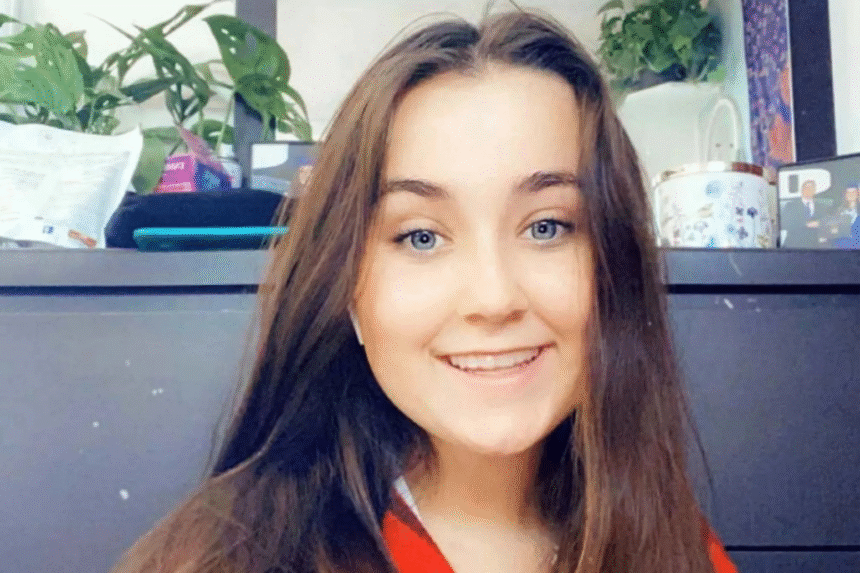
Ashley Wadsworth was a 19-year-old Canadian girl who traveled over 4,000 miles to England to meet her long-distance boyfriend, Jack Sepple. She never made it home. On February 1, 2022, she was found stabbed to death in his apartment in Chelmsford, England.
Ashley was born in 2002 in Vernon, British Columbia. She grew up in the Okanagan Valley with her older sister, Hailey, her mother, Christy Gendron, and her father, Kenneth Wadsworth.
Even though her parents had separated, both of them stayed very involved in her life. People who knew her described her as warm, friendly and the kind of person who made everyone around her feel included.
She played sports like ringette and tennis and was known for her easy, outgoing personality. During her later teenage years, she joined the Church of Jesus Christ of Latter-day Saints and was baptized into the faith.
By 2021, she had graduated high school and been accepted into Thompson Rivers University in Kamloops. However, the COVID-19 pandemic disrupted her plans, and she decided to take a gap year instead.
It was in 2015, when Ashley was just 12 years old, that she first came across Jack Sepple on Facebook. He was older than her and lived in Chelmsford, England. At first, their conversations were completely ordinary.
They messaged each other about school, music, and everyday life. Because of the time difference between Canada and England, Ashley would wake up early before school just to catch him online, and she would stay up late at night to keep talking.
Over time, Sepple also began sending her small gifts through the post, things like jewelry and stuffed animals. Her mother, Christy, knew about him and had even seen him on video calls. At that point, nothing seemed particularly alarming.
As the years passed, however, the relationship began to change. Sepple grew increasingly possessive.
He would question Ashley about who she spent time with, push her for details about any male friends or classmates, and become visibly moody if she mentioned socializing with boys. Arguments between them through messages could go on for hours.
When Ashley blocked him to get some space, he would simply create a new account and start messaging her again. If that did not work, he would contact her sister directly instead.
By the time Ashley was 16 and Sepple was 19, he had her name tattooed across his arm. During one particularly heated argument, while still on a video call with her, he picked up a knife and deliberately cut through the tattoo, causing himself to bleed heavily.
What Ashley did not know at this point was that Sepple had a documented history of violence. Court records showed that two previous girlfriends had each sought restraining orders against him because of his controlling behavior.
In one case, he had broken a court order by continuing to contact a former girlfriend after the relationship had ended. He had also been physically violent toward his own mother during an argument, and she had eventually sought legal protection against him as well.
Sepple was also involved with multiple women at the same time as Ashley. Some of these women knew about her and referred to her as his favorite.
At one point, a friend of Sepple called Ashley directly to say that another woman was being prevented from leaving his apartment, putting Ashley in the position of trying to resolve a conflict involving her own partner.
None of this history was known to Ashley, who continued to see Sepple as someone who was struggling emotionally and simply in need of support. Friends urged her to walk away, but she remained convinced that meeting him in person would fix things.
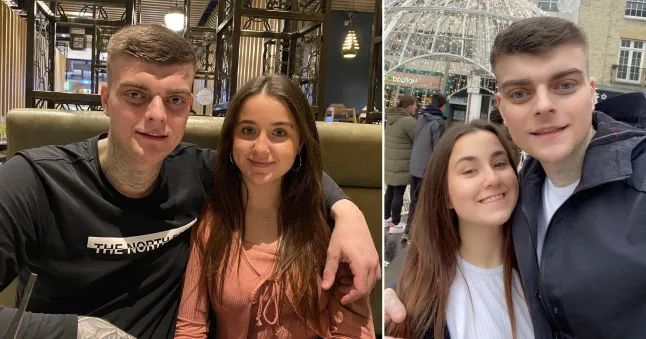
By 2021, Ashley had saved enough money and secured a six-month tourist visa to visit England. She packed her bags and said goodbye to her family at the airport.
Her mother admitted later that she had a strong uneasy feeling in that moment, though she recognized that Ashley, now 19, was an adult making her own choice. Ashley arrived at Heathrow Airport roughly 12 hours later, where Sepple was waiting for her.
A photograph from that moment showed the two of them together, with Sepple’s arm around her shoulders. From the airport, he took her back to his one-bedroom flat on Tennyson Road in Chelmsford, a small and noticeably worn apartment near the city center.
The first two weeks went smoothly. They visited London together, walked through the city and posted photos on social media. They adopted a small gray kitten named Winston, which Ashley grew very fond of.
On video calls back to Canada, she showed her family the flat and appeared genuinely happy. Sepple cooked meals, accompanied her on outings, and was attentive throughout this early period.
However, beneath the surface, the conditions for conflict were already present. Neither of them was working. Ashley could not work legally under the terms of her tourist visa, and Sepple had no employment of his own.
This meant both of them were in the apartment together for most of the day, with no financial flexibility and no independent social lives.
Sepple discouraged Ashley from talking to neighbors or making new friends outside of their relationship. Whenever she sent a message to anyone, he would ask who it was.
Ashley tried to stay positive and even attempted to bring Sepple into her church community, hoping it might help him become more open and social. He had no interest in that. He preferred to spend his time playing video games and wanted Ashley close to him at home.
Shortly after Christmas, on Boxing Day, Ashley found Sepple barely conscious following what appeared to be a deliberate overdose. She called for an ambulance, and he was taken to hospital.
When medical staff discharged him, they handed his medication to Ashley in a locked box and placed her in charge of managing his care going forward. This placed a 19-year-old girl, alone in a foreign country, in the role of being fully responsible for another person’s medical welfare.
That kind of responsibility makes leaving far more difficult because once someone believes that their partner might harm themselves without them, walking away begins to feel like abandonment.
Ashley did not tell her family the full story. She kept her responses vague during calls home and downplayed what had happened. When her sister eventually found out and told Christy, Ashley’s family immediately urged her to come back to Canada. Ashley refused, at least at that stage.
Things calmed down briefly, but not for long. During one argument, Sepple picked up a heavy beer mug and struck Ashley across the head with it, shattering it on impact. After that, physical violence became more frequent.
Each incident was followed by apologies and promises that it would not happen again, but the cycle repeated. In mid-January, Sepple’s family arranged a short seaside trip for the couple, hoping the change of environment would help ease the tension.
It worked temporarily. But as soon as the two returned to the Chelmsford flat, the situation deteriorated again. Sepple began going through Ashley’s phone obsessively and took complete control of all her social media accounts.
She was no longer allowed to use any platform without him present. He monitored her messages, deleted conversations he did not like, and could impersonate her online if he chose to.
By the final days of January 2022, the arguments were happening multiple times a day. People back home noticed the change in the way Ashley spoke during calls and voice messages. She sounded guarded and careful in a way that had not been there before.
On the morning of February 1, 2022, the neighbor in the flat next door, Helen, heard screaming through the wall. A short while later, Ashley knocked urgently at Helen’s door.
When Helen opened it, she found Ashley standing barefoot, shaking, and bleeding. Ashley told her that Sepple had attacked her, smashed her phone, and thrown their kitten against the wall.
She told Helen that she was afraid he was going to kill her, because he had told her exactly that during the altercation. Ashley pleaded with Helen not to call the police, worried about what Sepple might do if officers showed up.
Helen went to speak with him directly instead. He apologized and insisted everything was fine. Helen had no choice but to continue with her day.
A short time later, Ashley used Sepple’s phone to send urgent messages to friends in Canada and members of her church community in England. The messages were brief and direct, stating that it was Ashley, that she needed help, and that it was an emergency.
Christy answered the call in the early hours of the morning in Canada. During that conversation, Ashley told her mother everything. She disclosed the abuse, the fear, and the fact that she wanted to come home immediately.
Christy wanted the same. However, COVID-19 testing requirements at the time meant the earliest available flight was still more than 48 hours away. The two agreed that if Sepple became violent again, Ashley would leave for the airport right away without stopping to pack anything.
For the first time since arriving in England, Ashley had a plan to get out but sometime after midday on February 1, Ashley’s messages stopped entirely.
Her church friends, having noticed that the messages coming from Ashley’s phone no longer sounded like her, contacted emergency services. Officers arrived at the Tennyson Road flat and forced entry.
Inside, they found Ashley lying face down on the bed. She had been beaten, strangled, and stabbed more than 90 times with a kitchen knife. Sepple had hidden the knife behind a radiator. When officers arrived, he was on a video call with his sister.
He was arrested without resistance and told officers he had gone psychotic and that drugs were responsible. Toxicology testing later confirmed that only cannabis and prescribed medication were in his system, neither of which would explain any loss of reality or awareness.
Investigators recovered a video from his phone in which he had filmed himself confessing to the killing while standing in the apartment with Ashley’s body behind him.
His Xbox controller was found to be covered in her blood, indicating he had continued playing video games after the attack. Digital evidence also showed that he had been sending messages from Ashley’s social media accounts following her death, telling her contacts that she was perfectly fine.
At Chelmsford Crown Court later in 2022, Sepple pleaded guilty to murder. Ashley’s family traveled from Canada to attend the sentencing. The judge imposed a life sentence with a minimum term of 23 and a half years before he could be considered for parole.
During the proceedings, Christy spoke about the lasting weight of her daughter’s absence, describing sleepless nights and the way that previously joyful occasions now felt hollow.
Ashley’s father described how grief had altered his everyday life completely. From prison, Sepple sent letters to the family in which he cited poor mental health and intrusive thoughts as factors and offered an apology.


Recent Comments