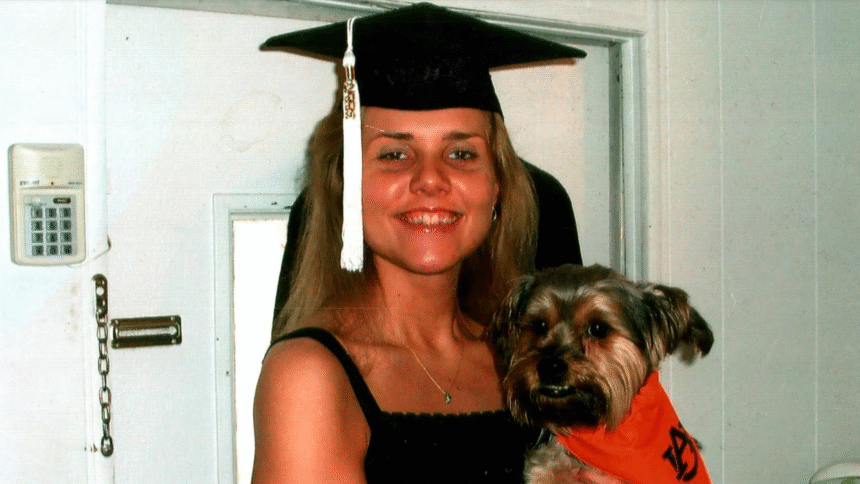
In June 2006, Auburn University graduate Lori Slesinski disappeared after a planned evening with a friend, beginning an investigation that would not reach resolution for more than sixteen years.
A Planned Evening Cut Short
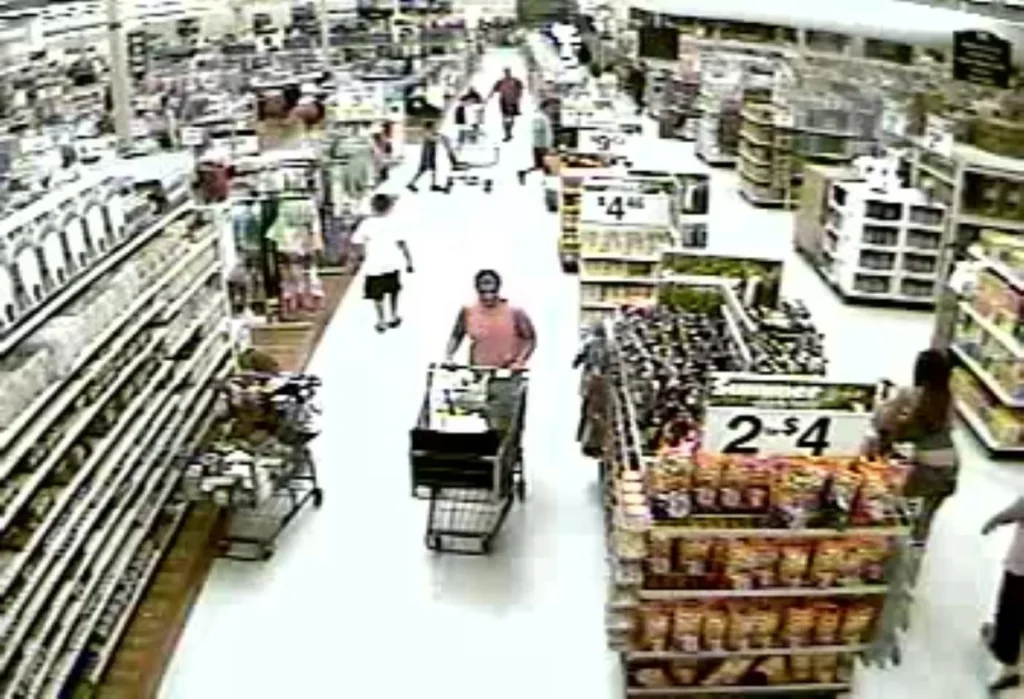
Lori Slesinski, a recent graduate of Auburn University in Alabama, had arranged to spend the evening of June 10, 2006, with her close friend Lindsay Braun. Auburn, home to the university, was known chiefly as a college football town.
The two planned to drink Rum Runner cocktails and watch a movie together at Lindsay’s home. Around 6:30 p.m., Lori called to say she was stopping at a store to pick up drink mixes before heading over.
About thirty minutes later, Lindsay’s phone rang once or twice, but no one spoke when she picked up. She called the number back immediately but got no answer.
Lori never arrived, which was completely out of character for her, since she had never before failed to show up without calling first.
That evening, a man named Rick Ennis was at Lori’s mobile home; his voice could be heard in the background during her call to Lindsay.
Lori had met Ennis, who worked at a local bowling alley, while she was still a student, and the two had stayed friendly in the years since, though Lindsay said she knew little about him beyond his friendship with Lori.
The previous Christmas, Lori had invited Ennis to spend the holiday with her family because he had no relatives of his own, telling her mother she felt bad about him being alone; Arlene remembered him at the time as friendly and polite.
Because Lori and Ennis were known to spend time together, Lindsay was not initially concerned that he had been at her home that day.
Days before she disappeared, Ennis had also left Lori a letter on a table in her trailer expressing interest in starting a romantic relationship with her, an interest she did not return. Those who knew Lori said she had no known enemies.
A Friend’s Growing Concern
When Lori did not come home or answer her phone that night, Lindsay began leaving messages on her answering machine. The next morning, Lori failed to show up for work, and a colleague contacted Lindsay to ask about her whereabouts.
Lindsay sent Ennis a text message asking whether he had seen Lori; he replied that he had not and said he too was worried. After Lori missed a second consecutive day of work, Lindsay drove to her mobile home.
She found the front door unlocked, the air conditioning running, and Lori’s Yorkshire terrier, Peanut, whom she considered her baby, shut inside a crate that Lindsay described as spotless.
Although Lori had been gone for several days, the dog appeared well fed and recently cared for.
Several other details in the home stood out as unusual: rugs that Peanut normally used to cross the tile floor were missing from the kitchen, an outdoor trash can that held yard tools was gone, and the answering machine had been unplugged, which explained why none of Lindsay’s earlier messages had gone through.
Around the same time, Arlene received a call at work from a woman she believed to be Lori’s boss, informing her that Lori had not come in.
Arlene called Lori’s phone and home number repeatedly without success, then drove to Auburn, contacting her husband and the police along the way.
Officers were initially reluctant to treat the case with urgency, noting that a person typically needed to be missing for 48 hours before further action would be taken, and suggested Lori may have left on her own.
Later that day, Ennis called Arlene and told her that Lori had gone to complete a large drug deal. Arlene did not believe the claim and reported it to police, who also heard the same story directly from Ennis.
Acting on the tip, officers searched Lori’s mobile home but found nothing to support it. Arlene later said she suspected Ennis had invented the story to draw attention away from himself.
The Car in Flames
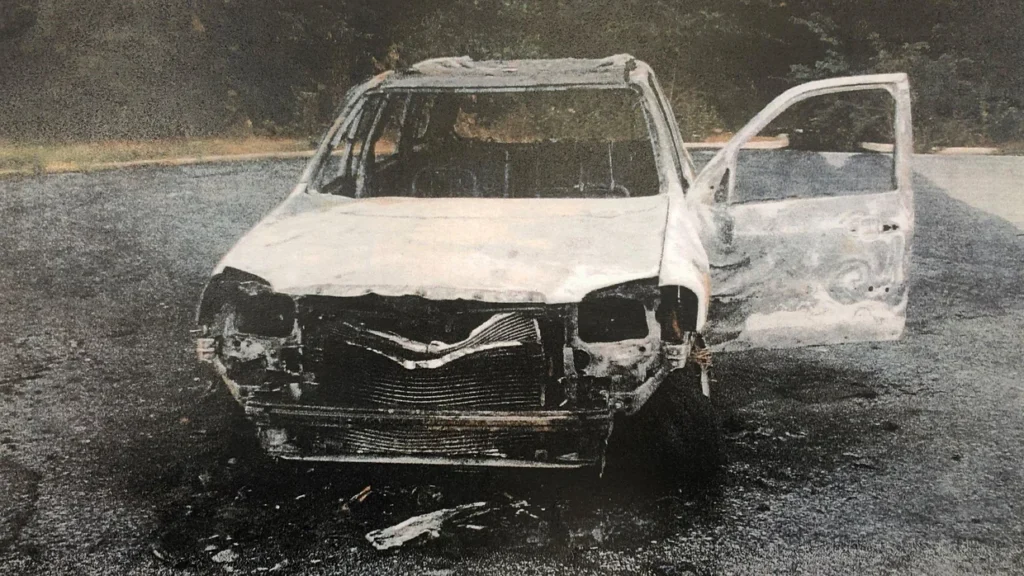
Four days after Lori was last seen, at approximately 4:40 a.m. on June 14, 2006, her car was found engulfed in flames on a secluded dead-end road near a construction site. Lori was not inside, and no trace of her was recovered at the scene.
The discovery shifted the case from a missing-person search to a suspected homicide investigation. Officers found no evidence to support Ennis’s earlier claim that Lori had been involved in a drug transaction.
When police first spoke with Ennis, hours after Lori was reported missing, they noticed scratches on his hands and arms, which investigators later described as consistent with defensive wounds from a struggle; at the time, Ennis offered no explanation for them. Inside his car, they found handcuffs, a knife, and cleaning supplies.
Near the spot where Lori’s car had burned, investigators recovered a gas can resembling one missing from the bowling alley where Ennis worked, located roughly a thousand yards from the alley and about thirty yards from the burned car, along with a hand-rolled cigarette butt, which was collected but not sent for testing at the time.
Railroad tracks ran alongside both the bowling alley and Lori’s home, offering a route between the two locations where a person could avoid being seen.
Inside Lori’s home, sections of a wall bore black scuff marks consistent with the soles of shoes, suggesting a struggle had taken place, and the cord from a bedroom telephone was missing.
Investigators later theorized that the cord may have been used to restrain or strangle Lori, and that Ennis remained in the trailer for a period afterward, which would account for the dog having been fed and let outside during the days she was missing.
No official cause of death was ever determined, though Whitaker said he believed Lori had been strangled.
Despite these findings, investigators did not have enough evidence to charge Ennis, and no arrest was made. He remained in the Auburn area for a short time, but after a third interview with police, he left town and did not return.
A Violent Past Comes to Light

Before Ennis ever met Lori, he had already killed two people. On March 5, 1993, Alabama state trooper John Clark responded to a car that had run off a highway, and found it had been driven by a 12-year-old boy: Ennis.
A search of his backpack turned up a kitchen knife, shotgun shells, and .22-caliber ammunition. When the trooper asked where his parents were, Ennis said, without visible emotion, that he had killed them both.
Local officers went to the family’s home and found two bodies in a bedroom: Ennis’s mother, Dolly Flowers, and his stepfather, Eddie Joe Flowers. A television series filming with area law enforcement at the time recorded cameras entering the home shortly after the discovery.
Dolly had been shot in the face and beaten with a baseball bat; Ennis later told investigators he had covered her face with a blanket and placed a rose on her chest. Eddie Joe, known to friends by the nickname “Elvis,” was shot in the face with a shotgun.
At the time, Ennis said he was upset because his parents were planning to move and he did not want to leave his school; he continued attending classes for two days while the bodies remained in the home.
Investigators also found a handwritten list in which Ennis had noted plans to kill his stepfather’s three daughters from a previous marriage — Donna, Angela, and Tina, the youngest of whom was 20 at the time of the killings.
Because he was a minor, Ennis could not be tried as an adult. He spent nine years in juvenile detention and was released after turning 21.
A Cold Case Reopened
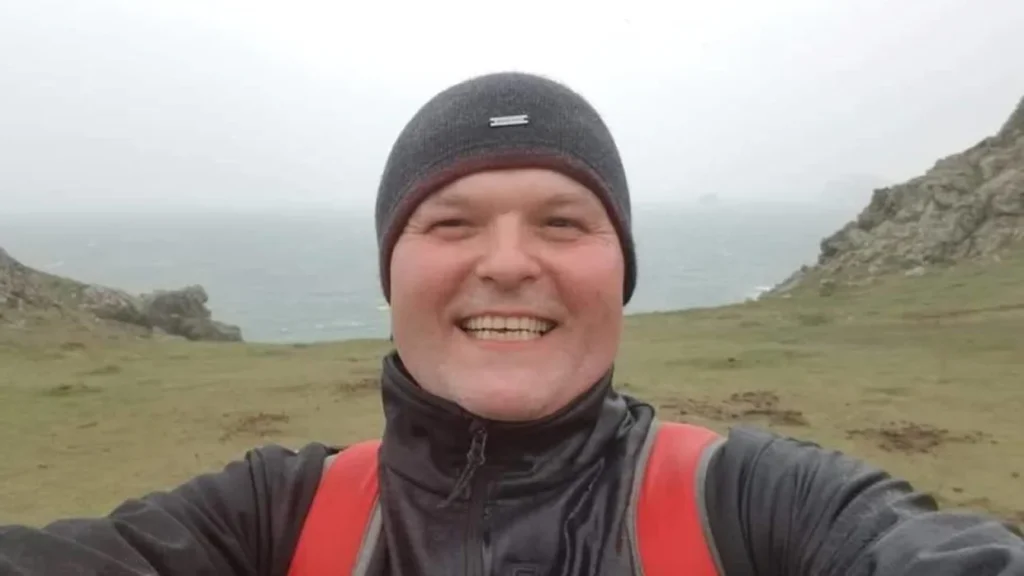
In 2016, ten years after Lori disappeared, Special Agent Mark Whitaker of the Alabama State Bureau of Investigation formed a cold case unit and selected her case as its first assignment.
Whitaker, who had by then investigated close to a hundred murder cases, later called it the most significant of his career, in part because Lori’s body had never been found.
Investigators could not eliminate Ennis as a suspect, citing inconsistencies in the statements he had given in 2006. They resubmitted physical evidence for updated testing, including the hand-rolled cigarette found near Lori’s burned car nearly a decade earlier.
They also learned that a former roommate of Ennis had given police three rugs years earlier that matched the ones missing from Lori’s kitchen.
While reviewing old case files late one night, Whitaker’s partner, J.W. Barnes, found a sealed police report from 2006 that had never been opened and called Whitaker immediately.
It showed that DNA testing conducted shortly after Lori disappeared had identified Ennis’s DNA in semen found on her bedsheets, in blood on the interior of her front door, and on one of the recovered rugs.
With this evidence, prosecutors charged Ennis with Lori’s murder twelve years after she vanished. Investigators later pointed to the letter found in Lori’s trailer, combined with Booth’s account that Ennis had felt rejected by her, as a possible motive.
Whitaker said he had kept a photograph of Lori in his home throughout the investigation as a reminder of the case.
By that time, Ennis, then 41, was living roughly 500 miles away in Virginia, working for a company that built portable structures known as yurts, and was engaged to a school librarian, Alana Atkinson, who called him one of the most compassionate and generous people she had known, said she had been drawn to his intelligence and sense of humor, and believed he would have given his life for Lori had he been present.
His employer, Sharon Morley, said Ennis had likewise struck her as open, friendly, and easygoing. Atkinson had learned of Ennis’s 1993 case two months into their relationship, through her own genealogical research, though she remained with him.
On August 6, 2018, his birthday, a law enforcement task force positioned agents in the woods surrounding his workplace before moving in and arresting him. Whitaker personally called Lori’s parents that morning to tell them Ennis was in custody, a call he later described as one of the most meaningful of his career.
Ennis appeared before an Alabama judge later that month with Lori’s parents present in the courtroom. During a subsequent hearing, an investigator with the Auburn Police Department informed Whitaker that testing on the hand-rolled cigarette found near the burned car had also matched Ennis’s DNA.
After news of the arrest became public, an acquaintance named Terry Booth, who said he was unable to sleep that night, came forward and told investigators that years earlier, Ennis had told him he had strangled someone and had said he “had to get rid of it” when Booth asked why he left Alabama.
The case was then delayed by the COVID-19 pandemic before going to trial. During that period, Lori’s brother, Paul, died of cancer, and her father, Casey, died after contracting COVID-19.
After his arrest, Ennis told a journalist in a phone interview that he had been sexually abused by his mother and that the killing occurred after he reached a breaking point, a claim he had not made to investigators in 1993, when he cited his parents’ plan to move as his reason.
No evidence was found to substantiate the abuse allegation. Atkinson said Ennis’s account of the abuse was part of why she believed he could not have been involved in what happened to Lori.
Because Lori’s remains were never recovered, prosecutors’ first task at trial was to establish that she was in fact dead.
Prosecutor Jessica Ventiere called Arlene to testify that the family had not heard from Lori since the day before she disappeared, then presented testimony from Lindsay and Booth alongside the DNA evidence connecting Ennis to Lori’s trailer and her burned car.
Ennis’s defense attorney argued that the cigarette butt could have been planted by police and told jurors there was no evidence Lori had been kidnapped or forcefully taken against her will, suggesting instead that she may have been involved in dealing marijuana; Lindsay testified that any marijuana Lori grew was for her own personal use.
Ennis testified in his own defense, stating that he had kidnapped Lori but denying that he killed her or burned her car. He testified that although Lori had turned down his proposal a month or two before she disappeared, the two remained intimate afterward, and he confirmed under questioning that he had told Booth he had strangled someone.
He said the scratches on his arms came from playing with his dog, that the knife and handcuffs found in his car were items he was moving from his apartment, and that he had last seen Lori alive that Saturday afternoon, with no argument between them, before he left to sell marijuana, saying Lori had told him she planned to do the same.
When the prosecutor asked whether the blood on Lori’s front door was his, Ennis said he had no explanation for it. In her closing argument, Ventiere told jurors the evidence was overwhelming and reminded them that Lori was not someone who would have left without contacting her family.
After seven days of testimony, the jury deliberated for two days before finding Ennis guilty of capital murder.
To avoid a lengthy appeals process tied to a possible death sentence, prosecutors offered a plea agreement for a sentence of life in prison without the possibility of parole, which Lori’s mother accepted, saying she felt relief that Ennis would not be able to harm anyone else.
Atkinson, who had expected Ennis to be exonerated and had planned to celebrate with him that day, said she was left in shock and disbelief by the outcome. In the years since, Arlene said she and Whitaker had become close friends, whom she now considers family.
Remembering Lori Slesinski
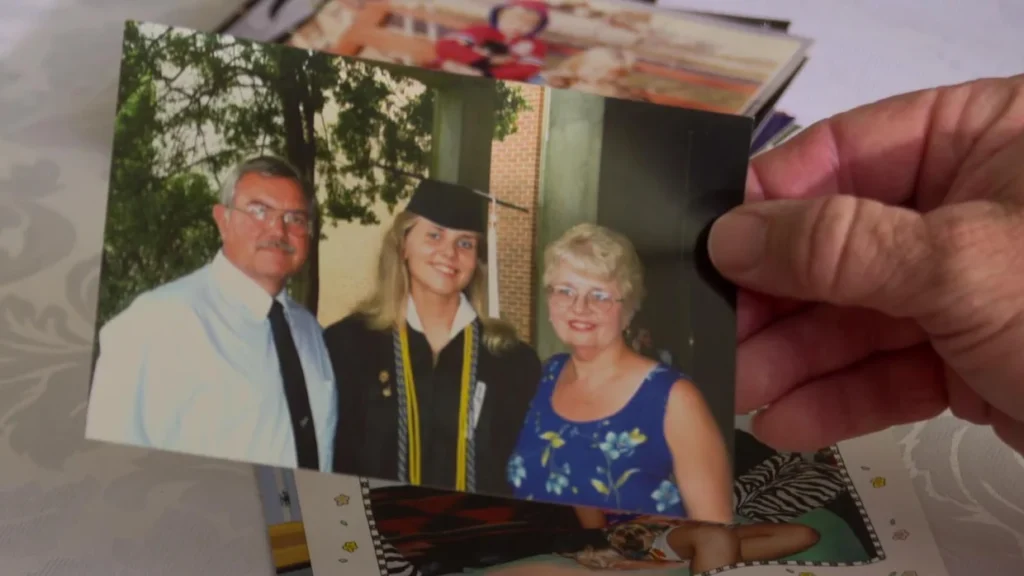
Lori Slesinski was born in New York and moved with her family to rural Alabama at the age of 13. She graduated as valedictorian of her high school class before enrolling at Auburn University, where her parents bought her a mobile home in a trailer park popular with students.
She majored in psychology and minored in criminal justice, graduating with honors. After graduation, she began working at a local mental health facility alongside Lindsay Braun, whom she had met during their junior year at Auburn in 2002.
Those who knew Lori described her as kind, loving, and studious, with a deep love of sports and animals. Arlene said she called her daughter every day even after Lori moved into her own home nearby.
Her Yorkshire terrier, Peanut, was especially close to her, and after her disappearance, the dog lived with her family until his death around the age of 16.
For years afterward, he would still run toward the sound of her name whenever it was spoken in the house. Those who knew Lori continued to remember her as an outgoing and devoted friend and daughter.