
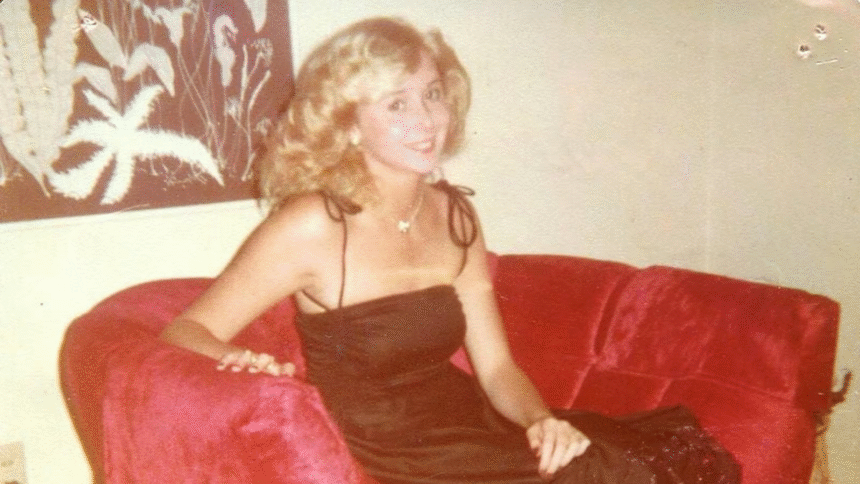
In December 1979, 18-year-old Michelle Martinko was murdered outside a shopping mall in Cedar Rapids, Iowa. The case remained unsolved for nearly forty years until advances in DNA science identified a suspect.
A Fatal Night at Westdale Mall
Cedar Rapids, Iowa, was a city of about 110,000 people in December 1979. On the evening of December 19, Michelle Martinko attended a banquet held by her high school’s concert choir.
Afterward, she and several friends from the choir went to Westdale Mall, which had opened only two months earlier and had quickly become a popular gathering spot in Cedar Rapids.
While there, Martinko looked at a coat her mother had placed on layaway as a Christmas gift. She carried $186 in cash to pay off the layaway balance but ultimately decided not to purchase the coat.
A friend who noticed her holding the cash in public advised her to put it away before someone noticed. Earlier that evening, Martinko had reportedly told someone that she felt as though she was being followed, although none of her friends recalled noticing anyone paying particular attention to her at the mall.
The mall closed at 10 p.m., and Martinko left shortly before closing time. She walked to her car, which was parked in a section of the lot some distance from the entrance. It was a dark December night, typical of winter in Iowa.
As she sat in her vehicle, someone opened the driver’s side door and got inside with her. Martinko was stabbed and cut a total of 29 times. She sustained wounds on her hands and arms consistent with an effort to defend herself against the attack.
Investigators found indentations left by rubber gloves both in the dirt outside the car and in blood inside it, indicating the attacker had taken steps to avoid leaving fingerprints.
Despite the violence of the crime, robbery did not appear to be the motive: the cash Martinko was carrying was untouched, as were shopping bags containing recently purchased items in the back seat.
An autopsy later confirmed that she had not been sexually assaulted. News of the killing spread quickly through Cedar Rapids, and the city’s entire police force became involved in the investigation.
The murder unsettled the community, in part because it occurred at a mall that had quickly become a central gathering place for local teenagers, and because Martinko herself was well known among her graduating class.
Suspicion Falls on Those Closest to Her
Given the number of wounds and the apparent intensity of the attack, investigators considered the possibility that Martinko had been killed by someone she knew, and every man who had been part of her life became a suspect who needed to be formally cleared.
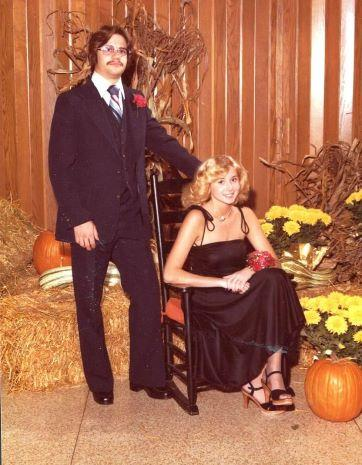
Attention turned first to Andy Seidel, her former boyfriend, whom she had met while roller skating. The two had dated for about two years before breaking up, and after the relationship ended, Seidel reportedly kept close tabs on Martinko’s activities, including who she was seeing and why.
Police learned that Seidel had encountered Martinko at the mall on the night of the murder and brought him in for questioning.
He stated that he had been at home shortly after the mall closed, and his mother corroborated this account, though investigators noted that alibis provided by close family members could not always be independently verified.
Investigators also questioned other men who had been part of Martinko’s life, including Mike Wyrick, another former boyfriend. During his questioning, investigators showed him photographs of the crime scene while pressing him for information.
Wyrick was attending college more than 100 miles from Cedar Rapids at the time of the murder, which ruled him out as a suspect.
Seidel’s visible distress at Martinko’s funeral drew additional attention from those who knew both of them, and public suspicion toward him grew in the years that followed. Not long after high school, Seidel left Cedar Rapids and joined the Navy.
However, investigators were unable to connect any physical evidence to Seidel or to any other individual questioned during the early stages of the case. Despite continued effort from the police department, no arrest was made in the years immediately following the murder.
A Case Goes Cold
The Cedar Rapids Police Department maintained an active file on the case throughout the years that followed, even as new leads became increasingly difficult to find. By the mid-1980s, the investigation had reached a standstill.
DNA analysis, which would later become central to identifying Martinko’s killer, was not yet available as a forensic tool. Leads that had once seemed promising failed to produce a suspect, and by 1986 the case had effectively gone cold.
Over the years, investigators continued to add to the case file, which eventually grew to nearly 8,000 pages of reports.
The investigation regained momentum in 2005, when Detective Doug Larison, who had attended the same high school as Martinko without knowing her closely, reviewed the case file and discovered that blood scrapings had been collected years earlier from the gear shift of Martinko’s car.
The sample had been sent to a laboratory for testing, but the results had never been followed up. Larison found that the lab report showed a full male DNA profile on the gear shift, consistent with the possibility that the attacker had cut himself during the struggle with Martinko and left blood on the vehicle.
He later noted that because different detectives working a case over many years do not always communicate with one another, the report had gone unreviewed until he personally examined the file.
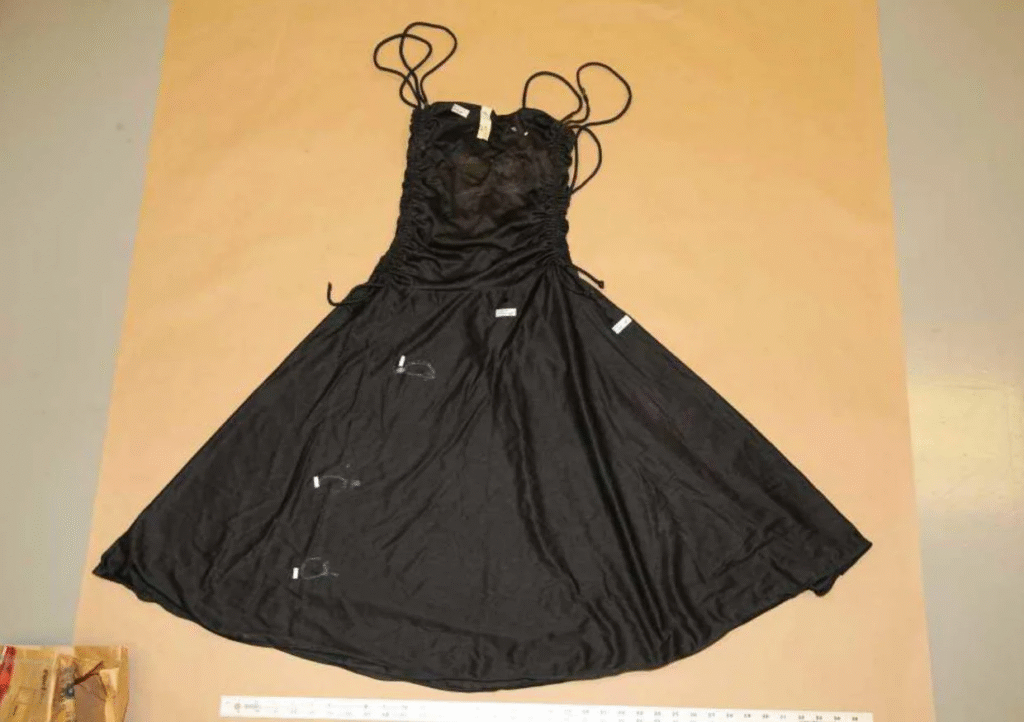
Larison then submitted Martinko’s dress, which had been preserved in evidence storage, for additional testing. That test also revealed a male DNA profile, one that matched the sample recovered from the gear shift.
Investigators submitted the DNA profile to the Combined DNA Index System, a national database containing genetic profiles collected from individuals who had been arrested or convicted of crimes.
The search did not produce a match. Larison’s team then began collecting DNA samples from more than 100 people connected to the original investigation, including men who had previously been questioned as suspects, typically using simple cheek swabs that allowed investigators to test large numbers of people relatively quickly.
Andy Seidel voluntarily provided a sample and was excluded, formally clearing him after years of public suspicion. Mike Wyrick and Tracy Price, a friend who had spoken with Martinko at the mall that night, were also tested and excluded.
As the effort continued, the total number of people tested eventually grew to more than 160, but none of the samples matched the DNA profile found at the crime scene, and the investigation stalled once again.
After nearly a decade spent on the case without a match, Larison asked his supervisors to assign a new detective to continue the work.
New Science Reopens the Case
In 2015, Detective Matt Denlinger took over as lead investigator on the case. Denlinger had a personal connection to the investigation: his father, Harvey Denlinger, had been one of the original detectives assigned to the case in 1979.
Matt was only five years old at the time of the murder and had no memory of the crime itself, but local news outlets aired a segment on the case every year on the anniversary of Martinko’s death, making the case a familiar part of the community’s collective memory long before he became involved in solving it.
With traditional DNA comparison no longer producing new leads, investigators sent the existing DNA profile to Parabon NanoLabs, a laboratory in Virginia that specializes in predicting physical characteristics from genetic markers, using a technique the lab called Snapshot.
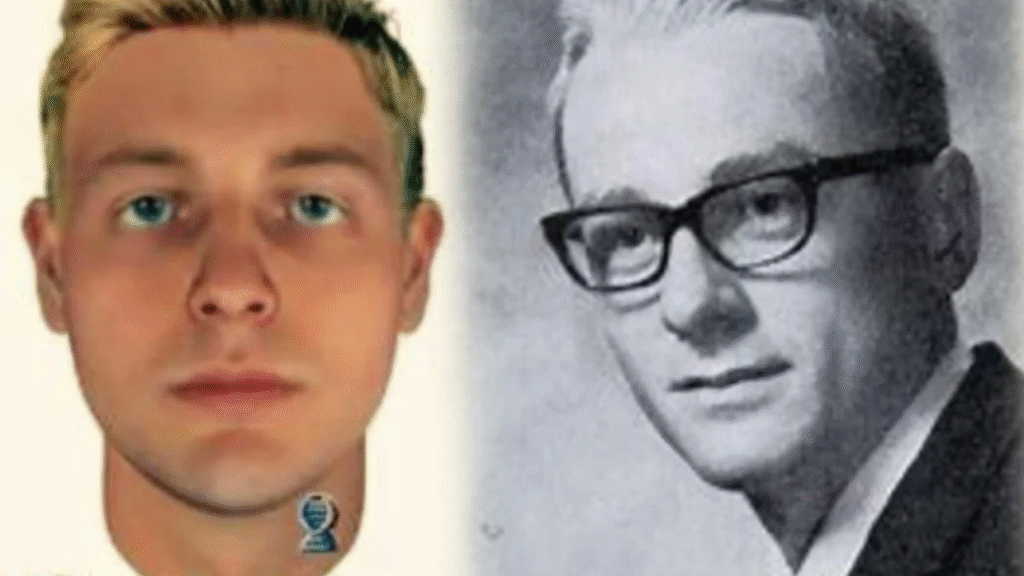
The analysis indicated that the suspect was likely a white male with blonde hair and blue eyes. Because the technique could not determine the suspect’s age or hairstyle, the laboratory produced several composite sketches representing different possible appearances.
When these images were released to the public during a press conference, investigators received hundreds of tips, but none led to the identification of a suspect.
In 2018, the arrest of Joseph DeAngelo in an unrelated case in California drew national attention.
DeAngelo, known as the Golden State Killer, had been identified decades after a series of crimes using a method called genetic genealogy, which traces DNA connections between distant relatives to narrow down a suspect’s identity.
Denlinger decided to apply the same approach to the Martinko case. Parabon uploaded the case’s DNA profile to GEDmatch, a public database where individuals voluntarily submit their own DNA for genealogical research.
The search identified a genetic connection to Brandy Jennings, an office manager and single mother living in Vancouver, Washington, who was determined to be a second cousin once removed of the unidentified suspect, meaning the two shared a common set of great-great-grandparents.
Investigators spent months building out Jennings’s family tree, using birth records, marriage records, and cemetery records to trace her family history back several generations.
As additional relatives voluntarily contributed their own DNA, the family tree became more detailed.
Parabon’s early findings pointed to a broader group of Jennings’s descendants as possible candidates; after investigators supplied further genealogical information, the lab recalibrated its analysis and narrowed the pool specifically to three brothers living in Iowa: Donald Burns, Kenneth Burns, and Jerry Burns.
Genetic Genealogy Leads to an Arrest and Trial
To confirm which of the three brothers might match the DNA profile from the crime scene, investigators developed a plan to obtain samples without alerting any of the men to the investigation.
They collected a drinking straw used by one brother during lunch, and a toothbrush discarded by another.
Locating Jerry Burns took longer; after tracking his likely locations, investigators found him at a pizza restaurant, where they observed him for about two hours before collecting a glass he had used to drink from.
Laboratory testing excluded Donald and Kenneth Burns, but Jerry Burns’s DNA matched the profile recovered from Martinko’s car and dress. Investigators later observed that the composite image created years earlier by Parabon closely resembled a photograph of Jerry Burns from his youth.
On December 19, 2018, exactly 39 years after the murder, Denlinger interviewed Jerry Burns at his place of business, using a hidden camera concealed inside a coffee mug, and informed him that DNA evidence connected him to the crime.
Burns denied any memory of the murder but acknowledged that he had visited Westdale Mall with his family on past occasions, though he could not recall specific dates. He was arrested and charged with first-degree murder.
During the drive back to Cedar Rapids following his arrest, a recording captured Burns making a comment referencing the possibility of blocking out memories of traumatic events.
At the time of his arrest, Burns had no criminal record, was married with three children, and was known in his community as a respected businessman with no documented connection to Martinko. Members of his family publicly stated afterward that they did not believe he was capable of committing the crime.
Burns’s trial began in February 2020. Due to extensive publicity in Cedar Rapids, the court granted a change of venue to Davenport, Iowa. Prosecutor Nick Maybanks led the case for the state, while attorney Leon Spies represented Burns.
Several of Martinko’s former classmates and friends testified during the trial, including Andy Seidel and Mike Wyrick. Prosecutors told jurors that there was an estimated one-in-100-billion chance that the DNA recovered from the crime scene belonged to someone other than Burns.
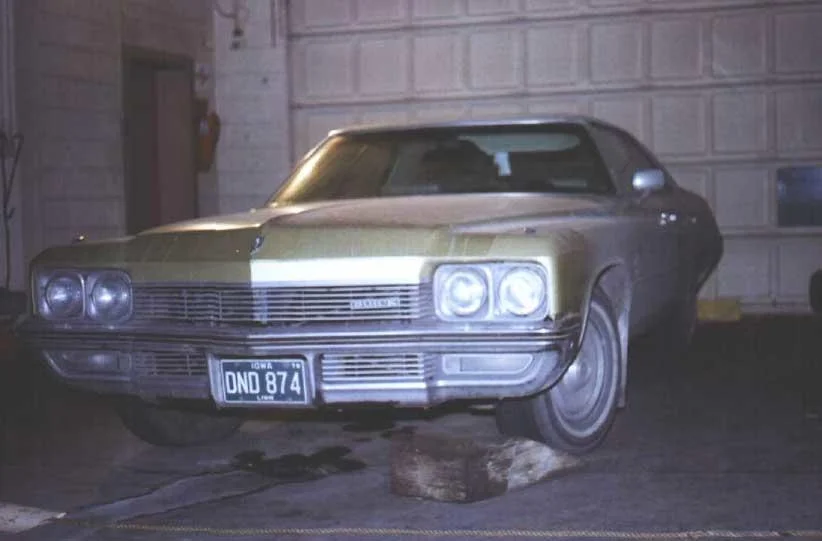
The defense argued that the DNA could have been transferred to the crime scene indirectly, noting that his family had used the same mall and suggesting his DNA might have reached the car through an unrelated connection, since Donald Burns had once worked at a dealership that sold Buick vehicles.
The defense’s sole witness, molecular biologist Dr. Michael Spence, did not dispute that the DNA belonged to Burns but testified that indirect transfer remained a scientific possibility.
The prosecution called an additional witness, Michael Allison, who had been incarcerated alongside Burns and testified about statements Burns made during their time in jail together, including a remark made during a card game that Allison found significant enough to prompt him to come forward and testify.
The jury began deliberating on a Monday afternoon, and after approximately three hours, returned a verdict finding Jerry Burns guilty of murder in the first degree.
Members of Martinko’s family were present in the courtroom when the verdict was read. Under Iowa law, a first-degree murder conviction carries a mandatory sentence of life in prison without the possibility of parole, and Burns was sentenced accordingly.
Following the trial, investigators noted that Burns had mentioned the name of Jodi Huisentruit, a television news anchor who disappeared from a parking lot in Mason City, Iowa, roughly two hours from where Burns lived, in 1995.
Huisentruit was never found, and Mason City authorities have not publicly confirmed whether they examined any possible connection between Burns and her disappearance. No evidence has linked Burns to that case, and it remains unsolved.
Remembering Michelle Martinko
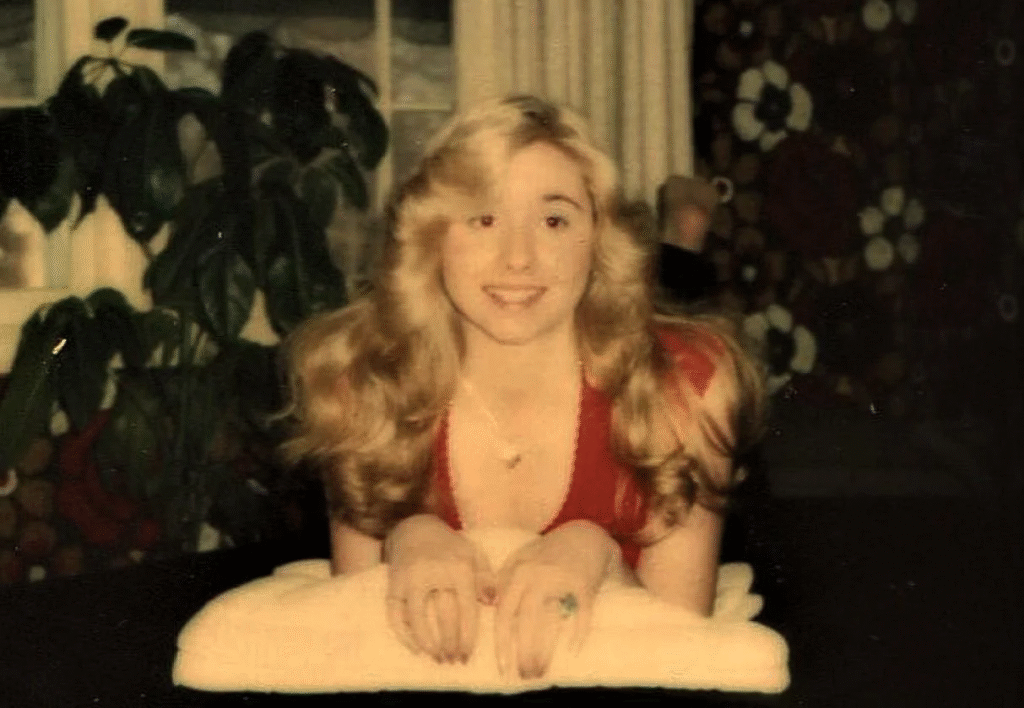
Before the tragedy that ended her life, Michelle Martinko was known to her family and community as a bright and kind young woman. She was born after her mother had experienced five miscarriages, at a time when her parents were in their forties, and her arrival was regarded by her family as a remarkable event.
Her older sister, Janelle, was twelve years her senior and had already begun her own adult life by the time Michelle was old enough to remember much of her childhood. Despite the age gap, the two sisters remained close, and Michelle served as the flower girl at Janelle’s wedding.
At the age of 12, Martinko was diagnosed with scoliosis, a curvature of the spine, and was required to wear a brace extending from her neck to her hips. The brace affected her confidence during a formative period of her adolescence, as she felt noticeably different from her classmates while wearing it.
By age 14, she no longer needed the brace, and in the years that followed she grew into a young woman known for her long blonde hair, styled in a manner popular during the era, and for a warm, unassuming personality that stood in contrast to the attention her appearance often drew.
Those who knew her during high school described her as intelligent, thoughtful, and easy to get along with.
At the time of her death, Martinko was in her final year of high school and was expected to graduate the following spring. She was known for staying closely involved in school activities and for spending time regularly with a tight circle of friends during her senior year.

