

In November 2003, Stephen Nichols was living in China with his American wife when she accused him of trying to suffocate her and throw her over the railing of their eighth-floor apartment.
She said that the two had gripped each other’s clothing and shouted during the struggle. Nichols denied the claim, and no charges were filed in China. A witness confirmed her account.
The marriage ended in divorce. By 2005, Nichols was working as a day trader and owned a three-bedroom condominium just outside Portland, Oregon, with two empty rooms. He decided to find a roommate.
Julia Simmons, who had found him online while searching for a room to rent, moved in. Soon afterward, her 20-year-old daughter, Rhonda Casto, knocked on Nichols’s bedroom door and introduced herself.
Nichols, who was ten years older than Rhonda, said he was stunned when he turned around and saw her, and that he considered her the most beautiful woman he had ever seen.
He felt she was interested in him as well and believed she valued intelligence, which he regarded as one of his strongest qualities.
Simmons offered a different explanation. She said her daughter was drawn less to Nichols himself than to his condominium, his money and his status.
Rhonda joined her mother in the condominium, not as a roommate but as Nichols’s girlfriend. Her younger sister, Tessa, who was nine at the time, remembers him from those years as playful and fun.
Three years into the relationship, in 2008, the couple, who lived together but were not married, had a daughter.
Tension Before the Hike

After the birth, Rhonda was heavier than she had ever been, and Nichols said she felt deeply unhappy about her appearance. He said the couple responded with a pact to hike twenty or twenty-five of Oregon’s best trails and cross them off a list.
Jessica Colburn, Rhonda’s best friend, remembers it differently. She said Rhonda mentioned only one planned hike and was happy because Nichols had finally planned something for her.
In all their years together, Colburn said, he had never put effort into planning anything for Rhonda.
Marriage was also on the couple’s minds. Nichols said they intended to marry in the summer and had looked at wedding rings together. He said Rhonda wanted a ring costing around $35,000, while he had a budget closer to $15,000. Colburn said the proposal never came.
Colburn said Rhonda had grown unhappy and that the relationship became difficult after the baby was born, because Nichols was not around as much.
She said Rhonda stayed longer than she otherwise would have for the baby’s sake and told her that Nichols had become physically abusive in recent months. Nichols rejected that account.
He said the couple hardly argued, that they were spending a great deal of time together, and that he considered it the closest they had ever been.
People close to Rhonda gave another picture: that she had fallen out of love with him, that the two fought constantly, and that she had talked about taking the baby and leaving. Colburn said she had witnessed their fights and had twice been on the phone with Rhonda during a physical fight.
Nichols said that three months before the hike, Rhonda insisted he buy life insurance, telling him she wanted to leave their daughter something if she died. Each of them ended up holding a $1 million policy on the other.
Simmons said the idea was Nichols’s. She noted that he had lost about a quarter of a million dollars trading the year before.
Simmons said that just before the hike, Rhonda told her that Nichols was either going to give her a ring or throw her off a cliff.
The Day of the Hike
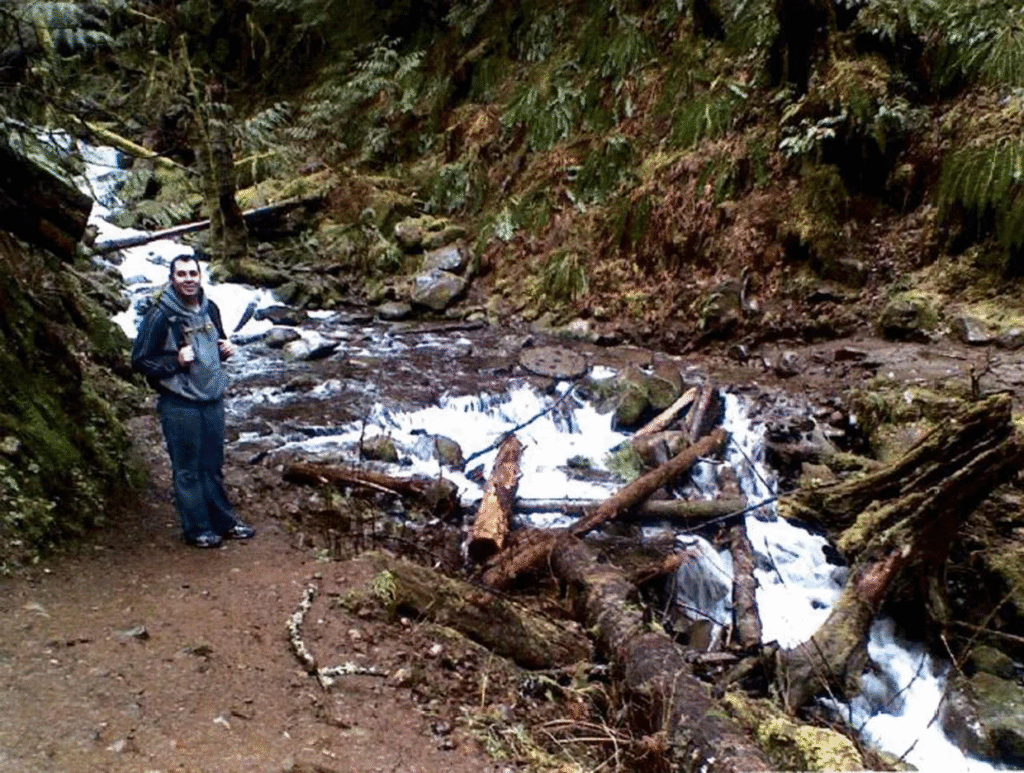
Rhonda and Nichols woke early on March 16, 2009. They set out to hike the Eagle Creek Trail, one of the most heavily hiked areas in the Columbia River Gorge because of its sheer beauty.
Before they left, Rhonda photographed red marks on her back in a mirror. A scuffle with Nichols on the stairs is alleged to have caused them. That day Rhonda also sent a text message to her younger sister, Melanie.
By then, she had learned that Nichols had been in a sexual relationship with Melanie. In the message she wrote that Nichols had used Melanie to hurt her, that she would not let him divide the sisters again, and that she would be waiting whenever Melanie needed her.
Rhonda’s family said she loved her sister and knew that Nichols was trying to drive a wedge between them. Nichols said he had no idea why she sent it.
Nichols said Rhonda seemed focused on the future during the drive. She told him she needed to lose weight to work as a lookalike model for the tennis player Maria Sharapova.
Rhonda then asked whether he would promise to watch over their daughter and take care of her if anything ever happened to her.
When he asked what she meant, she answered that she often dreamed of being dead before the age of 25. Nichols said he promised that he would. The question unsettled him, he said.
At the trailhead, Rhonda took a photograph of Nichols with her cell phone. The weather was excellent.
Nichols said he asked whether she was all right hiking the trail, and she replied that she used to come up there with a bottle of vodka and a bag of marijuana and would be fine.
They climbed a few miles. Nichols said they kissed, and Rhonda wanted to have sex, but he declined. Rhonda then raised the question about their daughter a second time.
Then the weather turned. Rain began to pour and thunder sounded, and they decided to head back. Nichols said Rhonda started down the trail at a full sprint, and he did not think he shouted anything to her.
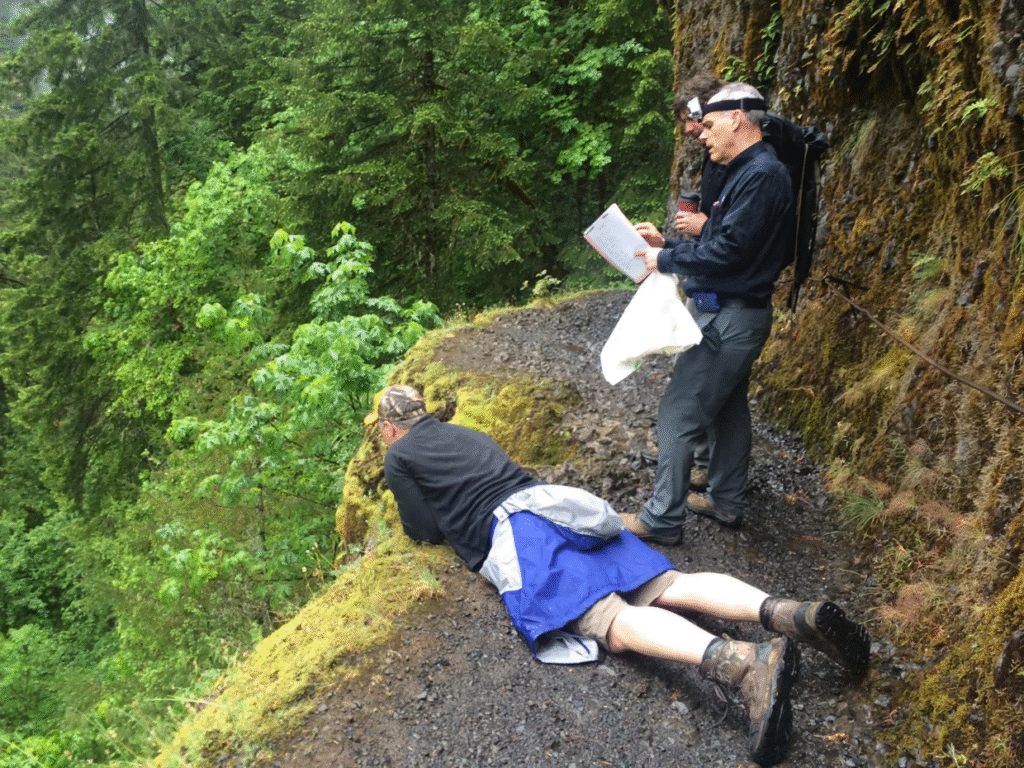
The path was narrow and steep, and in the cascading rain it became slick, with water visibly flowing down its surface. At some point Rhonda left the trail and fell more than 150 feet into a ravine.
Nichols climbed down to reach her. He said the first thing he did when he arrived was hold her. Without cell service, he returned to the trailhead and called 911.
The Years That Followed
Police opened an investigation into Rhonda’s death. Prosecutors say that on the night of the fall, Nichols did not go to his daughter or to his parents. The first person he went to was Melanie.
A memorial for Rhonda was held. Her family said that Nichols did not appear to be grieving. Nichols said he cried constantly and that, when he is deeply sad, he closes down, which is how he handles pain.
He moved with his daughter across the state to live with family, and he said that for about three months after Rhonda’s death he was completely shut down.
Nichols also tried to collect the life insurance and eventually agreed to split the money with Simmons and the estate of his daughter.
Less than six months after Rhonda’s death, Nichols was charged with five counts of sex abuse for allegedly touching a 13-year-old girl on a bus. He said the touching never happened.
He did, however, send the girl sexually suggestive text messages and a shirtless selfie, and he pleaded guilty to one count of sexual harassment. Nichols has said he was wrong to send the photograph.
By 2013, four years had passed with no charges against him in Rhonda’s death. Nichols decided to start a new life in China, where he had lived before and liked the country. He told himself it was a fresh start and that America was all in the past.
He took a job teaching English to Chinese businessmen in Wuxi, about 75 miles from Shanghai. His daughter, he said, thrived: within a little more than two months she was fluent in Mandarin, and she took dance lessons, taekwondo and piano.
Nichols also fell in love with a Chinese woman, Landy Yin Yan, who he said became like a mother to his daughter. After a year of dating, he proposed.
Meanwhile, in the United States, the investigation continued. Simmons kept calling to ask why nothing was happening. In April 2014, a secret grand jury heard evidence and formally charged Nichols with Rhonda’s murder.
Nichols did not know the investigation was still active. In February 2015, he flew back to the United States with his daughter to marry Landy, who was to follow a few days later. The couple planned to marry in both America and China.
When he arrived in San Francisco ten months after that decision, he was told there was a problem with his bags. Instead of boarding his connecting flight to Oregon, he was separated from his daughter and arrested.
He could hear his daughter crying in another room, saying she wanted to be with her father. Nichols, then 40, was sent back to Oregon, and his daughter was placed with Rhonda’s family.
Rhonda’s loved ones said they broke down in tears, unable to believe that an arrest had finally come after so long.
Hearings and Courtroom Developments
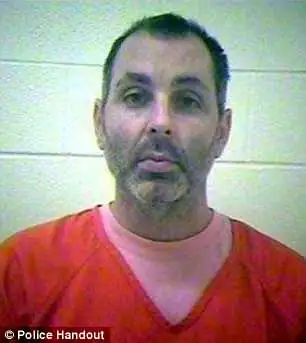
Nichols’s return to Oregon began a long legal process. At a court hearing in Hood River County, he pleaded not guilty to murder, and bail was set at $2 million. He spent the next 14 months in jail awaiting trial.
He said that missing his daughter was the hardest part of it. His defense attorney, Mike Arnold, led an investigative team up the Eagle Creek Trail about three months after the arrest.
Arnold said the physical evidence and the science would leave little dispute that Rhonda’s death was a tragic accident on a dangerous trail.
His attorney had forbidden him from discussing the details of the fall publicly, so the only account he had given of that day was his statement to police.
In the defense’s version of events, Rhonda was in a good mood and jokingly wrapped a towel around her shoulders, calling herself Supergirl, shortly before she fell.
In the months after the arrest, Nichols faced pretrial hearings on matters ranging from evidence to motive, including whether a trial should be held at all, since the defense considered the death an accident.
Prosecutor Carrie Rasmussen represented the state, and both sides called witnesses. Sheriff Matt English testified that the death was not immediately investigated as a murder, and lead investigator Gerry Tiffany said it became a homicide investigation the next morning.
Medical examiner and forensic pathologist Dr. Christopher Young said Rhonda landed mostly on her legs and pelvis, which was essentially shattered, and that her injuries were mostly below the waist.
The defense argued that such injuries indicated she went off the trail feet first rather than tumbling head over heels from a push.
Notes from a therapist Rhonda had seen showed she was depressed but not suicidal and described her relationship with Nichols as loveless.
Court records indicated that the original lead detective had destroyed evidence on his computer, including crime scene and autopsy photographs, before retiring in 2012.
Prosecutors also asked the judge to let jurors hear about earlier conduct by Nichols, including the accusations of his former wife and of the girl on the bus, as well as his involvement with Melanie, which they considered a possible motive.
They wanted jurors to see the mirror photographs of Rhonda’s back as well. Colburn said Rhonda told her that Melanie was 15 when she first had sex with Nichols.
Investigators believe the relationship began in 2005 and continued on and off for four years, until the day of the hike.
Shortly after his arrest for murder, Nichols was formally charged with two counts of third-degree rape and three counts of third-degree sodomy for allegedly having sexual relations with Melanie while she was underage. Simmons said she had not wanted to believe it but that Nichols had raped her daughter.
In April 2016, with still no trial date in sight, Judge John Wolf reduced Nichols’s bail to $250,000. Arnold gathered the 10 percent cash deposit required, which came to $25,000, but an extra day passed while an ankle monitor was arranged.
Nichols was released from jail the next day. Nichols called it a bittersweet victory and said he would keep fighting to prove his innocence.
While he was free on bail, Landy visited him and hiked to the spot on the Eagle Creek Trail where Rhonda fell. He was later rearrested after prosecutors said he had violated his release agreement.
While awaiting trial in October 2016, Nichols agreed to plead guilty in Washington County to two misdemeanor counts of third-degree sex abuse involving Melanie and signed a statement saying he had sexual intercourse with her twice.
He initially said the admission was false and that he did not have sex with her. He said that when he asked whether he could enter a plea and deny the conduct, he was told he would have to admit it to pass sex offender treatment.
He said he was desperate to regain custody of his daughter and that people would be amazed at what they would sign to stay out of prison. Although the plea would make him a registered sex offender, the law would still allow him to fight for custody.
Prosecutors had appealed a ruling that suppressed statements Nichols made to detectives after his arrest, which delayed the trial.
Earlier in 2017, the Oregon Supreme Court upheld the ruling, finding that detectives should have stopped questioning him once he said he did not want to talk about Rhonda’s death.
By May 2017, after several hearings on what evidence could be used against Nichols, including his plea in the Melanie case, a trial seemed to be approaching.
Then Rasmussen called Simmons with news of a settlement: the prosecution and the defense had agreed that Nichols could plead guilty to lesser charges. Simmons said she screamed into the phone, begging Rasmussen not to let him plead.
The district attorney’s office, which had long believed Nichols was responsible for Rhonda’s death, said the case was not about belief but about the facts that could be presented to a jury.
In court, Nichols pleaded guilty to criminally negligent homicide and coercion. He received credit for the 19 months he had served awaiting trial and was placed on probation for three years, and his ankle monitor was removed. The murder case never went before a jury.
Simmons addressed the court. She told Nichols that he had destroyed her family and taken a mother away from her child by killing her. She said the agreement was not justice and that it seemed to come out of nowhere.
She added that she would wait for him to make another mistake. Nichols said he accepted the deal for one reason: time was running out.
He said that if he had waited more than a year for a trial, he would probably have had no chance, because in the juvenile court system the longer a case drags on, the harder it is to have a child returned to a parent.
Asked what would happen if her granddaughter were returned to his care, Simmons said the girl would be emotionally and mentally abused, and possibly physically abused as well.
Barred from leaving Oregon until his probation ended in 2020, Nichols broke up with Landy, who had returned to China. He said he was alone about 99 percent of the time, rarely went out and had nobody.
Also in 2017, Nichols spoke publicly for the first time about the day Rhonda died. He said that either he had pushed her, she had jumped of her own accord, or she had slipped.
He denied pushing her and said he had absolutely nothing to do, directly or indirectly, with her fall. He suggested that Rhonda might have chosen to go over the edge, saying she was not a happy person and had thought that having a daughter would bring her happiness, but it had not.
He said she had been depressed, had attempted suicide at least three times before they met and had used drugs, including alcohol, cocaine, marijuana, crystal meth and heroin, since the age of 12. Rhonda’s family rejected the claims, saying she had never attempted suicide.
An autopsy had found only traces of marijuana and prescription medication for anxiety and depression in Rhonda’s system, and Colburn said Rhonda had been taking the medication for postpartum depression, for which she was in therapy.
Asked why he had never told police that suicide was a possibility, Nichols said officers never asked him about it; they asked questions, and he answered them.
He noted that life insurance does not pay out in a suicide, which would have left his daughter with nothing. Rhonda’s family said the suggestion was an attempt to deflect from the fact that he had pushed her.
Asked about a mark at the edge of the path, Nichols said it was just a single footprint. He said he had laid everything out and that people could reach whatever conclusion they wished.
He declined to discuss the moments after he reached Rhonda. He posed a hypothetical in which a soldier shoots a mortally wounded comrade to end the man’s pain, asking whether that would be murder.
He said it would not and that it would be justified, though technically a homicide. Asked whether that was what he had done, he said that was not what he was saying.
He called the scenario hypothetical and urged people to think outside the box, saying there are always other options.
In 2018, Nichols publicly acknowledged having a sexual relationship with Melanie, saying he knew she was underage. An Oregon court has since terminated his parental rights to his daughter, and he appealed the decision. Three years after his arrest, he still had not seen his daughter.
Remembering Rhonda Casto

Rhonda Casto was 23 when she died. Those who knew her describe a woman whose beauty was matched by her intelligence. Her best friend, Jessica Colburn, treasures the photographs in her modeling portfolio and says Rhonda looked amazing in every one.
Nichols said everything about her was impressive, that people were often surprised to learn that a woman so beautiful could also be so intelligent, and that she was extremely smart. She enjoyed being outdoors and playing frisbee golf.
Her daughter was the center of her life. Nichols said the birth meant everything to her, and Rhonda’s family said she loved her nine-month-old daughter dearly and her relatives as well.
Tessa said she loved having a niece and was always at the house, where the girl played with jewelry just as Rhonda did. Tessa sees Rhonda in her, saying the girl is just like her mother.
Rhonda is survived by her daughter; her mother, Julia Simmons; her sisters, Tessa and Melanie; and her best friend, Jessica Colburn, who remains among those who remember her.


Recent Comments