
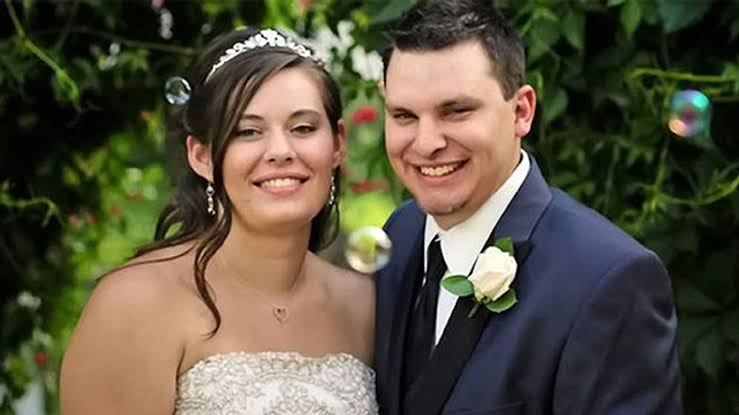
Eight days after his wedding, 25-year-old Cody Johnson vanished from his home in Kalispell, Montana. What followed was a monthslong investigation that reshaped how his family and friends understood his final days.
A Marriage Cut Short
In the week following their wedding, Cody Johnson and his new wife, Jordan Graham, settled into a house they had purchased together in Kalispell, Montana.
Cody took time off from his job to help unpack and decorate, and the two spent much of the week outdoors, an activity they both enjoyed.
On the final Sunday before Cody was due back at work, the couple attended their usual church service, then spent time at nearby Flathead Lake.
That evening, they met friends from church and went together to a local Dairy Queen for dinner. The group ate, talked, and parted ways around 8:30 p.m., with nothing about the evening appearing out of the ordinary.
The next morning, Cody failed to arrive at work, where he was normally so punctual that he showed up as early as 6 a.m. His absence was noticed within minutes.
When repeated attempts to reach him failed, his boss, Cameron Fredrickson, drove to the newlyweds’ house. No one answered the door, prompting him to enter the home himself.
Fredrickson found no sign of forced entry or a struggle, but he did find something that troubled him: Cody’s cell phone, left behind in the garage. Those who knew Cody said he rarely went anywhere without it.
Fredrickson began contacting friends and family, none of whom had heard from Cody since the previous night’s dinner. Unable to locate him or his wife, Fredrickson went to the Kalispell Police Department and filed a missing person report on July 8, 2013.
Conflicting Accounts
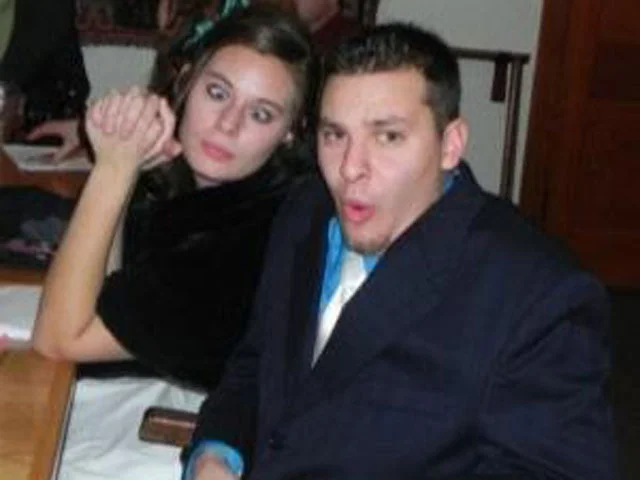
Officers who took the report noted that it was Cody’s employer, rather than his wife, who had come forward, a detail that drew early attention from investigators, including Sergeant Chad Zimmerman.
Jordan was not immediately available, but she later contacted a friend by text message to ask whether anyone had seen Cody. In that exchange, she explained that he had left their house the previous night with a group of people she did not recognize.
As news of Cody’s disappearance spread, friends and family gathered at the couple’s home to offer support and help search for him.
Several who were present said Jordan did not appear to welcome the gathering and was reluctant to join conversations about where Cody might be. At one point during the visit, she stood up and threw her wedding ring across the room.
When police interviewed Jordan on July 9, she described the events of the previous night in more detail. She said the couple had been driving home from Dairy Queen when Cody received a phone call that appeared to upset him.
She decided to give him space and left the house briefly to retrieve a phone charger she had forgotten at work. When she returned, she said, she saw a dark-colored sedan pulling out of the driveway with Cody in the back seat.
She told detectives she believed the car had Washington state license plates, though she was not certain, and that it disappeared around a corner before she could get a closer look.
She said she did not know who the passengers were or where they were headed, and that she assumed Cody would return within a few hours, as he sometimes did after taking late-night drives with friends. She said she had not filed a missing person report herself because she worried Cody would be upset with her for doing so.
Investigators traced the phone call Jordan described to a man named Jose, who lived in Washington state. When questioned, Jose said the two had discussed a tool Cody had lent him, nothing more, and that Cody had not sounded upset during the call.
His account was supported by hospital records showing he had been present for the birth of his child that same night, and he was cleared as a suspect.
With Jose ruled out, investigators turned to reconciling Jordan’s version of events with what they were learning elsewhere.
Search parties were organized throughout Kalispell, covering fields, barns, alleyways, and other locations where Cody might be found. By July 10, two days after the report was filed, none of these efforts had produced results.
A Message from “Tony the Car Man”
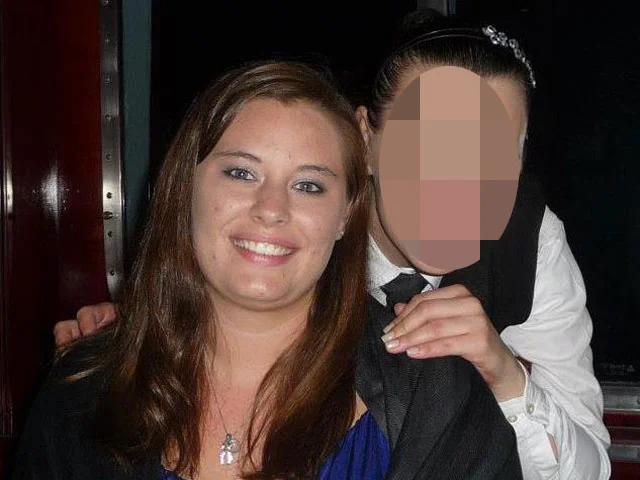
That same day, Jordan received an email from an address she did not recognize, sent by someone identifying themselves as “Tony the Car Man.” She showed the message to her friend Hannah.
The email stated that there was no need to continue looking for Cody, explaining that he had gone hiking in Glacier National Park with several friends and had fallen to his death. It asked that the missing person report be withdrawn.
Hannah urged Jordan to bring the email to police immediately, and Jordan did so later that day. When asked whether she knew who “Tony” might be, Jordan told investigators that Cody worked with a man named Tony Stalcup and provided his contact information.
Detectives brought Stalcup in for questioning, but he denied any connection to the message. He said he and Cody were acquaintances who shared an interest in cars but did not work together, and that he had not seen Cody in some time.
Stalcup cooperated fully, granting investigators access to his email accounts and phone records, none of which showed any connection to the “Tony the Car Man” address. He was cleared of involvement.
Determining who had actually sent the email required a formal request to Google for the account’s IP address, a process that would take several days. Investigators also awaited cell phone records for both Cody and Jordan.
In the meantime, search efforts shifted toward Glacier National Park, an area spanning roughly 1,500 square miles in the northern Rocky Mountains with more than 700 miles of trails.
The terrain includes steep cliffs, fast-moving rivers, and wildlife such as black bears, grizzly bears, and mountain lions.
While some of the park’s most hazardous overlooks are fitted with protective fencing, others remain unguarded. Flyers bearing Cody’s photo were posted throughout the area.
Jordan joined the search alongside Hannah, though Hannah later said Jordan appeared uninterested in the effort and reluctant to stop and investigate specific locations. On July 11, the group returned to the park, this time with Jordan’s stepbrother, Michael.
Jordan drove the group along Going-to-the-Sun Road, a narrow, winding route through the park, insisting on continuing to its highest point rather than stopping at areas Hannah suggested.
At a parking area near a loop trail at the top of the road, Jordan led the group on foot, telling them the location held significance for her and Cody.
The trail runs alongside a 200-foot ravine, and beyond a safety wall marking the end of the approved hiking path lies a series of rocks leading to an unprotected cliff edge.
Jordan climbed over the wall with apparent familiarity, walked to the edge, and threw a rock down into the ravine. Moments later, she told the group she believed she could see Cody’s body below.
Michael climbed over to look for himself and was able to make out something in the ravine, though the distance made it impossible to confirm what it was.
The experience left him visibly shaken, and he had to be helped back to the car. Two friends stayed behind with him while Jordan and another friend drove roughly 20 miles to Lake McDonald Lodge to report the discovery to park rangers.
Recovery from the Ravine
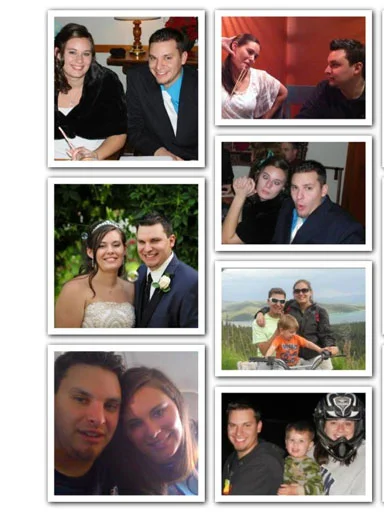
Park officials examined the site and identified a blue tennis shoe consistent with footwear Cody had been wearing when he disappeared, but a firm visual identification was not yet possible given the distance and danger involved.
Rather than risk a full recovery operation without confirmation, an FBI special agent volunteered to get a closer look. He secured a rope to a nearby tree, tied it around his waist, and leaned out over the edge, confirming that a body was resting in a small pool of water at the bottom of the ravine.
Reaching the site required a lengthy hike around the river and cliffside while carrying evidence-collection equipment, and park rangers noted that the location may never have been reached by anyone before.
Once recovery teams arrived, they found Cody’s body in the water at the base of a waterfall, with significant injuries to his head and arms.
His wallet, still on him, allowed the coroner to identify him at the scene. Because there was no way to carry the body out on foot, a helicopter was brought in and lowered a 200-foot line to retrieve it.
Investigators then had the difficult task of notifying Cody’s family and friends that he had died. In the days that followed, detectives returned to those who knew Cody best to better understand what might have happened.
Several friends told police that Cody had a fear of heights, raising questions about why he would have been standing near the edge of a cliff. Some suggested he may have been brought to the location under false pretenses. Investigators began treating the case as a potential homicide.
New Evidence Surfaces
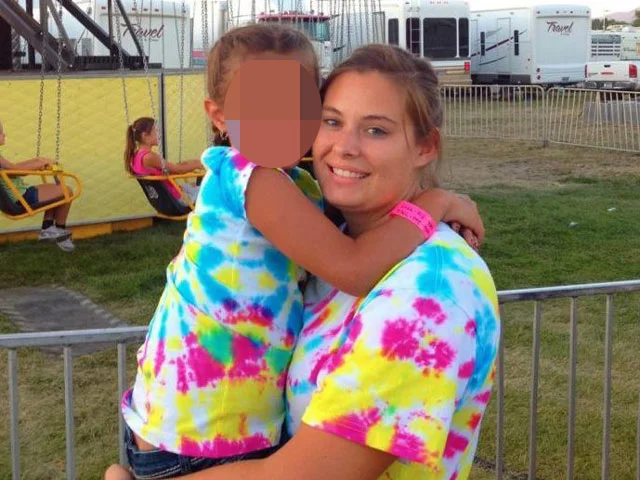
A significant break came when Kimberly Martinez, who had served as Jordan’s matron of honor, came forward with information she had not previously shared.
She told police that Jordan had expressed serious doubts about the marriage in the days leading up to and following the wedding, particularly around the prospect of sexual intimacy with Cody.
According to Martinez, the couple had not consummated the marriage; Jordan had told her she informed Cody she was on her period for the entirety of the week following the ceremony to avoid the subject.
Martinez shared a series of text messages Jordan had sent her after the wedding. In one, Jordan wrote that she had not stopped crying since the ceremony and wished someone had asked what she wanted before it took place.
In another, she described a wave of doubt so strong she called it a meltdown, and said she could not tell Cody how she felt because it would break his heart.
Two days before Cody disappeared, Jordan told Martinez that Cody had held her down and gotten in her face during an argument, describing him as having a quick temper and stating that she had been scratched while pulling away from him.
On the evening of July 7, Jordan texted Martinez that she planned to tell Cody the truth about how she was feeling. Martinez replied that she would pray for them. Jordan responded that if Martinez did not hear from her again that night, something had happened.
Later that night, Jordan went to Martinez’s house and said the conversation with Cody had gone badly, that he had become angry, and that she had left to give him time to cool off, going instead to spend time with her stepbrother at her mother and stepfather’s house.
Detectives compared these accounts with statements Jordan had given to other friends and to investigators and found inconsistencies between them.
Park rangers who had received Jordan’s report at Lake McDonald Lodge also noted that she showed little emotional reaction after apparently locating her husband’s body, and investigators questioned how she had been able to identify the specific location within such a vast area.
Jordan told them the site had been on a list of places Cody wanted to visit, and separately said she had been guided there by what she described as a feeling from the Holy Spirit.
Investigators eventually received the IP address associated with the “Tony the Car Man” email from Google. It traced back to the home of Jordan’s stepfather, where records showed the account had been created and the message sent on the same day.
Jordan’s mother, stepfather, and stepbrother each denied writing the email, leaving Jordan as the only remaining person with access to the residence at the time.
Cell phone records for Cody and Jordan placed both of their phones inside Glacier National Park on the night of July 7, showing they had entered together at 9:17 p.m.
A camera positioned at the park’s entrance photographed every vehicle passing through, and investigators located an image from that night showing Jordan and Cody entering the park together, directly contradicting her earlier statements.
On July 16, detectives brought Jordan in again and presented her with the photograph. She began crying and admitted that she and Cody had gone to the park together that night.
According to her account, the argument that began after they left dinner had continued once they returned home, prompting Cody to drive them to the same overlook near the loop trail.
She said the argument resumed there, and that as she tried to pull away from Cody after he grabbed her arm and jacket, he ended up standing near the edge of the ravine.
She told investigators that in that moment, she pushed him with both hands, one on his back and one on his shoulder, and he fell. She said she then ran back to the car, which she was able to drive because she had the keys, and left the park without seeking help or reporting what had happened.
She also acknowledged creating the “Tony the Car Man” email account from her stepfather’s house in the days that followed.
Arrest, Trial, and the Life He Led
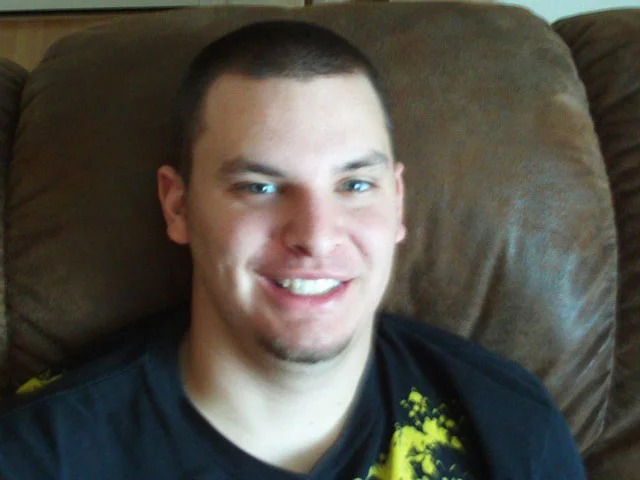
Jordan was released following her confession while investigators continued gathering evidence to support formal charges. On July 22, Cody’s funeral was held, and those in attendance noted that Jordan spent much of the service on her phone, showing little visible emotion.
In the weeks before her arrest, public interest in the case grew substantially, with an independent social media account created solely to track developments in the investigation.
On September 9, 2013, Jordan was arrested and charged with second-degree murder and making false statements to investigators. She remained calm throughout the arrest, showing no visible reaction.
The case drew national media coverage in the weeks that followed. A judge later determined that Jordan did not pose a risk to the community and ordered her released on electronic monitoring to her parents’ home, along with a required mental health evaluation and any recommended treatment.
In October, a grand jury indicted her on an additional charge of premeditated first-degree murder, which carries a minimum sentence of life in prison without the possibility of parole.
The trial began on December 9, 2013, in Missoula, Montana, and was scheduled to proceed quickly due to the judge’s calendar. Jordan did not testify and showed no visible emotion throughout the proceedings.
Because a first-degree murder charge required prosecutors to prove premeditation beyond a reasonable doubt, much of the trial centered on establishing intent.
Jordan’s attorney, federal public defender Michael Donahoe, did not dispute that she had pushed Cody, but argued that she had acted in self-defense and that her subsequent lies stemmed from fear that she would not be believed.
The defense described her as young, sheltered, and overwhelmed by the situation, and presented wedding photographs and video showing her smiling throughout the ceremony to support the argument that she had been happy in the relationship.
Prosecutors called friends who described the imbalance between Jordan’s and Cody’s feelings for one another and testified to Jordan’s reluctance about both the marriage and physical intimacy.
Testimony also indicated that Cody had, at times, pressured Jordan regarding intimacy and had been physically aggressive with her on at least one occasion, according to statements she had made to friends.
A text message Jordan sent Martinez the night Cody disappeared, describing a state of panic, was also introduced as evidence. Cody’s family members, including Jordan’s stepbrother, Michael, testified as well, at times emotionally.
The coroner testified that Cody’s body had been recovered without his wedding ring and indicated that he had fallen head-first into the ravine.
Testimony further revealed that Cody had canceled plans to golf with friends that day because Jordan told him she had a surprise for him, which several friends believed he understood to be something intimate.
Prosecutors pointed to this detail, along with a black cloth resembling a blindfold found near Cody’s body, to argue that Jordan may have lured him to the remote overlook under false pretenses before pushing him.
Jordan had previously mentioned to others that Cody wore a similar cloth as a blindfold while joking about knowing the trail well enough to walk it blind.
Prosecutors also played recorded police interviews showing Jordan’s shifting explanations, from her initial account of Cody leaving with unfamiliar friends to her description of the “Tony the Car Man” email, followed by her eventual confession.
The defense argued that a portion of one interview, roughly the first hour and twenty minutes, had not been recorded, raising questions about the completeness of the record.
On December 12, 2013, before the case reached the jury, Jordan accepted a plea agreement, pleading guilty to a reduced charge of second-degree murder in exchange for a 30-year sentence.
She maintained that Cody’s death resulted from a reckless act rather than an intentional one, stating that she had not been thinking about the danger of their location when she pushed him.
Shortly afterward, prosecutors indicated they would seek a 50-year sentence based on evidence of premeditation, prompting the court to consider whether the plea should stand or the case should proceed to a new trial.
The judge ultimately upheld the original agreement, and Jordan was sentenced to 30 years in prison without the possibility of parole. In issuing the sentence, the judge noted that Jordan had not expressed remorse or apologized for her actions.
Graham appealed her sentence to the U.S. Court of Appeals for the Ninth Circuit, which upheld it in November 2015, and her final appeal, a petition asking the U.S. Supreme Court to review her case, was denied on June 13, 2016, closing out the appeals process.
As of 2026, Graham remains incarcerated at the Federal Correctional Institution in Aliceville, Alabama, with a scheduled release date in November 2039.
Those who knew Cody Johnson remembered a young man whose life had been shaped early on by a close bond with his mother, Sherry Johnson, and by the Montana landscape that became his home.
He was born on April 8, 1988, in San Jose, California, and in 2002, his mother relocated the two of them to Kalispell, a small, outdoor-oriented tourist town in the Flathead Valley situated between Flathead Lake and Glacier National Park, hoping to give her son a safer and more grounded upbringing.
Cody embraced the move fully, developing a lasting love for the outdoors through shooting, dirt biking, and long stretches of time in the park that would later play so significant a role in his story.
His most defining passion, however, was cars. Friends recalled him as someone who could turn nearly any conversation toward vehicles and who spent much of his free time modifying and building them for others, eventually launching his own business focused on custom commercial vehicles.
He later took a position at Nomad, a communications company, working alongside his uncle and several close friends, including his childhood best friend and eventual boss, Cameron Fredrickson.
His friends and loved ones described Cody as charismatic, funny, and unfailingly generous, someone who made friends easily and who was well liked throughout his community.
As he grew older, he began looking for a partner who shared his desire for a family, hoping specifically to meet someone active in her church community. He found that connection in Jordan Graham, whom he met on Halloween in 2011.
Jordan had grown up in a devout Christian household and was an active member of Faith Baptist Church throughout her youth, later working for several years as a nanny for families in her congregation, with hopes of one day becoming a stay-at-home mother herself.
Though quieter and more reserved by nature, those who knew her well said she had a lighter, more playful side once she felt comfortable. She shared Cody’s love of the outdoors and Glacier National Park, and the two began dating that November.
Friends who knew both of them said Cody appeared far more invested in the relationship than Jordan. The couple was rarely seen being openly affectionate in public, something acquaintances attributed to their shared religious beliefs.
Cody quickly became devoted to the relationship, growing more involved in Jordan’s church community and telling his mother within weeks that he intended to marry her.
In keeping with Jordan’s wishes, the couple agreed to remain celibate until marriage. They became engaged in December 2012, and some of Jordan’s friends said they were surprised by the news, having sensed she was not entirely certain about the relationship, though they were glad to see her happy.
Jordan asked her close friend Kimberly Martinez to serve as her matron of honor. The couple commissioned a custom song from professional songwriter Elizabeth Sheay for their first dance and purchased a home together ahead of their wedding.
On June 29, 2013, Cody and Jordan were married in a ceremony surrounded by family and friends. Guests said Jordan appeared nervous throughout the ceremony and avoided eye contact with Cody at several points, a reaction others close to her attributed to ordinary wedding-day nerves.
Cody, by contrast, was visibly overjoyed, later telling friends the day had been the best of his life. He was 25 years old, and Jordan was 21. Eight days later, his life came to an end in the park he had once called home.

Recent Comments