
A couple in Poughkeepsie, New York, raised two young children in a quiet apartment. Their story drew national attention after the events of 2017.
A Household in Poughkeepsie

In 2012, Chris Grover and Nicole Addimando, known to friends as Nikki, moved into an apartment together in Poughkeepsie. Soon afterward they announced that Addimando was expecting their first child. Their son, Ben, was born, and a daughter, Faye, followed two years later.
Friends and relatives described a household centered on its children. Gail Grover, Chris’s mother, remembered Addimando as an excellent mother. Addimando’s friends called her gentle and loving and said everything she did was for her kids.
Elizabeth Clifton taught a music class for parents and toddlers that Addimando attended with Ben. One day Addimando arrived with what appeared to be a black eye.
Clifton also noticed that Addimando kept her body fully covered, wearing long sleeves and long pants even in summer, along with a scarf around her neck.
Addimando’s childhood friends, Laura Mocodeanu and Rachel Hawkes, noticed injuries as well. Bruises appeared from time to time, and Addimando explained them as accidents from playing with Ben. On one occasion she said his guitar had hit her.
The explanations seemed plausible, and neither friend pressed her. Other people saw black eyes and bruising on her face and neck, along with bite marks on her back and burn marks on her skin.
In April 2016, Clifton decided to confront Addimando about the injuries. She told her she was frightened for her and feared she was not safe at home. Addimando reluctantly admitted that Chris was abusing her. Clifton described the admission as a slight trickle rather than a flood.
Addimando said the violence had developed in stages. She told friends that Chris had forced himself on her sexually earlier in the relationship but had not become violent until after Ben was born. She said he then slammed her head into the door frame of Ben’s room and raped her.
She said the violence happened again almost two years later, while she was pregnant with Faye, and she sought medical attention at Vassar Brothers Hospital in Poughkeepsie.
A couple of days later, she said, she was making eggs for Ben in the kitchen when Chris walked in and told her she had better be making some for him. She answered “yes, sir” in a sarcastic tone.
Chris then forced her to the floor, held a spoon in the flame of the gas stove, and burned her in several places. She again sought medical care, and the examination report stated that an assailant named Chris had heated a metal utensil on the gas stove and burned her in multiple areas of her body.
Clifton said she saw marks around Addimando’s neck and wrists and understood that Chris had been tying her up and raping her. Addimando also feared that he was recording these encounters.
Clifton and Addimando’s therapist urged her to press charges, and several other people tried to persuade her to file a police report. Addimando was petrified, Clifton said. She told them Chris had warned her that nobody would believe her, and she did not want her children taken away.
During the summer of 2016, Addimando packed the children into her car and drove to Clifton’s house. Over several hours, she drove past the house again and again, slowing down and then continuing on. Clifton stayed on the phone, urging her to walk through the front door. Addimando could not do it.
On another day that year, Addimando said she was having a miscarriage. Clifton saw pools of blood on the floor and stained clothing. Addimando was in so much pain that she could barely speak, yet she was afraid to go to the hospital because Chris would be angry.
The Final Months

Over the course of 2017, Addimando sought help from a midwife three times, and each visit produced a written record. In May, the midwife noted rope-like burns and recorded Addimando’s statement that Chris had a gun and used it on her body.
In June, the midwife documented swelling and injuries to her genital area. In August, she noted bruising and bleeding, and Addimando reported that Chris had raped her at gunpoint.
In September, a mother from the gym where Chris coached heard about Addimando’s injuries. She had previously seen Chris lose his temper with young gymnasts in his class. Concerned, she made an anonymous report to Child Protective Services, as the law required of her.
The agency contacted Addimando and Chris and told them that caseworkers would visit the apartment the next day to interview them.
The Night of September 28

Addimando said that after the call, Chris left home for the rest of the day with a bag of items connected to the abuse, presumably to get rid of them. The caseworkers made their visit the following day. Chris went to work afterward and came home that night in a quiet mood.
Addimando said that at one point he called her into the bedroom, where he was loading his gun, and told her to try loading it. He handed her a bullet, and she was shaking.
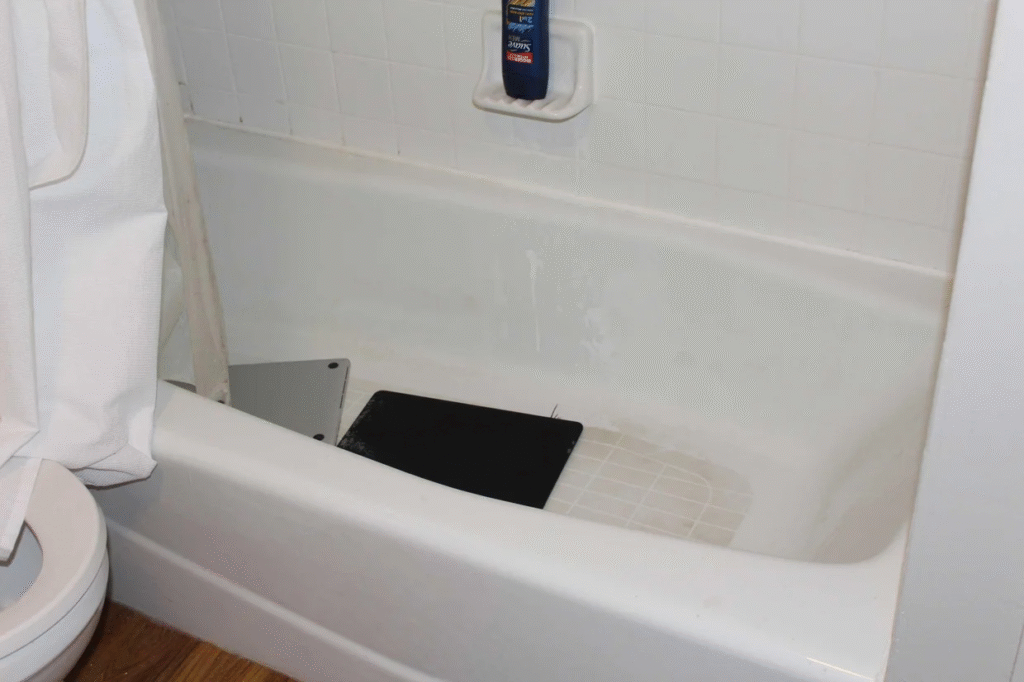
She later took a shower, and at some point Chris threw a laptop into the bathtub. She said he then forced her to have sex on the couch but was unusually gentle.
Afterward, she said, she lay on top of him for a while and believed he had fallen asleep. When she tried to get up, he pulled a gun from behind the couch cushions. She said she got the gun away from him and pointed it at him.
He laughed, she said, and told her that she was going to give him the gun, that he was going to kill her and then himself, and that the children would have no one. She said she lunged and shot him in the head.
At 2 a.m. on September 28, 2017, a police officer came upon a car stopped at a red light. The light turned green, and the car did not move. The officer sounded an air horn to get the driver’s attention.
The driver was Addimando, who was in stocking feet, and two children were in the car. She told him something had gone terribly wrong at home.
She said she had been abused, that she had tried to leave, and that her boyfriend had a gun. The officer did not know whether an ambulance was needed.
Addimando had also telephoned Clifton, whose phone rang a little after two in the morning. Clifton said she sounded very scared. Clifton drove toward the scene, and officers asked her to wait in a nearby parking lot.
From there she saw police and emergency vehicles pass. An ambulance later returned in the opposite direction without its lights on, and she feared what had happened.
Officers went to the apartment and found Chris on the couch, appearing to be asleep. He had died of a single gunshot wound to the head. The shower was running, and a broken laptop lay in the bathtub.
Addimando was taken to the police station, where detectives questioned her. She told them she had asked Chris to let her leave at least 17 times that night and had promised to tell no one anything.
Each time, she said, he answered that she was not leaving. Clifton learned during those hours that Chris was dead. She said she had spent years afraid that Addimando would die and had never imagined that he would.
Not long afterward, a sheriff visited Gail Grover to tell her that her son had died. Her first question was whether Addimando and the children were all right.
Arrest and Trial
Addimando was charged with second-degree murder. Chana Krauss, chief assistant district attorney of Putnam County, began investigating her account.
The arrest prompted an outcry from friends, relatives and advocates for victims of domestic violence. Clifton began organizing rallies and fundraisers.
The trial opened in March 2019 at the Dutchess County Courthouse in Poughkeepsie. Addimando was free on bail at the time.
Her supporters lined up outside wearing purple, the color associated with domestic violence victims, and stood beside loyal supporters of Chris. Gail Grover said her son had never hurt anybody.
Krauss, who has spent much of her career advocating for victims of sexual violence, told jurors that Chris was the victim in the case and that the physical evidence was overwhelming.
The medical examiner testified that the muzzle of the gun left an imprint on Chris’s head, which meant the weapon was pressed into his skin when the trigger was pulled.
Krauss said Addimando threw the laptop into the bathtub to make it look as though Chris had evidence to hide. The laptop was recovered in a condition that allowed examination, and investigators found no evidence of abuse on it.
Krauss presented text messages Addimando sent to Chris in the days before his death, in which she called him a man-child and asked what was wrong with him and whether he was stupid.
Krauss described them as proof that Addimando was the one abusing Chris. She also presented internet searches made on Chris’s phone on the night he died.
They included a query asking whether police would know if someone was shot in their sleep and covered about 15 minutes. Krauss said she believed Addimando made them.
Another text had been sent six weeks earlier to a friend. It read that she had not figured out a way to kill him without being caught, so she was still there, and it ended with a grimacing emoji. Addimando’s lawyers said the emoji showed she was joking.
Krauss also told jurors about Addimando’s past. At age five, Addimando was raped during a sleepover at a friend’s house, and another child witnessed it. She told no one at the time.
Her friends said the experience left a lasting mark, and that when they planned sleepovers, they always held them at her home.
Addimando told Chris when they began dating that the assault made her uncomfortable with sex. For about a year, the two were not intimate.
Krauss said Addimando later invented stories of abuse. She noted that Addimando never reported the allegations to police, though the accounts reached friends and therapists over the years.
They began before she met Chris, Krauss said, when Addimando accused an ex-boyfriend of assaulting her. A few years after she began dating Chris, she told a therapist that a maintenance worker at her mother’s apartment complex had raped her.
She later said her memories of that period were unclear and that she was unsure which abuse came from the maintenance worker and which came from Chris.
Around that time, Addimando met a married police officer whose child was coached by Chris. He invited her to become a live-in babysitter for his family.
Krauss said they began a relationship that lasted several years, including after Addimando moved in with Chris and while she was pregnant with Ben.
Addimando said the officer also forced himself on her. Krauss asked jurors how they could tell which man Addimando was describing.
Krauss then addressed the injuries. She said a bruise near Addimando’s eye came from Ben hitting her with a guitar, and that someone had witnessed it.
She pointed to the first hospital visit during the pregnancy with Faye, when Addimando answered no to questions about whether she was being hurt with tools or burned.
A nurse noted burns only when she returned a few days later. Krauss said Addimando went back so she could answer yes to every question.
Krauss gave jurors a motive. The Child Protective Services visit threatened to expose a history she believed was false, and Addimando might lose her children. Chris, Krauss said, was asleep when she killed him.
The Defense, the Verdict and the Sentence
Addimando’s lawyers argued that she lived in constant danger and believed she would die that night. They said she had no history of violence and no criminal record, and that women who seek help too often end up dead. They needed jurors to conclude that she shot Chris in self-defense.
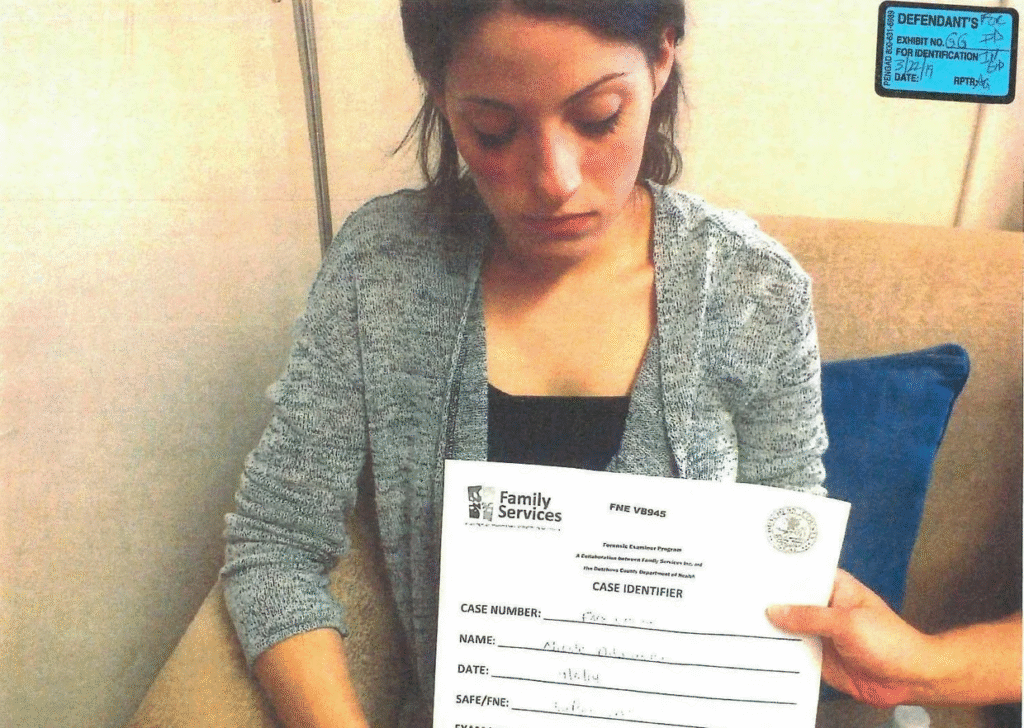
The defense called psychologists, nurse midwives, and a police officer who testified that he had been ready to send officers to make an arrest. It showed photographs of her injuries and argued they could not have been self-inflicted.
The photographs showed burns to her face that left blisters, burns to her breast, and bite marks on her shoulder blades, a place she could not reach herself.
When prosecutors asked how anyone could tell the injuries came from Chris and not from other men, the lawyers answered that the other men were raised to create confusion.
They said the line of questioning shamed Addimando and had no bearing on whether Chris was abusing her. They said she had not had sexual relations with anyone but Chris for years before his death.
The lawyers said the aggressive texts were Addimando’s way of sticking up for herself, and that she paid for them afterward when Chris hit her. They noted that no evidence showed she made the searches on Chris’s phone.
The medical examiner, Dr. Newman, testified that nothing proved Chris had been sleeping and that the shooting could have happened exactly as Addimando described.
Addimando also testified, for three days. She said she had told the truth from the start and that the truth never changes.
Visibly shaken and sometimes in tears, she said Chris lashed out when he felt disrespected, beat and raped her, choked her, and once left her tied up for hours. After Faye was born, she said, he watched pornography constantly and tried to act out what he saw with her.
Her lawyers presented photographs, most too graphic to be shown publicly, which she said Chris had posted without her consent on a pornographic video website.
The posts carried degrading keywords and were uploaded by a user called Grover Respect, who described himself as a 29-year-old cinematographer who loved martial arts. The judge ruled there was no way to prove Chris created the account.
Jurors saw the photographs but not the keywords or the information about the uploader. They also did not see the full medical report from 2014 or the midwife examinations from the summer before Chris died.
Krauss said the evidence was excluded for good reason. She argued that Addimando might have made the images herself, that no man in them could be identified, and that the acts shown looked consensual. She also said Addimando’s testimony shifted on the stand.
The defense entered a photograph of Addimando in a bridesmaid’s dress at Mocodeanu’s wedding to document a burn on her chest. Krauss said the mark came from a curling iron, because Addimando’s hair was freshly curled.
Mocodeanu, who did not testify, said the bridal party had just gone to the salon together and that the mark was large, oval, and already healing when they arrived. She said it came from a heated metal spoon.
After 14 days of testimony, the case went to the jury. Following three days of deliberation, eight women and four men rejected the claim of self-defense.
They convicted Addimando of criminal possession of a weapon and second-degree murder. Chris’s family and friends felt relief, and Addimando’s supporters were devastated.
Under the Domestic Violence Survivors Justice Act, a recently updated New York law, Addimando was entitled to a hearing at which her history of abuse could be weighed to reduce her sentence.
The judge who presided over the trial heard from more witnesses and from prosecutors, who argued that she had access to services and could have left Chris at any time, including that day. They noted that she had a car and the means to leave.
Rachel Louise Snyder, a journalist who spent ten years studying domestic violence for her book No Visible Bruises, and who read the full court record and interviewed dozens of people for a magazine article about the case, disagreed.
She said that victims are most likely to die while leaving, that Addimando had used available services, and that with two very young children she could not find a way out alive.
She also said that a woman assaulted at age five is about two-thirds more likely to be victimized as an adult. Krauss said she did not dispute the research on leaving but did not believe Addimando was a victim.
In a 47-page ruling issued in February 2020, the judge sided largely with the prosecution. He wrote that Addimando was only steps from her front door the night Chris died and could have left, and that her inconsistent statements about past abuse made it impossible to know who had abused her.
He denied her request for a lighter sentence. Supporters of both sides gathered outside the courthouse again on February 11, 2020, when she was sentenced to 19 years to life in prison.
While Addimando was in prison, Ben and Faye lived with her relatives and spent weekends with the Grovers.
On July 14, 2021, a New York appeals court upheld Addimando’s conviction but ruled that the trial judge had not properly applied the Domestic Violence Survivors Justice Act. It reduced her murder sentence to 7½ years and her weapon sentence to 3½ years, followed by five years of post-release supervision.
Addimando was released under parole supervision on January 4, 2024. Her supporters said a time credit earned in a service-dog training program moved the date up by six months. She was reunited with her children outside Bedford Hills Correctional Facility for Women.
Remembering Chris Grover
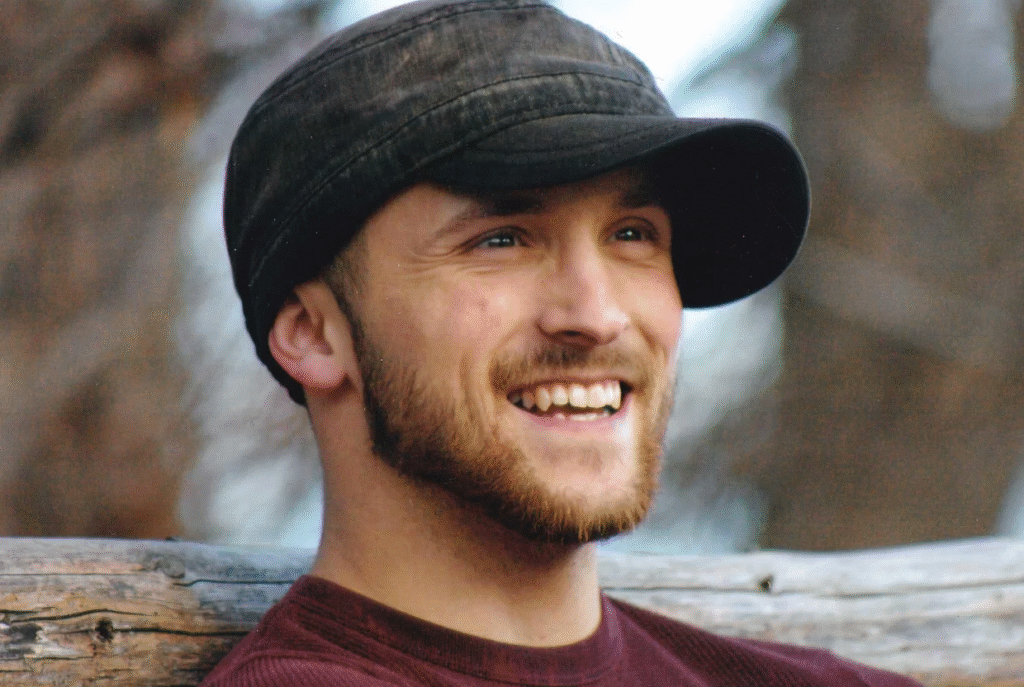
Chris Grover was remembered by those who knew him as kind, athletic and full of energy. He held a black belt in Taekwondo and served as head gymnastics coach at Mr. Todd’s Gym in Poughkeepsie.
Beth Whalen, who coached beside him, said he was always happy and moved around the gym like a rocket. She called him a huge kid at heart.
In 2008, at that gym, he met a young coach named Nicole Addimando. He was 21, and she was 19. They soon began dating. A talented amateur videographer, Chris made a video for her called Becoming Mom.
He was ecstatic about becoming a father, and his mother said he was a proud papa. She said the children were everything to him and that he lived for them and for Addimando. She described her son as a gentle soul who was full of life.
His students shared that view. They said he always made them feel safe, and they never saw him get upset or angry at the gym. Michaela Hughes, a former student, remembered his habit of calling out “let’s go, kid.”
A few weeks after his death, friends, family and former students gathered to release balloons in his honor. Hughes said it felt good to know she was not alone.
Years later, his friends and former students still defend the man they knew. To them, he was someone who would go above and beyond for everyone.


Recent Comments