

A first date in the small Illinois village of Farmersville on the night before Thanksgiving 2021 ended in gunfire.
A First Date on the Night Before Thanksgiving
On the night before Thanksgiving in 2021, Leslie Reeves traveled to the village of Farmersville, Illinois, to meet a man named Chris Smith. Reeves lived in Troy, about an hour south of Farmersville.
Smith, who sang in a band, had connected with her online and asked her out. The two agreed on a simple plan: they would meet at a bar in the village where he lived.
Reeves’s close friend Nanette Stuiber knew about the date. Stuiber said Reeves was excited and hoped it might turn into a good connection.
The bar was crowded that night, filled wall to wall with patrons. Reeves and Smith talked and laughed, and they got along with the people around them. At about 10 p.m., Reeves sent Stuiber a text message saying that everything was going well.
She then sent a second message saying she felt something was slightly off, although she did not explain what she meant. Stuiber never heard from her again.
The next morning, Stuiber texted Reeves and received no reply. She began driving toward Farmersville with the address of Smith’s house, and on the way she called the Montgomery County Sheriff’s Office to request a welfare check.
Stuiber reached the house on the afternoon of Thanksgiving Day and parked out front. A second woman was parked nearby. When Stuiber asked whether she was also there to check on Smith, the woman said she was checking on a friend.
The back door of the house was found broken, and Smith could be seen lying inside. A 911 call reported that no one was answering the door, that a rear window had been shattered and that a body was visible.
Deputies and emergency medical technicians arrived soon afterward. Over the radio, a deputy reported that one person was alive and one was dead.
Stuiber waited in her car and watched as responders entered the house. She saw Smith carried out on a stretcher and taken away in an ambulance, but there was no sign of Reeves.
Eventually, a detective approached and asked Stuiber for a photograph of her friend. After she showed him a picture on her phone, he told her that Reeves had been shot and killed. He added that she had died very quickly.
The Scene Inside the House
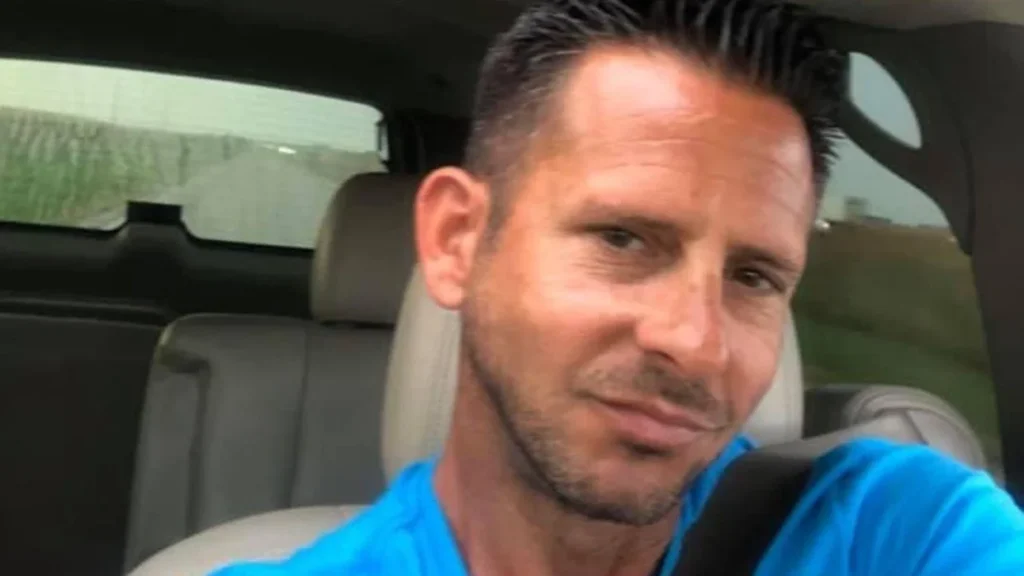
Josh Easton, a crime scene investigator with the Illinois State Police, was called to the house later that day. Easton had worked about 1,800 crime scenes during his career. He described this one as among the most horrific he had seen.
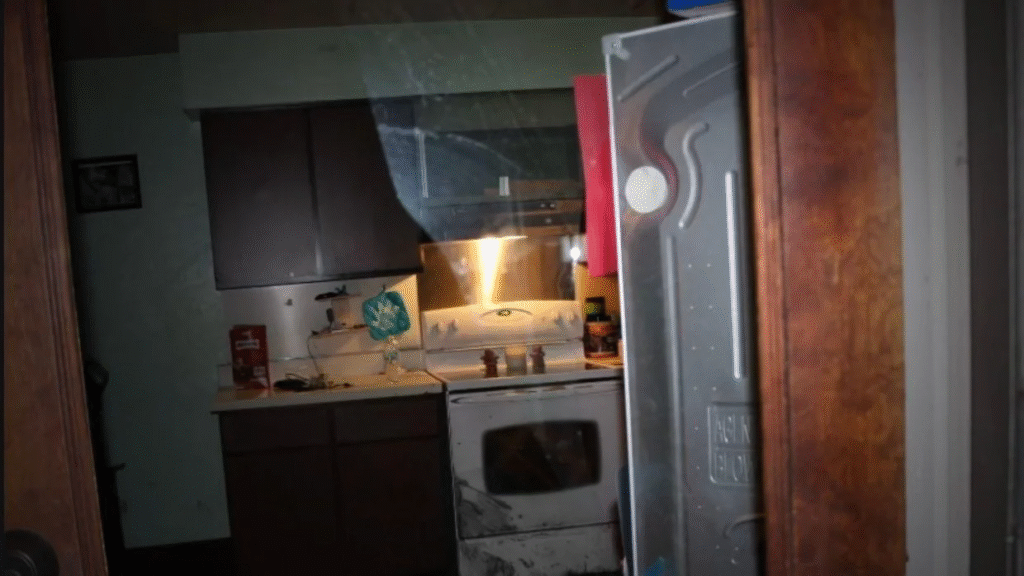
The glass in the side door had been broken out. Inside, the refrigerator had been pulled away from the wall, the kitchen table had been pushed aside and the chairs had been knocked over.
Blood covered the cabinets, the refrigerator and the countertop, stretching from one corner of the kitchen to the other. A burnt pizza sat in the oven. No weapon was found in the house, which led investigators to suspect that a third person had been involved.
Easton located two silver-colored 9mm bullet casings, one in the kitchen and the other near Reeves’s body. Reeves was in the living room. She had been shot once in the head. Smith had been found in the kitchen, barely conscious and unable to tell responders anything about the shooting.
Smith was rushed to a hospital in Springfield, where doctors found that a bullet had lodged in his brain. Surgeons removed part of his skull along with bullet fragments, and he was placed in a medically induced coma.
Smith lived at the house with a dog named Tiki. An emergency medical technician told his family that the dog may have helped him survive by lying close to him during the roughly 12 hours he had been bleeding before help arrived.
Smith’s relatives drove two hours to the hospital after learning he had been shot in the head. They also learned that he had been out that night with a woman named Leslie Reeves, a name none of them recognized.
A Former Boyfriend Is Questioned
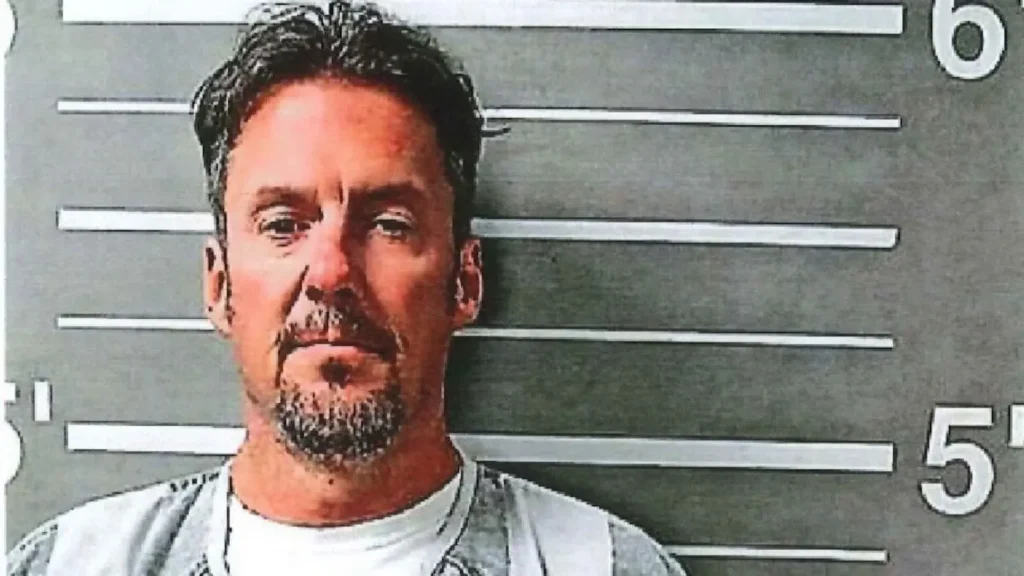
Stuiber told a sheriff’s deputy that Reeves had been worried about a former boyfriend, a contractor named Robert “Bobby” Tarr. Stuiber said Reeves had told her she intended to block him completely from her email, text messages and phone calls and to have no further contact with him.
That evening, as news of Reeves’s death spread among her friends, another friend, Amy Steinhauer, called the Sheriff’s Office and gave detectives Tarr’s name. Steinhauer had met Tarr, a divorced father of three.
She said that a few weeks before the shooting, Reeves had told her that Tarr showed up while Reeves was on a first date with a different man.
Afterward, Reeves told Steinhauer she was frightened of him and texted that he could kill her someday if she did not cut off all contact. Detectives had already begun looking for him.
That night, deputies went to Tarr’s home in Collinsville, roughly an hour from the scene. Tarr agreed to go to the police station without a lawyer. Authorities said he never asked why they wanted to speak with him.
During the interview, Tarr said he and Reeves were still a couple and that their problems were no worse than those of the average couple. When detectives told him Reeves had been murdered, he said he was not involved in anything.
He said he had never heard of Farmersville and had never been there. On the night before Thanksgiving, he said, he had gone to a friend’s house nearby to pick up money the friend had left for him at his shop.
He said he returned home at about 6:30 p.m. and stayed there all night. Investigators believed the shooting had occurred sometime after 1:00 a.m. on Thanksgiving morning.
Tarr suggested that detectives speak with his daughter, and they brought in his 17-year-old daughter, Shelby. Her account differed from his. She said her father had left home twice that night.
He first left at about 6:30 p.m. and returned roughly half an hour later, then said he had to go back out. He came home again at about 9:15, upset and crying, and said he missed Reeves.
Shelby went to sleep around 9:30 and was awakened by her father at about 2:45 a.m. He had started a load of laundry and was pacing the house, telling her he could not sleep.
When detectives repeated her account to him, Tarr changed his story. He said he had gone to his friend’s house twice, but he still insisted he was home by 8 p.m.
While Tarr waited at the station, detectives searched his home. They found his phone and a Glock pistol.
Shelby had told them her father owned a different gun, a small one in army green, which she had seen in his sock drawer the day before Thanksgiving. When she looked again, it was gone. Investigators did not find it.
Tarr remained at the station overnight. By then, investigators had learned that license plate reader cameras near a gas station in Troy, close to his home, had captured his car just after midnight on the night of the shooting.
A receipt showed he had bought gas there at that time. Confronted with it, Tarr said he did not remember being out after midnight, even though he had earlier said he was certain he had stayed home. Investigators regarded the discrepancy as proof that he had lied about his whereabouts.
Tarr was arrested the day after Reeves was killed and charged with first-degree murder in her death and attempted murder in the shooting of Smith.
Montgomery County State’s Attorney Andrew Affrunti said authorities acted immediately because Smith’s life was still in danger and the murder weapon had not been found, raising the possibility that Tarr could dispose of evidence if released.
The Murder Weapon
About a week after the shootings, Tarr telephoned a friend, Billy Adams, from jail, and the call was recorded. Tarr asked Adams to go to his house and look for some special aluminum brackets that he said were needed for another job, and he told Adams not to say anything about it.
Instead of going to the house, Adams contacted the Sheriff’s Office. Deputies suspected Tarr knew the call was being recorded and was using the brackets as a code for something else.
Investigators searched the yard of Tarr’s property, going over it on their hands and knees. They found deck brackets, but no gun.
A few days later, Tarr’s brother telephoned the Sheriff’s Office and asked deputies to return. Tarr’s family gave them a zip-lock bag they said had been found in the same yard that deputies had searched days earlier.
Inside were a Springfield Hellcat 9mm pistol and silver-colored ammunition. The Illinois State Police determined that the pistol was the weapon used in the shootings and that the ammunition matched the casings found at the scene.
Tarr’s fingerprint was on the bag. Neither his fingerprints nor his DNA were found on the gun itself, but Reeves’s DNA was found on its guide rod. Affrunti said he believed the gun had been cleaned and that one spot had been missed.
Tarr said he did not know how the gun came to be in the yard and said someone was framing him.
He said he would not have been careless enough to carry a gun back to his home and leave it on his own property. He also said the gun had belonged to Reeves. Tarr said he had bought the Hellcat and later sold it to her.
Howard Bolton, Reeves’s friend and firearms instructor, disputed that claim. Reeves had attended his classes on several occasions and had organized a class called “Girls with Guns” not long before her death.
In it, participants moved forward, fired, retreated and fired again. Bolton said Reeves became a very good shot, but she never brought a Springfield pistol, let alone a Hellcat, to class. He said she owned a different gun, and her friends said they wished she had taken it with her that night.
While Smith remained in a coma, authorities say Tarr tried to silence the only survivor of the shooting. A grand jury indicted Tarr on two counts of solicitation of murder.
The charges rested on allegations by an inmate who said Tarr had offered him $110,000 to kill Smith and the lead detective on the case. Tarr denied it. He said the plot was invented by a former cellmate, whom he had lent $10,000 for bond, and that the money had nothing to do with Smith.
Recovery and Trial
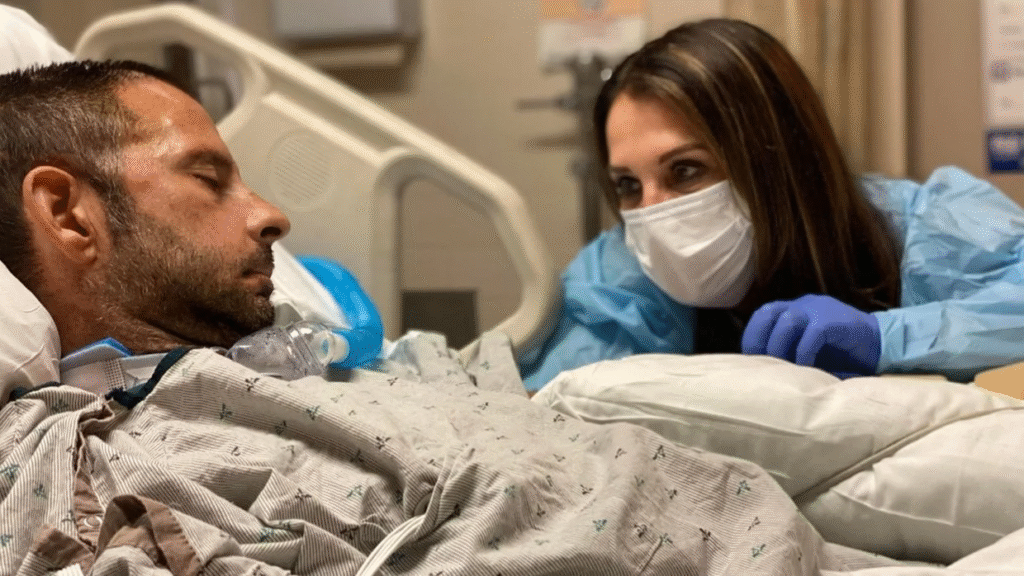
Smith first regained consciousness in early January 2022, about two months after the shooting. His voice was so weak that a friend who hosts a talk radio show in St. Louis barely recognized it on the telephone.
The host said he avoided asking Smith about that night, and their early conversations focused on whether he would be all right. Smith had no memory of the shooting and none of Reeves.
When he was first told her name, he said, he did not know who she was. He has said he would give anything to remember even a small part of that night.
He underwent intense physical therapy and grew much stronger, but gaps in his memory remained. His left leg is partially paralyzed from the hip to the knee and completely paralyzed from the knee to the toes.
Doctors said part of a hollow-point bullet remains in his brain, in a spot too dangerous to operate on. Smith moved back into his mother’s house, nearly two hours from his 12-year-old daughter and her mother, but he has since bought a new house.
He no longer lives with his dog. He exercises at a gym most mornings in hopes of walking without assistance, and he has returned to his band as its lead singer.
The radio host who knows him says that at his core he is still the same person, a joker who likes to talk about how much weight he could once lift.
Smith has described himself as half the man he used to be and says he is trying to get that man back. He misses his daughter, he has said, and recalls that the two once did everything together.
Tarr, meanwhile, offered an explanation for his presence in Farmersville. He said he met Reeves at her part-time job at a Loft store, where she told him she was going to meet friends because one of them was playing in a band.
She invited him, he said, but he declined because his youngest daughter was staying with him for a week. Tarr said Reeves then asked him to follow her to Farmersville because her van was unreliable.
He said they arrived at about 7:30 p.m. and that he parked in front of her van, in front of the house, and left. He said he never returned. Asked whether he had snapped that night, Tarr said violence was not in his nature.
Tarr said Reeves had lied to her friends about their relationship. He also said he had lied to Shelby about seeing Reeves because the two did not get along well and he did not want his daughter to know.
He said he repeated the lie at the police station because he feared detectives would tell her, and he never corrected it, even after his arrest. When asked about Steinhauer’s account of Reeves’s fears, he said he did not understand why Reeves would have thought he might kill her.
Tarr’s trial began in April 2024. Smith did not attend. He had told the prosecutor he was too angry to sit in the courtroom and knew himself well enough to know he could not sit through it.
Prosecutors told the jury that Tarr could not accept that Reeves was seeing someone else and killed her rather than let her live a life without him. They said he had secretly followed her to Farmersville early that evening.
Soon afterward, they said, his phone showed him searching for Smith’s name and trying to find his Facebook profile.
Tarr then headed home and texted Adams that he did not believe Reeves would drive that far for a party or a night out with a girlfriend, and that he thought it was for a man. He also searched whether police could track a phone that was using a virtual private network, known as a VPN.
After his stop at the gas station, prosecutors said, surveillance video and cell tower records showed Tarr driving back to Farmersville. They argued that he tried to enter through the back door and that Reeves and Smith tried to keep him out.
A struggle followed, and the glass was broken. Easton testified about the refrigerator being pulled away from the wall. Prosecutors argued that Reeves had tried to use it to block the door, and that Smith, crouching to help hold the door shut, was shot through it.
Reeves then hid in the living room, where, prosecutors said, Tarr found her and shot her. Affrunti told the jury he was certain Tarr went to the house intending to do serious harm to both of them.
He acknowledged that none of Tarr’s DNA or fingerprints had been found inside the house, but he said the phone activity, Tarr’s lies to investigators and the evidence found on the Hellcat together showed what had happened.
The defense attorney disputed that account. He said there was no evidence that Reeves had pushed the refrigerator, and no fingerprints or blood on it.
He pointed to the large amount of blood in the kitchen as a sign of a significant struggle between Smith and another person, and he argued that the attacker would have been covered in blood.
Investigators had searched Tarr’s white Jetta and found no blood, no glass and no DNA from the scene. Prosecutors answered that the house had not been bloody when Tarr left, and that Smith bled heavily in the hours that passed before help arrived.
The defense called no witnesses. Tarr did not testify. His attorney said the decision was strategic, because testifying might have allowed prosecutors to introduce more damaging evidence on cross-examination.
Tarr later said he should have testified. After about three hours of deliberation, the jury found Tarr guilty of first-degree murder and attempted murder. Tarr shook his head as people in the courtroom applauded.
Two months later, Tarr returned to court for sentencing, and this time Smith attended. He told the judge he had lost his house, his truck and, in his words, his life. Tarr also spoke and denied shooting Reeves and Smith.
The judge sentenced him to 85 years in prison. The solicitation case had not yet gone to trial. In April 2026, the Illinois Appellate Court rejected Tarr’s claim that his sentence was excessive and affirmed it.
Remembering Leslie Reeves and Chris Smith
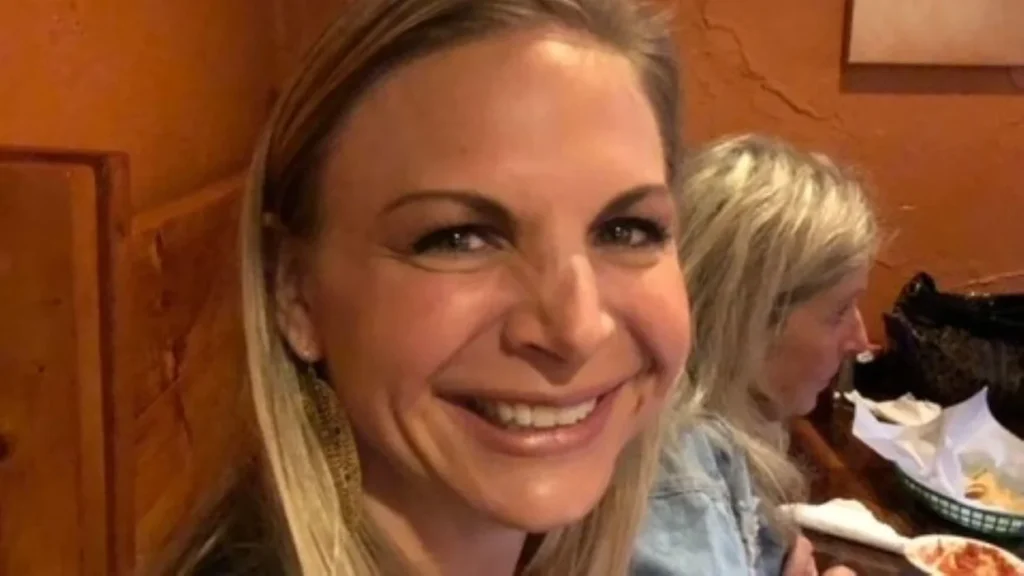
Leslie Reeves was a divorced mother of two. She held a master’s degree in engineering but chose instead to teach Pilates and to promote self-defense classes for women.
In a video posted on her YouTube channel for All You Studio, she invited women to learn simple self-defense techniques. She also worked to help women in abusive relationships.
Friends remember her as a light in many people’s lives, always smiling. They describe her as a devoted mother who lived for her children and as an advocate and champion for women’s rights, especially for women who were abused.
Her friends are focused on keeping her memory alive, and they say her death is a reminder that if it could happen to her, it could happen to anyone.
Chris Smith was 48 when he was shot and worked for a pool contractor. Friends and neighbors knew him well. He was known in the village as the man who grew banana trees and giant pumpkins, and one Halloween he donated hundreds of pumpkins for children to paint.
A bartender who knew him said he often stopped in and was friends with most people in town. His family described him as a homebody who spent his days working in his backyard, and they could not imagine anyone wanting to kill him.
His mother says she gives thanks daily that he is alive, and she wishes only that Tarr had not taken everything from her son. Smith has since published a book, My Fatal First Date, and started a business as a motivational speaker.
He has become engaged to Michelle Albrecht, and he proposed to her on stage. Smith has said he never expected to become a victim of domestic violence. He urges any man who feels like hurting a woman to get help, and he tells others never to give up, no matter how bad things become.


Recent Comments