
A phone call to the San Diego County Sheriff’s Department on January 1, 2021, sent deputies to a residential compound in Solana Beach, California. The events behind that call began in the last weeks of the previous year.
A Fall, a Hospital Stay, and a Discovery
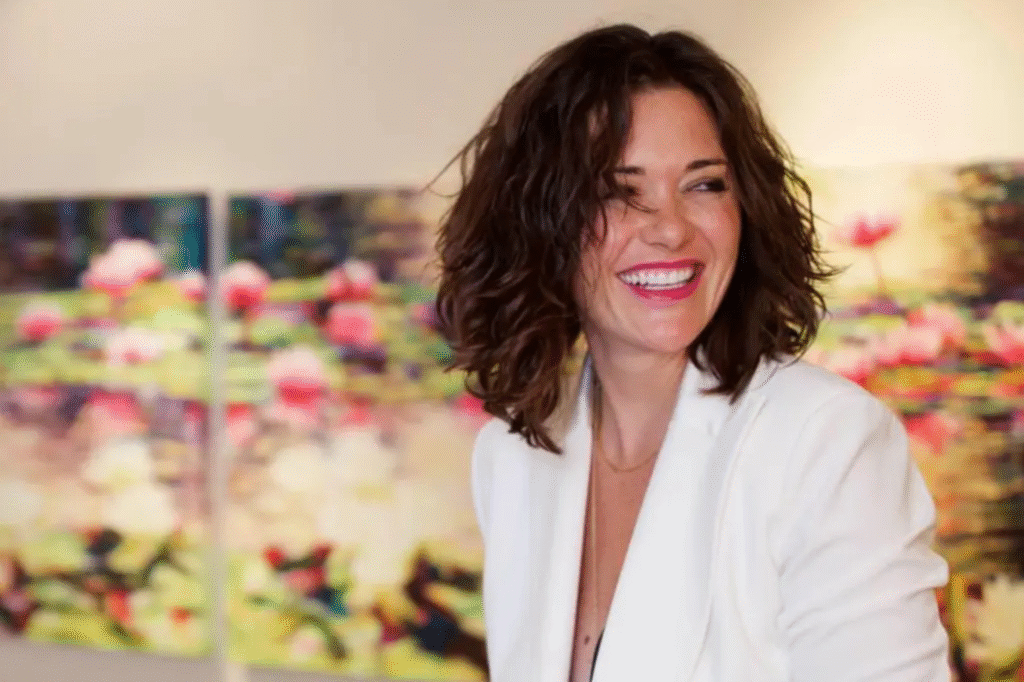
Tom Merriman was 64 years old and lived in an apartment in Solana Beach, a coastal community in San Diego County. His home stood on a landscaped property about a mile from the beach, and his stepdaughter, 37-year-old Jade Janks, lived next door.
Janks worked as an interior decorator. In December 2020, Merriman suffered a bad fall. He also had heart and liver problems, and he spent more than two weeks in medical care, first in a hospital and then in a rehabilitation center.
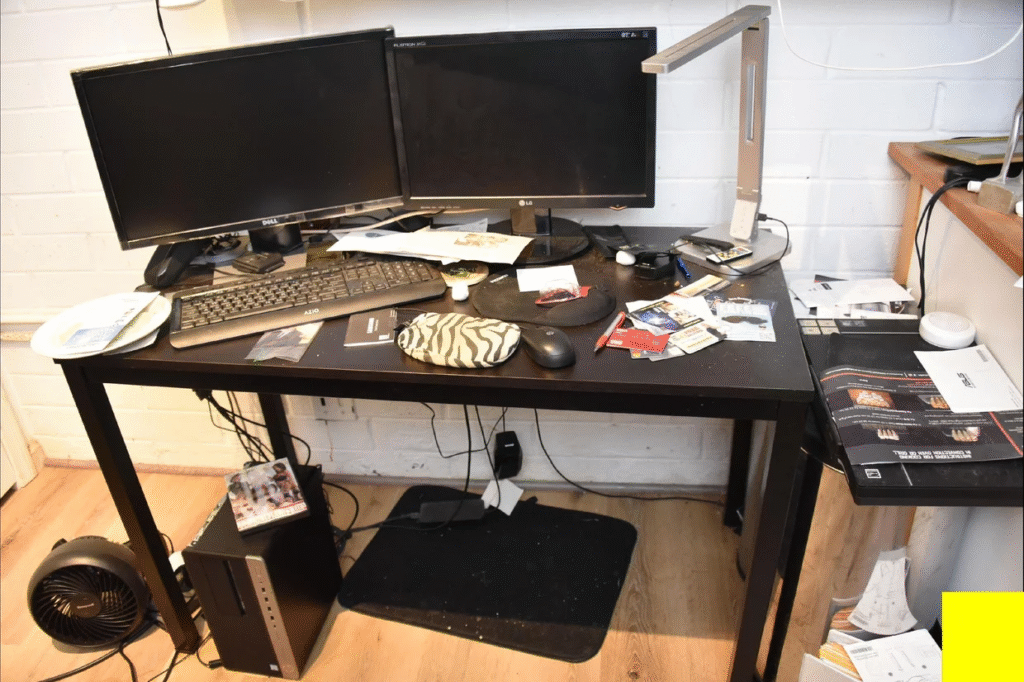
On December 23, while Merriman was still in the hospital, Janks went to his apartment to clean it. She bumped his computer, and the screen saver appeared. It was a nude photograph of her in a shower.
Janks has said she looked closely at the screen, recognized herself, and could not believe what she was seeing. A rolling slideshow of more nude photographs followed, and as she searched the computer she found hundreds of them.
She has said she took the pictures over the years, some of them with partners. She has also said that she never gave the photographs to Merriman, never showed them to him, never told him she had new ones, and never made any sexual overture toward him. How he obtained them is not known.
Janks’s reaction was severe. In messages to a friend, she wrote that she was “beyond freaked out.” She said she could not shower alone and that she vomited at the thought of looking at a shower.
She began sleeping with a knife on her nightstand in case Merriman returned early from the hospital. She has said she felt disgusted and vulnerable, and that she wanted someone to look out for her.
That same day, Janks contacted Alan Roach, a security guard whom a mutual friend had introduced to her. In one text message, Roach told her, “If you have a problem, I can fix it for you.”
Prosecutors adopted the label “the fixer” for him. They have stated that he is not a hitman and that what mattered was how Janks saw him: as a character like the one in the film Pulp Fiction, someone called in to solve problems.
Janks has said that she intended to confront Merriman after he came home and that she wanted Roach present as a safeguard, either to explain that what Merriman had done was not acceptable or simply to stand by “just in case.”
Over the next several days, Merriman was moved from the hospital to the rehabilitation center. Janks has said she felt she had to do something, because she could not continue living next door to him without feeling safe.
A Discharge and a Day of Messages
Janks has said Merriman began phoning her at about 6:45 on the morning of December 31, telling her he had not slept and wanted to rest. Despite her feelings toward him, she has said, she was trying to do everything she could to help.
A little after 11:00 a.m., she took him out of the rehabilitation center. He had a bag of his prescription medication with him, which included the sleeping pill Ambien.
Janks has said Merriman seemed preoccupied with finding medication and that, almost as soon as he got into her car, he helped himself to her own prescription pills.
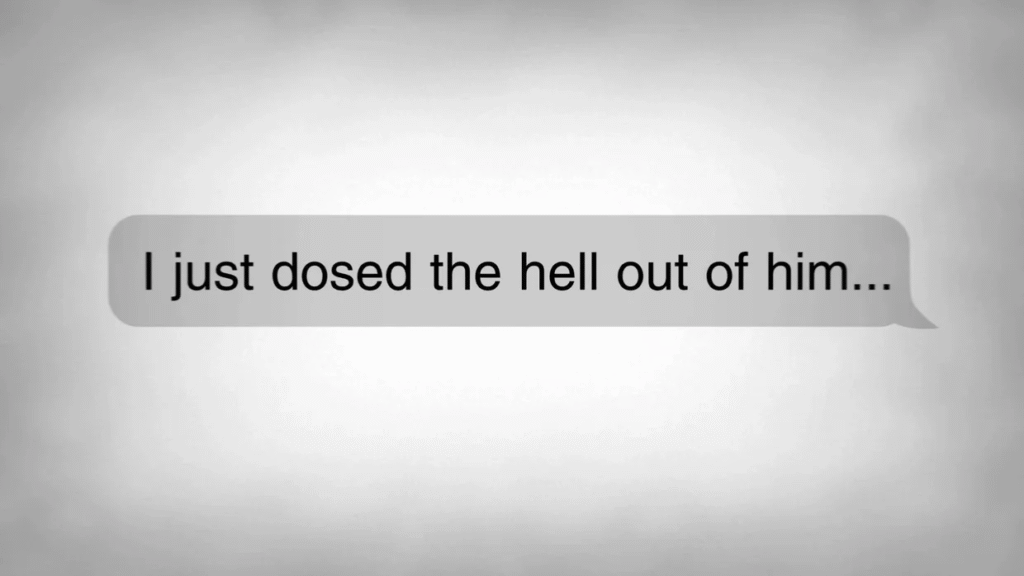
Eleven or twelve minutes after the discharge, Janks sent Roach a text message that read, “I just dosed the hell out of him.” When questioned about the message in court, she agreed that the phrase could mean one person had given another a large amount of drugs, but she described it as poor phrasing.
She then stopped at a shopping plaza and texted Roach to ask him to meet her there. Prosecutors have said that another of her messages described the stop as a way to stall, which they interpret as giving the drugs time to take effect and giving Roach time to arrive.
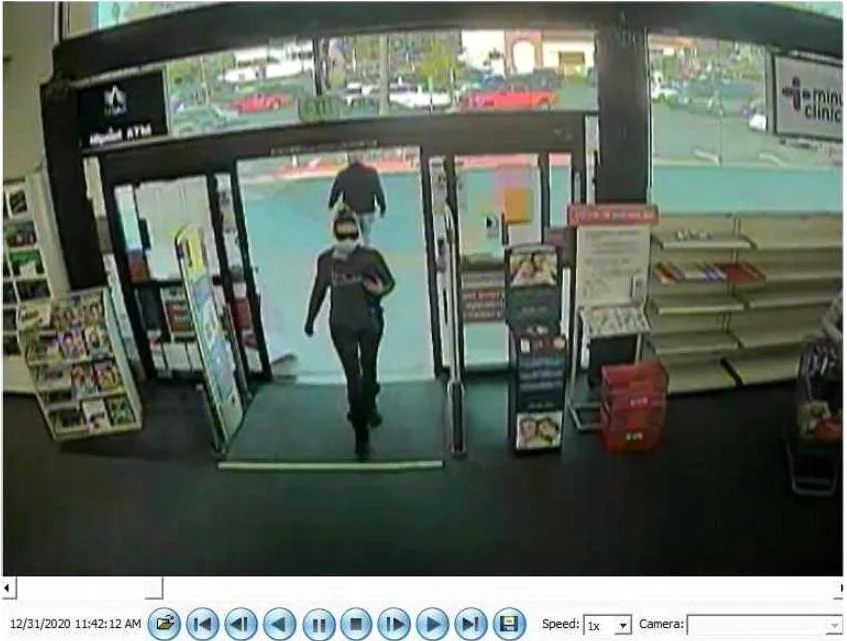
Inside the stores, Janks bought gloves, towels, a nylon cord, and spray paint. She has said the items were for a painting project at a house, explaining that she typically lays down plastic and encloses an area to protect the surrounding foliage.
Prosecutors have said the purchases also included zip ties, and they have described the collection as a murder kit.
Janks then drove Merriman home. Ramona Hamilton and her husband, George, neighbors who lived nearby, saw him in the passenger seat of her SUV in the driveway, with his feet out of the vehicle and a walker in front of him.
He looked very ill, and the couple assumed he had been sent home from the hospital heavily medicated. They also saw Janks there.
At 12:39 p.m., Janks texted Roach that she could not carry Merriman back to her car or into his house, that she was not strong enough, and asked him to come right away. Roach did not respond.
Janks has said Merriman was by then too groggy to walk and that she could not get him out of the car. She drove him back to the rehabilitation center to ask for help, but staff would not let her inside because of COVID-19 restrictions. She returned home with him still in the car.
Roach eventually replied that he could not come but was sending an acquaintance, Brian Salomon. Janks had never met Salomon. She has said he refused to help with Merriman and left right away. Salomon has given a different account.
Prosecutors told jurors that, when he arrived, Janks told him to strangle Merriman and then bring him into the house, and that she would take care of the rest. He did not want to get involved and left without doing anything.
At 2:59 p.m., Janks texted Roach that Merriman was waking up and that she was not sure how much longer she could control her temper. At 4:12 p.m., she wrote that he was waking up and becoming much more aggressive.
At 4:28 p.m., she wrote that he was heavily medicated, that she could not keep a “kicking body” in her truck, and that she was about ready to club him.
At 4:35 p.m., she texted that he was very aware and that she was on her own. Janks has said she was panicking and trying to urge Roach to come, and she agreed that the messages looked suspicious.
Adam Siplyak, a friend of Janks, arrived that evening at her request. Janks has said she was in tears and told him she wanted to get Merriman into her house or his own.
Siplyak became upset at how sick Merriman looked and left without helping. Janks has said she then tried to make Merriman comfortable in the car, with pillows and a blanket, so that he could sleep off whatever he had taken.
A Call to the Sheriff’s Department
By the morning of January 1, 2021, Merriman was dead. Prosecutors contend that Janks killed him in the car after her last message the previous afternoon.
They say she drugged him with his own sleeping pills, used either a grocery bag or a pillowcase to suffocate him, and strangled him with her bare hands when that did not work fast enough, then left his body in the vehicle overnight.
Janks has said she found him dead in the morning. When she tried to pull his leg, his pajama pant lifted and the skin was cold, and she has said she knew then that he was dead. She did not call 911. She has said she had been the one to pick him up and feared being blamed.
Instead, Janks drove to Scripps hospital with the body still in her SUV and took a wheelchair. Because Merriman’s legs took up the space inside, she has said, she hoisted the wheelchair in through the back window of the vehicle, which rolls down.
She told no one at the hospital that Merriman might need help. Prosecutors say she intended to move the body into his apartment and make his death look like an overdose of his own medication, but she could not lift his 180-pound frame and found no one willing to assist.
Janks has said she still wanted to get him into his house but did not know what else to do. Back at the property, she covered Merriman’s body with a blanket and stacked empty boxes over it so that it looked like a pile of debris in the driveway.
Hamilton saw Janks at the side of the property that morning with boxes and cartons. A little while later, Janks knocked on her door and said she had made a mess but had cleaned it up.
At some point that day, Siplyak, who described Janks as a one-time girlfriend, telephoned the sheriff’s department. He told the dispatcher that a friend had asked him to come over the night before and had said she had possibly killed her stepfather.
He added that he did not know whether she had really done it. When the dispatcher asked what exactly he was reporting, he said it sounded like she had killed the man.
He told deputies he had not seen Merriman and could not say whether Janks’s claim was true, but that he had to tell the police. He said he had barely slept and was frightened of becoming involved.
Several hours after Janks’s visit to the neighbor, deputies arrived to conduct a welfare check on Merriman. They walked past the pile in the driveway, knocked on his door, and entered the apartment, but did not find him.
That afternoon, they saw Janks driving out of her own driveway and pulled her over. Her final text message to Roach, sent at 5:33 p.m. as police were pulling her over, read, “Lose my number.”
Deputies brought Janks in for questioning. She said she was cold, and they gave her a blanket. They told her they were trying to find Merriman and asked whether she knew where he was.
She said she had picked him up the previous day but did not know where he had gone. The deputies told her that his family had not seen him for more than 48 hours.
Janks was eventually released, though Merriman was still missing. Acting on Siplyak’s report, detectives obtained a search warrant, and officers spent the night combing through Merriman’s apartment for clues.
The Discovery, the Arrest, and the Investigation
At first light on January 2, Detective Rosa Patron, walking down the driveway toward Merriman’s apartment, noticed the pile of debris, which included a wheelbarrow, boxes, and bags. She moved one of the trash bags and saw the silhouette of a man.
Merriman’s body lay in the middle of the driveway, buried beneath the pile. He was still wearing the hospital bracelet, the T-shirt, and the pajamas he had on when he was discharged.
Authorities arrested Janks that morning and charged her with Merriman’s murder. She retained an attorney and stopped answering questions, so investigators turned to other sources of evidence.
Siplyak told them that Janks had called him to her apartment, asked him to help move the body, and that he refused. He also said that Janks had confessed to him that she knocked Merriman out with an overdose of medicine and then strangled him.
The assistant district attorney who led the investigation attended the autopsy and spoke with the medical examiner. The examination produced little physical evidence.
It revealed no sign of strangulation, a point on which the prosecution’s own strangulation expert agreed. The final report gave the cause of death as acute zolpidem intoxication. Zolpidem is the generic name of Ambien.
Authorities had expected the autopsy to confirm Siplyak’s account, and the findings created a challenge for the prosecution. Asked whether Merriman might have died by accident, given his poor health, the prosecutor said it was possible but maintained that the evidence showed it was no accident.
Investigators examined Janks’s cell phone, and prosecutors called it a gold mine. They characterized the text messages as suspicious and incriminating and said they outlined a plan to get rid of Merriman one way or another.
Prosecutors also said that an open Ambien pack carried Janks’s DNA but not Merriman’s. A plastic bag found in her car had her DNA on the outside and his on the inside.
Prosecutors are not required to prove a motive, but they wanted to show one. On Merriman’s laptop, investigators found a nude photograph of Janks that had been used as wallpaper.
Prosecutors said this showed that he had been using the laptop since August 2019, and they had no doubt that the photographs existed, even though Merriman’s hard drive was not recovered. The investigation continued for nearly two years before the case went to trial.
The Trial, the Verdict, and the Sentence
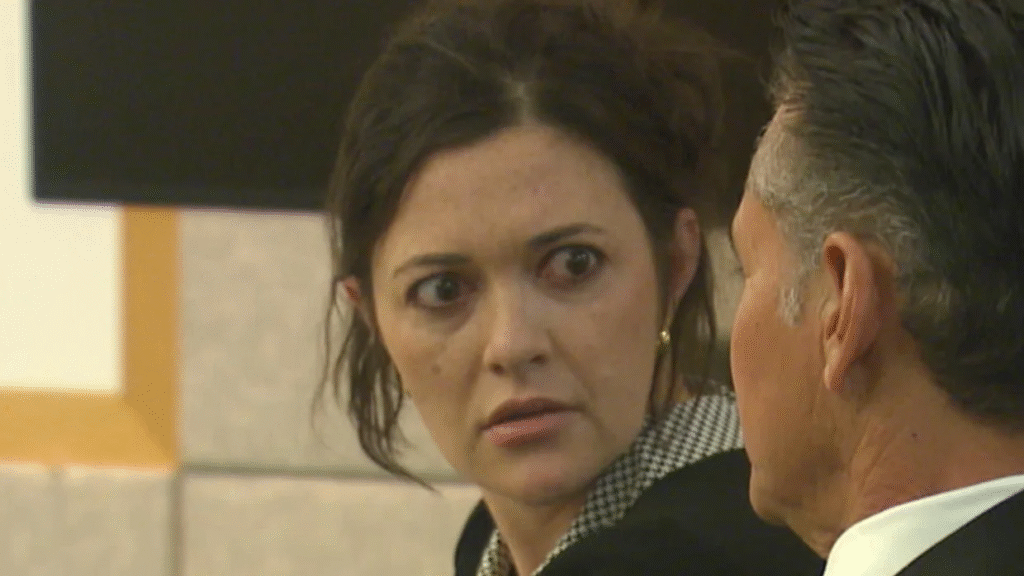
In December 2022, Janks went on trial for murder. Her attorney, Marc Carlos, told the jury that the case was not a murder.
He said Janks had no reason to kill her stepfather, and that finding the photographs might have made her angry or led her to cut off contact, but not to kill.
In his view, Merriman’s death was an accident caused by his poor health and by prescription drugs he gave himself. He said Merriman had multiple substances in his system and had made a cocktail of the medications he carried, which produced a fatal reaction.
Prosecutors Jorge Del Portillo and an assistant district attorney faced two concerns. They worried that jurors would see Janks as a victim, because she had found naked photographs of herself on her stepfather’s computer.
They also worried that jurors might dislike Merriman so much that they would acquit her or reduce the charge.
Janks’s family and friends, including her father, Steven Janks, attended the trial in support of her. Her friend Heather Pearce said she did not believe Janks could have carried out such a plan, because it was not like her.
Janks testified in her own defense. Asked whether she wanted her stepfather dead, she said no. Asked whether she had strangled him with her own hands, she said no.
When prosecutors suggested that she had lied to deputies about where Merriman was, she answered that she had asked for an attorney and kept asking for one.
Prosecutors also addressed the autopsy findings directly. They argued that a person can be strangled to death without visible injury if he is already unconscious, because his breathing is already depressed and little pressure is needed, and that Merriman had been dosed just enough to incapacitate him.
According to their argument, it takes about four pounds of pressure to cut off the blood supply to the head, less than the roughly 11 pounds of an ordinary handshake, and such pressure leaves no bruising and does not break the cartilage in the throat.
In his closing argument, Carlos described the case as “speculation upon speculation upon speculation.” He said Siplyak had no credibility and was trying to get out of something he thought might have happened.
He argued that Salomon’s claim was implausible, because Janks had never met him before and would not have told a stranger to strangle someone.
He noted that neither Siplyak, Salomon, nor Roach had been charged with any crime, and he urged jurors to stay with what he called the truth: that prosecutors had “zero evidence” to support a murder conviction.
Del Portillo had the final word. He told jurors that Merriman was not on trial, that he never received a trial, and that Janks had acted as his “judge, jury and executioner.”
He asked them to find her guilty of murder because “the evidence proves it, the law requires it, and justice demands it.”
The jury began deliberating that afternoon and returned the next morning to continue. The jurors resumed at 9:00 a.m., and at 9:30 a.m. the attorneys were told that a verdict had been reached.
The prosecutors were nervous, and Del Portillo has said he does not put much stock in quick verdicts, since the fastest he ever saw took fifteen minutes and was a not-guilty verdict.
This jury found Janks guilty of first-degree murder. She appeared stunned as the verdict was read, and each juror, asked individually, confirmed it. Merriman’s friend Pat Flanagan learned of the verdict by text message.
He had been anxious, with sweating hands, and he described feeling an absolute relief. When he heard the word guilty, he said, it felt right.
Three months later, on March 6, 2023, Janks returned to court for sentencing. Her father, Steven Janks, said he could only imagine what his daughter went through on learning what her stepfather had done. He said he believed an injustice had taken place and that the fight was not over.
Janks also addressed the court. She said Merriman’s influence during the early stage of her development had amounted to inappropriate touching, reckless behavior, and what she now recognized as years of psychological manipulation, and that finding hundreds of naked photographs of herself on his computer, taken without her consent, had brought it all crashing down.
She had not told this story during the trial, and it cannot be verified. She said that her only wrongdoing was covering up his body.
She told the court she was picking up the pieces and hoped to heal, and she apologized for not acting as she should have that day, saying she thought about it every day. The judge sentenced her to 25 years to life, and she was committed to the Department of Corrections.
Janks appealed. On October 25, 2024, a three-justice panel of the Fourth District Court of Appeal upheld the conviction.
She had argued that the physical evidence was insufficient to prove her guilt and that the case relied largely on statements she was said to have made to others. The panel found that those statements, together with the physical evidence, supported the inference that she killed Merriman.
It pointed to toxic levels of zolpidem in his system and to Janks’s DNA on his blister pack of pills, which it said indicated that she dosed him rather than that he took the fatal dose himself.
It also noted that his DNA was found on a rope, a bag, and disposable gloves, and it rejected the arguments that the killing occurred in the heat of passion and that the jury had been improperly instructed on provocation. On January 15, 2025, the California Supreme Court denied her petition for review.
Tom Merriman’s Life
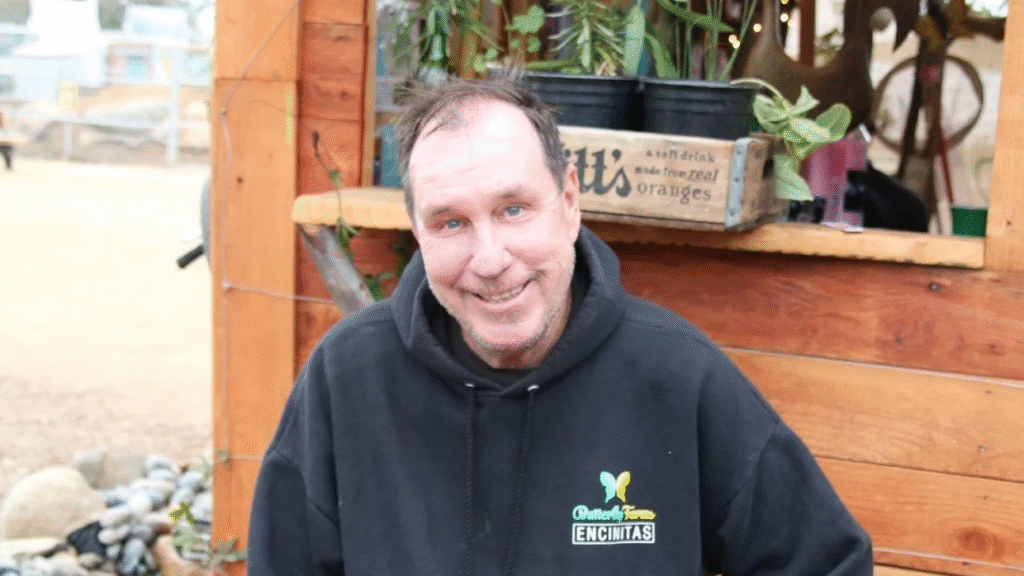
Tom Merriman came into Jade Janks’s life when she was 14 years old, after he married her mother. The two grew close, and the neighbors saw them that way. Janks lived next door, prepared his dinner every night, and looked after him.
She has said she called him her father and that he called her his daughter, and that she trusted him completely.
Pearce, who grew up next door to Janks and is 13 years younger, described Janks as a little more than a big sister and a little less than a mom, a person with strong, loving, and genuine energy, and said Janks always loved and cared about him.
Beyond his family, Merriman was known for an unusual business. He co-founded Butterfly Farms, an education and research nonprofit in Encinitas, where his business partner was Flanagan, the organization’s CEO, who called him his best friend and described him as a butterfly expert.
Flanagan still speaks of him in the present tense. He said he feels for Merriman, who ended up buried under trash. Asked whether he believed Janks had found the photographs, he said he could not disprove it but did not want to believe it.
Hamilton, a gardener who loves butterflies, knew Merriman better than her husband did and said she liked him and thought he was very nice.
At Janks’s sentencing hearing, a local pastor shared his memories of Merriman and the butterfly farm.
“I still remember Tom and wish I could drop by for a smile, to ask a question about plants or butterflies, or just to recharge those batteries that keep seeming to wear down as I get older,” he said. “I believe my life is richer because I knew Tom.”

Recent Comments