
Rita Politte, 40, was killed at her home in Washington County, Missouri, on December 5, 1998.
A Family Under Strain
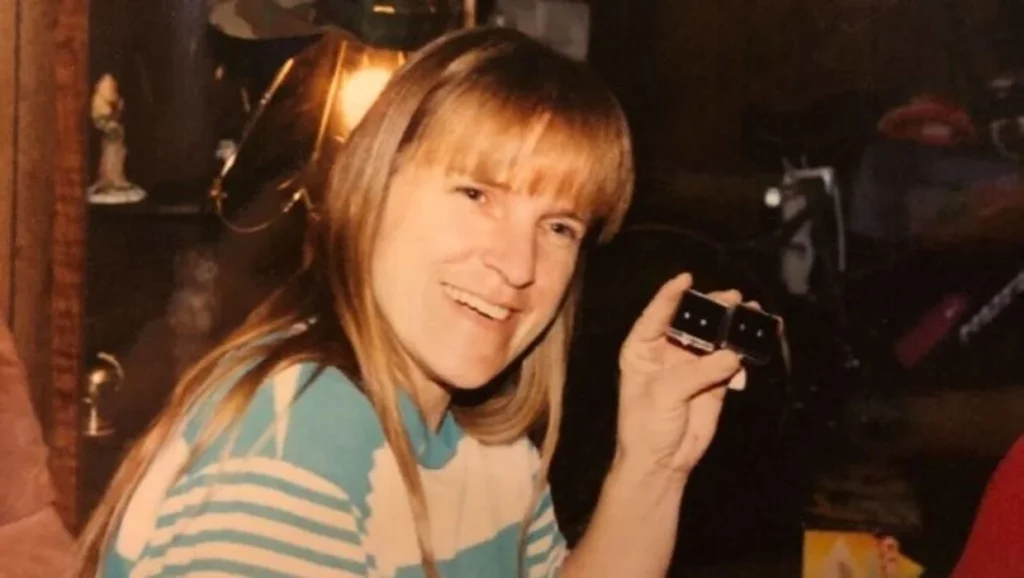
Rita Politte and her husband, Edward, raised three children, Chrystal, Melonie and Michael, in Hopewell, a small rural community about 70 miles southwest of St. Louis. Michael, the youngest, went by the nickname Bernie, which came from his middle name, Bernard.
By the late 1990s, the marriage was in serious trouble. Chrystal and Melonie described their father as mentally abusive and said he was repeatedly unfaithful to their mother. Violence between the couple was alleged on both sides.
In 1997, police were called to the family home, where Michael told an officer that his father had pushed his mother to the floor and choked her.
Michael was struggling as well. He was in his third year of seventh grade because he kept skipping school. In early 1998, about ten months before his mother’s death, he was hospitalized for behavioral problems after threatening to kill her and himself.
Michael said he told her he would put her six feet under. He said he did not mean it and called it the biggest regret of his life.
Rita and Edward divorced in the summer of 1998 after more than 20 years of marriage, and the divorce decree cited Edward’s infidelity. Michael had to divide his time between his parents’ homes.
He said his father tried to pay him to move in, but he refused because he wanted to live with his mother. Chrystal and Melonie said their father put Michael in the middle of the conflict and that Michael was angry at him.
The Night of the Fire
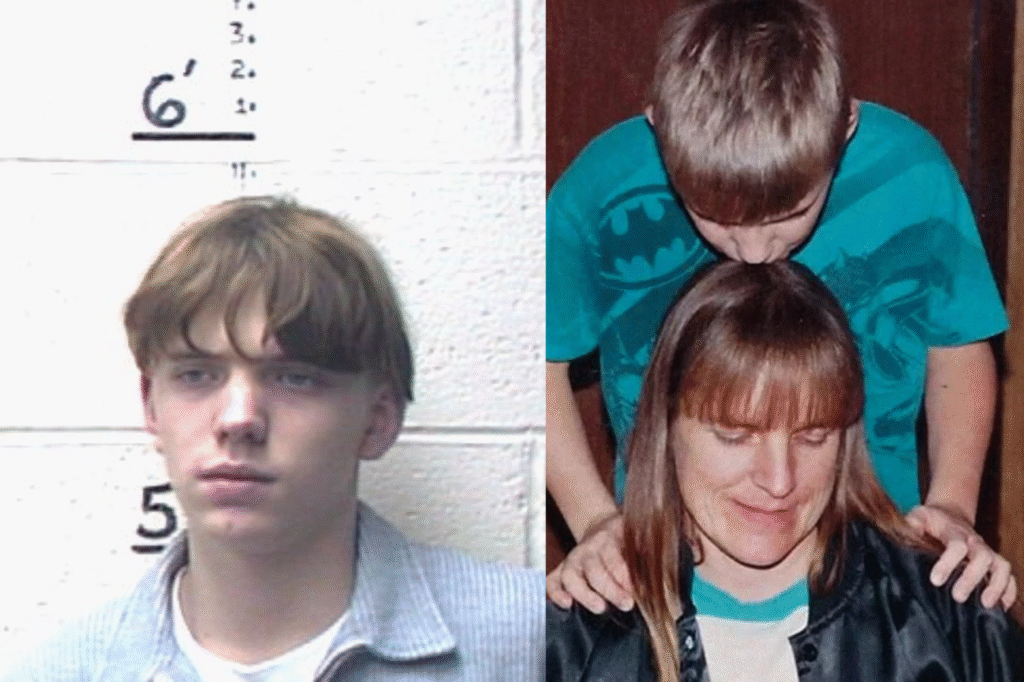
On the evening of December 4, 1998, Rita was working at a local bar, and Michael, then 14, was home alone.
Around seven or eight o’clock, he grew bored and rode his bicycle to the general store, where he met Josh SanSoucie, a 15-year-old friend. The boys spent hours together, and Michael invited Josh to sleep over.
Rita came home around midnight. Michael said she told him she loved him, said good night and said she would see him in the morning.
Michael then asked Josh where he wanted to sleep, offering the fold-out couch in the living room or the floor of his own bedroom. Josh chose the floor of Michael’s room.
Sometime later, Michael woke to a haze of light in his room, and he and Josh noticed smoke. They ran out of the room. Rita’s bedroom door faced Michael’s, and he saw an orange glow coming from that area.
He called out to his mother but received no answer. He ran outside, grabbed a garden hose and returned to her room. He saw her feet on the floor, and she was on fire from the waist up.
Michael turned the hose on her, though he could not say whether he sprayed for seconds or minutes. Josh ran to get help, but it was too late.
Michael then called his sister Chrystal with the news. Chrystal picked up Melonie, and by the time they reached the house, police cars and fire trucks were lighting the driveway.
Michael sat in the front passenger seat of a police car, with tear marks down his face. When his sisters asked what had happened, he said he did not know and that their mother was dead.
Chuck and Patsy Skiles, Michael’s uncle and aunt, lived next door and were among the first people to see him. They said he had no scratches on him.
The Investigation
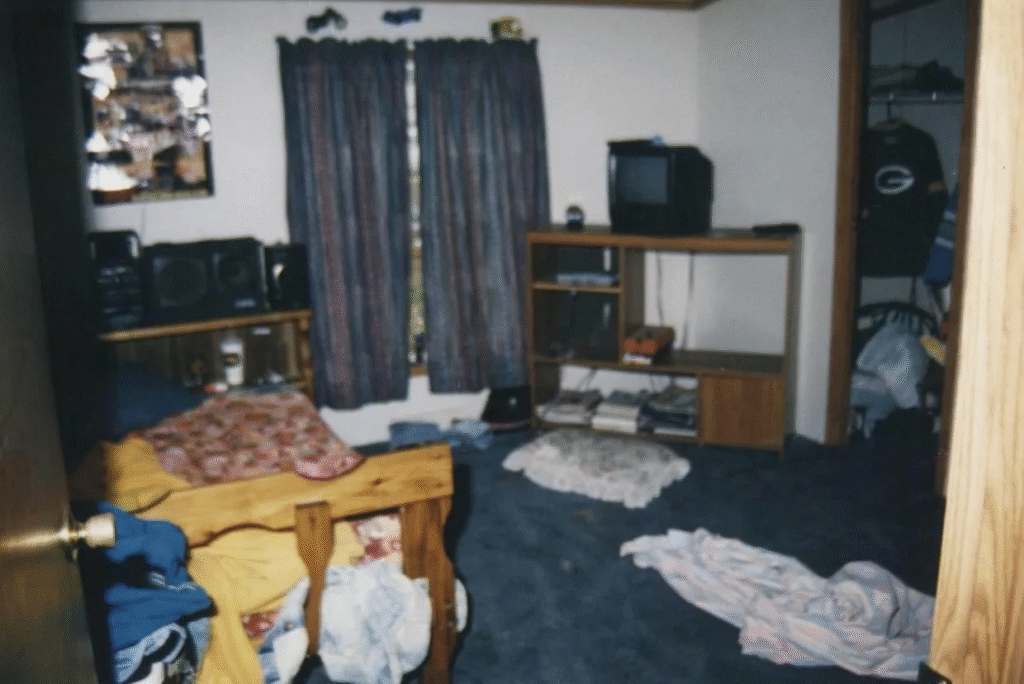
Tammy Nash, who worked for the Washington County Sheriff’s Office at the time, was one of the responding officers. Rita had been struck in the head with an object at least once, and blood on the bedroom walls pointed to a struggle.
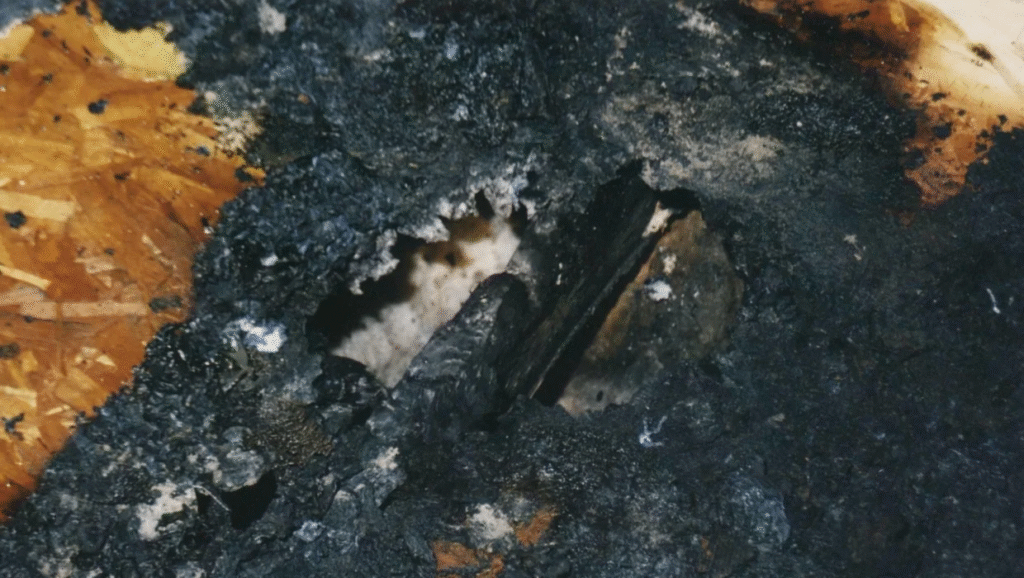
A fire marshal quickly concluded that an accelerant, a substance that makes a fire burn faster, had been used to set her on fire. Nash was assigned to collect evidence and look for anything that could have been used to strike Rita. No weapon was ever found.
While Nash processed the scene, officers took Michael and Josh to the sheriff’s office for questioning. On the way, Michael asked an officer what would happen to his mother’s truck, a question that was recorded in a police report.
Michael explained that people try to hold on to things after a loss and that his mother had loved that truck.
At the sheriff’s office, he was given a voice stress test and told that he had failed. Investigators also took his shoes so that a dog trained to detect accelerants could examine them. He was told that the dog alerted to the shoes.
Michael told officers that he and Josh had used gasoline to start a fire on the railroad tracks near his house hours before Rita came home.
He said the gasoline on his shoes meant nothing, because he and his friends often set fires for fun in the country. After the voice stress test and the dog’s alert, Michael said, officers stopped asking him questions and began telling him that he had done something.
Both boys said they did not know what had happened to Rita and that they had stayed in Michael’s room all night. Investigators said they did not believe them and questioned them repeatedly.
Two days after the killing, Josh gave a videotaped statement with an officer on each side of him and his mother present. He said he woke up during the night.
Asked whether he had seen Michael in the room, he said Michael was not in his bed. Asked whether he could have seen Michael if he had been there, Josh said yes, and he said he did not see Michael anywhere else in the bedroom.
On December 7, 1998, shortly after that statement, Michael was arrested for his mother’s murder. He was 14. Chrystal and Melonie said they could not believe it, and the Skileses felt police had made a mistake.
The Trial
Michael remained in custody for years while he waited for trial. During that time, prosecutors offered him a deal: if he pleaded guilty to voluntary manslaughter, he would serve a maximum of 15 years in prison. He rejected it right away, saying he had not killed his mother.
His trial, held in St. Francois County after a change of venue, began in January 2002, when he was 17. Prosecutors built their case around scientific evidence, starting with the shoes.
In addition to the dog’s alert, they presented testing that confirmed the presence of gasoline on the shoes, along with testimony that an accelerant had been used to burn Rita’s body.
They also argued that the burn pattern on the railroad tracks matched the burn pattern on Rita. Jurors were told that Michael had a problem with fire and that he was the only person who could have committed the crime. They asked to see the shoes.
A witness testified about a disagreement between Michael and his mother over money a few weeks before the killing, after which Michael sat flicking a lighter.
Michael said the argument took place, but not in the way the state described it. He said he was flicking the wheel of the lighter and was not threatening his mother.
The prosecution also said Michael had confessed. One month after the killing, he attempted suicide at the juvenile detention center where he was being held.
Three employees there wrote in reports that he said, “I haven’t cared since I killed my mom.” Michael said the words were “since they killed my mom.”
Michael did not testify. The jury was told that Josh, the other boy in the house that night, had been granted immunity, which protected him from being charged in the case.
Josh was never called to the stand, and his videotaped statement was never shown. Chrystal and Melonie were not called either. The defense built its case around the lack of direct evidence, pointing out that Michael had no blood on his clothing despite the violence of the attack.
After three days of testimony, the case went to the jury. The jury found Michael guilty of second-degree murder. He was sentenced to life in prison.
After the Verdict
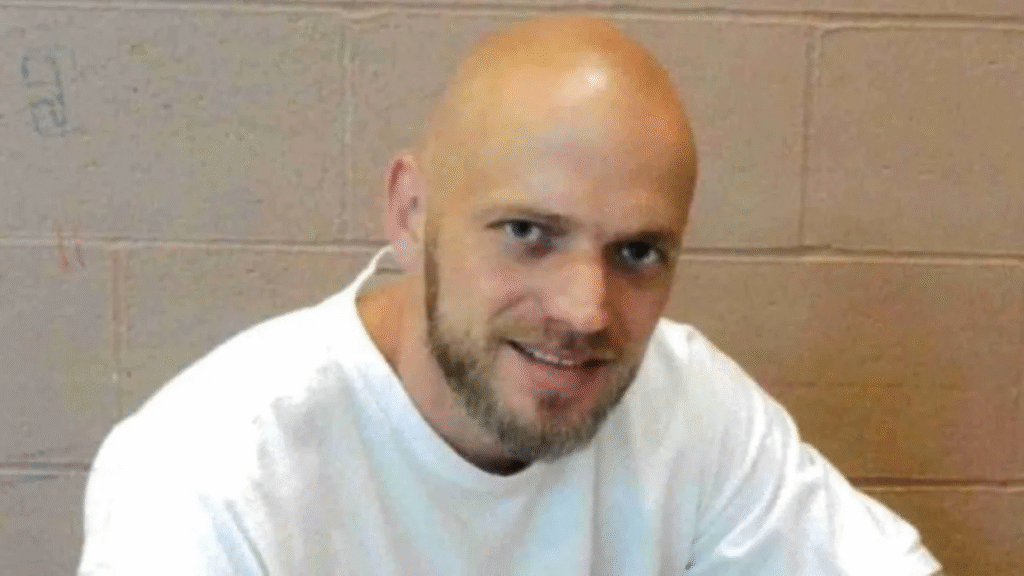
At 18, Michael was sent to the Missouri State Penitentiary, a prison once called the bloodiest 47 acres in America. He said his young age made him a target and that he got into a fight on his first day with a man who tried to rape him.
He became a skinhead and got tattoos, which he said he did to survive and not because it reflected how he felt or how his mother had raised him.
Michael wanted to hire a lawyer to prove his innocence, and he said he asked his father for help but did not receive it. For a few years, he said, he had no hope and used heroin to self-medicate, looking for drugs any time he tried to escape his surroundings.
Five years after his conviction, he found something that gave him hope: he wrote a letter to the Midwest Innocence Project, which agreed to take his case.
After years of work by the organization, attorneys Tricia Bushnell, Megan Crane and Mark Emison became involved. They challenged the evidence used against him.
They began with the fire. The investigator who visited the scene concluded that the fire was fed by fuel based only on visual patterns.
The legal team said this broke the standards of fire investigation at the time, which called for laboratory testing and control samples.
Carpet samples from the scene were tested in a lab, and no accelerant was found. Prosecutors had explained this by saying the accelerant could have burned away. Crane said there is no scientific basis for that explanation.
The team also challenged the shoes, which they said were the only physical evidence tying Michael to the crime. They said a chemical used in the manufacturing of shoes had been wrongly identified as gasoline at trial and that the dog could have been alerting to that chemical.
In a 2020 letter, the Missouri State Crime Lab stated that solvents in footwear adhesives have similarities to gasoline and that this was not widely known in the late 1990s.
As for the detention center statement, the lawyers said a single word is easy to mishear in a busy room, especially when the employees already believed the boy in their care had committed the crime.
Michael’s trial attorney was a public defender. In a sworn statement filed with the court, he said Michael’s case was the first homicide case he had tried on his own and that he would handle it differently today.
Josh SanSoucie, now 39, spoke publicly about the case for the first time. He said he had spent most of his life trying to forget that night.
After police began questioning him, he said, they repeatedly told him that what he said was not what had happened, and he told his mother he no longer knew whether he was telling the truth. He said the night itself had been normal.
He slept poorly and woke up once. He does not remember telling police that Michael was missing from the room and said that, if he did, it may have been at a weak moment.
Michael’s lawyers said the statement came after hours of interrogation and that Josh never repeated it. In a sworn deposition taken shortly before the trial, Josh said he never sat up from where he was sleeping on the floor.
He said it was not that he had failed to see Michael in the bed; he had no way of seeing anything on top of the bed from where he lay.
He said he accepted the immunity deal because he believed police would try to blame him or Michael, and he thought immunity meant he had nothing to worry about.
Michael’s lawyers said the state did not call him because he had nothing helpful to say. Josh has not seen Michael since they were boys. He said he would tell Michael that he is sorry and that Michael did nothing wrong, and the two hope to reunite one day.
The legal team also filed court documents naming Michael’s father, Edward Politte, as an alternative suspect. Four days before Rita’s death, a judge had finalized the financial terms of the divorce, awarding Rita half of Edward’s retirement, along with maintenance, child support and alimony.
Chrystal and Melonie recalled that Edward lost his temper in court and said she would never live to see a dime of that money. Police had interviewed Edward after the killing, and he had an alibi: he was at home, more than 80 miles away.
The legal team said investigators did not examine whether Edward might have acted with someone else. Michael said he believes his father hired Edward’s cousin, Johnny Politte.
Witnesses placed Johnny near the scene on the morning of the killing. Larry Lee said he was driving toward the railroad tracks as first responders arrived, with sirens sounding, when he saw Johnny walking along the tracks.
Johnny came up to his truck and asked if he had heard about Rita. About a week later, Larry’s wife, Carolyn, said Johnny came to their door at about six in the morning.
He said that he and Edward were conducting their own investigation and that he had heard Larry talking about Rita at the store, so he wanted to know what Larry knew.
Carolyn said she knew nothing and told Johnny it was time for him to leave. The Lees did not tell investigators about either encounter and said they wish they had. Larry said he was not claiming that Johnny had anything to do with the crime.
In a sworn statement filed by the legal team, another man said he saw Johnny’s truck near the same spot as emergency vehicles came down the road.
Nash said she did not remember hearing that Johnny had been seen that morning. She did recall that in the days after the crime scene was released, someone came to the sheriff’s office and said a tire iron or similar tool had been found in Michael’s closet.
Police records show that the person who found it was Johnny Politte. Nash retrieved the tool from the closet, and it was later ruled out as the murder weapon. She said she was positive she had not missed it during her first search of the scene.
Michael said he believes the tool was placed in his closet to set him up. Neither Edward nor Johnny has been charged in the case. Chrystal and Melonie said they asked their father whether he had anything to do with their mother’s death and that he denied it. They have not spoken to him in years.
Michael’s lawyers were repeatedly turned down by the appeals court. In 2021, however, Missouri passed a bill giving juvenile offenders convicted of serious crimes a second chance, and Michael was granted a parole hearing.
He told the parole board that he was innocent and explained why. On April 22, 2022, he walked out of the Jefferson City Correctional Center. Chrystal and Melonie were waiting with friends, family and a change of clothes.
Michael said he felt his mother’s presence when a bird flew overhead, and he greeted her. He then rode a bicycle from the parking lot to the railroad tracks, something he had enjoyed before he went to prison.
Michael moved in with Melonie. He covered his prison tattoos with new artwork, found work as a carpenter and got his driver’s license.
Josh Hedgecorth, the prosecutor of Washington County at the time, filed a motion in May 2022 asking for the conviction to be overturned. He agreed with Michael’s attorneys that the scientific evidence used at trial was problematic and said he did not believe Michael received a fair trial.
He said he could not say that the prosecutor at the time knew the evidence was false, but that it should not have been presented. Asked whether he could retry Michael on the evidence available today, he said he did not believe he would file the case.
Missouri Attorney General Eric Schmitt opposed the motion. His office argued in a court filing that Michael cannot meet the standard for actual innocence and that the evidence against Johnny and Edward would have been inadmissible at trial.
Five jurors signed sworn statements questioning whether Michael received a fair trial. Linda Dickerson-Bell and Jonathan Peterson were among them, and they said they had left the deliberations with unanswered questions and had felt pressure from other jurors to reach a verdict.
Another juror wrote, “I do not believe that Michael Politte killed his mother, but I don’t know how to fix it.”
The sheriff’s department reopened the investigation into Rita’s murder, though details were not released, including whether Johnny or Edward are persons of interest.
Hedgecorth lost his bid for reelection, and John Jones IV took office as Washington County’s prosecutor in January 2023. In February 2023, the Missouri Supreme Court ruled unanimously that only the prosecutor of the county where a person was convicted may file such a motion.
Because Washington County was not where Michael was tried, the court ordered the motion dismissed, and his conviction remained in place.
In April 2025, Dickerson-Bell organized a rally outside the Washington County Courthouse, urging Jones to pursue the case. Michael, by then a general foreman who travels the Midwest for construction projects, said that without exoneration he faces lifetime parole.
His lawyers have two other options if Jones does not act: a federal habeas petition filed in 2023 and a commutation from Missouri’s governor.
In Memory of Rita Politte
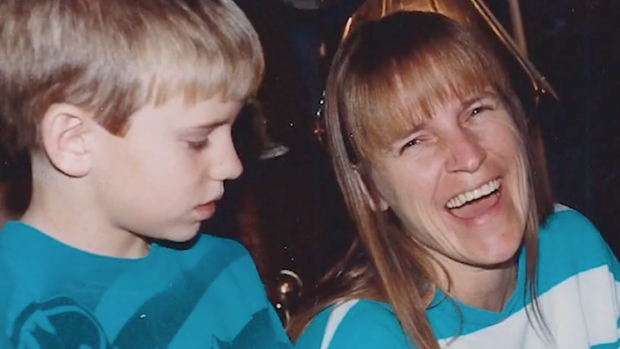
Rita Politte was 40 years old when she died. She married Edward as a teenager and raised her children in a community where, her daughters recalled, families lived close together, doors were left unlocked, and children rode bicycles and motorcycles. Melonie remembered her childhood there as a happy one.
Chrystal and Melonie said the first thing they think of when they remember their mother is her laugh and her smile. Michael, her youngest, was close to her.
He recalled that she was always at his football and baseball games, often recording him on video. His aunt and uncle remembered him as a boy who was always giving his mother a hug, and his sisters remembered a child who was always happy. To the family, he was her baby.
The house where the family lived no longer stands. Rita’s truck still does. It sits in Potosi, Missouri, and has stood there for years, in need of new tires.
Her children kept it because it is one of the few things they have left of her, and they hope to repair it and get it running again. Michael said that everything he works through today is guided by his mother. Her family has said they believe justice will come for her one day.


Recent Comments