
On July 18, 2024, a young architecture student vanished in Córdoba, Argentina. Her family’s desperate search would uncover a horrifying betrayal.
A Rising Star in Córdoba
Catalina Gutiérrez was born in 2003 to Eleonora Vollenweider and Marcelo Gutiérrez in Córdoba, Argentina. Her father worked as a renowned architect while her mother devoted herself to raising Catalina and her older sister Lucía.
The sisters shared an extraordinarily close bond, functioning as best friends rather than mere siblings. Inspired by her father’s career, Catalina enrolled at the University of Córdoba to study architecture after completing high school.
Her personality radiated warmth and confidence. Through Instagram and TikTok, she shared glimpses of her life and eventually attracted over 100,000 Instagram followers and 36,000 on TikTok.
Local brands offered sponsorship opportunities, providing both business experience and financial support for her studies. University also introduced her to Lázaro Oliveda, a fellow architecture student who became her boyfriend. Their relationship appeared solid, built on shared faith and genuine affection.
Among her university connections was Néstor Soto, originally from the Bariloche region. He became a familiar presence in the Gutiérrez household, attending family gatherings and studying alongside Catalina.
To her, the friendship remained purely platonic. She trusted him completely, welcoming him into her life without reservation. Beneath the surface, however, Néstor harbored feelings far beyond friendship.
He was obsessively in love with Catalina, his admiration bordering on dangerous fantasy. He seized every opportunity to spend time with her and engaged constantly with her social media posts. Though he outwardly respected her relationship with Lázaro, his suppressed emotions simmered dangerously close to eruption.
The Night of July 18, 2024
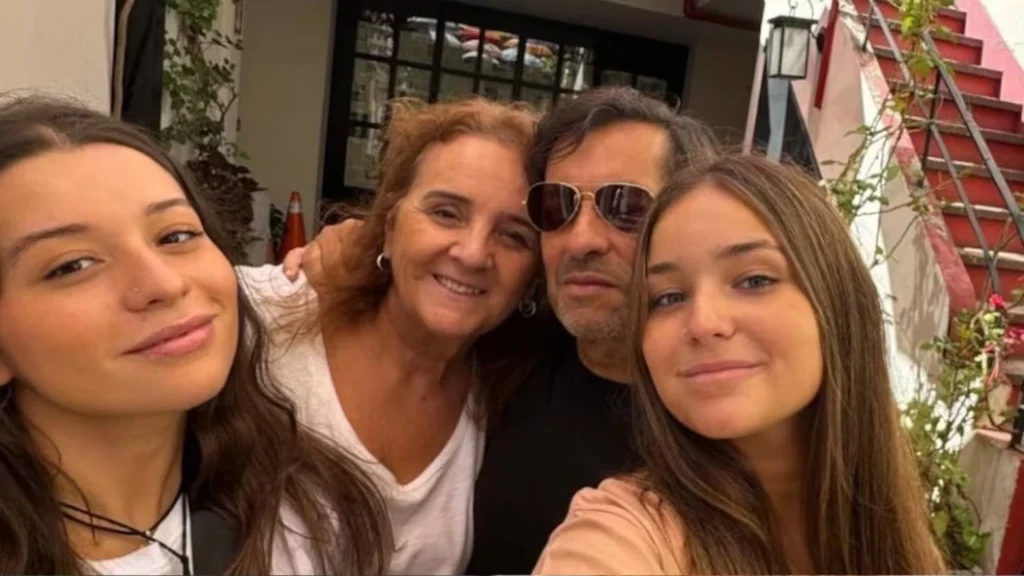
The evening of July 18, 2024, began ordinarily enough. Catalina planned to meet friends for bowling at the Patio Olmos shopping center in central Córdoba. She left the family home around 9:00 p.m., taking her mother’s silver Renault Clio.
Her plan involved picking up Néstor before heading to the mall where Lázaro and others waited.
Before departing, she sent a voice message to her boyfriend. Her words were, “I’m on my way my love, see you soon.” She also texted Néstor confirming she was heading to his home. He responded twice to her messages. That voice message to Lázaro would prove to be the last communication anyone received from Catalina Gutiérrez.
Hours passed without her arrival at the shopping center. Calls to her phone went unanswered. Text messages remained unread.
This behavior struck everyone as deeply abnormal. Catalina always responded promptly to those she cared about. Her friends at the mall grew worried and reached out to her family, only to discover nobody had heard from her since she left home.
The family spent a restless night hoping for some reasonable explanation. Morning brought no relief. By midday on July 19th, they gathered at the local police station. Catalina’s parents, her sister Lucía, boyfriend Lázaro and friend Néstor all filed a missing person report together.
They explained her disappearance and the complete communication blackout that followed her departure. Néstor stood among them, appearing as concerned as everyone else about his missing friend.
A Family’s Desperate Search

Argentine authorities showed reluctance to investigate immediately. Catalina was an adult missing less than 24 hours. In a city with high crime rates, her case received no urgent priority.
The Gutiérrez family refused to accept this passive approach. They knew their daughter would never leave them worried without explanation.
Taking matters into their own hands, they began retracing Catalina’s movements. They knew she planned to collect Néstor before proceeding to the mall. Eleonora called him to verify details. He claimed Catalina never arrived at his home.
He reported seeing nothing unusual from his window and said he had contacted Lázaro by morning when concern grew. He even joined Lázaro in searching for Catalina before accompanying the family to the police station.
Lucía provided crucial information during the report. The sisters shared phone locations for safety. Checking Catalina’s iPhone, Lucía found it pinging at 3900 Pedro Echagüe Street in southern Córdoba. This discovery coincided with separate reports from neighborhood residents about suspicious activity.
Locals reported unfamiliar people lurking in shadows the previous night. An unknown vehicle had appeared overnight, parked with tinted windows. The car appeared damaged and emanated a strong smell of ash. The connection seemed impossible to ignore. Police finally mobilized to investigate the reported vehicle.
Officers arrived at the location and found the silver Renault Clio matching Eleonora’s vehicle. Approaching cautiously, they noted damage and detected the smell of burning.
Inside the back seat lay the partially burned remains of a young woman. The fire had been set hastily and unsuccessfully, leaving most of the body intact. The victim was identified as Catalina Gutiérrez.
The Brutal Murder Revealed
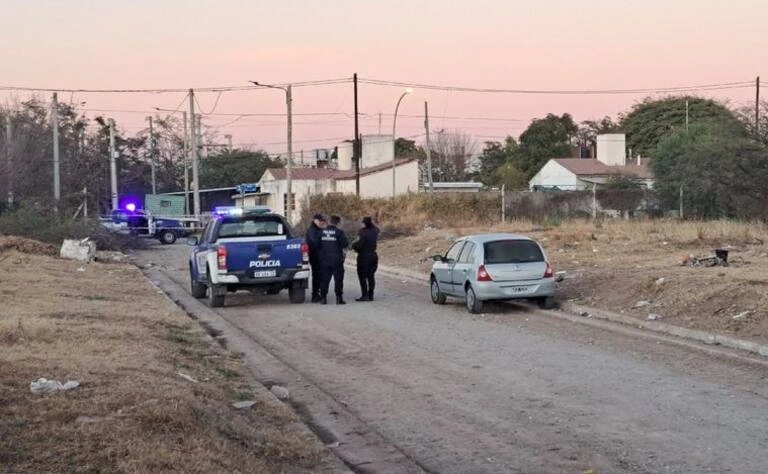
The crime scene was immediately sealed. Catalina’s remains were transported for autopsy and the results revealed horrifying details about her final moments. Fire had not killed her. The flames were merely an attempt to destroy evidence after death.
The actual cause was asphyxiation by strangulation. Her body bore multiple physical injuries from blunt force trauma, indicating she had been violently attacked before being killed, the National World reports.
Investigators reconstructed the crime using forensic evidence, phone records and traffic camera footage.
Catalina had arrived at Néstor’s home as planned around 9:00 p.m. Mobile phone data showed she spent approximately 38 minutes at or near his property, directly contradicting his claim that she never arrived.
While still seated in the car outside his home, Néstor revealed his true romantic feelings to Catalina. He confessed his obsessive love, likely expecting or hoping she would reciprocate.
When Catalina rejected him, maintaining her commitment to Lázaro, something inside Néstor snapped completely. The rejection triggered explosive violence.
He attacked her inside the vehicle with brutal force. He struck her multiple times, causing significant blunt force injuries across her body. Then he wrapped his hands around her throat and strangled her until she stopped breathing.
The absence of defensive wounds on Néstor indicated Catalina never had the chance to fight back. The attack was swift, overwhelming and fatal.
After killing her, Néstor moved Catalina’s body to the back seat of the Renault Clio. At approximately 10:20 p.m., a traffic camera captured the silver vehicle traveling along Valparaíso Avenue, a main road between Néstor’s home and the location where the car would later be discovered.
He drove to 3900 Pedro Echagüe Street, parked the vehicle and attempted to set it on fire to eliminate all evidence connecting him to the murder.
A Calculated Deception

The fire failed to destroy the evidence Néstor intended. He made one crucial oversight: leaving Catalina’s phone inside the vehicle. That phone would later provide the location data leading directly to her body.
Within minutes of setting the fire, Néstor began constructing his alibi. He called Eleonora eight separate times, pretending to be concerned about Catalina’s whereabouts.
He claimed she never arrived to pick him up and said he was looking out his window searching for any sign of her. His voice conveyed worry and confusion, perfectly mimicking the emotions of a concerned friend.
The following morning, he joined Lázaro in actively searching for Catalina around Córdoba. He walked alongside her boyfriend, helping look for a woman he knew was already dead because he had killed her himself.
When the family gathered at the police station, Néstor stood among them as they filed the missing person report. He provided his false account to officers, maintaining the story that Catalina never reached his home.
After her body was discovered, Néstor continued his performance. He comforted the devastated family, hugging Eleonora and sharing in their visible grief. He offered condolences and support while knowing he had caused every tear they shed.
This calculated behavior represented a cold attempt to deflect suspicion and maintain his facade as a caring friend.
Throughout these hours of deception, Néstor possessed a gruesome trophy from his crime. Officers would later discover Catalina’s ring hidden inside his bedroom, kept as a memento of the woman he claimed to love but had murdered in a rage over rejection.
The Investigation Closes In

With the case now classified as homicide, detectives began examining everyone close to Catalina. Lázaro Oliveda warranted initial scrutiny as her boyfriend and the last person to receive communication from her.
However, his alibi proved unshakeable. Surveillance cameras throughout the Patio Olmos shopping center confirmed his presence there all evening. Multiple witnesses corroborated his account. Investigators quickly eliminated him as a suspect.
Attention shifted firmly to Néstor Soto. His claim that Catalina never arrived at his property directly contradicted mobile phone records showing she spent 38 minutes there.
More damning still, investigators discovered he had deleted text messages from the night in question. His attempts to erase digital evidence raised immediate red flags.
Background investigation into Néstor revealed disturbing patterns. A former classmate of Catalina described a frightening encounter at a camp where Néstor attempted to force himself on her after a night out. She had to physically push him away and shout when he refused to accept no for an answer.
A former girlfriend came forward describing him as possessive and extremely controlling. These accounts painted a picture of someone capable of violence when denied what he wanted.
Police obtained a search warrant for Néstor’s property. During questioning, his story shifted dramatically. He initially maintained he never saw Catalina that evening.
Under pressure, this changed to admitting he saw her briefly. His composure crumbled as detectives pressed harder. Finally, he broke down completely, crying as he muttered: “She was the love of my life.”
What followed was a full confession. Néstor admitted to attacking and killing Catalina after she rejected his declaration of love. He described moving her body and attempting to burn the evidence.
The confession left investigators with a complete picture of the crime and its horrifying motivation.
Trial and Aftermath

Following his confession, Néstor Soto was formally arrested and charged with aggravated homicide. The aggravating factor of treachery applied because Catalina had trusted him completely as a close friend, never anticipating danger.
An additional charge of gender violence was later added to his case. Combined, these charges mean Néstor faces the possibility of life imprisonment if convicted. His initial confession was submitted as evidence.
However, once legal proceedings began and he secured representation, Néstor refused to provide any further recorded statements. Through his attorney, he expressed severe remorse and offered an apology to Catalina’s family.
His mother publicly claimed Néstor was under severe stress leading up to the crime, attempting to generate sympathy for her son. This effort found little traction given the calculated nature of his post-murder deception.
Catalina’s father, Marcelo, expressed his anguish publicly: “I am in pain and I don’t understand it. The only thing I want is justice and for him to rot in prison for the rest of his life because he does not deserve to live in this society,” per El Doce.
In early 2025, the case proceeded to jury trial in Córdoba. Prosecutors presented forensic findings, digital location data, surveillance footage and testimony detailing his attempts to destroy evidence and fabricate an alibi.
The prosecution argued that the murder constituted femicide, emphasizing the rejection of his romantic advances and his possessive conduct. The defense argued the killing occurred during an emotional outburst rather than as gender-based violence.
After deliberation, the jury found Néstor Soto guilty of aggravated homicide qualified by treachery and gender violence. He was sentenced to life imprisonment, the maximum penalty available under Argentine law.
The court highlighted the abuse of Catalina’s trust, the deliberate attempt to burn the vehicle and his calculated deception afterward as decisive aggravating factors.
Following the conviction, Catalina’s remains were released to her family, allowing them to proceed with a private farewell ceremony that had been postponed during the judicial process. As of 2025, Néstor remains incarcerated under high-security conditions.
The case sent shockwaves across Argentina. At the start of the new university semester, Catalina’s classmates honored her memory by placing a sign on an empty chair reading “Cata should be here.”