
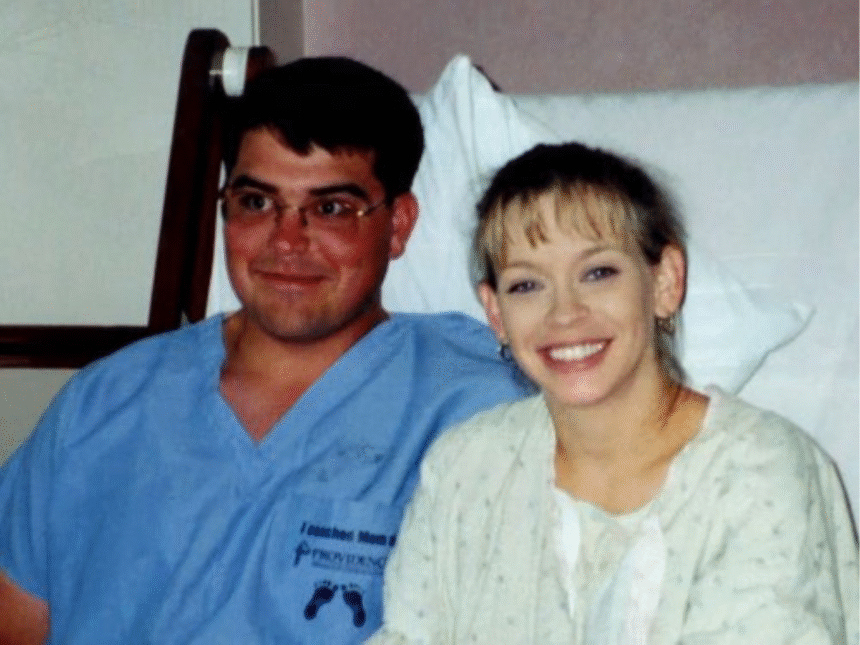
Darlene Gentry shot her sleeping husband and tried to make it look like a break-in. The plan fell apart fast.
Keith Gentry was a quiet, polite Texan who loved hunting and fishing. He was the kind of guy who said “yes ma’am” and “no ma’am” without thinking twice. He grew up with strong values and a simple lifestyle.
He met Darlene, a stunning blonde from Cameron, Texas. She was the homecoming queen type. Outgoing, beautiful, and the kind of person everyone noticed when she walked into a room. Keith never thought someone like her would look twice at him. But she did.
They started dating, and things were going well. But after about eight months, they hit a rough patch. Darlene wanted to get married and start a family. Keith wasn’t ready for that yet. So they broke up.
Darlene moved to Dallas to start fresh, and Keith stayed in Waco. Dallas didn’t work out for her though. She didn’t like her job, didn’t enjoy city life, and at one point her car was even stolen. That was enough. She moved back to Cameron.
Not long after she returned, she ran into Keith again. Something clicked right away, just like before. The time apart had changed Keith’s thinking. He realized Darlene was the one he wanted to be with. In 1999, he proposed. She said yes.
They got married and bought a home in Texas, right next door to Keith’s parents. Darlene went back to school and became a registered nurse. Keith worked as an engineer for a local electric utility company.
They had three sons together — Chase, Cody, and Cade. Darlene cut back her nursing hours to focus on raising the boys. From the outside, everything looked perfect.
But things weren’t as smooth as they appeared. Keith’s engineering job had him traveling a lot. He was away from home for much of the week and felt like he was missing out on his kids growing up.
So he made a decision that seemed right at the time. He left his engineering role and took a new job closer to home. The problem was the new job paid much less. It wasn’t in engineering, and the pay cut was significant.
Keith hoped the change would bring the family closer. Instead, it created serious financial stress.
At the same time, Darlene had developed a pattern of heavy credit card spending. The bills kept growing month after month. Keith tried talking to her about it, repeatedly. He wanted them to work together to pay down their debt and get back on track.
But the arguments kept coming, and nothing changed. The debt kept climbing. Through all of this, Keith had quietly made sure his family would be protected if anything ever happened to him. He had taken out two life insurance policies that totaled $750,000.
He arranged these policies because he was the family’s sole provider, and he didn’t want Darlene and the boys left with nothing if something went wrong.
On the evening of November 8, 2005, the couple fought again. Darlene had come home after a night out with friends, and Keith had seen the latest credit card statement. The balance had gone up again.
The argument got heated enough that Darlene left the house to drive around and cool down. She later described the conversation as eventually calming down into a discussion about managing their finances. The next morning told a completely different story.
At just after 6:00 a.m. on November 9, 2005, emergency services in Robertson County, Texas received a panicked call from Darlene. She was crying and shaking as she told the operator that someone had broken into their home and shot Keith while he slept.
She said blood was all over the bed and that Keith had pink foam coming out of his mouth. She also reported that the back door was open and all of Keith’s guns had been taken from his cabinet.
Darlene explained that she hadn’t been in the couple’s bedroom that night. All three boys had colds, and she had stayed with them to help them sleep. She said she woke briefly around 5:15 a.m. but fell back asleep.
When she got up at around 5:45 a.m., she noticed the gun cabinet was empty. She called out for Keith and got no response. She walked into the bedroom and found him covered in blood.
Police arrived quickly. They found Keith with a gunshot wound to his head. He was barely alive. Paramedics rushed him to hospital while officers began searching the home. Almost immediately, the scene didn’t match what Darlene had described.
There were no signs of a break-in anywhere. No broken windows or no damaged doors. Nothing that suggested anyone had forced their way inside. The house looked calm and undisturbed.
Keith’s gun cabinet was in similar shape. The glass wasn’t broken. The door hadn’t been pried open. It was simply closed. The guns inside were gone, but the cabinet itself looked completely untouched. And the key to the cabinet was still sitting right inside the lock.
Keith had kept that key on top of the cabinet, out of plain sight. Whoever opened that cabinet had known exactly where to look for the key.
Then came the detail that made the investigators stop completely. Just outside the front door, neatly piled together, were Keith’s guns. The same ones Darlene had reported stolen. They hadn’t been carried off by any intruder. They were sitting right there outside the house.
A real burglar wouldn’t break in, shoot someone, steal a collection of guns, and then place them neatly outside the door before walking away. It made no sense. To the officers standing there, the scene looked staged.
There was more. Inside the home, investigators found small amounts of blood in one of the bathrooms. Darlene hadn’t mentioned going to the bathroom at any point. Her version of events was — she found Keith, called 911, and she waited.
She said she didn’t even check for a pulse or try to stop the bleeding because she was frozen in shock and focused on keeping her boys safe. Worth noting is that Darlene was a trained registered nurse.
Checking vitals and responding to medical emergencies was part of her training. She offered no medical aid at all.
When detectives searched the kitchen, they found a pair of latex gloves in the trash can. The gloves had small dark specks on them. Inside one of the gloves was a single .22 caliber shell casing.
Doctors had already confirmed that Keith had been shot with a .22 caliber weapon. That same gun was the only firearm missing from the collection. Keith’s father confirmed that Keith had owned a .22 caliber handgun — one he had personally given him as a gift. It was nowhere in the home and not among the guns found outside.
The gloves were sent to a forensic lab for testing. Results came back several weeks later. The gloves tested positive for gunshot residue. Two DNA profiles were found on the gloves — one matched Keith, and one matched Darlene. That was the turning point.
While the lab results were being processed, Keith had been taken off life support and died in hospital. He was 31 years old. Darlene was at the hospital when it happened.
Investigators present noted that her reaction, while emotional, didn’t reflect what they would expect from someone who had just lost their spouse under violent circumstances. One investigator later said she never truly broke down.
Police brought Darlene in for questioning. During the interview, she was asked repeatedly about that night. She stuck to her story. She also said that her marriage had been fine. She described Keith as calm and supportive.
But she grew tense as the questioning continued and eventually stopped cooperating. She asked for an attorney and refused to answer any more questions. On November 28, 2005, Darlene was arrested and charged with Keith’s murder.
Keith’s family, who had stood firmly behind Darlene from the start, posted her $50,000 bond. They believed the police had made a mistake. They were certain she was innocent.
Out on bond, Darlene began looking for a new home. She told people the family house was too painful to stay in. A local real estate agent named Robert, an old friend of hers, agreed to help her find something.
After viewing several properties, she became very enthusiastic about one that included a pond on the land. She talked about how much her boys loved fishing and how perfect the pond would be for them. The sale appeared to be moving forward smoothly.
Then, about two weeks later, Darlene called Robert with a sudden change. She no longer wanted the pond. She asked if it could be filled in before the sale was finalized. Robert was caught off guard.
Two weeks earlier she couldn’t stop talking about how perfect the pond was. Now she wanted it gone entirely. He found it deeply suspicious, especially with a murder charge hanging over her. He went to the police and told them everything.
Detectives immediately saw what this likely meant. The murder weapon was still missing. A pond that Darlene now urgently wanted filled in was not something they could ignore. A dive team was sent to search it quietly. Within minutes, they found Keith’s missing .22 caliber handgun at the bottom.
Instead of arresting her right away, investigators set up a trap. They asked Robert to call Darlene back and tell her the pond would need to be drained before it could be filled in, and that workers would arrive in a day or two.
Police then placed surveillance officers near the pond and waited. Within two hours of that phone call, Darlene showed up at the property. She walked straight to the pond and began searching along the edges with a stick.
Then she stepped into the water, clearly looking for something in the exact spot where the gun had already been recovered. Every moment of it was captured on camera. Officers moved in and arrested her on the spot.
Darlene’s trial began on February 6, 2007. Her defense team argued the prosecution’s case was based on circumstantial evidence and focused heavily on Darlene’s appearance, suggesting to the jury that someone like her couldn’t be capable of murder.
Before the trial, they had also tried to introduce medical records suggesting Keith had been involved in an affair and that a third party may have carried out the killing. The court rejected this completely. The records were unverified and not considered relevant.
The prosecution laid out everything — the staged break-in, the latex gloves, the DNA, the gunshot residue, the missing weapon, and the video footage of Darlene at the pond searching for the gun she had thrown there.
After about five hours of deliberation, the jury found her guilty. She was sentenced to 60 years in prison. When the verdict was read, Darlene sat quietly, removed her earrings, placed them on the table, and was taken into custody.
In 2017, her legal team filed an appeal. They argued the original trial had been unfair, pointing to several claimed errors including the rejection of the third-party theory, the denial of a venue change due to pre-trial media coverage, and issues with how jurors were handled during sentencing.
The appellate court reviewed every argument and rejected them all. Her conviction stood. She will not be eligible for parole until 2037.
After the trial, Keith’s parents were granted full custody of the couple’s three sons. A court order in 2010 made it official that Darlene would have no contact with the children. The youngest of the three boys was just 18 months old when his father was killed.



Recent Comments