
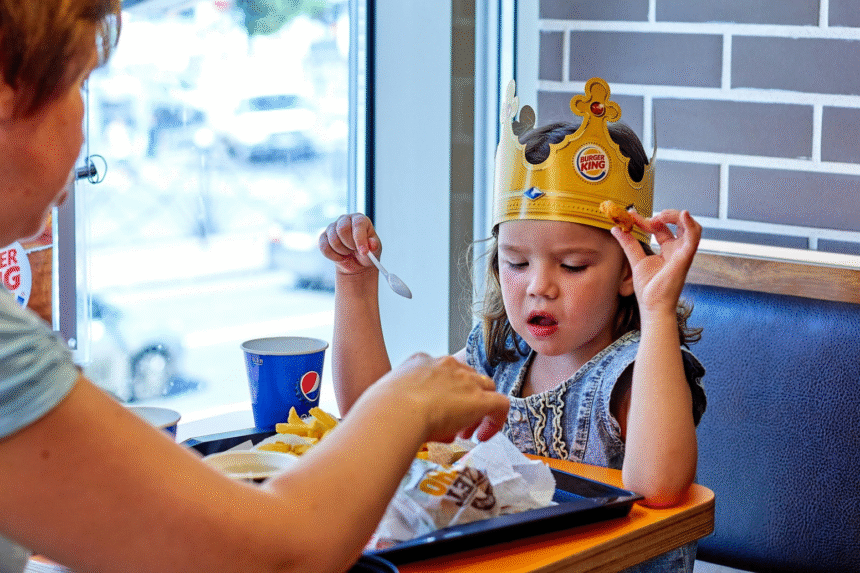
Nutrition researchers are asking a question with real-life stakes: can what preschoolers eat influence how they act and feel later on? A Canadian analysis suggests it might, especially when a large share of a child’s diet comes from ultra-processed foods.
The work, led by University of Toronto researchers and published in JAMA Network Open, found that higher intake of ultra-processed products at age three was associated with more emotional and behavioral difficulties by age five.
A diet built for speed
On an average weekday, it is easy to spot the pattern: a sweet drink in a spill-proof cup, a packaged snack between activities, then a quick dinner that only needs heating. These choices are common because they are fast, predictable, and widely available.
In nutrition science, “ultra-processed foods” are industrial products made mostly from refined ingredients plus flavors, colors, and other additives. They include sugary drinks, instant noodles, ready meals, and many boxed or bagged snacks.
They can fit into family life, but they often deliver lots of added sugar or salt and not much fiber.
In Canada, ultra-processed foods account for close to half of daily calories among preschool children, according to national dietary reporting.
That matters because ages three to five are not only about growth; they are also about learning emotional control, handling stress, and getting along with others. Eating habits formed here can also stick.
High ultra-processed food intake is already tied, in many studies, to higher risk of excess weight and other long-term health concerns. The Toronto team asked whether behavior might be part of the picture too.
How the Toronto team followed children
The researchers turned to the CHILD Cohort Study, a major Canadian project that enrolled families during pregnancy (2009–2012) and has followed children over time. This kind of study tracks everyday life rather than assigning diets, then looks for links that remain after considering other influences.
For this analysis, the team examined diet reports from more than 2,000 children at age three and estimated how much of each child’s energy intake came from ultra-processed foods.
Two years later, when the children were five, caregivers completed the Child Behavior Checklist, a well-established tool used in child development research.
CHILD participants were recruited at several sites across Canada, which helps the findings reflect different regions and family backgrounds. Diet data at age three came from detailed food questionnaires, later grouped by level of processing using a standard classification used in public health research.
The analysis looked at calorie share, so a child could eat some packaged foods and still fall into a lower-intake group if most meals were minimally processed. The behavior checklist, while widely validated, relies on caregiver observation, so it can miss what happens in classrooms or playgrounds.
That is one reason researchers call for additional, multi-method follow-up.
The checklist summarizes patterns, not diagnoses. It captures internalizing behaviors (such as anxiety or withdrawal), externalizing behaviors (such as aggression or hyperactivity), and a total difficulties score.
Results showed a consistent association: children who got a larger share of calories from ultra-processed foods tended to score higher on behavior and emotion difficulty measures at age five. The increase was not limited to one type of behavior.
The numbers were concrete. For every 10 percentage point increase in calories from ultra-processed foods, average scores rose for internalizing behaviors, externalizing behaviors and overall difficulties.
Some products stood out. Sugar-sweetened beverages and artificially sweetened drinks showed particularly strong links. Ready-to-eat or ready-to-heat foods, including items like macaroni and cheese or French fries, were also associated with higher scores.
Because the study is observational, it cannot prove that ultra-processed foods directly cause behavior problems. Diet can overlap with many other factors, including household stress, time constraints, and access to fresh foods.
The researchers adjusted for a range of variables, but no analysis can capture every detail of a child’s environment.
What the results could mea
Even with that caution, the findings point to a useful idea: the overall “share” of ultra-processed foods in a child’s diet may matter more than any single treat. The study is less about blame and more about identifying realistic improvements during a sensitive developmental stage.
The researchers also modeled a substitution scenario. Replacing 10% of calories from ultra-processed foods with minimally processed options—such as fruits and vegetables—was associated with lower difficulty scores.
That estimate is not a guarantee for any individual child, but it supports standard nutrition advice that favors whole foods.
Kozeta Miliku, the study’s principal investigator and a researcher at the University of Toronto’s Joannah & Brian Lawson Centre for Child Nutrition, has highlighted preschool years as a key window when dietary routines become normal and easier to maintain.
For families and child-care programs, beverages may be an efficient place to start. Sweetened drinks add a lot of sugar without much nourishment, and they were among the strongest signals in the analysis.
Water and unsweetened alternatives are simple replacements. Food swaps can be equally small: offering fruit, vegetables, nuts (when age-appropriate), or plain yogurt more often, while gradually reducing ready-to-heat meals and packaged sweets.
For public health, the study strengthens the case for making minimally processed foods easier to access and easier to choose. Convenience is not just a personal preference; it is shaped by price, marketing and time.
For scientists, the next questions are about mechanisms and timing. Researchers are exploring whether ultra-processed diets affect behavior through nutrient gaps, changes in gut health, sleep disruption or rapid spikes and drops in blood sugar.
It is also possible that ultra-processed intake is a marker for other pressures rather than the main driver. More studies, including intervention trials where feasible, could help sort that out.
For now, this JAMA Network Open report adds to the evidence that early diet is part of the broader environment supporting attention, mood, and social development. In a food system built around packaged ease, that is information families can use—not as a rulebook, but as a guide.



Recent Comments