
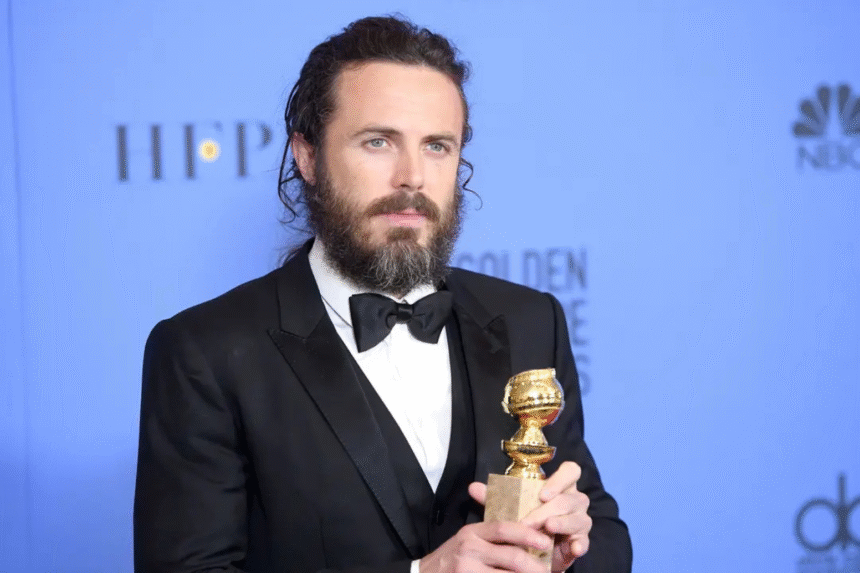
In 2010, two women who worked on the film I’m Still Here filed civil lawsuits against the film’s director, Casey Affleck. The court papers described allegations of sexual harassment and, in one case, breach of contract.
Affleck denied the claims through his lawyer. Both lawsuits ended later that year in out-of-court settlements with confidential terms.
The First Lawsuit: Amanda White
On July 23, 2010, Amanda White filed a lawsuit in Los Angeles Superior Court against Casey Affleck and his production company, Falsified Films. White had worked as a producer on I’m Still Here, and she said she had known Affleck professionally for about ten years. Her complaint asked for $2 million in damages.
White’s filing listed several claims, including sexual harassment, failure to prevent harassment, and breach of an oral contract. In simple terms, she said she faced unwanted sexual behavior at work and that the people in charge did not stop it.
She also said she was not paid properly and that this was connected to her rejecting Affleck’s behavior.
According to the lawsuit, White said Affleck made “uninvited and unwelcome sexual advances.” She also said he often talked about his sex life at work and used insulting language about women, including calling women “cows.”
The complaint described this as part of a work environment she felt was hostile and disrespectful.
One of the most serious claims in White’s filing involved an incident during a flight. She alleged that Affleck told a crew member to expose his genitals to her.
The lawsuit says she objected out loud, but the situation still happened as described in the complaint. White’s filing presented this as an example of behavior that crossed boundaries and created an unsafe work setting.
The lawsuit also described a situation in Las Vegas while the crew was staying in a hotel. White claimed Affleck tried to persuade her to stay in his room. She said she refused.
After that, she alleged he became aggressive, grabbed her arm, and sent her harassing text messages. Her complaint tied these events to her claim that she was targeted after pushing back.
White also said Affleck refused to pay her producer fee after she rejected his advances. In her version, not paying her was not just a money problem but also a punishment.
The filing further claimed Affleck intentionally made the work environment so uncomfortable that she would leave the project.
The Second Lawsuit: Magdalena Gorka
A week later, on July 30, 2010, Magdalena Gorka filed a second lawsuit in the same court. Gorka worked as the director of photography for I’m Still Here. Her case asked for $2.25 million.
Her complaint included allegations of sexual harassment and intentional infliction of emotional distress, meaning she said the behavior was extreme enough to cause serious emotional harm.
Gorka’s filing described the set as a place where sexual talk and behavior were constant. She said male crew members took part in it and that Affleck led the tone. In her complaint, this was not presented as occasional bad jokes. It was described as a pattern that shaped daily work life.
The most specific incident in Gorka’s lawsuit was dated to December 2008 during filming in New York. Gorka said the production did not provide separate hotel rooms. Because of that, she said she was instructed to sleep in Affleck’s apartment.
In her account, she woke up during the night and found Affleck in bed with her, wearing only underwear and a T-shirt. She alleged he was caressing her back. The complaint says she demanded that he leave, and that he reacted with anger.
Gorka’s filing also claimed she experienced verbal abuse and that Affleck made negative remarks about her to other crew members after the incident. She said the situation affected her ability to do her job.
Eventually, she resigned from the project. Her complaint described the harassment as reaching a point where continuing work was not possible.
Affleck’s Public Denials
After both lawsuits were filed, Affleck’s legal team responded publicly and forcefully. His attorney at the time, Michael Plonsker, denied all charges. He described the allegations as “scurrilous” and “complete fiction.” The defense message was clear: they were saying the claims were not just wrong, but made up.
Affleck’s side also argued the lawsuits were an attempt at extortion. Their position was that the plaintiffs were disgruntled employees trying to get money before the film’s release at the Venice Film Festival. This framing mattered, because it cast the legal fight as a publicity and money move rather than a workplace safety complaint.
The defense also signaled that they planned to file a cross-complaint against White and Gorka. They suggested claims like breach of contract and defamation.
They said the women had signed agreements that barred them from sharing details about the production, and that filing the lawsuits broke those terms. During the early part of the dispute, Affleck also maintained that the environment on set connected to the experimental style of the film, while still denying personal wrongdoing.
Settlement in 2010
In September 2010, the dispute ended before trial. Affleck reached settlements with both White and Gorka. The terms were confidential, so the amounts paid were not made public and the details were not shared. The cases were dismissed with prejudice, which means the same claims could not be filed again.
A joint statement said the disputes were “resolved to the mutual satisfaction of the parties.” As part of the resolution, both women received professional credits they were seeking for their work on the film.
The settlements included non-disclosure agreements. Because of those NDAs, neither Affleck nor the accusers spoke publicly about the specific details for several years.
The 2010 lawsuits drew fresh attention years later, in late 2016 and early 2017. This happened during the awards campaign for Manchester by the Sea, when Affleck was getting strong reviews and major attention.
Media outlets and social media users began sharing and discussing the earlier lawsuit filings again, even though the cases had already been settled.
In 2017 interviews, Affleck mostly avoided discussing details. When The New York Times asked him about the allegations, he said, “It was settled to the satisfaction of all. I was hurt and upset—I am sure all were—but I am over it.”
He emphasized that the matter was closed and said he was focused on his current work. Even with the controversy, he won the Academy Award for Best Actor in February 2017.
2018: Skipping the Oscars Stage
In January 2018, during the rise of the MeToo movement in Hollywood, Affleck announced he would not attend the 90th Academy Awards to present the Best Actress award.
That move broke a long-running tradition where the previous year’s Best Actor winner presents. A spokesperson for the Academy said they “appreciated the decision to keep the focus on the show.”
Later, in August 2018, Affleck discussed the situation more directly in an interview with the Associated Press. He said he had “contributed to an unprofessional environment” on the set of I’m Still Here.
He added that he had “tolerated that kind of behavior from other people and I wish I hadn’t.” He framed it as a lesson about responsibility, especially for someone in a position of power.
He also said the lawsuits made him think about his behavior. He expressed regret about how defensive he was at first, and he said his reaction back then was “unprofessional.” While he did not provide new details about the original claims, this interview was seen as a clearer acknowledgment than his earlier comments.
Since the 2018 apology, Casey Affleck has continued working in the film industry as an actor, writer, and producer. There have been no further legal actions filed against him connected to the 2010 incidents.
Sources
The New York Times: Casey Affleck Settles Sexual Harassment Lawsuits
The Hollywood Reporter: Casey Affleck Sued by Second ‘I’m Still Here’ Staffer
Associated Press: Casey Affleck breaks silence on harassment allegations
Variety: Casey Affleck Withdraws From Oscars
The Guardian: Casey Affleck: the lawsuits, the Oscars and the ‘unprofessional’ set



Recent Comments