
In April 2005, a young woman left her Glasgow hostel for work and did not return. Her disappearance led to one of the largest police investigations in Scottish history.
A Routine Interrupted
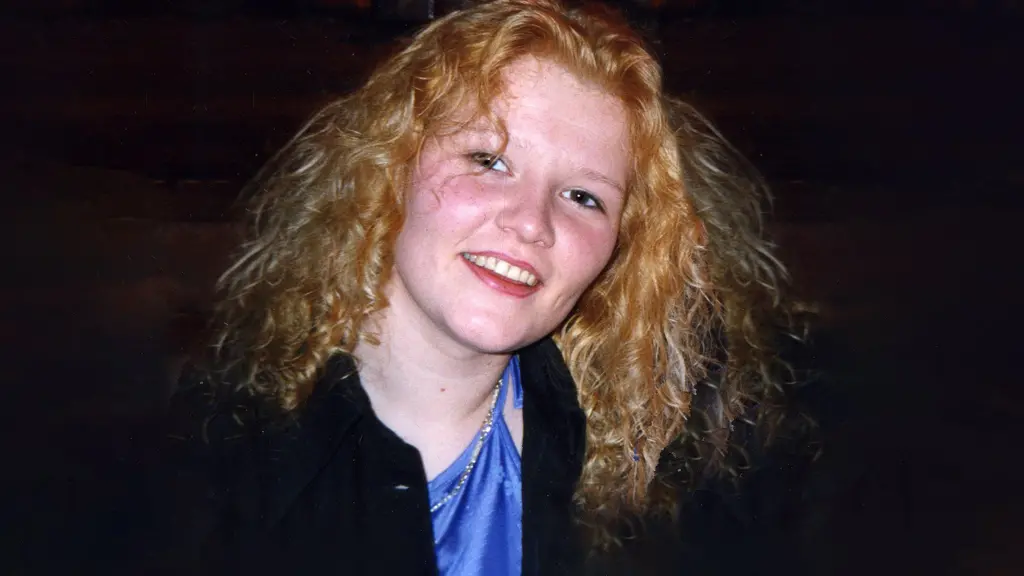
Emma Caldwell, 27, lived in a women’s hostel in Glasgow, a three-storey building where residents shared one shower, two baths and three toilets. She was struggling with a heroin addiction that cost about £100 a day, and she paid for it through regular sex work.
Her parents, William and Margaret, supported her through this period. Every Wednesday, William visited to top up her phone credit, buy her food and collect her washing.
On Sundays, Margaret returned the clean laundry, brought snacks and stayed for a few hours. The family also spoke by phone every day, and the weekly visits were never missed.
On Sunday 3 April 2005, Margaret arrived as usual but noticed that her daughter seemed nervous. They went shopping, buying daffodils and a birthday card for Emma’s grandmother, and then ate at McDonald’s.
Emma normally chatted with her mother for hours in the car after such outings, but this time she asked to be taken straight back to the hostel. As she left, she said she would phone on Monday or Tuesday. It was the last time Margaret saw her.
On the evening of Monday 4 April, Emma got ready for work. She tied her long blonde hair into a ponytail and put on a dark brown jacket with a fur collar and brown heeled boots.
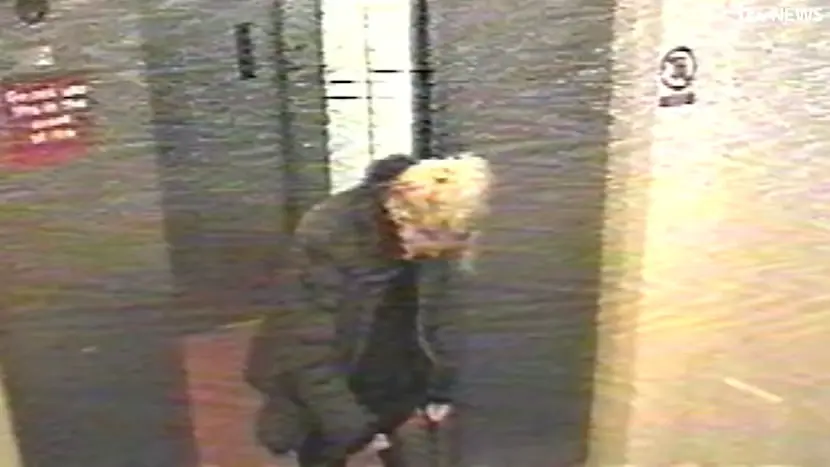
CCTV footage showed her leaving her building at 10:45 p.m. and walking alone towards Victoria Road. Sometime between 12:30 a.m. and 1:30 a.m., she was seen working on London Road, an area well known for street sex work. There were no confirmed sightings of her after that.
Two days later, her parents became concerned. William had been trying to rearrange their weekly meeting, but he received no reply to his calls on Tuesday, and none on Wednesday, Thursday or Friday.
The family normally spoke almost daily and saw Emma at least twice a week, so the silence convinced them that something was wrong. Five days after her last sighting, they reported her missing.
Police took the report seriously and began examining Emma’s background and her final movements. A friend with whom she often walked into town in the evenings had not seen her recently either.
A Body in the Woods
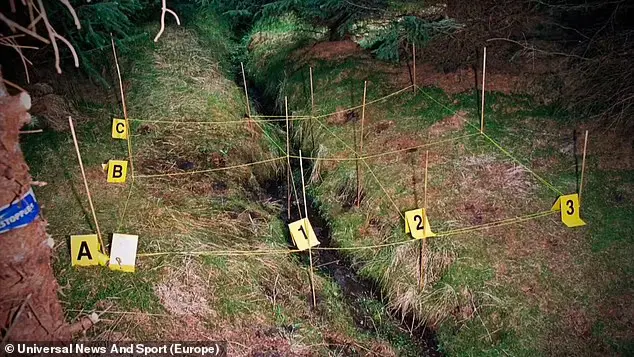
On Sunday 8 May 2005, a man was walking his dog in Limefield Woods, a remote stretch of woodland in South Lanarkshire, southwest of Glasgow. His dog ran into one particular section and then refused to follow him when he walked on.
After calling the animal several times without success, the man went back and found it sniffing at something that looked out of place. He ducked beneath some bushes and saw the body of a woman.
She was half-naked, with a ligature around her neck and distinct bruising on her torso. She had been strangled, and it was clear she had been dead for some time.
Emergency services recovered the body, but the level of decomposition made identification difficult.
Dental records and DNA testing were needed to confirm that the woman was Emma Caldwell. Police informed her parents, and the missing person inquiry became a murder investigation.
The early stages of that investigation were troubled. Officers had searched Emma’s room shortly after she disappeared and again after her body was found, but nothing pointed directly to a suspect.
Some items of possible evidential value had not been preserved well enough to be used. At the woodland, the area was cordoned off, but the crime scene officer had used the most commonly used walkway into the trees as the route for the investigation team.
Any footprints, hair strands or other traces left by the killer may have been destroyed or compromised.
Detectives turned to Emma’s phone to identify her clients. She had about 50 clients saved in her contacts, but she also worked by getting into cars with men she did not know.
Police took statements from a number of men connected to her, aged between 19 and 76. Many were reluctant to talk. Some denied knowing her, and others said as little as possible.
Phone records then provided a lead. The last person to call Emma was a client who rang at 11:20 p.m. on the night she disappeared, and the call lasted 1 minute and 16 seconds. It was traced to Abubekir Oncu, a 28-year-old Turkish man living in the east end of Glasgow.
He told police he had contacted Emma only once before, and that he had paid her for sex on that single occasion some time earlier. He did not remember speaking to her on the night in question, and said that if he had, he had simply forgotten.
Officers noted that Oncu had boarded a flight to Turkey the day after Emma disappeared. He explained that he was travelling for his wedding and promised to return once it was over.
He did so, and officers met him at the airport and brought him in for interview. His account did not change. Police took nail clippings, hair samples and photographs, which showed a superficial scratch on his neck. There was no clear evidence to hold him, and he was released.
Police nevertheless regarded Oncu as their prime suspect. They placed him under covert surveillance and installed listening devices in his home.
Over time, hours of recordings were gathered. In them, Oncu spoke about knowing that he was under investigation, and his housemates were also heard discussing Emma.
Four Arrests and a Collapsed Case
Over the following months, attention turned to a cafe on Glasgow’s Bridge Street, owned by Huseyin Cobanoglu. The cafe was known as a base for sex workers.
Women there were given alcohol and taken upstairs to a room with a mattress on the floor. Some encounters were consensual and paid, but others were rapes or sexual assaults.
On 9 August, police raided the cafe, and a forensics team searched the premises. Hundreds of items went to the laboratory, and the most significant was a bloodstained quilt. The blood matched Emma’s.
Police were then granted approval for further covert surveillance, including listening devices, four cameras in the kitchen, the cafe and the upstairs room, and an undercover officer placed inside the premises.
Translators working on the recordings reported hearing several incriminating remarks. They said the speakers claimed that Emma had been taken away, that she had been strangled like an animal, and that her jacket had been thrown into bushes near a casino.
Police searched the bushes and found a black jumper, a T-shirt and a key ring that they believed belonged to Emma. The items appeared to have been there since around the time she disappeared.
Investigators theorised that she had been assaulted and strangled in the cafe, that her body had been rolled in a carpet, and that it had been driven to a drainage ditch hidden among trees and left there.
On 31 August 2007, police arrested four men: Abubekir Oncu, now 32; Huseyin Cobanoglu, 55; Halil Kandil, 34; and Mustafa Soylemez, 35. All were charged with murder, and all denied involvement.
Oncu said he did not even know the other three. The main evidence behind the arrests was the covert recordings, which had been translated from Turkish into English.
That evidence did not survive scrutiny. When the recordings were played back to the men, it became clear that the translations were inaccurate.
The translators who had assisted police knew only a small amount of Turkish and were not fluent enough to produce a reliable account. More experienced translators were brought in and confirmed numerous mistakes.
The men had not spoken about Emma being strangled, and nothing was said about her jacket being thrown into bushes. The recordings contained nothing incriminating.
The physical evidence fared no better. The clothing recovered from the bushes did not match Emma’s DNA, and it did not visually match anything she had been seen wearing or was known to own.
The blood on the quilt did match her DNA, but it was believed to have come from an earlier occasion when she had injected heroin. All four men were released.
No further arrests followed. Each suspect the police identified was soon cleared, and Emma’s murder was officially classed as unsolved.
In 2011, her father, William, died without seeing anyone brought to justice. Margaret later recalled that his last words to her were, “Go on. You have to go on. Don’t let this go.”
The Case Reopened
In 2015, Police Scotland began a reinvestigation on the instruction of the Lord Advocate. A cold case review team was set up following sustained pressure and growing scrutiny of the original inquiry.
Assistant Chief Constable Bex Smith stated that further investigation should have been carried out after the initial inquiry in 2005. Detectives began re-examining more than 30,000 documents and over 23,000 pieces of evidence.
Officers also spoke to sex workers about men who had used their services around 2005 in the area where Emma worked. Several women described the same man.
His name had come up many times during the original inquiries, and he had been interviewed repeatedly between 2005 and 2007, but senior officers had dismissed him because they did not believe he was the murderer. His name was Iain Packer.
When first questioned, Packer claimed not to know Emma and said he did not even know the names of the women he paid for sex. In later interviews his account changed. He said he had got to know several of the women, Emma among them, and that he used to look out for her specifically.
He described an occasion on which they had agreed to have sex but Emma called out that she no longer wanted to continue. He said he had told her they had agreed beforehand and that he had paid, and that she had pulled away, upset.
The description amounted to an admission of rape. Police could not use it as evidence, because he had been interviewed as a witness rather than a suspect and had not been cautioned.
Packer also told police he had never taken Emma outside Glasgow and did not know the Lanarkshire area where the woods were. Several women contradicted him. One, named Natalie, said she had regularly been taken to a remote area of woodland by a client.
When shown a photo lineup, she immediately pointed to Packer. She then led police along the route to the location, and it was the place where Emma’s body had been found.
On 4 April 2017, twelve years to the day since Emma was last seen, police carried out fresh searches at the wooded area near Roberton.
Detective Superintendent Dave McLaren, the senior investigating officer in the reinvestigation, appealed to any women who had been taken to the area in the previous 15 years.
Three more women came forward to say they had been taken to the same woods by a man driving a van that matched Packer’s description, and each picked him out of police photo books.
Another important piece of evidence was a log known as the “beware book”, in which sex workers recorded dangerous individuals and specific incidents to warn one another. Packer’s name appeared in it several times, often alongside pseudonyms he used.
Many entries described a man who picked women up, drove for about an hour to a wooded area and then either had sex with them or, if they refused, raped them.
One woman who wrote in the book had been raped in the same woodland months before Emma’s murder. No other accounts of women being taken to that remote area were found.
Other women described violence of a different kind. A woman named Magdalene reported that Packer had tried to rape her when she was 15 and he was dating her sister.
A former partner said he had locked her inside a property and threatened her with a knife, and another said he had put out cigarettes on her head.
The reinvestigation also revealed what Packer had told police in 2007. In his fourth police interview, he admitted taking sex workers to remote woodland.
He described a time when a woman said she no longer wished to have sex, and he became angry, saying, “That’s twice you’ve done this to me. Just take your clothes off. We’ll get it over with and done and we’ll go home.” He said he had forced other women to undress there too.
In March 2007, he led officers to the woods he was describing, and it was the same spot where Emma had been found.
He said he had lied and changed his story because he feared being blamed. He acknowledged that he had been with her at that location and had assaulted her before, but denied killing her.
After those admissions, a detective telephoned the senior investigating officer, Willie Johnston, to request permission to arrest Packer for Emma’s murder.
The reply was, “Do not detain him. He is not our man. Release him.” The detective was later told that whatever Packer said, he would never be an accused in the case.
Forensic work added to the picture. Soil recovered from the footwell of Packer’s van was compared with samples taken from the woodland where Emma’s body was found. The result was a 97% match, the highest level available for that type of analysis.
In 2018, Packer contacted BBC journalist Samantha Poling, hoping to clear his name and concerned that his police statements were being leaked. Her interviews with him featured in the BBC Scotland documentary Disclosure: Who Killed Emma?.
In their first interview, which lasted more than two hours, he said he had paid Emma for sex ten or eleven times over a long period and had heard of her death before police contacted him, having seen an appeal poster outside a casino.
He insisted he had never been outside Glasgow with any sex worker and had never visited the remote woods where Emma was found until police took him there.
In a second interview, Poling told him she did not believe he had been truthful and described him as a sexually violent man. He denied it, saying he had never raped anyone.
When she put it to him that he had been to the woods many times and that Emma was the first woman he took there, he answered, “No, it wasn’t.” Packer was subsequently arrested.
Trial and Inquiry

Packer faced 46 charges, including Emma’s murder, as well as multiple rapes, sexual assaults, physical assaults and abductions of women over a number of years. He pleaded not guilty to every one.
The trial took place at the High Court in Glasgow. Jurors saw forensic evidence, thousands of documents and interview recordings, including the footage of his meetings with Poling.
His alibi was also tested. Packer had always said he spent the night of the murder at home with his fiancée and newborn child.
However, the baby was only ten days old, and his fiancée had kept detailed notes as part of its care plan, recording who was in the house, when the baby was fed and how the night unfolded. The notes showed that Packer had been out. He claimed he had been working.
Several women gave evidence. One told the court that Packer had tried to strangle her with the flex of a vacuum cleaner during an argument, holding it behind her head.
She said he drove her around Glasgow’s red light district, constantly watching who was on the street, and that he regularly disappeared for long periods, spending money on sex workers, gambling and drugs.
Police had first interviewed her in 2006 during the inquiries into Emma’s death. Another woman said Packer had raped and repeatedly assaulted her from the age of 14, and that she had not told those close to her because she had not been believed.
After a five-week trial and four days of jury deliberation, on 28 February 2024 Packer was found guilty of 33 charges, including Emma’s murder and 11 rapes. The offences involved 22 women and spanned 26 years, from 1990 to 2016.
He was sentenced by Lord Beckett to life imprisonment with a minimum term of 36 years.
The judge said Emma had been alone with a man who had already indecently assaulted her, in the dark, deprived of her phone and miles from help, and that he had murdered her in truly terrifying circumstances. In August 2024, the Appeal Court refused Packer’s appeal against his sentence.
Margaret Caldwell said she wished to honour the women who spoke up, not only for Emma but for Packer’s many other victims, and to acknowledge those who had since been lost to illness, overdose and other harm.
Police Scotland apologised, saying that Emma, her family and many other victims had been let down by policing in 2005, and that women and girls who showed remarkable courage in speaking up had not received the justice and support they deserved from Strathclyde Police.
Following the conviction, the Scottish Government announced a public inquiry into the investigation of Emma’s murder in March 2024, and Lord Scott, a High Court judge, was named as its chair on 24 April 2025.
The inquiry was formally set up on 9 December 2025, when its terms of reference were published. It is examining the Strathclyde Police investigation, carried out under the direction of the Crown Office, from 2005 to 2015.
As of September 2026, the inquiry was still gathering evidence, having received 41,000 documents from Police Scotland, and it intends to begin evidential hearings in the early part of 2027.
Remembering Emma
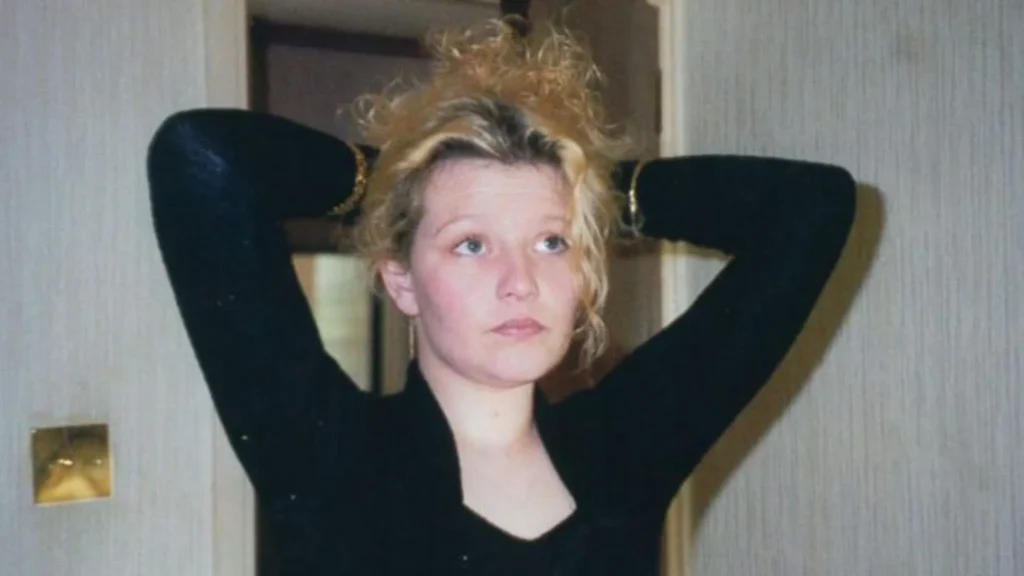
Emma Caldwell was born on 31 January 1978 to William and Margaret Caldwell and grew up in and around Cardross, sharing her childhood with her older sister, Karen, to whom she was extremely close.
She was a member of the Brownies and a local drama group and took horse riding lessons. Her focus turned to working with horses full time, and she took a job at a local stables.
Her life changed when Karen was diagnosed with non-Hodgkin lymphoma. Karen died of the disease when Emma was 20. Emma struggled to cope.
During that period, her boyfriend told her he had something that would help her forget the pain, and he gave her heroin. Her use quickly became an addiction.
She begged her parents for help, and they took her to hospital, where a doctor told them nothing could be done. She moved into her boyfriend’s house, and when that relationship ended, she moved into the hostel in Glasgow.
Her parents did their best to stay close to her. They worried constantly, but they had no idea that she worked on the streets of Glasgow, or how much her habit cost.
Margaret has described her daughter as gentle and kind to a fault, with a passion for horses and for her family. She was a daughter, sister, niece and aunt, and her family adored her. They say they were robbed of a wonderful person.


Recent Comments