
Catherine “Cati” Blauvelt was a 22-year-old animal lover from Simpsonville, South Carolina. In October 2016, she was found stabbed to death in an abandoned farmhouse, and it took investigators six years to catch her killer.
Catherine Ann Boyter, known to family and friends as Cati, was born on August 8, 1994, and raised in Simpsonville, South Carolina, by her mother, Patricia Piver. She grew up in a large blended family, alongside several sisters, including Brandi Blackwell.
Relatives remembered her as warm and easygoing, with a deep love of animals. Her mother later described her as “a free spirit.” Cati hoped for a simple life: falling in love, marrying, and raising a family surrounded by pets.
In 2014, when Cati was 20 years old, she took a job at a Firehouse Subs restaurant located next to a U.S. Army recruiting office in Simpsonville. A 26-year-old Army recruiter named John Tufton Blauvelt began stopping by the shop often.
Blauvelt was well known in the community and held a respected position representing the military. He and Cati soon began dating. At the time, Blauvelt was still married and had a young daughter, though he told Cati he was in the process of getting a divorce.
Cati’s mother and other relatives said Blauvelt showed little interest in getting to know them and seemed guarded about the relationship.
In the summer of 2015, Blauvelt encouraged Cati to enlist in the Army herself. She began basic training but was medically discharged about two months later after doctors diagnosed her with scoliosis, a spine condition.
On December 7, 2015, Cati surprised her family by texting her mother that she and Blauvelt had married that day at a courthouse. The couple went on a honeymoon shortly afterward. Within about two months, their marriage began to fall apart.
Cati moved into a four-bedroom house that Blauvelt owned in Fountain Inn, a town next to Simpsonville. Instead of settling into married life, the home became a gathering place for teenagers, many of them students at Hillcrest High School, where Blauvelt also worked as a recruiter.
According to friends who spent time there, Blauvelt supplied alcohol, marijuana, and drugs such as cocaine and acid to the teens who visited, some as young as 16. Cati repeatedly asked him to stop, but the parties continued.
One of the teenagers who began spending time at the house was 17-year-old Hannah Thompson. Investigators later said Thompson grew devoted to Blauvelt and increasingly resentful of Cati.
After less than three months of marriage, Cati moved out and returned to her mother’s home. Blauvelt then moved Thompson into the bedroom Cati had left behind.
On February 26, 2016, Thompson’s father contacted police and said he had not seen his daughter in two weeks. Officers went to Blauvelt’s house that night. He initially refused to come outside, and officers drew their weapons before he complied.
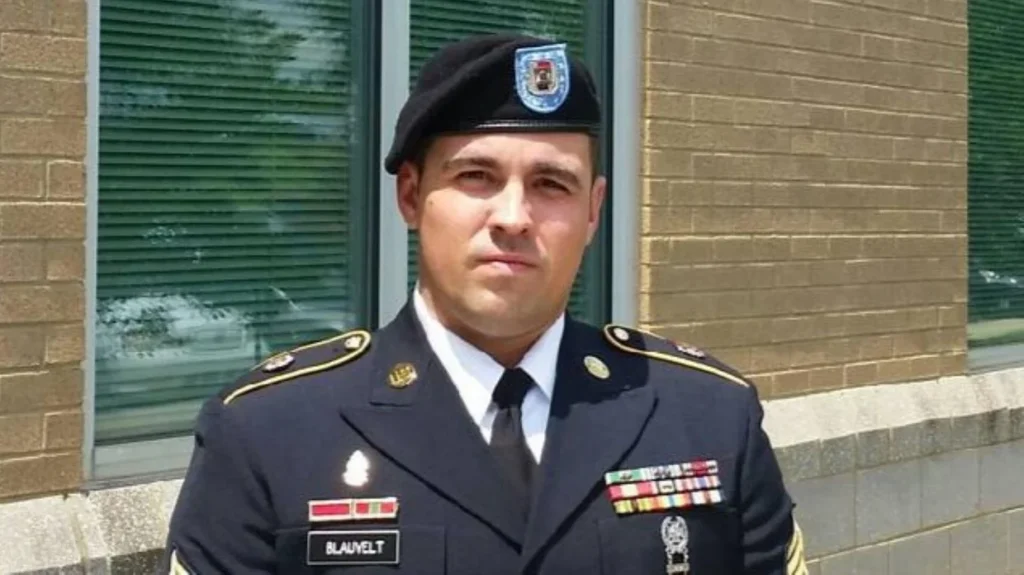
The following day, February 27, 2016, Blauvelt was arrested and charged with contributing to the delinquency of a minor. That same day, Cati told police that Blauvelt had pointed a gun at her head about a month earlier and threatened to kill her and her family.
The Fountain Inn Police Department charged him with first-degree domestic violence, and a restraining order was issued barring contact between Blauvelt and Cati.
The Army responded to the charges by cutting Blauvelt’s pay and removing him from recruiting duty, reassigning him to a desk job while it investigated the allegations.
Friends later told investigators that Blauvelt blamed Cati for the damage to his military career and said more than once that he intended to kill her.
Despite the restraining order, Cati still visited Blauvelt’s house occasionally to see her dog, Jupiter, who continued to live there. She otherwise moved forward with her life. She took a job at PetSmart, enrolled in classes at a technical college, and told her mother she planned to file for divorce.
On October 24, 2016, Cati finished her shift at PetSmart but never arrived for plans to see her niece that evening. Her phone had last been used around 4:17 p.m., when she took a photo from inside her car.
Phone records later showed Blauvelt called Hannah Thompson at 5:03 p.m. and sent her a message a minute later asking her to check Snapchat; the contents of that message had been deleted from his phone.
Calls to Cati’s number soon went straight to voicemail. When she had not returned home by the next day, her mother reported her missing and told police she suspected Blauvelt was involved.
Just after midnight on October 26, 2016, two of Cati’s friends searched an abandoned farmhouse in Simpsonville where teenagers were known to gather. In the basement, they found Cati’s body inside a concrete storage box and called 911.
An autopsy determined she had been stabbed in the neck with what investigators believed was a steak knife, and part of the blade remained lodged inside her. The autopsy also found defensive wounds on her hands, indicating she had fought against her attacker.
Investigators believed she had been attacked on the gravel driveway outside the house and then dragged through a window into the basement.
Investigators visited Blauvelt that day to notify him of Cati’s death. He appeared distressed at first, but his demeanor soon changed, and he asked no questions about how she had died or who might be responsible.
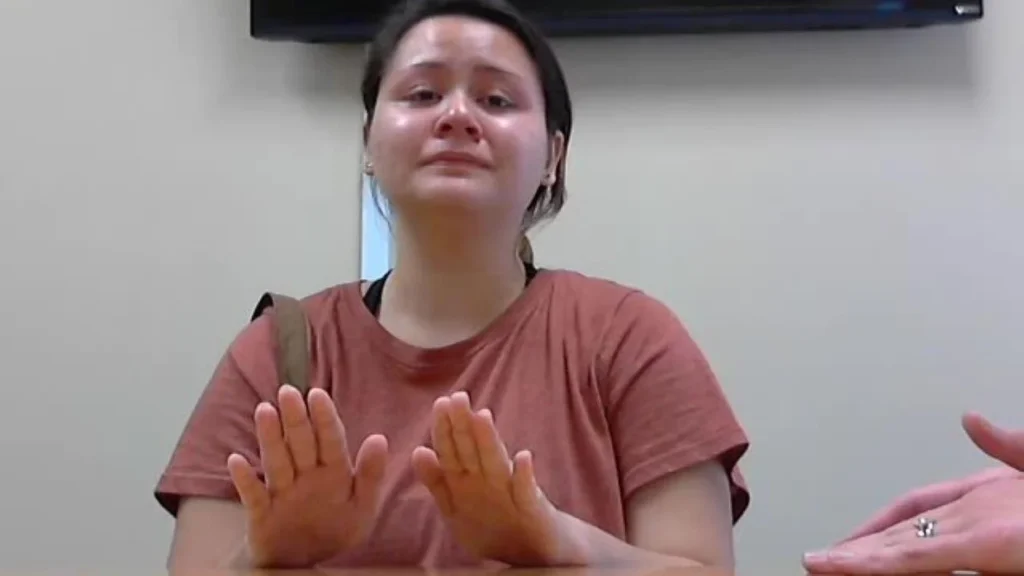
On November 2, 2016, investigators formally questioned him. Asked directly, “Did you kill Cati?” Blauvelt answered, “No.” He also denied knowing who was responsible, though he acknowledged that he and Cati had argued constantly during their marriage.
Hannah Thompson was questioned the same day. She became upset when shown an autopsy photograph of Cati and asked repeatedly to leave, but she denied knowing anything about the killing. Without physical evidence tying Blauvelt to the crime, investigators released both of them.
The affidavit investigators later used to obtain a warrant said several witnesses reported that Blauvelt had asked them for help killing Cati and offered to pay them for an alibi, including use of his phone, debit card, and vehicle in another city so it would appear he had been elsewhere when she died.
The affidavit also cited a life insurance policy Blauvelt held on Cati, worth between $100,000 and $150,000, that named him as the beneficiary.
Separately, witnesses told investigators that Cati’s car had been driven to Blauvelt’s residence about 30 minutes after she was last seen, and that minutes after the car left again, Blauvelt came from the backyard sweating and wearing a hooded jacket similar to the driver’s, with no shirt underneath. He said he had been running.
Around the same time, investigators also arrested a second man, 31-year-old Charles Sidney Scott Jr., who was already in jail on an unrelated charge, and charged him with murder in connection with Cati’s death.
By mid-November, Blauvelt had stopped reporting for duty and was considered absent without leave from the Army. He was last confirmed near Las Cruces, New Mexico, on November 15, 2016, traveling with Hannah Thompson, still 17 years old.
On November 18, 2016, investigators obtained a warrant charging him with murder and possession of a weapon during a violent crime.
Police described Blauvelt as five-foot-eight and 185 pounds, with brown hair, brown eyes, and tattoos on his chest and arms, and said he had previously used aliases including John Bluefields, Vincent Mendoza, and Victor Sacceti.
The U.S. Marshals Service joined the search for Blauvelt. Marshal Will Cook, based near Simpsonville, led the effort. Investigators were also concerned for Thompson’s safety, reasoning that a man capable of killing his wife might pose a danger to the teenager traveling with him.
Surveillance cameras, license plate readers, and store footage tracked the pair moving west through Texas and New Mexico, but by the time investigators reached each location, they had already moved on.

On December 12, 2016, Thompson contacted a family member from Eugene, Oregon, and said she wanted to come home. She later told investigators that Blauvelt had abandoned her after their vehicle became stuck in mud in the Pacific Northwest, leaving the two of them to beg for money to get by.
During an interview on December 20, 2016, Thompson said Blauvelt had confessed that he stabbed Cati, that the knife broke during the attack, and that Cati’s final words were a plea that she would not call police if he let her go.
Thompson admitted she had helped hide Cati’s car after the killing, telling investigators that she drove Blauvelt to a road near Cati’s workplace, followed him as he drove Cati’s car, and watched him park it in a shopping center lot before the two of them left it behind.
She said she had not known beforehand that Blauvelt planned to kill his wife. Because investigators still hoped she could lead them to Blauvelt, she was not charged at that time.
The investigation stalled for years. In 2019, the case was featured on the television program “In Pursuit with John Walsh” in an effort to generate new leads, and police offered a $2,500 reward through Greenville County Crime Stoppers for information on Blauvelt’s location.
Unknown to investigators, Thompson and Blauvelt remained in regular contact through Facebook Messenger and later Snapchat until 2019, when Thompson said the communication ended.
In March 2020, Scott pleaded guilty only to obstruction of justice and was sentenced to time served. The South Carolina Attorney General’s Office said the evidence did not support his involvement in the murder itself, and the murder and weapons charges against him were dropped.
In 2022, Thompson finally told investigators that she had remained in contact with Blauvelt for years and that he had been living with another woman in Oregon under a false name.
Investigators traced a phone number Blauvelt had used to text the woman to an address in Medford, Oregon, and began watching the house.
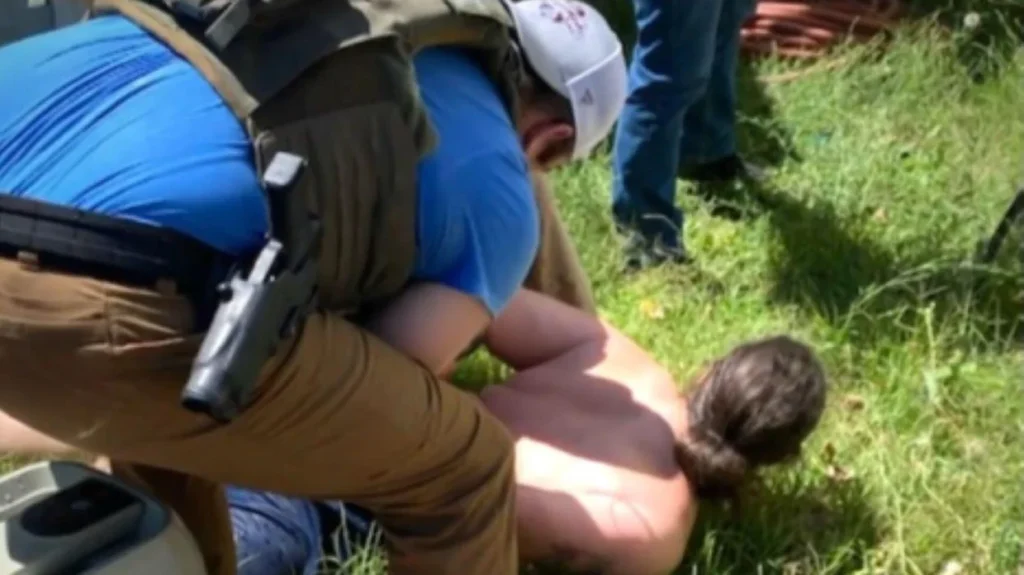
On July 20, 2022, nearly six years after Cati’s murder, U.S. Marshals watched the Medford house and saw a man matching Blauvelt’s description leave. They arrested him on the spot.
He initially identified himself as “Ben Klein,” but a fingerprint scan confirmed his identity within minutes, and a distinctive pirate tattoo matched earlier photographs of Blauvelt. Marshals also found a handgun on a nightstand inside the house.
The woman Blauvelt had been living with for six years returned home during the arrest and appeared to have no knowledge of his true identity or the murder charge against him.
Simpsonville’s police chief credited the arrest to cooperation among several agencies, including the Marshals Service. Cati’s sister, Brandi Blackwell, told reporters at the time that the family still awaited full accountability, saying, “Justice isn’t served yet.”
Blauvelt was extradited to South Carolina to await trial. In October 2022, prosecutors charged Thompson with five felonies, including obstruction of justice and accessory after the fact. She pleaded not guilty and was released on bail.
While preparing for trial, investigators reviewed a journal Blauvelt had kept while on the run. One entry, addressed to his daughter, included the words “I did it,” written in bold letters.
A search of his phone also turned up internet queries made in the weeks before the murder, including “how to sharpen a knife” and “what to do when my wife dies.”
Blauvelt’s murder trial began on September 16, 2024, in Greenville County, nearly eight years after Cati’s death. Prosecutors Kinli Abee and John Meadors led the case for the state, while defense attorneys Paul Neely and Ana Walker represented Blauvelt.
Patricia Piver took the stand to testify about the impact of her daughter’s death. Prosecutors also noted that the concrete box where Cati’s body was found was the same spot where teenagers who partied at the abandoned house usually threw away their trash.
Thompson testified against Blauvelt as the prosecution’s key witness. She told jurors she had helped hide Cati’s car and that Blauvelt had confessed the killing to her while they were on the run together.
She testified without receiving any plea agreement in exchange for her cooperation. Defense attorneys highlighted inconsistencies between Thompson’s early statements to police and her trial testimony, and argued that no DNA evidence tied Blauvelt to the crime.
They also said the journal contained fictional writing, poems, and drawings unrelated to the killing.
The trial lasted four days. After about five hours of deliberation, the jury convicted Blauvelt of murder and possession of a weapon during a violent crime. He was sentenced to life in prison without the possibility of parole.
In February 2025, Blauvelt’s attorneys filed an appeal of his conviction.
On August 20, 2025, Thompson pleaded guilty to one count of obstruction of justice and one count of misprision of a felony, lesser charges than she originally faced. She was sentenced to three years of probation. Patricia Piver said afterward that the sentence felt like “a slap on the wrist.”