
In November 2013, Google executive Forrest Hayes was found dead aboard his yacht in Santa Cruz, California. Police soon began searching for the person who had been with him.
A Career in Silicon Valley and a Boat Called Escape

Santa Cruz is a small coastal town at the northern end of Monterey Bay in California. Its beaches and mountains have long attracted visitors, and in recent years the town has become increasingly popular with wealthy residents of Silicon Valley, which lies on the other side of the mountains.
Forrest Hayes was one of those residents. He began his life in Dearborn, Michigan, and started his career in his home state at the Ford Motor Company. He later moved to California for a position at Sun Microsystems, then worked at Apple, and eventually joined Google.
At Google he was assigned to Google X, a research division housed at a secret location that employees called the company’s moonshot factory.
The division existed to pursue the most ambitious ideas the company could imagine, among them Google Glass and self-driving cars, and Hayes was one of the people charged with turning some of those ideas into reality. The work was so closely guarded that colleagues declined to say what exactly he did there.
By 2013, Hayes was 51 years old and a high-powered executive with considerable assets. He and his wife had five children, and the family lived in a house worth about three million dollars in an upscale neighborhood of Santa Cruz.
One day a friend emailed Hayes a photograph of a boat that was for sale. Within a couple of days, he had bought it. The vessel was a 46-foot yacht that he named Escape, and it ranked among the larger boats docked in Santa Cruz Harbor.
Hayes spent heavily to equip it. He installed about $200,000 worth of technology, including a sophisticated security system with high-definition cameras inside the cabin, and he furnished the interior with a leather ceiling and a captain’s chair that cost $88,000. He also retained a captain to look after the yacht.
Hayes valued two things above all others: his family and his time on the boat. When the pressures of work became heavy, he went to the marina and spent his hours aboard Escape.
An Engagement in Atlanta and a Move West
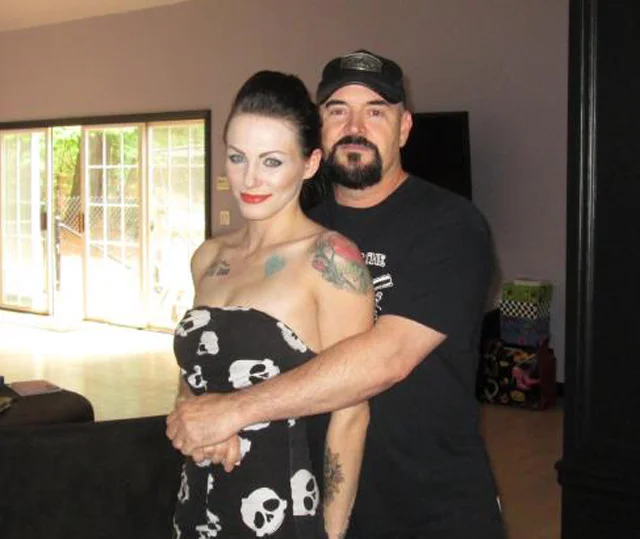
Meanwhile, in the Atlanta area of Georgia, a young woman named Alix Tichelman was living in 2013 with Dean Riopelle, a 53-year-old man who owned the Masquerade, one of the city’s best-known concert venues.
Riopelle had once been the cross-dressing lead singer of the rock band The Impotent Sea Snakes. His home in Milton, north of Atlanta, was shared with his children from a previous marriage and with dozens of pet monkeys.
He had begun collecting the animals after dreaming about monkeys one day, and he gave them names such as Samson, Delilah and Jezebel. He told an Atlanta television station that he hoped to turn his property into a zoo.
Riopelle was devoted to Tichelman and wanted to marry her, and she wanted to marry him as well. The obstacle was her addiction to heroin, which was by then severe.
Riopelle sent her to rehabilitation, and on August 30, 2013, he told a close friend, an Atlanta businessman named Todd, that he had bought her an engagement ring. Todd, who asked that his last name not be used, is also a close friend of Tichelman.
In a text message that day, Riopelle wrote that Tichelman had picked out the ring herself, that the couple would take drug tests every week, and that they would marry on Halloween night 2014 if she stayed clean for 14 months.
He added that she had told him it was the first time in ten years she had left detox or rehabilitation and lasted a whole week.
She did not stay clean for long. On September 7, Riopelle discovered that Tichelman was advertising herself online to men.
Todd says some men with considerable power and status wanted to rent her penthouse apartments, but she had no interest in anything beyond raising money to support her habit, and she disliked that her addiction pushed her to it.
Riopelle asked Todd whether she could move into his home, saying he did not want to see her, but he never made her leave. Todd says Riopelle wanted to keep her but could not figure out how to reconcile what he had learned, and that he began drinking heavily.
About ten days later, Tichelman called 911 and said she thought her boyfriend had overdosed. She told police she had been in the bathroom when she heard a crash, and that she found Riopelle on the bedroom floor, unresponsive.
He died at a hospital about a week later. An autopsy found a fatal mixture of heroin, oxycodone and alcohol in his system. His death was initially ruled an accidental overdose.
Tichelman sent Todd a text message asking why Riopelle had to die. Her mother then arrived to move her to California, where the family had a new home about two hours outside San Francisco.
Tichelman told Todd she was trying to detox but was worried about the move. She knew San Francisco well, she wrote, and described the Tenderloin district as the third-biggest open drug market in the United States, a place where drugs could be bought in two minutes without knowing anyone.
She arrived in California around October 30 and immediately began advertising herself online again. She texted Todd that the men there had a lot of money, and within days she had a prospect.
On November 2, she wrote that an amazing man had found her and that he was the real deal. The next day she would go to his boat for a few hours, where he would give her between $400 and $500 in cash and a check for $2,000. Todd is relatively certain the man she described was Hayes.
During this period, Tichelman was also seeing Chad Cornell, a struggling musician who believed she was a model. Cornell had felt drawn to her the first time he saw her, and he describes her as strikingly beautiful, with a dark style reminiscent of Angelina Jolie.
He had seen photographs of her, a swimsuit commercial and a makeup tutorial she had recorded online. He watched her dress up and leave for what she described as photo shoots, and she told him they usually paid about $1,000.
November 22, 2013

On November 22, 2013, a few days before Thanksgiving, Tichelman spent part of the day with Cornell. She told him that some longtime high school friends were in Santa Cruz and had a boat, and that she planned to spend the evening with them.
That evening, Hayes was aboard Escape, and Tichelman joined him in the main cabin. The camera in the cabin recorded the entire visit. Tichelman had brought all of her own equipment, along with the heroin.
The two greeted each other with a quick hug and began talking, though the recording has no sound. Tichelman then prepared a syringe. She appeared to inject herself, with her back to the camera, while Hayes watched. She then injected him. Hayes appeared nervous and uncertain, but he went along with it.
Almost immediately, he went into distress and slumped forward in his chair. Tichelman went to him, patted his face, spoke to him and held his head. She did not call 911 or any other emergency service. Hayes ended up on the floor of the cabin.
Rather than seek help, Tichelman wiped surfaces to remove fingerprints and cleaned up her drug equipment. She stepped over him as she moved around the cabin, and she picked up her glass of wine and carried it with her. The scene lasted seven minutes, and then she left the yacht.
Later that night, Tichelman phoned Cornell and woke him. She was frantic, crying and sniffling, and sounded very upset. She told him that her friends had started using heroin and other hard drugs on the boat, that this made her uncomfortable, and that she had to leave.
The Investigation Begins
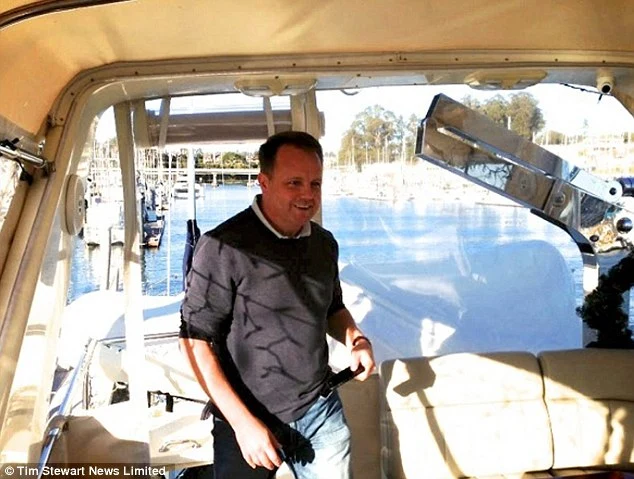
Hayes did not come home that night, and his wife became concerned. She called the captain who had been hired to look after the yacht. The captain went to the boat and found Hayes lying dead in the main cabin. He immediately called 911.
Santa Cruz police detectives arrived and examined the scene. Hayes had died of a heroin overdose, and there was a visible injection mark on his arm. Detectives found no drugs, however.
They did find two wine glasses, both of which appeared to have been used. Someone else had been on the boat, and the question was who. Deputy Police Chief Steve Clark has worked on the case since the first day.
Police said they did not have enough evidence to describe the death as a homicide or a murder, and they were still building a case, which was not easy. The death did not appear in the news for months.
Detectives asked about the yacht’s security cameras and were first told that the video from the cabin was not available. In fact, it had been uploaded to a cloud server.
It took three months and a court order for investigators to obtain it. Police have not released the footage publicly, but Clark has described it as the heart of the case.
Investigators also carried out an exhaustive search of Hayes’s cell phone. It showed that he had a profile on SeekingArrangement.com, a website that connects wealthy men and women with younger people who want to be pampered.
The members are known as sugar daddies and sugar babies. Brandon Wade started the website in 2006 from a bedroom in San Francisco. It is now headquartered in Las Vegas, a short distance from the Strip, and has nearly four million members worldwide.
Wade, who was 43 and became a multimillionaire through the business, said the members included employees of Fortune 500 companies, among them Google. He described Hayes as an average client: a married technology executive looking for an arrangement.
Members state a budget that reflects what they are willing to spend, which may cover dinners and trips, and sugar babies request monthly gifts ranging from $1,000 to more than $10,000.
Wade says that sex is part of many of these relationships, but that money and sex together do not make a relationship prostitution. Clark disagreed. He said the titles of the members and the talk of budgets left no doubt about what was taking place.
The website also held a profile for Tichelman. Wade said it looked like any other normal profile and had been approved, and that it gave no indication she was soliciting money for sex.
Detectives had noticed the woman on the video was dark-haired and had distinctive tattoos, and those features led them to Tichelman. She was a 26-year-old aspiring model.
The Case Against Tichelman

Investigators began following Tichelman on social media, concerned that she might leave the area. When she posted on Facebook that she planned to go back to Georgia, and other messages suggested she might leave the state or even the country, detectives decided to act.
They created a profile on SeekingArrangement.com, the same website Hayes had used, under a false identity, posing as a wealthy client, and invented a full background for him.
Using the code name Sebastian, the detective contacted Tichelman through the website and exchanged emails and text messages with her. Eventually she agreed to travel to Santa Cruz County for sex in exchange for money.
Police deposited several hundred dollars into her bank account and promised at least $1,000 more on her arrival. Tichelman called the detective cheap and said many of her clients paid twice that amount.
Eight months after Hayes died, she arrived at a secluded resort in Santa Cruz County. Once again she had heroin in her bag.
Detectives told her they were police officers and the same people she had been communicating with. She cried and panicked. Police arrested her for prostitution and charged her in connection with the death of Hayes.
Cornell learned of the arrest when he received a text message with a link to a news story. He said he turned white and nearly collapsed onto his couch, and that he was devastated to find that the woman he had hoped to spend his life with was accused in the death of a Google executive.
The arrest also drew attention to Riopelle’s death. During questioning about Hayes’s death, Tichelman told Santa Cruz detectives that she had supplied Riopelle with heroin, something she had not told police in Milton, Georgia.
Milton police took a second look at the case, saying it could become a criminal matter, and Clark said Santa Cruz detectives were surprised by the similarities between the two cases.
Khristina Brucker, who lived in Riopelle’s home for a few months in 2012 as an aspiring model caring for his children and monkeys, said she believed Tichelman had something to do with his death. She had left Riopelle’s employment almost a year before his death.
She said she never saw him drink, smoke or use drugs and was sure he would never have injected himself with heroin. Todd disagreed.
He said Riopelle drank heavily, that Tichelman was devastated by his death, and that Riopelle would have been the first to bail her out of jail and would have been mortified at the way people treated her.
By May 19, 2015, Tichelman had been in jail for almost a year. She faced nearly 20 years in prison on the charge in Hayes’s death, along with charges of drug possession and prostitution.
Her public defenders, Jerry Christensen and Larry Biggam, said she was not a cold-blooded killer. They argued that she did nothing Hayes did not want her to do, and that the two adults had engaged in cooperative drug use that went wrong.
They said Hayes was an eager participant who even used the light on his own cell phone to show her where to inject him, and that she panicked afterward. In their words, everything about the video pointed to an accident and to panic.
They had also asked prosecutors for video from the yacht’s cameras going back as far as six months before his death, saying there were indications of earlier encounters on the boat that were relevant to whether drugs had been used along with sex.
The hearing that day was meant to set a trial date. Instead, with her parents watching from the courtroom, Tichelman pleaded guilty to involuntary manslaughter, a felony under California Penal Code section 192(b).
She also admitted to the lesser charges, a total of two felonies and five misdemeanors. Through her lawyer, she apologized to the Hayes family and said the death had been an accident that came from panic and was never intentional or malicious.
She was sentenced to six years in a local jail. With credit for time served and a reduction by the judge, she was expected to serve a little more than two years. The judge ended the hearing by wishing her good luck.
Prosecutor Rafael Vasquez said the Hayes family had never wanted charges filed and would have been happy to see the case dismissed.
They feared a trial, and Vasquez said he could only imagine the further pain and humiliation the family would endure if the video from the boat were made public.
Vasquez also said the footage did not show the cold-blooded killer described by law enforcement. In his account, Tichelman struck Hayes in the chest, tried to lift him, held him, cried and yelled for him to wake up, none of which fit an intent to kill.
Her guilt, he said, lay in not doing enough. She was the only person who could have helped, and she failed to do so, taking time instead to destroy evidence and get away.
One of Tichelman’s attorneys said her time in jail had helped her turn her life around. She was clean and sober, was closer to her family than ever and had used the time to reflect. For the Hayes family, Vasquez said, the plea ended the worry over the scrutiny, ridicule and scorn that media attention had brought.
Tichelman was released from the Santa Cruz County jail on March 29, 2017, after serving about half of her sentence. Immigration agents were waiting. They took her into custody, and she was deported to Canada, where she also holds citizenship.
In September 2017, a Fulton County, Georgia, grand jury indicted her on two counts of felony murder and on charges of distributing heroin and oxycodone in connection with Riopelle’s death.
The indictment states that she caused his death by giving him the drugs while he was intoxicated with alcohol.
The district attorney’s office announced the charges in June 2018 and said it would work with Canadian authorities to arrest and extradite her. Tichelman has said she had nothing to do with his death.
Early Life of Alix Tichelman

Photographs from Tichelman’s childhood show a cheerful blonde tomboy who appeared to have every advantage. She grew up with her sister, Monica, who later became an investment counselor, and her parents, Leslianne and Bart.
Her father was the chief executive of a technology company and a talented poker player who once found himself at the table with some of the best players in the world and won about $400,000.
In her early teens the family lived in a suburb of Atlanta, where she played sports and won writing awards. Friends described her as very smart and thoughtful, but also deeply troubled. Her experiences with boys were often unhappy, and she developed eating disorders and began using drugs.
Her parents were desperate for help and searched for a school that could give her special attention. They chose the Hyde School in Maine, where she spent a few months.
Megan, a former student who asked that her last name not be used and who returned to the campus to describe her time there, remembers her as gorgeous but awkward, very thin and emotionally closed off.
Tichelman never named a single event that changed her, Megan said, but the two talked about having trouble trusting men and about having become numb to many things.
Ashley Kent, who lived in the same dormitory, said Tichelman was the first person she had met who harmed herself in that way. She arrived at the school already scarred and had already built an image of herself as a devil-like figure.
A scrapbook kept by her bunkmate at the time includes a photograph of Tichelman captioned “psycho roomy.” Both former students said the dark persona seemed to be a front, and that behind it Tichelman was a kind, normal girl who was scared.
Ashley recalls waking one night to the sound of Tichelman screaming and finding her in the halls, cutting herself late at night.
Tichelman was frequently in trouble at the school. Students were told what they could and could not do, and punishment took the form of manual labor.
Megan said she and Tichelman were once made to build a dirt road across the campus, weeding it and then hauling wheelbarrows full of rocks to spread over it.
Hyde did not work out, and her parents tried other schools. Tichelman has said she took heroin during her teens. By her early twenties she was living in San Francisco and working in strip clubs, including Larry Flynt’s Hustler Club and the Condor. She later returned home to Atlanta.

Recent Comments