
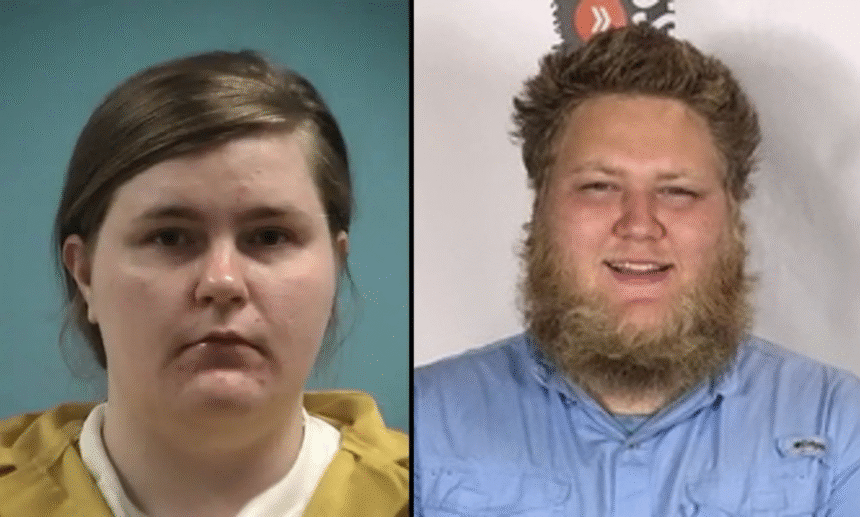
Carson Sistrunk was 24 years old when he left his home in Pearl, Mississippi, and never came back. He went to meet a woman he had been talking to on Snapchat. That decision cost him his life.
Carson Sistrunk lived in Pearl, Mississippi, and worked as a welder. He stood 6 feet 4 inches tall and was known by his family as ‘Little Man.’ Despite his size, people who knew him consistently described him as warm, kind, and easy to be around.
He was close to his mother, Darlene, and made a habit of staying in contact with her. He showed up to work on time, kept his word, and never disappeared without telling someone where he was going. That reliability is exactly what made his disappearance so alarming.
In the weeks before Labor Day weekend in September 2022, Carson told Darlene that he had been exchanging messages with a woman on Snapchat. He was open about it and treated it like a normal part of his social life.
He mentioned that he planned to meet her in person over the long weekend. He gave no full name and no detailed background, but none of that felt strange at the time. He was simply going on a date, roughly 50 miles from home, in a rural area near a small town called New Hebron.
The weekend passed. Carson did not come home. At first, Darlene assumed the visit had extended naturally. People sometimes stay longer than planned. But Carson was not the type to go silent, and as the hours stretched into a full day and then another, the silence became harder to explain.
He was not answering calls and was not opening text messages. His voicemail picked up every time someone tried to reach him. Then Monday arrived, and he missed his shift at work. That was the moment Darlene knew something was genuinely wrong. She contacted the authorities and reported him missing on Tuesday.
Investigators immediately began working through the standard process. They checked local hospitals and jails, contacted people who knew him, and tried to retrace his movements. Nothing came back. No accidents, no arrests, no confirmed sightings.
A man of his size and presence had simply disappeared without a trace. The early hours of a missing-person case are critical, and the absence of any immediate leads made the situation feel more urgent.
The first real breakthrough came from Carson’s financial records. A transaction on his bank account showed a purchase at a convenience store in New Hebron. Detectives obtained the surveillance footage from the store and watched it carefully.
Carson appeared on camera looking calm and relaxed. He stepped out of his silver Ford Raptor and went inside. He was not alone. A young woman was sitting in the passenger seat and remained in the truck while he was inside.
As Carson walked back out, a third person briefly came into frame, approached the passenger-side window, exchanged a few words, and then walked away. Carson got back behind the wheel and drove off. That footage was the last confirmed record of him alive.
With that footage in hand, investigators focused their attention on the woman in the passenger seat. They identified her as Sierra Inscoe and traveled to New Hebron to find her. They did not have to look far.
Carson’s silver Ford Raptor was sitting in a parking area out in the open, and Sierra was standing right next to it.
Officers asked her how she came to have the truck. She answered immediately, almost as if she had already thought through what she would say. According to Sierra, she had purchased the truck from a stranger using cash and had not completed any paperwork.
She also said she did not know Carson and had never met him. Investigators noted that a Ford Raptor is a high-value vehicle, and the idea of buying one from a stranger with no documentation was difficult to accept at face value.
Still, they continued the conversation and looked more closely at the truck.
On first glance, the interior appeared clean. On closer inspection, however, officers found blood stains on the tailgate, in the truck bed, and underneath the vehicle. These were areas that are not easy to notice unless someone is specifically looking.
Sierra had an explanation ready for that, too. She said she had hit a deer the night before. The problem with that story was that the truck itself showed no damage consistent with striking an animal.
And the location of the stains, including the interior, did not match what would be expected from a roadside collision with wildlife.
The interview ended without a resolution. Sierra held to her story. But investigators were not finished. They went back to the convenience store footage and confirmed with greater certainty that the woman in Carson’s truck was Sierra.
They also tracked down the third person seen briefly on camera outside the store. That individual confirmed that the passenger was Sierra and told officers that Carson had mentioned plans to spend the rest of the evening with her after leaving the store.
That single piece of witness information directly contradicted everything Sierra had told police. She had denied knowing Carson, denied being with him, and fabricated a story about the blood in the truck.
Every part of her account was falling apart. Forensic testing on the stains then delivered the most significant result yet. The blood was not from an animal. It was human, and it matched Carson’s DNA.
At this point, investigators had surveillance footage placing Sierra with Carson, a witness confirming they were together that night and forensic evidence linking his blood to the truck she was driving.
The case had moved well beyond a missing-person inquiry. It was now a focused investigation into what had happened to Carson after he left that convenience store.
As detectives built their case, they also looked into Sierra’s background. What they found painted a detailed picture of someone who had spent years deceiving the people around her.
She maintained multiple social media profiles that presented different versions of herself depending on the audience. One account showed her as a grounded, outdoors-oriented young woman interested in fishing and country life.
Another was more aggressive in tone, focused on themes of independence and anger. Neither reflected how people who had known her personally described her.
Former acquaintances said she lied habitually and on a significant scale. She had claimed to hold jobs she did not have, earn degrees she never pursued, and suffer from medical conditions that did not exist. One of those false claims involved cancer.
People around her believed it and adjusted their lives accordingly, offering housing, financial support, and emotional care. When the truth came out, Sierra did not explain herself. She simply left and moved on. That pattern repeated itself across multiple relationships and situations.
Something else also surfaced during this stage of the investigation. Before Carson disappeared, Sierra had spoken openly to people about wanting a truck for her birthday. Not just any truck, but a nice one.
That detail, on its own, might not have meant much. But placed alongside everything else, it suggested that Sierra’s interest in Carson may not have been personal at all.
While all of this was developing, investigators were simultaneously expanding their physical search. On September 7, 2022, an oil field worker driving along a remote stretch near Gulf Camp Road noticed tire tracks leading away from the road toward a pump site. He reported it.
Officers followed the tracks and found Carson’s body lying in the grass near an oil well. The location was completely isolated, with no homes or traffic nearby. His body had been there for several days, and exposure to the conditions had already caused visible deterioration.
The autopsy confirmed that Carson had been shot multiple times. The bullets had entered at an upward angle, which told investigators that the shooter was positioned lower than Carson when the shots were fired.
That detail, combined with the pattern and location of the blood found in the truck, led them to conclude that Carson had most likely been sitting on the tailgate of his own truck when he was killed.
There was no sign of a struggle at the scene, and nothing indicated that he had been in a defensive or alert position. He had not seen it coming.
After he was shot, his body was transported in the bed of the truck and left at the oil field site. The blood found underneath the vehicle and inside the cab was consistent with that sequence of events.
The tire tracks at the location matched the direction from which the truck would have approached. Every piece of physical evidence pointed in the same direction.
With Carson’s body recovered and the cause of death confirmed, Sierra was no longer just connected to a missing man’s vehicle. She was the primary suspect in his murder.
But between the time officers had first spoken to her and the recovery of the body, Sierra had left the area. Investigators issued alerts and began tracking her movements. She was eventually located in a neighboring county.
She had made contact with her mother using a friend’s phone, and that communication allowed officers to trace the location to the address where she was staying. When police arrived, she did not resist. She was taken into custody without incident.
She was initially charged in connection with the theft of Carson’s truck. That charge was enough to hold her while prosecutors finalized the murder case. In 2023, a grand jury formally indicted Sierra for murder.
The evidence presented to the court included the surveillance footage from the convenience store, testimony from the witness who had spoken to her through the truck window that night, the forensic results confirming Carson’s blood in the vehicle, and the findings from his autopsy.
Her own statements to police, which had been directly contradicted at nearly every point, were also part of the record.
The case was scheduled to go to trial. That trial never happened. In July 2024, Sierra Inscoe pleaded guilty to the murder of Carson Sistrunk. During the court hearing, she acknowledged the killing and addressed Carson’s family directly.
It was the first time she had admitted to what she had done. Her guilty plea removed the need for a full trial and spared Carson’s family from sitting through an extended court process.
It also meant that no detailed account of her actions or movements was ever formally presented beyond what investigators had already established.
The judge sentenced Sierra to 40 years in prison, with 35 of those years to be served without the possibility of parole. The sentence effectively meant she would spend the majority of her life behind bars. With that ruling, the criminal case was formally closed.


Recent Comments