

India Chipchase, a 20-year-old woman from Northampton, England, was killed on the night of January 29, 2016, after a stranger approached her outside a nightclub and offered to take her home.
A Night Out in Northampton
On the evening of January 29, 2016, India Chipchase made her way to NB’s Cocktail Bar and Club on Bridge Street in Northampton with a group of friends. Like many young people her age, she was out for a casual night of drinks and socializing.
Over the course of the evening, she and her friends drank considerably, and India had consumed six Jäger bombs by the time the night was well underway.
By 12:45 a.m. on January 30, India had become separated from her group somewhere inside the crowded venue. She made her way outside, likely expecting to reconnect with her friends, while they remained inside looking for her.
After some time of searching without success, her friends assumed she had simply decided to head home on her own — something that did not appear unusual to them at the time.
India, now alone outside the club, tried to get back inside, but the staff refused her entry due to her level of intoxication. By 12:58 a.m., she was standing outside the bar, visibly struggling to keep her balance.
She approached the doorman, Dave Burry, and told him she just wanted to go home. He escorted her to a taxi, and she got in. However, the driver asked for the fare upfront, which upset her, and she got back out of the cab.
By 1:08 a.m., India was once again outside the venue, stumbling. She returned to the doorman, practically falling against him, and again told him she just wanted to go home. He went back inside and asked his colleagues to keep an eye on her.
India then sat down on the ground and began using her phone, repeatedly calling and texting her boyfriend, Grant Hare, who had been out at separate clubs that evening.
The loud music around him meant he did not hear his phone going off, and none of her calls were answered. CCTV footage captured her becoming increasingly distressed and visibly upset, crying as her attempts to reach someone went unanswered.
The Stranger Who Offered Help
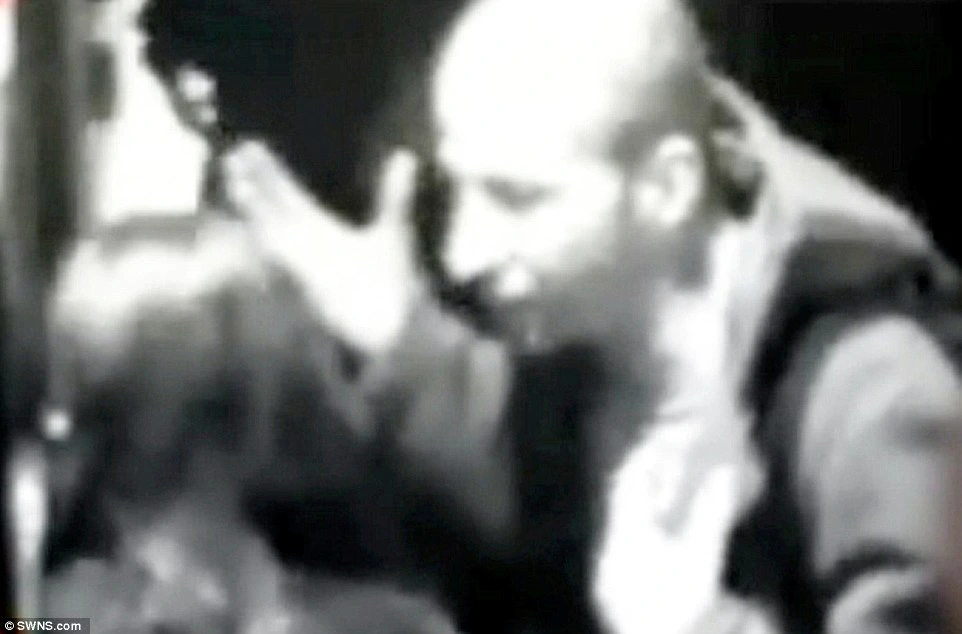
It was at this vulnerable moment that a man approached India outside the club. Witnesses nearby overheard him speaking to her in a calm and reassuring tone. He was heard saying words to the effect of “don’t worry, I’ll get you home safe.”
Those who observed the interaction noted that the two appeared to speak comfortably, as though they may have known each other, though there is no evidence that they did.
After a short conversation, the pair were seen walking together toward a taxi. As they walked, the man was heard telling India to put her phone away for her own safety. The two got into the taxi together and drove off.
Inside the cab, the man instructed the driver to head toward a McDonald’s on Bridge Street, then redirected him to a different location. They stopped briefly at a nearby BP petrol station, where the man stepped out for approximately four minutes.
India remained in the taxi and attempted to call her boyfriend once more, but received no answer.
The taxi then drove to the end of Stanley Road, where it dropped both passengers off at 1:40 a.m. A witness in the area observed the man and India walking toward a house on Stanley Road before entering it.
Between 1:41 and 1:49 a.m., India sent a series of Snapchats, one of which read “where are club” — a phrase that clearly reflected her severely disoriented state.
At 3:03 a.m., India’s boyfriend arrived home, discovered his phone had died, and charged it. When it turned back on, he saw that India had been trying to reach him throughout the night. He called her back three times, but received no answer.
With no immediate reason to suspect something was seriously wrong, it was reasonable to assume she had made it home and fallen asleep.
India Chipchase was never seen alive again.
A Missing Person and a Swift Investigation

By 4:00 p.m. on January 30, 2016, India was scheduled to begin her shift at The Collingtree pub in Northampton, where she worked as a barmaid. She did not show up and made no contact with her employer.
Her parents, knowing this was completely out of character for her, immediately reported her missing to police.
Officers began reviewing CCTV footage and tracing the timeline of her movements. When they identified the man who had approached India outside the club, one of the officers recognized him.
He was identified as Edward Tenniswood, 52 years old, a bookkeeper who lived on Stanley Road in Northampton. Police used India’s mobile phone signal to pinpoint her location and confirmed she was at Tenniswood’s address at 6 Stanley Road.
At 3:45 p.m. on January 31, officers forcibly entered the property. Upon stepping into the hallway, PC Steven Knight immediately observed a mattress on the floor with a duvet pulled to the top.
Beneath the blanket was the shape of a human figure, with dark hair visible at the top of the cover. Officers approached and attempted to rouse her.
On police camera footage, one officer can be heard saying, “Sweetheart, can you wake up? Can you hear me?” Another officer responded, “She’s gone. She’s gone.”
The fully clothed body of India Chipchase was recovered from the scene. She was 20 years old.
Edward Tenniswood was not in the house.
The Arrest and What Police Found
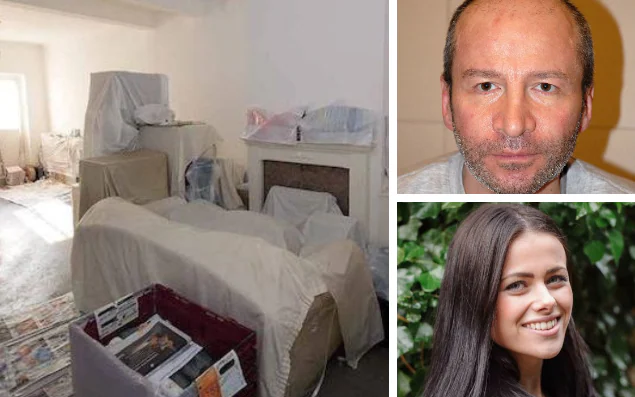
Officers quickly established that Tenniswood had checked into the Ibis Hotel on Marefair in Northampton at 4:00 p.m. on January 30 — shortly before India’s family had reported her missing.
He had stayed overnight and had spent time on the hotel’s computer, searching for news stories related to the disappearance. When police arrived at the hotel on the evening of January 31, they found him sitting in the lounge, watching television and drinking a beer.
As officers approached him, Tenniswood spoke calmly. He said, “I suppose you’ve been to the house. You found what you were looking for.” He then added, “I’m surprised you were so quick. You didn’t take long to find me.” He was arrested on suspicion of murder.
A search of his home revealed a deeply unsettling environment. Tenniswood, who had a diagnosed case of obsessive-compulsive disorder, had wrapped nearly every item in his home in cling film, including bookshelves, his desk, his computer, and furniture.
Newspapers were spread across the floor, and stacks of plates and bowls lined the kitchen counters. India’s mobile phone was found hidden in a box beneath the stairs.
Her shoes and handbag had been placed neatly in a separate bedroom. A blood stain was found in the downstairs lounge near a bottle of alcohol.
Investigators also recovered a collection of cut-out photographs of women pinned in his kitchen. One of the women pictured was a former model named Heather Stewart-Whyte, who publicly and firmly denied ever having met Tenniswood.
She stated she had no knowledge of him whatsoever and asked for privacy to deal with the distress caused by his claim that the two had previously dated.
The Trial and the Evidence
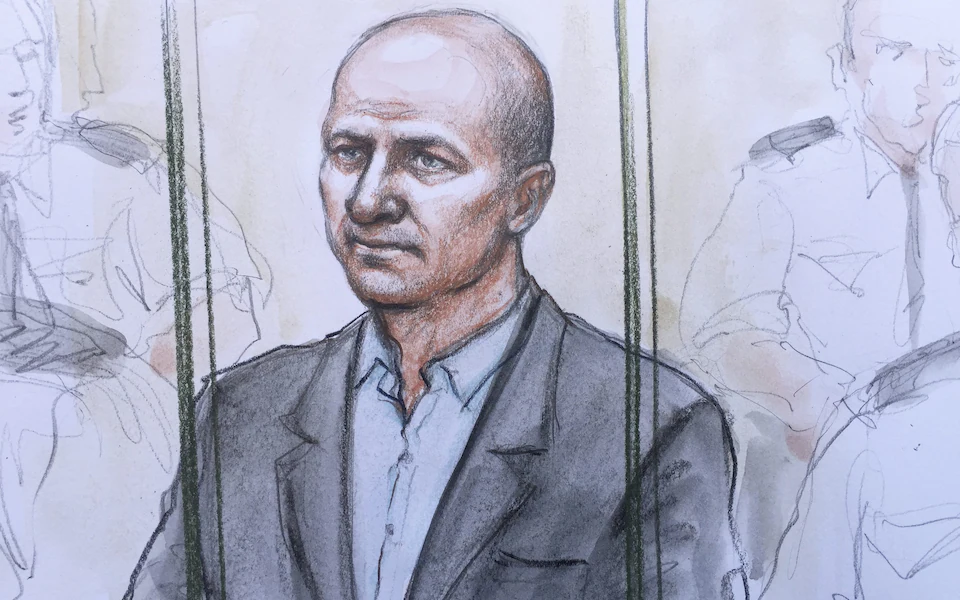
Tenniswood’s trial for the rape and murder of India Chipchase began in July 2016. India’s parents chose not to attend the proceedings, stating they could not bear to sit through the evidence and his account of what had happened to their daughter.
Other family members were present, and a statement from her parents was submitted to the court.
Tenniswood took the stand and presented his version of events. He claimed that India had smiled at him when he approached her, that the two had an immediate connection, and that she had willingly gone home with him.
He said the two had drinks and spoke together before she allegedly initiated a physical encounter between them.
He claimed her death occurred accidentally during a consensual act and that he had applied pressure to her neck only at her request, for approximately ten seconds, before she exhaled and went limp. He said he blacked out himself afterward and only realized she was unresponsive the following morning.
He claimed that when he could not wake her, he assumed she had suffered a stroke or entered a diabetic coma.
Rather than check her pulse, he said he drank a glass of wine, re-dressed her body out of respect, changed the bloodied mattress cover, and then left to get food — a kebab — before checking into the hotel, still convinced she might somehow regain consciousness while he was gone.
When asked by police why he had said he was surprised they found him so quickly, he stated his “optimism” had led him to believe she might have walked out of the house and been found alive.
The prosecution systematically dismantled his account.
A forensic pathologist testified that India’s body bore more than 50 individual bruises, along with cuts on the inside and outside of her lips and cheeks, bruising on her tongue, a cut to the top of her right ear, and significant bruising and scratching across her neck — with more than ten visible bruises and multiple instances of corresponding internal bruising to the neck muscles.
The pathologist stated the injuries were consistent with an inflicted, violent attack and were not consistent with accidental or self-inflicted injury. Additional blunt force injuries were found on both hips and all four limbs.
India’s blood was found in the downstairs lounge. Tenniswood’s blood was recovered from beneath India’s fingernails. He himself had cuts on his neck and forearms consistent with scratch marks, as well as a rug burn on his knee.
A toxicology report confirmed India had a blood alcohol level of 235 milligrams per 100 milliliters at the time of her death — nearly three times the legal driving limit of 80 milligrams.
The prosecution also called two additional witnesses. A former neighbor testified that Tenniswood had told him he had been trained in the army to kill with his bare hands and had, on one occasion, entered his home uninvited before attempting to grab him by the throat when pushed away.
A woman testified that during an argument with Tenniswood years prior, he had shoved her against a wall, placed his hands tightly around her throat, and attempted to kiss her while holding her there. She had never reported the incident and only came forward after learning what had happened to India.
The jury deliberated for one hour and forty-five minutes before returning a guilty verdict on both counts of rape and murder. The judge sentenced Tenniswood to life in prison with a minimum of 30 years before he could be considered for parole.
In sentencing, the judge described the crime as one of “utter depravity,” committed solely to satisfy Tenniswood’s own desires against a vulnerable young woman.
Remembering India Chipchase
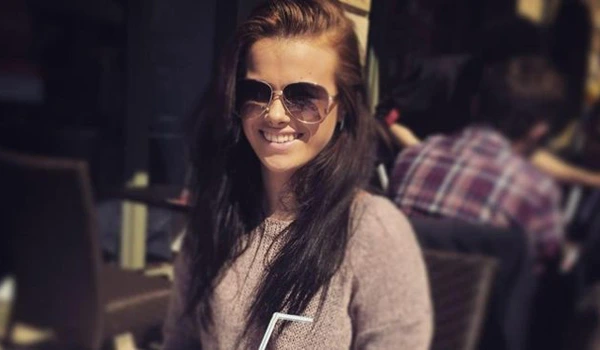
India Eve Chipchase was born on December 24, 1995 — Christmas Eve — in Northampton, a date she reportedly loved because of how much the festive season meant to her and her family.
She was the eldest of four children, with three younger siblings named Harry, Pia, and Lulu. Those who knew her described her as vibrant, warm, and full of energy. Her mother recalled that whenever India was home, the house was never quiet.
She attended Pitsford School, an independent school in Northamptonshire, before going on to Northampton College, where she earned a diploma in Health and Social Care.
Her tutors and peers described her as hardworking, popular, and deeply caring. For a period, she was unsure of the career path she wanted to follow, but shortly before her death she had made up her mind — she wanted to become a paramedic.
Her parents were enormously proud of that decision, and those who knew her felt she had both the energy and the compassion the role required.
At the time of her death, she had recently begun dating Grant Hare and was working as a barmaid at The Collingtree pub. She was 20 years old, at the very beginning of her adult life, with a clear future ahead of her.
She never got the chance to live it.


Recent Comments