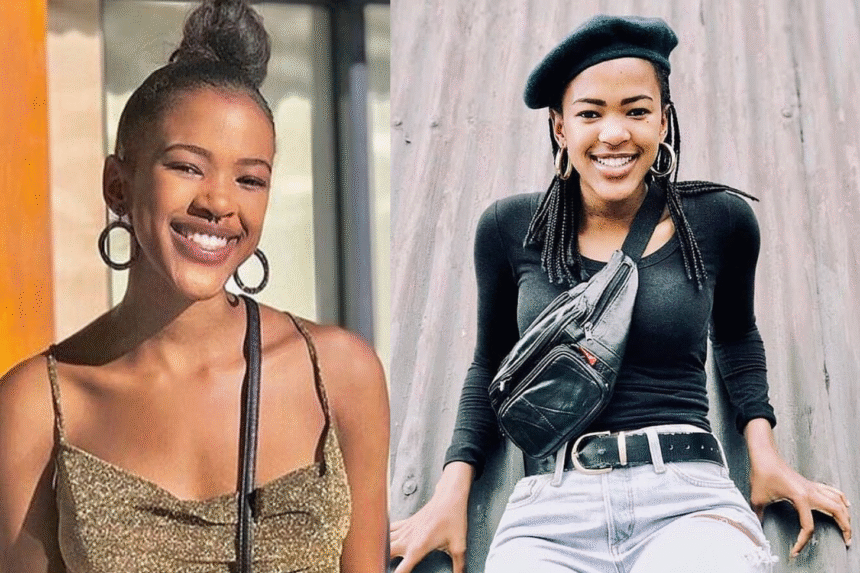
Uyinene Mrwetyana, a 19-year-old student, was raped and murdered inside a Cape Town post office in August 2019. Her death led to nationwide protests and new laws on gender violence in South Africa.
Uyinene Mrwetyana was born on April 20, 2000, in East London, a city on South Africa’s southeastern coast. Her parents, Philip and Noma Mrwetyana, raised her and her older brother in the suburb of Beacon Bay where family members called her by the nickname Nene.
She attended Hudson Park Primary School where she led the student council and won the Hudsonian of the Year award. She later studied at Kingswood College, a well-known high school where she stayed active in sports and kept a wide circle of friends.
She developed a strong interest in film and media during her teenage years. After finishing high school in 2018, she applied to the University of Cape Town, the highest-ranked university on the continent and was accepted into its film and media program.
In 2019, Mrwetyana moved across the country to begin her studies. She settled into Ross Commons, a student residence at the University of Cape Town, and quickly joined campus clubs and sports societies.
Friends and classmates described her as warm and outgoing, and she built new friendships during her first months on campus.
The man who would kill her worked at the Clareinch Post Office branch in the Cape Town suburb of Claremont. Luyanda Botha, 42 at the time, had a criminal history before he was hired as a post office employee.
In 1998, he was convicted of carjacking and sentenced to eight years in prison, of which he served five, with three years suspended. In 2014, he was accused of walking in on a nursing student in Athlone and attempting to rape her.
That case was struck off the court roll and did not proceed at the time. By August 2019, Botha was reportedly going through a divorce from his second wife.
Mrwetyana first visited the Clareinch branch in early August 2019 to ask about a parcel she had ordered online, and a staff member told her they would contact her once it had arrived at the branch.
On August 24, 2019, a Saturday, her phone received a message saying the parcel was ready and she went to collect it. In reality, the parcel had already arrived more than a week earlier.
Botha told her it was still not ready because of a power cut, a common occurrence in Cape Town and asked her to come back that afternoon. This request was unusual, since the branch was scheduled to close at 1 p.m. on Saturdays.
Botha had already arranged for his colleague, Soraya Abdullah, to leave work early that day, which left him alone in the building after closing time.
Mrwetyana returned to the post office by taxi at around 2 p.m. She stepped out of the vehicle and walked inside, and the taxi driver who dropped her off became the last person known to have seen her alive. Once she entered the building, Botha locked the door behind her.
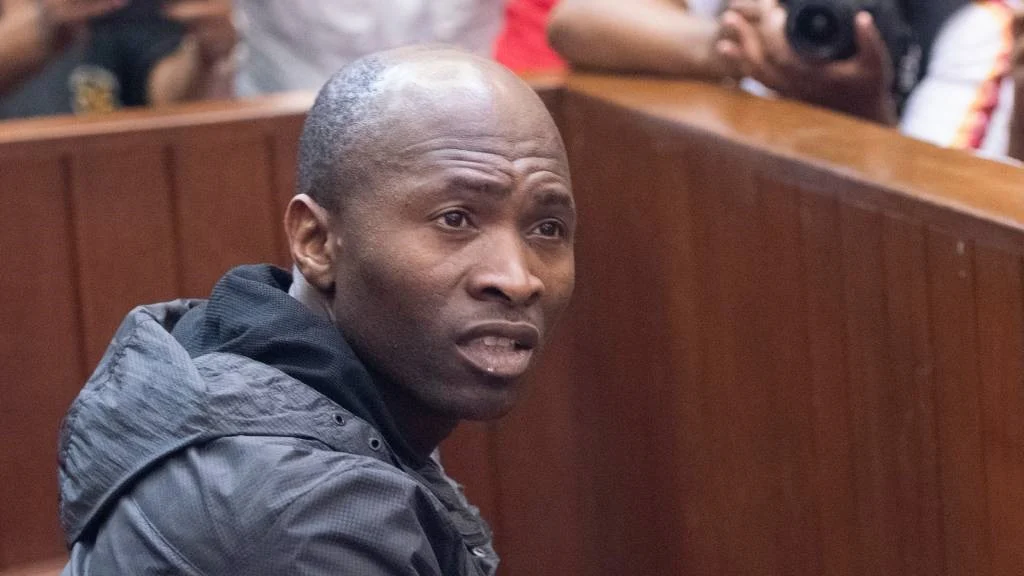
According to Botha’s later confession, he attacked Mrwetyana as she waited at the counter. She struggled against him and tried to run, but the front door was locked.
He caught her, and in the struggle that followed, he raped her and attempted to strangle her before striking her with a two-kilogram packaging scale. The blow killed her.
Botha then left the post office and went to a nearby liquor store, where he sat outside and drank alcohol. He returned later that night, hid her body inside the branch’s safe, and began cleaning the scene.
The next day, he loaded her body into his car and drove to Lingelethu West, a section of the township of Khayelitsha. There, he poured petrol over her body, set it alight, and buried her in a shallow hole beside a disused railway track.
Mrwetyana’s absence was noticed the same night by her friends at Ross Commons, since she had made no plans to stay away and had not answered any messages. Her family grew concerned as the hours passed without contact.
On August 26, two days after she went missing, her disappearance was formally reported to police, and missing person notices spread quickly through Cape Town.
The hashtag #BringNeneHome began trending on social media as students, friends, and members of the public joined the search. Volunteers organized search parties, banners were hung from bridges, and candlelight vigils were held across the city.
The family also hired private investigators to help with the search, and some feared she had been abducted for human trafficking, a concern often raised in cases involving missing young women in South Africa.
Two days after the disappearance was reported, the University of Cape Town said it was working directly with Mrwetyana’s family to intensify the search.
That same day, August 26, a routine police patrol discovered a body near the abandoned railway track in Lingelethu West.
Because the body had been burned, it was not immediately identified, and the public search for Mrwetyana continued in the days that followed, even though she had already been found.
Investigators traced her last confirmed movements to the Clareinch Post Office, the same branch where she had gone to collect her parcel. Officers examined the branch using a black light and found traces of blood near the safe.
Rapid DNA testing confirmed the blood belonged to Mrwetyana. The post office had no working security cameras, but records showed that only one employee, Botha, had remained inside the building after the official closing time.
He had also been absent from work in the days following her disappearance. On August 29, five days after Mrwetyana vanished, police arrested him. He did not resist and was taken into custody without incident.
He made his first court appearance at the Wynberg Magistrate’s Court on September 2, at which point Mrwetyana’s exact location had still not been confirmed to the public, even though investigators were already working to link him to the remains found six days earlier.
Botha confessed to officers the same night, telling them where they could find Mrwetyana’s remains. Investigators soon realized this matched the body discovered on August 26. DNA testing later confirmed that the remains belonged to her.
A search of Botha’s home and vehicle uncovered further traces of her blood, adding to the evidence against him.
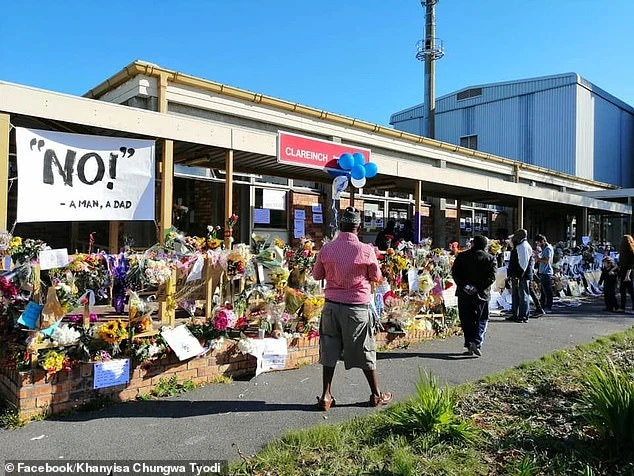
News of Mrwetyana’s death and the details of her killing spread quickly across South Africa, prompting an outpouring of anger and grief. The University of Cape Town suspended classes and tests for two days, on September 5 and 6, and held memorial gatherings for students and staff.
A vigil was also held at the University of the Witwatersrand in Johannesburg. On September 4, protesters gathered outside the World Economic Forum on Africa in Cape Town, where President Cyril Ramaphosa was attending a session.
Demonstrators attempted to breach a fence around the venue, and police used tear gas to disperse the crowd. The following day, an even larger protest took place outside the Houses of Parliament in Cape Town, drawing several thousand people.
Ramaphosa attended this demonstration as well. During this period, the hashtag #AmINext became widely used online, as women across the country shared their own experiences with violence and harassment, questioning whether they might be the next victim of a similar crime.
Mrwetyana’s funeral was held in East London on September 7, 2019. Police Minister Bheki Cele addressed mourners at the service and described the sequence of the attack based on Botha’s confession.
“The little girl comes for her parcel, the guy tells her to back later,” Cele told the crowd. Cele also confirmed publicly that Botha’s 2014 attempted rape case had been withdrawn before it reached trial.
Following the funeral, the South African Post Office launched an internal investigation into how Botha had been hired and kept on staff despite his criminal record.
The inquiry found that senior officials had known about his 1998 conviction since June 2018, more than a year before the killing, but a Post Office board member, Charles Nwaila, said this information had not been passed on to the organization’s executive team or board.
Mrwetyana’s killing was one of several cases of violence against women that drew public attention in South Africa that same period.
Higher Education Minister Buti Manamela, who attended both her memorial at the university and her funeral, listed other recent victims, including university student Jesse Hess, Angelique Clark-Abrahams, and Ayakha Jiyane, who died along with her three siblings at the hands of their stepfather, as well as boxer Leighandre “Baby Lee” Jegels, who was killed by her former partner.
These killings, alongside Mrwetyana’s death, became part of a wider national conversation about the safety of women in South Africa.
Public officials cited national statistics on violence against women during the unrest that followed Mrwetyana’s death.
Reports at the time indicated that roughly 2,700 women had been murdered by men in South Africa over the previous year, a rate about five times higher than the global average, and that at least 100 rapes were reported daily across the country.
On September 17, 2019, Ramaphosa called for a joint sitting of Parliament to address gender-based violence, describing the scale of the problem in terms usually used for an armed conflict.
In the months that followed, his government announced plans for tougher sentences for people convicted of crimes against women and children, along with public access to the National Register for Sex Offenders.
The plan built on a steering committee the government had formed the previous year, after a 2018 women’s march known as the Total Shutdown protest.
In 2020, the government adopted a ten-year National Strategic Plan on Gender-Based Violence and Femicide, built around six focus areas, including prevention, strengthening the criminal justice response, and providing support and care to survivors.
On September 3, 2019, the Clareinch Post Office branch was permanently closed after members of the public began visiting the site to leave flowers and tributes.
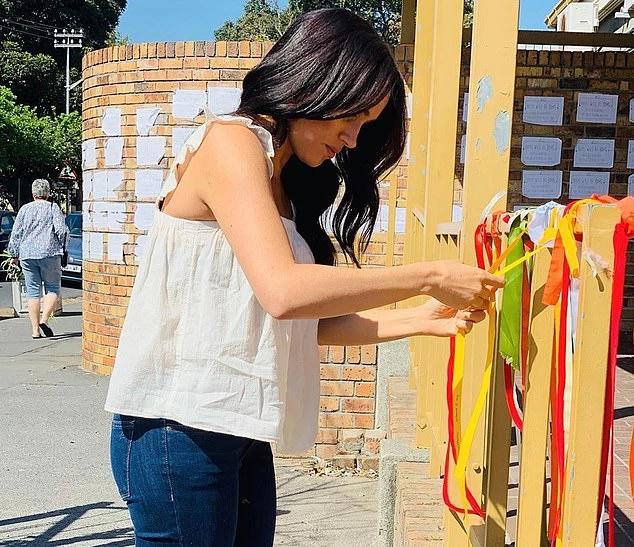
Later that month, Meghan, Duchess of Sussex, privately visited the site of the killing while touring South Africa with Prince Harry, and passed her condolences on to Mrwetyana’s mother.
That same September, hundreds of South Africans living abroad gathered in Times Square in New York City to protest violence against women following news of her death.
Before his trial, Botha made earlier appearances at the Wynberg Magistrate’s Court, where members of the public gathered outside and some in the courtroom gallery called on him to show his face.
On November 15, 2019, his case reached the Western Cape High Court. As part of a plea and sentencing agreement, he pleaded guilty to two counts of rape, one count of murder, and one count of defeating the ends of justice for disposing of evidence.
His lawyer read a four-page written admission describing the crime in detail. Judge Gayaat Salie-Hlophe sentenced him to three life terms in prison for the rape and murder charges, along with an additional five years for defeating the ends of justice, with the sentences to run one after another.
Botha will not be eligible for parole until he has served at least 25 years. Speaking after the sentencing, Mrwetyana’s uncle, Vuyani Mrwetyana, told reporters, “This judgment won’t in any manner replace Uyinene but we do appreciate it.”
On November 29, 2019, the Uyinene Mrwetyana Foundation was launched in Makhanda, in the Eastern Cape.
The foundation was set up to offer support and mental health resources to survivors of gender-based violence, run public awareness campaigns, and push for further changes to the law.
The University of Cape Town also created the Uyinene Mrwetyana Scholarship for female students in its Humanities faculty, covering study costs for the recipient each year. The scholarship was first awarded in July 2021 to a student named Luhlanganiso Majebe.
In March 2020, Kingswood College posthumously honored Mrwetyana with its Neil Aggett Memorial Award, recognizing former students who showed courage and integrity.
That same month, Mrwetyana’s family also took legal action against the South African Post Office, filing a civil claim that pointed to the earlier internal findings about Botha’s record.
Her uncle, Thembelani Mrwetyana, said the Post Office needed to be held accountable, since she had entered a state-owned building and had been assisted by a state employee. “Someone must answer,” he said.
In August 2024, a separate case connected to Botha resurfaced. The 2014 attempted rape charge involving the nursing student in Athlone, which had been struck off the court roll years earlier, was reinstated at the Wynberg Magistrate’s Court.