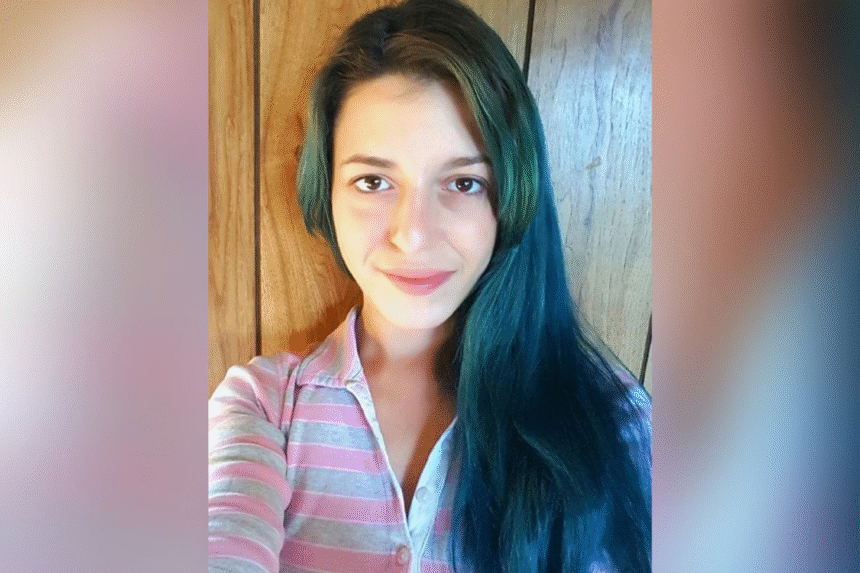
A padlocked freezer in a Campbell, Ohio, basement held a secret in the summer of 2017 that turned a missing person case into a murder investigation.
Shannon Graves was born in 1988 in Youngstown, Ohio. She was the daughter of Christa Graves and Ronnie DePaul. Her father did not know she existed until she was five years old, but once he learned about her, he welcomed her into his family.
She grew up with a sister, Debbie, and a brother, Antonio, who went by AJ, both of whom welcomed her warmly once she became part of the family. Friends called Shannon “Starr.”
People who knew her described her as kind, big-hearted, and always willing to help others. She loved her younger brother AJ and her dog, Molly.
In 2015, Shannon graduated from Raphael’s School of Beauty Culture in Boardman, Ohio, and began working as a hairstylist, offering clients services such as haircuts, flat-iron styling, manicures, and pedicures.
Classmates and instructors described her as hardworking and easy to get along with. She was close with her family and rarely missed birthdays or holidays, always making an appearance no matter how busy her life became.
In April 2016, Shannon met Arturo Novoa. The two began dating, and by September 2016, they had moved in together in an apartment on Mahoning Avenue in Youngstown. Court records describe their relationship as tumultuous.
Novoa was reported to be physically violent toward Shannon during the time they lived together, and the relationship went through repeated periods of conflict even as the couple continued living under the same roof.
In December 2016, the couple briefly split up. Novoa moved in with another woman, Katrina Layton, who had previously dated him and still had feelings for him. About a week later, Novoa moved back in with Shannon, and the relationship continued, though it remained volatile.
Around the same time, a former boyfriend named John was released from prison. John reached out to Shannon on Valentine’s Day, February 14, 2017, hoping to win her back. Shannon told him she wanted to give Novoa one more chance and said she would call John if things did not work out.
That call never came. On February 24, 2017, Novoa beat Shannon to death with a heavy object, later identified as a hammer, inside the bathroom of their Mahoning Avenue apartment.
Katrina Layton later admitted to witnessing the killing and to helping dismember and move Shannon’s body afterward. Novoa shaved Shannon’s head, wrapped her body in garbage bags, and placed it in the trunk of her own car before driving to Layton’s home.
At Layton’s house, Novoa and an acquaintance named Andrew Herrmann dismembered Shannon’s body in the garage. Herrmann later told investigators he helped because he feared what Novoa might do to him if he refused, since he already knew what had happened.
In the days that followed, Novoa moved Shannon’s remains between several locations, first back to the Mahoning Avenue apartment, then to an apartment on Ravenwood Avenue, and finally to a friend’s home, before the parts were eventually placed inside a chest freezer.
Novoa and Layton also attempted to destroy portions of the remains using sulfuric acid, an idea reportedly inspired by a television crime drama. The acid dissolved Shannon’s skull and part of her torso but failed to destroy the rest of her body. The remaining body parts were packed into storage totes.
On March 11, 2017, Novoa and Layton held a bonfire at a friend’s house. They burned Shannon’s belongings, including her clothing, papers, hair, and a bracelet engraved with her name.
The fire grew so large that the local fire department had to respond. Neighbors later told investigators they had seen Novoa and Layton pulling items from bags and totes and feeding them into the flames.
The next day, people at the property found unburned fragments, including the bracelet, which were later recovered by police and placed into evidence.
In the days following the murder, Katrina Layton moved into the Mahoning Avenue apartment and began living as though she were Shannon. Court testimony indicated Layton moved in within about two weeks of the killing.
She drove Shannon’s car, used her cell phone, and spent from her benefits card. She also took over the care of Shannon’s dog, Molly. City prosecutor Dana Lantz later described this in court, saying Layton had “basically, assumed her life and her belongings.”
Meanwhile, Shannon’s family began to notice her absence. She missed her sister Debbie’s birthday in March 2017, a holiday she had never skipped before. She also stopped attending Sunday family dinners and other regular gatherings.
Her father, Ronnie, started calling people who knew her, including friends and former coworkers, trying to find out where she had gone.
He also reached out to her most recent boyfriend, Arturo Novoa, and to her former boyfriend, John, hoping one of them could tell him where Shannon had gone. Novoa told Ronnie that Shannon had broken up with him and moved to Cleveland or Columbus with a new boyfriend.
Shannon’s brother AJ eventually received a text back from her phone, but the reply made clear it was not her. Her cell phone number and bank activity had both gone quiet since February, with her old phone number later reassigned to someone else.
In April 2017, a police officer attempted to pull over a car that turned out to belong to Shannon. The driver refused to stop, leading to a car chase followed by a foot chase.
The driver was identified as Arturo Novoa, already using Shannon’s vehicle two months after her death. He was caught, shocked with a stun gun, and arrested, but he was released after posting bond.

By June 2017, Shannon’s family reported her missing to the Youngstown Police Department. Investigators learned she had last been seen in mid-February. Police searched jails and hospitals but found no trace of her.
They questioned both Novoa and John, her former boyfriend. Novoa repeated the story that Shannon had left him for someone else. John said the last time he had spoken with her was around Valentine’s Day.
The following month, Novoa contacted a friend using the alias Anthony Gonzalez. He said the electricity at his home had been shut off and asked if he could store a padlocked freezer, which he claimed contained meat, in the friend’s basement.
The friend, Kenneth Eshenbaugh, agreed. On the night of Monday, July 17, 2017, Novoa delivered the freezer to the Eshenbaugh home in Campbell, a town neighboring Youngstown, and plugged it in.
About a week later, Jill Eshenbaugh went looking for meat to cook and remembered the freezer in the basement. She found it locked, but the padlock had been installed backward, making it easy to break open with a screwdriver.
Inside, instead of food, she found large black bags giving off a foul smell. She waited for her husband to come home from work and showed him what she had found, hoping it might simply be spoiled meat.
Kenneth cut into the bags and discovered dismembered human remains, including a foot. He called 911 on July 30, 2017, and officers arrived at the home within minutes.
Police who responded to the Eshenbaugh home found body parts frozen together inside the bags, including arms, legs, teeth, and pieces of a spine and torso. There was no head among the remains.
The Eshenbaughs were questioned separately and cleared of any wrongdoing after explaining how the freezer had come to be in their basement. The remains were sent to the Cuyahoga County Coroner’s Office for examination and identification, a process that took several days to complete.
A scorpion tattoo found on one of the legs matched a tattoo Shannon was known to have, helping confirm the remains belonged to her.
Because her head was never recovered, an exact cause of death could not immediately be confirmed, though investigators later determined, through witness accounts and physical evidence, that Shannon had died from repeated blows to the head.
Investigators also used dental records and DNA comparison alongside the tattoo to complete the identification.
Investigators quickly connected the alias Anthony Gonzalez to Arturo Novoa, the man Shannon’s family and police had already questioned about her disappearance.
Youngstown Police Lieutenant Doug Bobovnyik told reporters that investigators believed the crime had originated in Youngstown, even though the freezer was found in neighboring Campbell.
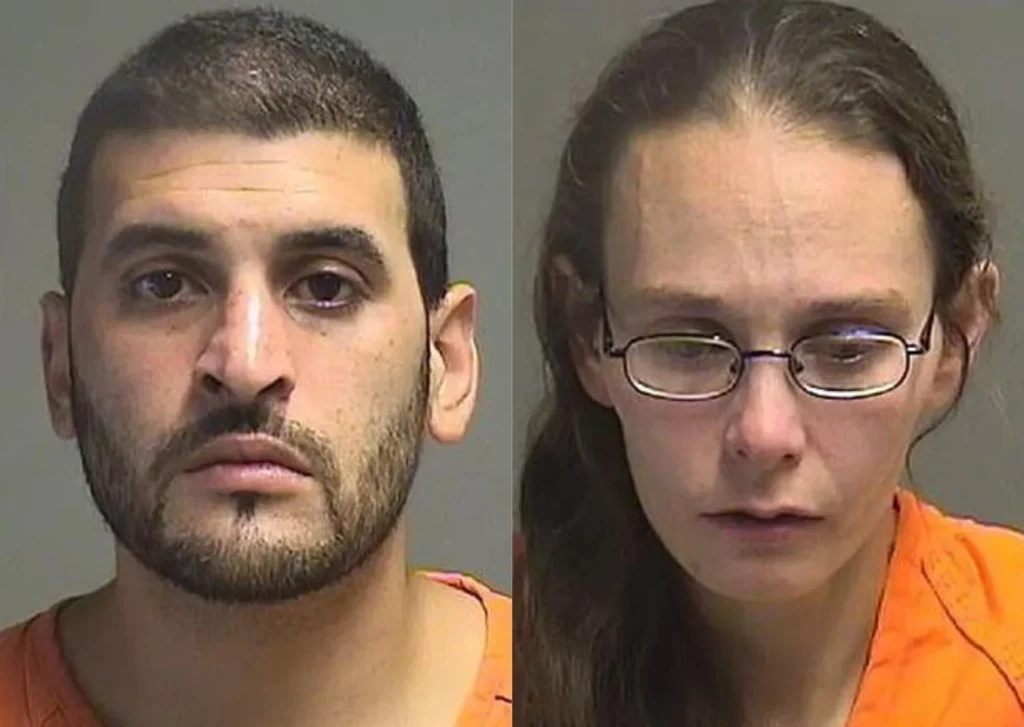
Novoa, 31, and Layton, 34, were arrested days later, and a judge set bond at one million dollars for each of them.
At the time of the arrest, the only charge filed against either of them was abuse of a corpse, since investigators had not yet finished piecing together the events surrounding Shannon’s death or building a murder case.
Officials said at the time that more serious charges could follow once the investigation was complete. Novoa denied knowing anything about a freezer when he was first questioned, but police later found a key on his key ring that matched the padlock.
A search of his apartment also turned up a large knife, paperwork connected to the freezer, and evidence of blood. Prosecutors said Novoa had also been running a drug-trafficking operation out of the same Mahoning Avenue apartment where Shannon was killed.
Investigators also noted that Novoa had still been out on bond from his April arrest at the time he was identified as a suspect in Shannon’s death.
Around this time, John, who had continued searching for Shannon on his own after she disappeared, learned about the March bonfire from a mutual acquaintance. He shared what he knew with police.
That tip led investigators to Andrew Herrmann, an acquaintance of Novoa’s, who had been the third person present at the bonfire.
When questioned, Herrmann eventually admitted he had helped dismember Shannon’s body, though he said he only did so because he feared Novoa. He also admitted to helping burn her belongings.
Herrmann told investigators that he had returned to help Novoa a second time even after realizing what had happened, out of fear that Novoa would turn on him if he refused or went to police.
Investigators also learned that Herrmann’s wife, Michelle Ihlenfeld, had lied to a grand jury during the investigation and had tried to intimidate a witness who was cooperating with police.
She was later arrested and charged in connection with the case, separately from the murder and dismemberment charges filed against the others.
By late August 2017, a grand jury indicted Novoa on charges that eventually totaled 43 counts, including aggravated murder, murder, tampering with evidence, obstruction of justice, abuse of a corpse, theft of Shannon’s vehicle, drug trafficking, possession of criminal tools, and engaging in a pattern of corrupt activity.
Layton was indicted on related charges, including tampering with evidence, obstruction of justice, and abuse of a corpse.
Layton initially agreed to a plea deal that would have required no additional prison time beyond time already served, in exchange for her promise to testify against Novoa.
However, prosecutors later discovered that she had continued communicating with Novoa while both were in custody, which violated the terms of her agreement. As a result, her deal was revoked.
In May 2019, Novoa, then 33, pleaded guilty to murder and dozens of other charges as part of an agreement in which prosecutors dropped the aggravated murder charge. On June 14, 2019, Mahoning County Common Pleas Judge Anthony Donofrio sentenced Novoa to 48 years to life in prison.
In January 2020, Katrina Layton, then 36, was sentenced to 18 years in prison after pleading guilty to tampering with evidence, obstruction of justice, and abuse of a corpse.
Ohio Attorney General Dave Yost commented on the case at the time, calling it “murder most foul, this is the stuff of nightmares.”
Andrew Herrmann pleaded guilty on February 27, 2020, to abuse of a corpse, engaging in a pattern of corrupt activity, and an unrelated drug trafficking charge. He was sentenced on March 11, 2020, to 12 years in prison by the same judge who had handled the earlier sentencings in the case.
Special prosecutor Dan Kasaris noted that Herrmann had provided investigators with details no one else could, saying “he’s the only who told us how Shannon died.”
During the hearing, Judge Donofrio told Herrmann he found it difficult to understand why Herrmann never contacted police, despite having opportunities to do so after learning what Novoa had done.
Michelle Ihlenfeld, 28, who had recently filed for divorce from Herrmann at the time of the case, was sentenced separately for lying to the grand jury and intimidating a witness.
She had not taken part in the killing or the dismemberment of Shannon’s body. She received two and a half years in prison, to be followed by six months in a halfway house and five years of probation.
Novoa later challenged his sentence through the appeals process. In September 2021, he argued that the trial court had improperly imposed separate sentences for offenses that should have been combined.
On October 1, 2021, the Seventh District Court of Appeals agreed in part, ruling that some of his charges had not been merged correctly. The court upheld his conviction but ordered a new sentencing hearing.
Attorney Stephanie Anderson, who prosecuted the case for the state, had described it as one of the “most gruesome and horrific details in Mahoning County and perhaps Ohio’s history.”
In February 2022, Judge Donofrio resentenced Novoa, this time to 43 years and one month to life in prison, after merging close to 20 charges. At that hearing, Novoa also asked to withdraw his original guilty plea, citing what his attorney described as newly discovered information. The judge denied the request.
Novoa appealed again in 2023, arguing that the trial court should have allowed him to withdraw his plea and that his consecutive sentences were not supported by the record.
The Seventh District Court of Appeals rejected each of his arguments and upheld both his conviction and his sentence for a second time, finding that his original guilty plea had been “made knowingly, voluntarily and intelligently.”
Novoa remains incarcerated at the Mansfield Correctional Institution in Ohio, with parole eligibility not expected until 2065. From the initial charge of abuse of a corpse in 2017 to the final appellate ruling in 2023, the legal proceedings in the case spanned roughly six years.