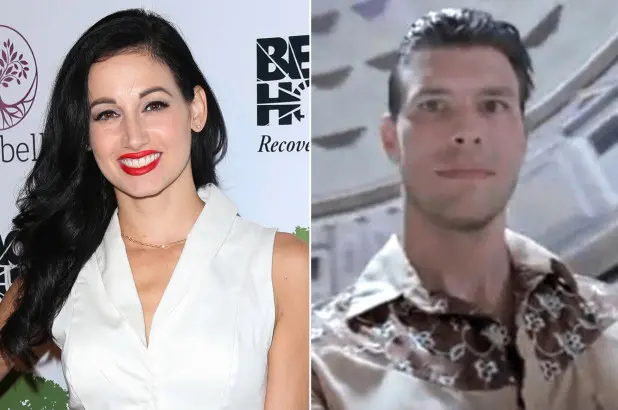
Amie Harwick was a well-known Hollywood therapist who was murdered by an ex-boyfriend in February 2020.
Amie Nicole Harwick was born on May 20, 1981, in Sellersville, Pennsylvania. She was adopted as an infant by Tom and Penny Harwick, who raised her in the nearby town of Lansdale alongside her adopted brother, Chris.
Harwick graduated from North Penn High School in 1999. While still a teenager, she began dating a heavy metal drummer named Tommy Decker. The couple married, and in 2001 Harwick moved with him to Los Angeles. The marriage ended in divorce after about three years.
In Los Angeles, Harwick supported herself through several jobs, including modeling, go-go dancing, bartending, and personal training. She modeled for Playboy under the name Nicolette Novak and released a workout DVD called “Fit to Rock.”
She went on to earn a psychology degree from California State Polytechnic University, Pomona, a master’s degree in clinical psychology from Pepperdine University, and a doctorate in human sexuality from the Institute for Advanced Study of Human Sexuality.
She became a licensed marriage and family therapist in West Hollywood, treating clients dealing with anxiety, depression, and relationship problems. She regularly discussed her work on podcasts, television segments, and her own YouTube channel.
In 2009, Harwick met Gareth Pursehouse, an event photographer who also worked as a software engineer and pursued stand-up comedy, at a Los Angeles party. The two began a relationship that lasted about a year and a half.
Friends later told investigators that Pursehouse was controlling during the relationship and frequently checked Harwick’s phone. In May 2011, Harwick filed a police report stating that Pursehouse had choked, punched, kicked, and suffocated her.
She photographed her injuries as evidence. After the relationship ended, Harwick obtained a restraining order against Pursehouse in 2012.
The order did not end the contact between them. Harwick later told her parents that her apartment had been broken into on more than one occasion afterward. During one break-in, only personal photographs were taken.
During another, her computer was wiped clean. She suspected Pursehouse was responsible both times, though there was no evidence to prove it. Rudy Torres, a friend who knew both Harwick and Pursehouse, said he repeatedly urged Pursehouse in those years to leave Harwick alone.
Around the same period, a prospective employer received anonymous nude photographs of Harwick, which cost her a job offer as a youth counselor. Her family believed Pursehouse had sent them.
Harwick continued building her career despite these incidents. She completed her doctorate and began treating clients full time, focusing in part on sex workers and other marginalized groups.
In 2014, she published a self-help book titled “The New Sex Bible for Women: The Complete Guide to Sexual Self-Awareness and Intimacy.”
She later volunteered with Pineapple Support, an organization that offers mental health services to adult film workers, and joined the board of Rock to Recovery, a nonprofit that uses music therapy to treat addiction.
One client, model Emily Sears, said she began seeing Harwick in 2017 to work through anxiety around dating and intimacy.
In the summer of 2017, Harwick met comedian Drew Carey, host of “The Price Is Right,” at a party. The two began dating, and Carey proposed to her during a trip to Paris on New Year’s Eve. They announced their engagement on January 31, 2018.
Later that year, the couple ended the engagement, though they remained on good terms. Carey later described Harwick as “a positive force in the world and an unapologetic champion of women.”
Harwick’s growing public profile added a new worry, and she told her mother she feared the attention could put her safety at risk.
On January 16, 2020, Harwick attended the XBiz Awards in Los Angeles, where Pursehouse was working as a red-carpet photographer. The two had not seen each other in nearly a decade.
When Pursehouse noticed Harwick, he approached her and began yelling that she had ruined his life. Harwick later wrote in an email to herself that Pursehouse was sobbing, hyperventilating, and shaking as he spoke to her.
She told her mother, Penny, that despite feeling afraid, she went into “therapist mode” to calm him down. After speaking with him for close to an hour, Harwick left the event visibly shaken.
She and her mother began discussing added security measures, including sharing her phone’s location and carrying pepper spray.
The next day, Pursehouse began contacting Harwick again, even though she had changed her phone number since their breakup. He sent a series of text messages and left a tearful voicemail asking for a chance to talk.
Harwick responded by asking that they cut off contact entirely. When Pursehouse continued reaching out, she blocked his number. Prosecutors later argued that being blocked pushed Pursehouse to begin planning her death.
Harwick did not report the January encounter to police. Under California law at the time, restraining orders of that kind required periodic renewal to stay in effect, and Harwick’s order had already lapsed by the time Pursehouse resumed contact with her.
Because he had not made a direct threat, she and her friends believed a new police report would not lead anywhere. She did tell her close friend, Robert Coshland, that she feared Pursehouse, saying that if anything happened to her, he would be responsible.
On the evening of February 14, 2020, Harwick attended a Valentine’s Day burlesque show with a group of friends.
That night, around 9 p.m., a surveillance camera on a neighboring property recorded a person matching Pursehouse’s description climbing over a fence into Harwick’s yard after covering the camera lens with a hand.
Investigators concluded that Pursehouse broke through a French door on the ground floor of Harwick’s home around the same time, cutting himself in the process. Blood found near the broken door was later matched to his DNA.
Harwick’s roommate, Michael Herman, was asleep on the ground floor of the home that night. He woke briefly to a sound like a plate dropping upstairs, assumed it was Harwick’s cat, and went back to sleep.
Investigators believe that after entering the house, Pursehouse climbed into Harwick’s bed and waited there for several hours.
Harwick returned home a little after 1 a.m. on February 15. Prosecutors said that when she entered her bedroom, she found Pursehouse waiting and threw her phone at him before trying to run. A struggle followed.
Herman was woken by a scream and then heard what sounded like choking. He began yelling to scare off whoever was upstairs, then searched for his phone to call for help. Unable to find it, he fled the house.
The front gate was locked, so he climbed over a fence, cutting himself on spiked rods in the process. He ran to a neighbor’s home, but no one answered. He then found a stranger on the street and used that person’s phone to call 911 at 1:16 a.m., reporting that his roommate was being attacked.
Officers arrived to find Herman outside, agitated and with blood on him. Because he did not have his house key and could not clearly explain what had happened, officers were initially uncertain whether he was involved in an attack or a victim of one.
Searching the property, they found Harwick lying on the ground beneath her third-floor balcony with severe injuries. She was taken to a hospital, where she was pronounced dead. She was 38 years old.
At the scene, officers found Harwick’s purse, jacket, and a broken necklace on the floor of her home. On the balcony, they discovered a syringe filled with a yellowish-brown liquid.
Not recognizing the substance, some responding officers assumed it was heroin and wondered whether the scene might involve a drug overdose or even a suicide, since there was no obvious sign of forced entry.
Lead detective Scott Masterson, arriving later, did not believe the substance was heroin, though its true identity remained unknown for months.
It took investigators that long, along with testing by the FBI, to determine that the syringe actually contained a lethal dose of liquid nicotine.
It was not until daylight that investigators noticed the broken French door and blood nearby, confirming that an intruder had entered the home and supporting Herman’s account.
At the police station, Herman told detectives that he believed Harwick’s ex-boyfriend was responsible, though he did not know the man’s name. Coshland provided investigators with the name Gareth Pursehouse.
Within 13 hours of Harwick’s death, officers arrested Pursehouse, then 41, at his home in a beachside Los Angeles neighborhood. He denied involvement and attributed a fresh black eye to a home renovation accident.
He was released a few days later on $2 million bond before being rearrested on a no-bail warrant and held in custody afterward.
An autopsy conducted by the Los Angeles County Medical Examiner’s Office found that Harwick died of blunt force injuries to the head and torso, with evidence of manual strangulation.
Investigators also noted what appeared to be a bite mark on Pursehouse’s arm, consistent with Harwick fighting back, and Pursehouse’s DNA was later found under her fingernails and elsewhere in the home.
Pursehouse was formally charged with murder, first-degree burglary, and a special circumstance allegation of lying in wait, a factor that can lead to a sentence of life without parole. He pleaded not guilty.
The case drew national media attention, in part because of Harwick’s earlier public engagement to Carey and her frequent appearances discussing relationships and sex therapy in the media.
In September 2021, a preliminary hearing was held to determine whether there was enough evidence to send the case to trial. At the hearing, prosecutors presented autopsy findings documenting defensive wounds on Harwick’s arms and hands.
After six days of testimony, a judge ruled that the case would proceed, and Pursehouse’s trial began in a Los Angeles courtroom in August 2023. Harwick’s parents, Tom and Penny, attended court sessions throughout the trial, along with her brother, Chris, and a group of her close friends.
In their opening statement, prosecutors Victor Avila and Catherine Mariano told jurors that Pursehouse had broken into Harwick’s home, waited for hours, and killed her because of his obsession with her.
Avila argued that Pursehouse had planned the attack after being blocked by Harwick, telling jurors, “He didn’t go there to talk. He’s on a mission.”
Over the following ten days, the prosecution’s case included surveillance footage, DNA evidence, Harwick’s email describing her fear of Pursehouse, and testimony from Herman, Coshland, and Masterson, who had since retired.
Prosecutors also played a recorded jailhouse phone call in which Pursehouse joked with friends about his arrest without expressing any remorse.
The defense, led by attorneys Evan Franzel and Robin Bernstein-Lev, acknowledged that Pursehouse had broken into Harwick’s home but denied that he intended to kill her.
The defense argued that the January 2020 encounter had left Pursehouse in a depressed state, and that he had gone to Harwick’s home only to talk to her, bringing the nicotine-filled syringe to use on himself rather than on her.
During closing arguments, the defense suggested that Harwick might have started the physical confrontation and could have gone over the balcony railing on her own, pointing to an earlier photograph of her sitting on a balcony rail. The defense did not call any witnesses during the trial.
On September 28, 2023, after about two days of deliberation, the jury found Pursehouse guilty of first-degree murder and first-degree burglary, along with the special circumstance of lying in wait.
Coshland, who attended the trial, said afterward, “I think he went there to kill her.” Harwick’s friend Rudy Torres, who had also attended proceedings throughout the case, said, “It’s just been a long time coming.”
On December 6, 2023, Pursehouse was sentenced to life in prison without the possibility of parole.
During the hearing, Harwick’s mother, Penny, delivered a victim impact statement describing the care given to her daughter by paramedics, doctors, and police after the attack, and by her family at her funeral.
Pursehouse was also ordered to pay $7,500 in restitution. He did not speak during the sentencing hearing. Los Angeles County District Attorney George Gascón said afterward that the outcome delivered justice for Harwick and the people who loved her.
Following Harwick’s death, a petition titled “Justice 4 Amie” was created calling for changes to California’s domestic violence laws, including a proposal to prevent restraining orders from expiring.
Harwick’s parents and friends supported the effort, along with Carey, who spoke publicly about the need for stronger protections for victims of long-term stalking and obsession.
Carey also arranged transportation for Harwick’s friends to attend her funeral. Model Emily Sears, who had been Harwick’s therapy client, said she was shaken by the murder and continued to feel the loss of Harwick’s guidance in the years that followed.
Harwick was buried at Whitemarsh Memorial Park in Ambler, Pennsylvania, near the town where she was raised.