
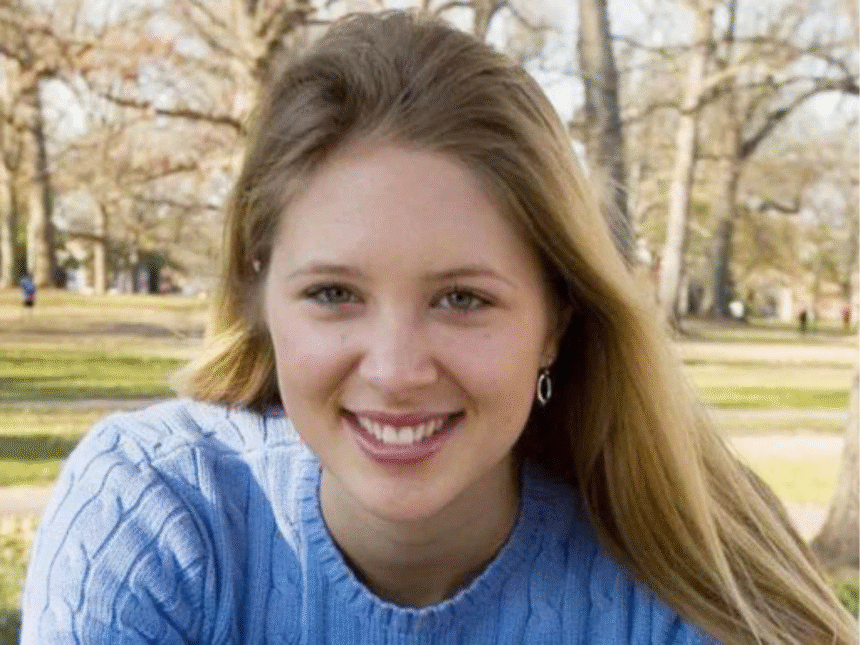
Eve Carson was the widely admired student body president at the University of North Carolina at Chapel Hill. In March 2008, her promising life ended in a robbery that turned into murder.
Eve Marie Carson was born on November 19, 1985, in Athens, Georgia, to Bob Carson and Teresa Bethke. She grew up in Athens with her younger brother, Andrew, in a family that valued community involvement. From an early age, Carson showed the drive and compassion that would come to define her.
At Clarke Central High School in Athens, Carson excelled both academically and socially. She graduated as valedictorian in 2004 and was elected president of her high school’s student body.
She also served as vice president of the National Honor Society and competed on the school’s academic team.
Outside the classroom, she volunteered as a peer educator at the Athens Area Attention Home, a shelter for abused and runaway teenagers, worked as a page in the U.S. House of Representatives, and held a position as a lab assistant in a stem-cell research laboratory at the University of Georgia.
Carson enrolled at the University of North Carolina at Chapel Hill in the fall of 2004 after receiving the prestigious Morehead Scholarship, later renamed the Morehead-Cain Scholarship.
She had also been offered admission and scholarship money at Princeton and Yale but chose UNC because she wanted to attend a public university.
At UNC, she double-majored in political science and biology on a pre-medicine track and earned membership in the Phi Beta Kappa honor society. She was also selected as a North Carolina Fellow, joining a four-year leadership development program for undergraduates.
Carson’s commitment to service extended well beyond the classroom. During her sophomore year, she studied abroad in Havana, Cuba.
In the summers, she traveled to Ecuador, Egypt, and Ghana through the Morehead Summer Enrichment Program, working as a medical assistant, laboring on a coffee farm, and teaching basic computer skills to local residents.
On campus, she co-chaired Nourish International, a student-led hunger relief organization, tutored children at Frank Porter Graham Elementary School and Githens Middle School, and served as an assistant coach for Girls on the Run, a program that builds confidence in young girls.
She also sat on UNC’s Board of Trustees, the Chancellor Search Committee, and several other university committees.
In February 2007, Carson was elected student body president, and she was inaugurated that April.
Her campaign platform included calls for more predictable tuition increases, a new scholarship for juniors who showed strong commitment to service, and an endowment to fund a free campus speaker series. Her term was due to end in April 2008.
On the night of March 4, 2008, Carson’s housemates left their home on Friendly Lane in Chapel Hill to go out for drinks, while Carson stayed behind to study.
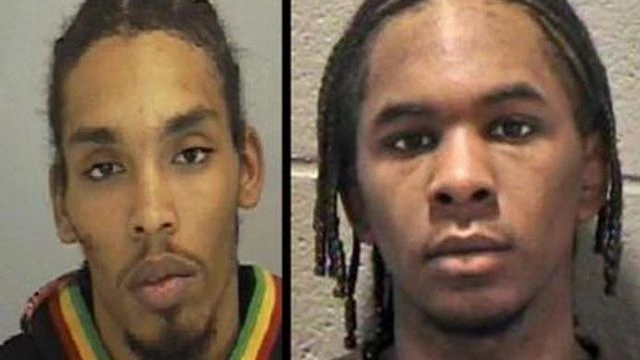
That same night, seventeen-year-old Laurence Alvin Lovette Jr. called his friend Jayson McNeil and asked for a ride to Chapel Hill, saying he wanted to rob someone. McNeil refused. Lovette then borrowed his mother’s car and, together with twenty-one-year-old Demario James Atwater, drove from Durham to Chapel Hill in search of a target.
Around 3:30 a.m., a UNC student sitting in her car on East Rosemary Street noticed the two men nearby. Feeling unsafe, she drove away and, glancing in her rearview mirror, saw them walking toward Friendly Lane.
Cell phone records later showed that Lovette’s phone connected to a tower in that area around the same time. Carson’s computer showed its last activity at 3:37 a.m., within the window investigators believe she was confronted near her home.
As Carson was getting into her SUV, Lovette and Atwater forced their way inside. Lovette took the driver’s seat while Atwater climbed into the back and held a gun to Carson’s head. Neither man had ever met her before; they had simply been looking for someone vulnerable to rob.
The men drove Carson to an ATM at University Mall in Chapel Hill. At 3:55 a.m., they withdrew $700, the daily limit on her account. They then drove to a second ATM in Durham, but that transaction failed because the daily limit had already been reached.
Surveillance cameras at the first ATM captured images of a man in a hoodie and cap using Carson’s card, with a second figure visible in the back seat of the SUV. An enhanced copy of the footage later showed Carson in the back seat with her head down and her hands raised, appearing to pray.
During the drive, Carson tried to reason with her captors, telling them they could take whatever they wanted and did not need to hurt her. Lovette and Atwater decided to kill her because she had seen their faces.
They drove to a wooded neighborhood about a mile from UNC’s campus, near the intersection of Hillcrest Road and Hillcrest Circle. When Carson realized what was about to happen, she asked her captors to pray with her.
According to testimony a friend of Lovette’s later gave in court, Carson said, “Pray with me.”
Lovette shot Carson four times with a .25 caliber handgun, striking her right cheek, back, right arm, and right buttock. She was still alive and breathing after these shots. Atwater then fired a shotgun blast that passed through her raised right hand and into her right temple, killing her.
Around 5 a.m., a resident near Hillcrest Circle woke to a gunshot, followed by a woman’s scream and three more shots in rapid succession. The resident called 911 but was too frightened to go outside.
Responding officers found Carson’s body at the intersection of Hillcrest Road and Hillcrest Circle. She carried no identification, and it took time for investigators to determine who she was.
Her SUV was later found abandoned near the intersection of North Street and Hillsborough Street, several blocks away. When Carson’s housemates realized she had not come home, they contacted police, and Carson’s body was ultimately identified by her roommates.
News of the killing spread quickly through Chapel Hill. On the afternoon of March 6, UNC Chancellor James Moeser addressed students gathered on Polk Place, and that evening thousands of students attended a candlelight vigil in the Pit, a plaza near the student union.
Three days later, on March 9, hundreds of mourners attended Carson’s funeral at a church in Athens. Moeser, who attended the service, said Carson was “truly a gift to Chapel Hill.”
UNC’s basketball teams wore patches reading “EVE” on their jerseys for the rest of the season, and players observed a moment of silence before a game against Duke on March 8.
While the campus grieved, investigators worked to trace Carson’s final hours. They reviewed her SUV, phone records, and bank statements, and Chapel Hill police offered a $25,000 reward for information leading to an arrest.
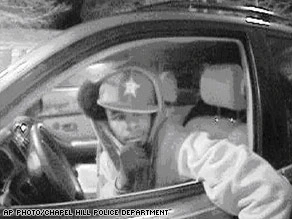
The enhanced ATM footage showed a young man in a hoodie and cap, though the image remained too grainy to identify him with certainty. In the days that followed, additional attempts were made to withdraw money from Carson’s accounts at several locations in Durham.
Records later unsealed showed that a total of $1,400 had been taken from her accounts over the two days after her death.
On the morning of March 7, a security camera at a Durham convenience store recorded a second man attempting to use Carson’s card, though the transaction was declined. That footage, combined with an anonymous tip, gave investigators their first strong lead.
On March 12, 2008, one week after the murder, police arrested Demario Atwater in Durham and charged him with first-degree murder. Investigators also identified Lovette, still 17, as a second suspect and warned the public that he should be considered armed and dangerous.
A tactical team surrounded a residence connected to the Lovette family while searching for him. Lovette was taken into custody the following day and charged with the same crime.
Both suspects had extensive criminal records. Atwater had prior convictions for robbery, assault, trespassing, and possession of marijuana with intent to sell. In February 2005, he received three years of probation for breaking into a home.
In June 2006, while still on probation, he was found carrying a handgun and pleaded guilty to a firearms violation, resulting in additional probation.
On February 20, 2008, Atwater was arrested again for carrying a gun while on probation and released on a $10,000 bond, with a court date set for March 3. Due to a clerical mix-up, that hearing was rescheduled to March 31.
Two days after his original court date, Carson was murdered. Lovette, a high school dropout, had his own escalating juvenile record and was on probation for breaking and entering at the time of the killing.
By late March 2008, an Orange County grand jury indicted both men on first-degree murder charges. On July 7, prosecutors added charges of first-degree kidnapping, armed robbery, felonious larceny, and possession of a firearm by a felon; Atwater also faced a charge tied to the sawed-off shotgun used in the killing.
Investigators additionally linked Lovette to the January 18, 2008, murder of Abhijit Mahato, a 29-year-old Duke University engineering student who was forced to withdraw cash from an ATM before being shot inside his home. Lovette was later tried separately for Mahato’s death and was found not guilty.
Federal prosecutors pursued the death penalty against Atwater because his charges included carjacking resulting in death.
On April 19, 2010, he pleaded guilty in federal court to kidnapping, carjacking, and weapons charges as part of a deal that removed the death penalty as an option. He entered a similar guilty plea to state charges on May 24, 2010, admitting to first-degree murder, kidnapping, and armed robbery.
Carson’s family, who opposed the death penalty, released a statement saying the plea agreement “honors Eve’s love of life and all people.”
On September 23, 2010, a federal judge sentenced Atwater to life in prison plus thirty years and ordered him to pay more than $212,000 in restitution. Facing Carson’s parents in court, Atwater said, “I just want to say personally I’m sorry for everything that has happened.”
Lovette pleaded not guilty to the state charges against him, and his trial began on December 6, 2011, in Orange County Superior Court in Hillsborough. Jayson McNeil testified that Lovette had described Carson pleading with her captors and asking to pray before she was shot.
In closing arguments, prosecutor James Rainsford told jurors that “what the defendant did to Eve Carson was greedy, miserable and cruel.” Defense attorneys argued that DNA evidence linking Lovette to Carson’s SUV had been mishandled and that key witnesses, including Atwater, never testified.
On December 20, 2011, after about three hours of deliberation, the jury found Lovette guilty of first-degree murder, kidnapping, armed robbery, and larceny. Judge Allen Baddour sentenced him to life in prison without the possibility of parole.
Because Lovette was 17 at the time of the crime, his sentence was later challenged under a U.S. Supreme Court ruling requiring courts to weigh mitigating factors before sentencing juvenile offenders to life without parole.
On February 5, 2013, the North Carolina Court of Appeals vacated Lovette’s sentence and ordered a new hearing. At his resentencing on June 3, 2013, a psychologist testified that he did not consider Lovette “irretrievably corrupt.”
Addressing the court himself, Lovette said, “I’m not the monster that y’all made me out to be.” Judge Baddour again sentenced him to life without parole, stating that he saw no realistic chance of rehabilitation.
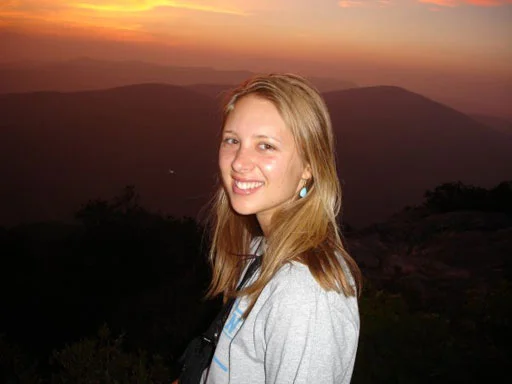
Carson’s murder also exposed serious problems within North Carolina’s probation system.
A review found that both Atwater and Lovette had received minimal supervision while on probation, part of a broader pattern in which officers were sometimes responsible for as many as 100 cases at once.
State corrections official Robert Guy said the handling of Atwater’s case reflected a “lack of doing things timely, lack of quality supervision, all of the above.”
The case prompted the state to overhaul its probation system, reducing officer caseloads, improving staff training, and, starting in 2009, giving probation officers access to juvenile records that had previously been sealed.
In the years since her death, UNC has honored Carson’s memory in several ways. The university created the Eve Carson Scholarship, fulfilling a promise from her student government campaign, which provides funding for a summer experience and senior-year tuition to two juniors chosen each year.
In May 2008, Carson’s political science and biology degree was posthumously awarded to her family at the graduation ceremony she would have attended. She also received the Chancellor’s Award for the most outstanding woman in her senior class and the university’s Distinguished Young Alumni Award.
On the second anniversary of her death, UNC dedicated the Eve Marie Carson Garden near Polk Place, featuring a wall inscribed with her own words about learning from others. An annual 5K race held in her name continues to raise money for the scholarship fund and other causes.



Recent Comments