

Colleen Ritzer, a 24-year-old math teacher, was raped and murdered by her freshman student, Philip Chism, at Danvers High School in Massachusetts on October 22, 2013.
Colleen Elizabeth Ritzer was born on May 13, 1989, and raised in Andover, Massachusetts. She was the oldest of three children born to Tom and Peggy Ritzer, and grew up alongside a younger brother, Dan, and a younger sister, Laura.
From an early age, relatives and family friends described her as caring and nurturing, someone who was drawn to helping other people. That instinct eventually shaped the career she chose.
Ritzer graduated from Andover High School in 2007. She then enrolled at Assumption College in Worcester, Massachusetts, where she majored in mathematics, minored in psychology, and focused on secondary education.
She graduated magna cum laude in 2011. During her senior year, she completed a student-teaching placement with high school students who struggled with math, an experience that confirmed teaching was the career she wanted to pursue.
After college, Ritzer briefly taught at a middle school before joining the faculty at Danvers High School, about twenty miles north of Boston. By the fall of 2013, she was in her second year there, teaching algebra and geometry.
At the same time, she was working toward a master’s degree in school counseling at Salem State University, hoping to support students with special needs. Ritzer used Twitter to send her students homework reminders and words of encouragement.
Her Twitter bio described her as a “math teacher often too excited about the topics I’m teaching.” One tweet from that summer read, “No matter what happens in life, be good to people.” Pink was her favorite color, and she often shared photos with her students on the platform.
Tuesday, October 22, 2013, began as an ordinary school day. Ritzer taught a full schedule of classes, with her last period ending at 1:55 p.m.
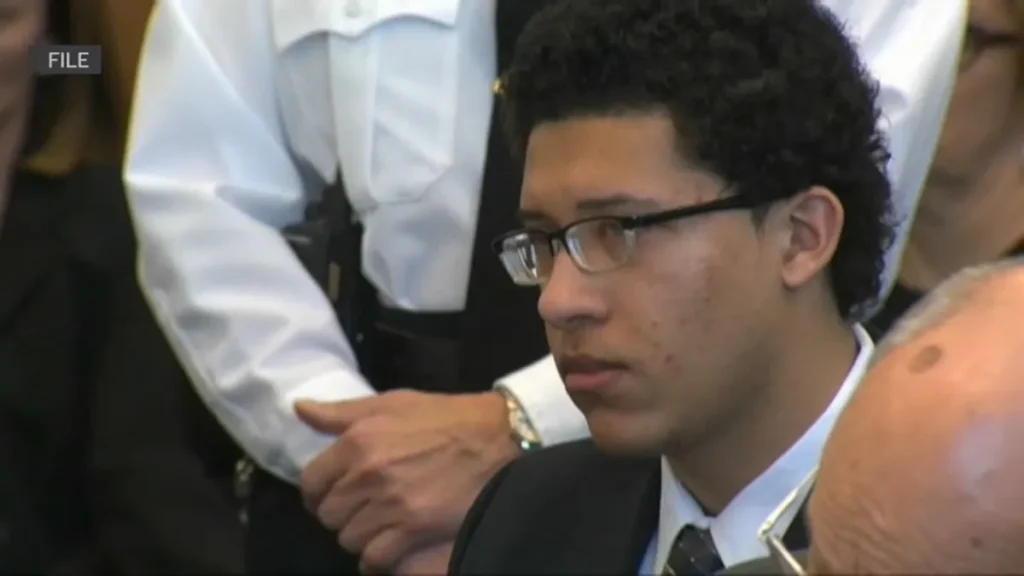
In that final class, Algebra I, sat Philip Chism, a 14-year-old freshman who had recently moved to Danvers from Clarksville, Tennessee, after his parents’ divorce. Classmates described him as quiet and reserved.
During that last class, he spent much of the period doodling instead of taking notes, which a classmate later said was unusual for him.
As class ended, Ritzer asked Chism to stay behind so they could talk. Another student remained in the room to get extra help with math. That student later told investigators that Ritzer brought up Tennessee during the conversation, and that Chism visibly became upset.
Noticing his reaction, Ritzer changed the subject. A short time later, she spoke with a co-worker in the same classroom and mentioned she was not sure why Chism was still there.
Sometime after 2:30 p.m., Ritzer left her classroom and walked toward a girls’ bathroom on the second floor; the school’s regular faculty restroom was occupied at the time.
Security cameras recently installed throughout the building recorded her leaving the classroom and heading down the hallway. Moments later, Chism followed, wearing a hooded sweatshirt and a pair of gloves.
At 3:06 p.m., another freshman briefly opened the bathroom door, then quickly left, later telling investigators she believed someone inside was changing clothes. About a minute later, Chism emerged alone.
Camera footage showed him returning to Ritzer’s classroom, gathering both of their belongings along with a ski mask, then briefly leaving the building in different clothing before coming back.
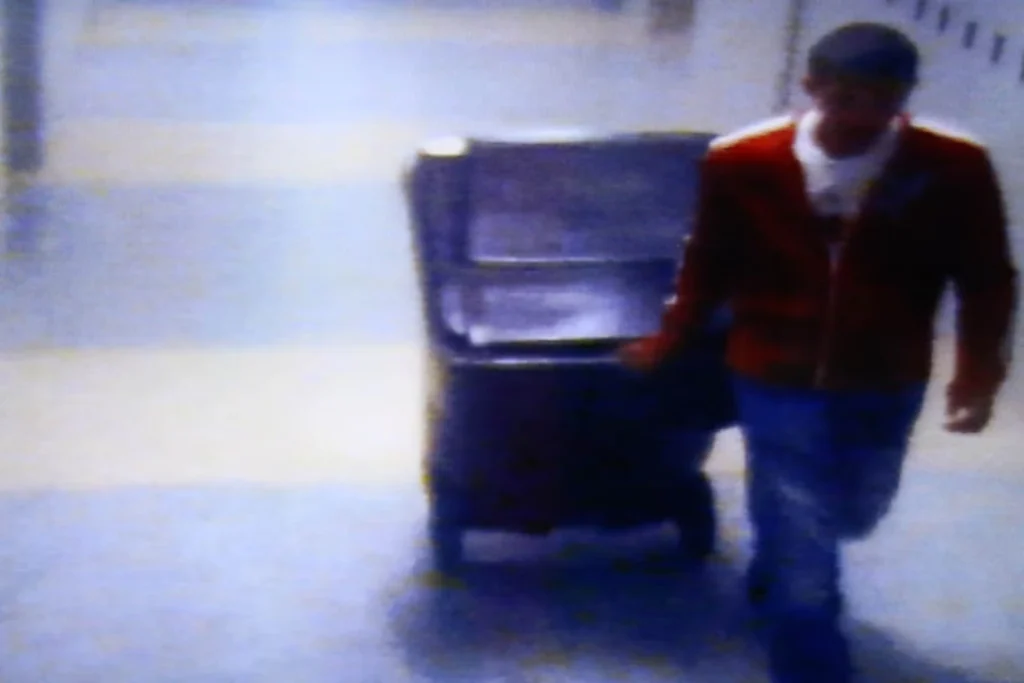
He later wheeled a large recycling bin into the same bathroom, then emerged wearing the ski mask, pulling the bin out of the building.
By 3:23 p.m., he had moved it through the parking lot toward the woods behind the school’s athletic fields, where he left Ritzer’s body about twenty feet from the edge of the trees, partly covered by leaves.
He returned to the school without shoes, his jeans soaked in blood, changed clothes once more, and made a final trip back to the same bathroom before leaving the building for good.
That afternoon, surveillance video from a nearby movie theater showed Chism buying a ticket in cash around 4:15 p.m. He also used Ritzer’s stolen credit card to buy fast food afterward.
Chism missed soccer practice that day, and by evening he still had not returned home. His mother contacted police, and Danvers officers began searching for him, alerting residents that he had last been seen near the theater.
Around the same time, Ritzer’s parents grew concerned when she did not come home. Her father, Tom, drove to the school and found her car still in the parking lot but no sign of her. He contacted another teacher, but no one had heard from her. By 11:20 p.m., Ritzer was reported missing to police as well.
Investigators tried to trace both of their cellphones. Ritzer’s last signal came from a spot about twenty-five minutes on foot from the school; Chism’s came from near the theater. Searches began in both areas and at the school itself.
An officer reviewing the newly installed camera system found reddish-brown stains believed to be blood in the second-floor bathroom. Around the same time, searchers in the woods found a recycling bin, bloodied clothing, and shoes. Investigators began operating on the belief that Ritzer had been the victim of a violent crime.
Shortly after midnight on October 23, Topsfield Police Officer Neil Hovey spotted a young man walking along Route 1 in the neighboring town. Because of the darkness and Chism’s height, Hovey initially believed he was an adult, but soon recognized him as the missing 14-year-old.
Chism told the officer his backpack held survival gear. When asked to empty his pockets, he produced a rock, along with Ritzer’s driver’s license, insurance card, and credit card. Asked where he had gotten them, Chism first said he found them at a store, then said they came from her car.
Chism was taken to the Topsfield police station, where officers searched his backpack. Inside, they found a woman’s purse and underwear, along with a bloodied box cutter. When asked whose blood it was, Chism said it belonged to a girl.
Officers then contacted Danvers police, who by that point also knew a teacher was missing. Chism told them she was buried in the woods.
He was transferred to the Danvers police station, where his mother arrived shortly after 1:30 a.m. and was permitted a private conversation with him. A formal interrogation began around 2:30 a.m.
Although his mother was legally allowed to remain in the room, Chism asked her to leave partway through. Over the next hour and forty-four minutes, he described attacking Ritzer with the box cutter and told investigators where he had left her body.
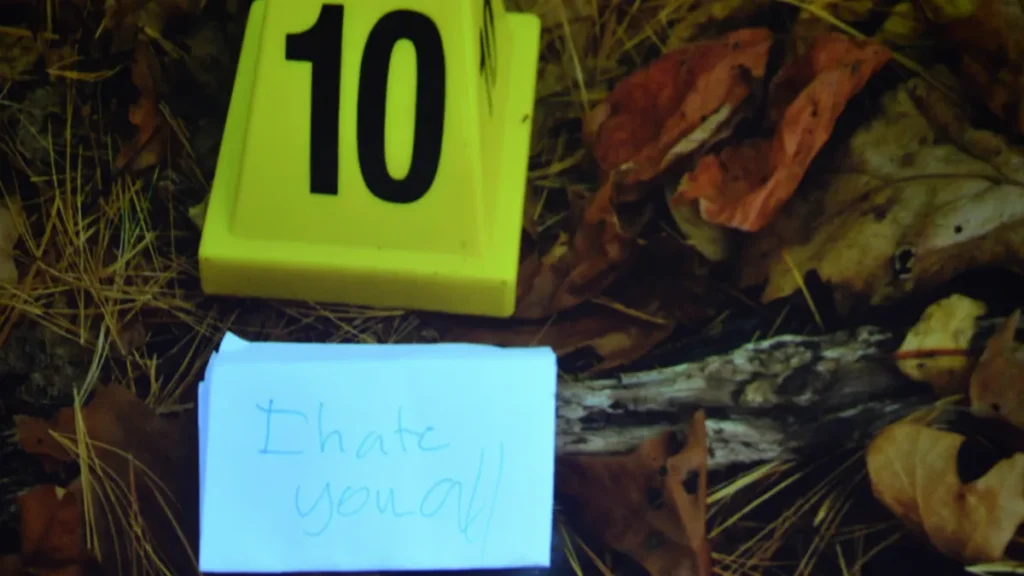
Officers found Ritzer’s body in the woods at approximately 3 a.m., about twenty yards from the recycling bin. She was naked from the waist down, and a handwritten note reading “I hate you all” lay nearby.
An autopsy later determined she had been stabbed sixteen times in the neck and sexually assaulted, both with a tree branch and by Chism himself. Her cause of death was attributed to the stab wounds and asphyxiation.
Chism was arraigned in Salem District Court later that day, charged as an adult with first-degree murder and, as a youthful offender, with aggravated rape and armed robbery for stealing her credit cards, underwear, and phone.
He was ordered held without bail. Essex District Attorney Jonathan Blodgett said the indictments detailed “horrific and unspeakable acts.”
News of the killing shook the school community. The Danvers school district released a statement calling Ritzer “a dynamic and brilliant ray of light.” Classes were canceled for the rest of the week, and hundreds gathered for a candlelight vigil, many wearing pink.
Her wake, held on October 27 at a church in Andover, drew a long line of mourners hours before it began. Her funeral the next day drew more than a thousand people, including students, colleagues, and members of the wider community.
While awaiting trial at a juvenile detention facility in Boston, Chism attacked a twenty-nine-year-old clinician with the Department of Youth Services on June 2, 2014. He followed her into a staff bathroom and attempted to strangle her before other employees intervened.
Jury selection for Ritzer’s murder trial began in the fall of 2015 in Essex Superior Court, with Judge David Lowy presiding. Chism, tried as an adult on the murder charge, pleaded not guilty by reason of insanity.
In her opening statement, prosecutor Kate MacDougall told jurors that Chism had arrived at school that day carrying “a hood, gloves, a mask, a box cutter, and a terrible purpose.”
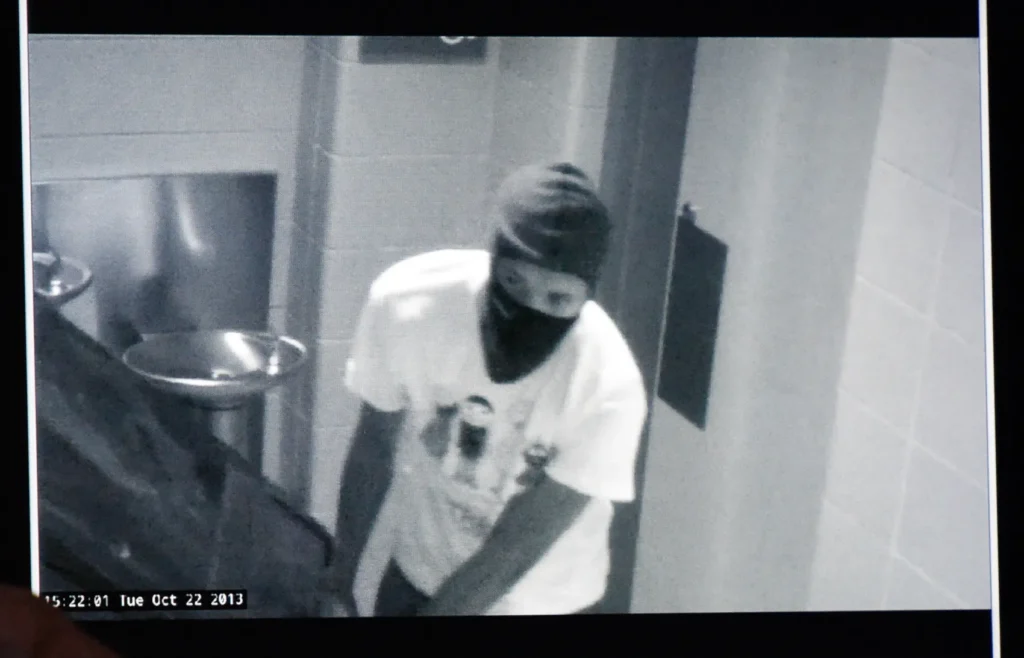
Over nearly two weeks, jurors watched surveillance footage and heard testimony from classmates, teachers, and expert witnesses. Defense psychiatrist Dr. Richard Dudley testified that Chism suffered from an unspecified psychotic disorder and had shown signs of it since around age ten.
Dudley said Chism heard commanding voices at the time of the attack, and pointed to his behavior afterward, including posing Ritzer’s body, as evidence of disordered thinking.
The judge barred testimony about brain scans that defense experts said showed abnormalities linked to schizophrenia, ruling that the evidence was too prejudicial for jurors to weigh fairly.
In rebuttal, prosecution experts testified that Chism had exaggerated or invented his symptoms.
Neuropsychologist Dr. Nancy Hebben said testing showed signs of malingering, while forensic psychologist Dr. Robert Kinscherff testified that Chism met the legal standard for sanity at the time of the killing. A Rorschach inkblot test, Kinscherff told jurors, showed “no indication of a psychotic process.”
On December 15, 2015, the jury found Chism guilty of first-degree murder, aggravated rape, and armed robbery. He was acquitted of a second rape charge tied to the assault in the woods. Ritzer’s father, Thomas, said afterward that the verdict meant “there can never be true justice for the crime committed.”
Chism returned to court for sentencing on February 26, 2016. Nine of Ritzer’s family members and friends delivered victim impact statements before Judge Lowy handed down the sentence. “The crashing waves of this tragedy will never wane,” Lowy said.
He sentenced Chism to twenty-five years to life in prison for the murder, and to forty years and a day for the aggravated rape and robbery, with all sentences served concurrently.
Because Chism was fourteen at the time of the crime, he could not be sentenced to life without parole; both the United States Supreme Court and Massachusetts’ highest court had ruled against that penalty for juveniles.
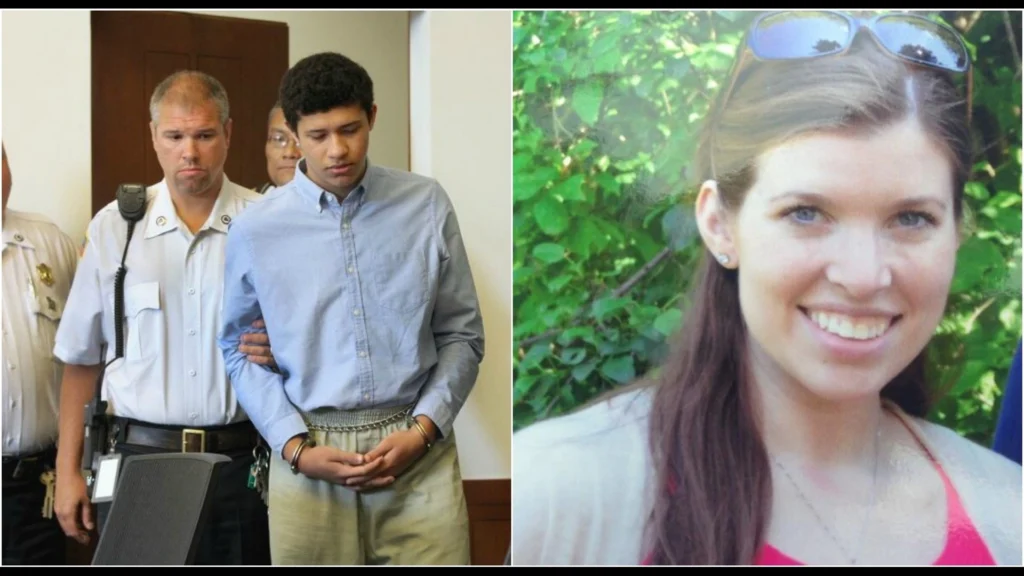
As a result, he became eligible for parole after forty years, when he will be fifty-four years old. He remained at the juvenile facility in Worcester until he turned eighteen, then was transferred to state prison.
Later in 2016, Ritzer’s family filed a wrongful death lawsuit against the town of Danvers, a cleaning company contracted by the school, and DiNisco Design, the architecture firm that had designed the newly renovated wing where she was killed.
The family argued that the wing’s security system had known flaws that were overlooked before her death. The town and the cleaning company were later dismissed from the case, but a judge allowed the claim against DiNisco to move toward trial.
In August 2022, the Ritzer family and DiNisco reached a settlement on terms that were not disclosed. In a joint statement, both sides said the lawsuit was never meant to shift blame away from Chism, adding, “This litigation was never about assessing blame on any civil defendant.”
The family said the case had answered lingering questions about the school’s security system.
In April 2024, Chism pleaded guilty to charges connected to the 2014 attack on the detention center worker, including attempted murder. He was sentenced to seventeen to twenty years, to run concurrently with his sentence for Ritzer’s murder.
In her victim impact statement, the woman he attacked said, “Philip Chism is a monster, a murderer.”
Chism later asked the Massachusetts Supreme Judicial Court to overturn his murder conviction. He argued that the trial judge had wrongly excluded the brain-scan evidence, and that there was not enough evidence to support the rape and robbery convictions.
In response, Ritzer’s family said Chism remained dangerous, stating, “Without any admission of remorse, this evil individual cannot be rehabilitated.”
On February 25, 2025, the court unanimously rejected his appeal, upholding both the conviction and the original sentence. Essex District Attorney Paul Tucker noted that Judge Lowy had once said Ritzer lived “a life of quiet heroism.”
In the years following her death, Ritzer’s family created the Colleen E. Ritzer Memorial Fund to preserve her memory and support future educators.
The nonprofit awards scholarships to students in the Andover and Danvers areas who plan to pursue careers in education, funded partly through an annual five-kilometer walk and run held in her honor.
Each year on October 22, the anniversary of her death, the fund also promotes a day of kindness, encouraging people to perform acts of kindness in her memory.



Recent Comments