
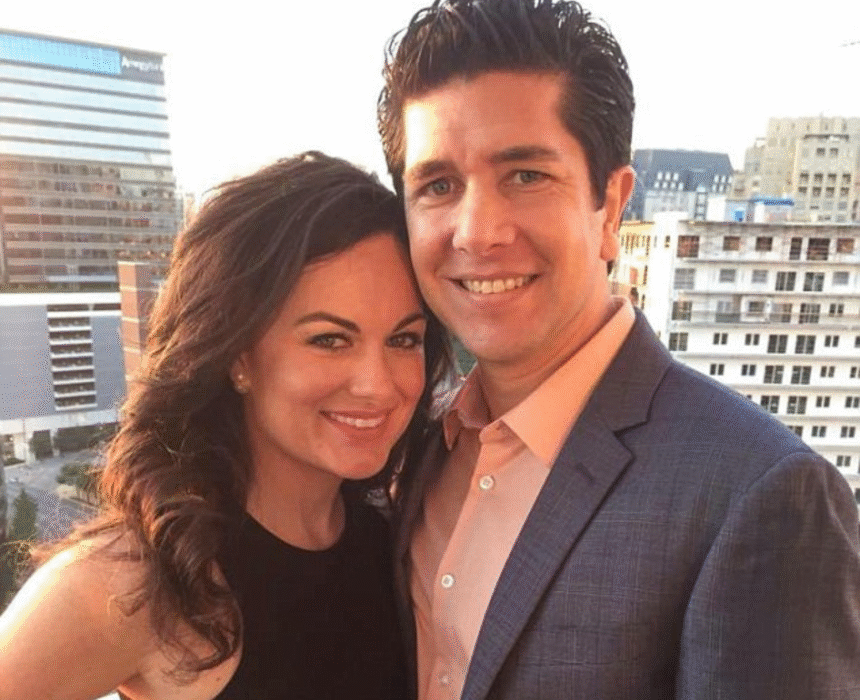
Kendra Hatcher, a 35-year-old Dallas pediatric dentist, was shot to death in her apartment parking garage on September 2, 2015, in a murder-for-hire plot arranged by her boyfriend’s jealous ex-girlfriend.
Kendra Kay Hatcher was born on February 3, 1980, in Springfield, Illinois, to Ragan Hatcher and Bonnie Gibson Jameson-Cawley. She grew up in the small town of Pleasant Plains, Illinois, alongside three sisters and a brother, in a family that placed a strong emphasis on Christian faith.
In high school, she was captain of both the cheerleading squad and the volleyball team. She also began leading Bible studies for children from low-income families, a habit she kept for years.
Hatcher came from a modest household, and those who knew her said her drive to help others grew out of watching her mother work hard to support the family.
She studied at DePauw University in Indiana, where she majored in Spanish and minored in biochemistry and joined the Kappa Alpha Theta sorority, then went on to the University of Kentucky College of Dentistry.
During school breaks, she traveled to Ecuador and Spain to provide free dental care to families who could not otherwise afford it, practicing her Spanish so she could speak directly with the children she treated.
After graduating, she moved to Dallas, Texas, and took a position at Smile Zone, a practice that offered high-quality dental care to children from disadvantaged backgrounds.
In the spring of 2015, Hatcher began dating Dr. Ricardo “Ricky” Paniagua, a dermatologist she met through the dating app Tinder. Paniagua, a California native, had graduated from Stanford University School of Medicine.
He moved to Dallas in 2011 to complete his dermatology residency at the University of Texas Southwestern Medical Center, where he later worked as an assistant professor. The relationship between Hatcher and Paniagua moved quickly.
Within months, the couple had started a wedding fund, and Hatcher had met his parents. By late summer, they were planning a Labor Day trip to Cancún.
Before Hatcher, Paniagua had spent nearly three years in an on-and-off relationship with Brenda Delgado, a dental assistant and dental hygiene student. Delgado was born in central Mexico on June 18, 1982, and immigrated to Dallas with her parents and four siblings that same year.
Her father worked in construction and her mother took jobs with the postal service and as a house cleaner. Delgado graduated from Skyline High School in Dallas, worked as a dental assistant, and later enrolled in a dental hygiene program at Sanford-Brown College.
A friend once described her as “someone always easy to talk to.” She and Paniagua dated from the fall of 2012 to the summer of 2014, briefly reunited that November, and split for good in February 2015.
Delgado struggled to accept the breakup. She kept a key to Paniagua’s apartment, knew his iCloud and email passwords, and installed an app that let her track his phone’s location.
In June 2015, Paniagua emailed her to say his new relationship with Hatcher was going well. Delgado responded by escalating her surveillance, saving screenshots of his flight confirmations, text messages, and even a photo of him with Hatcher, according to court testimony and reporting on the case.
Rather than move on, Delgado began asking people close to her to help her get rid of Hatcher. Her cousin testified that she showed him a baseball bat and asked him to beat Hatcher to death.
Her roommate at the time, Jennifer Escobar, testified that Delgado considered other violent methods as well. “She just wanted to eliminate Kendra Hatcher or even both of them,” Escobar later told the court.
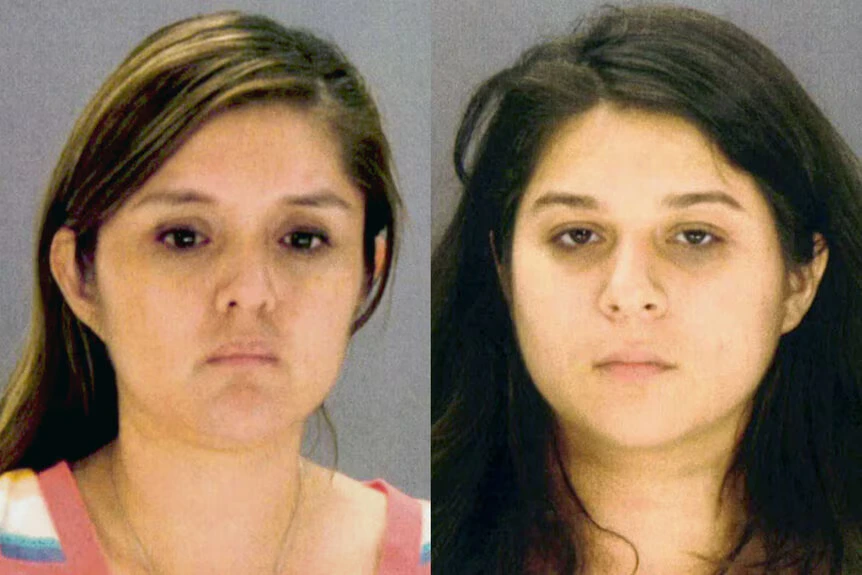
Each person she approached declined, and none reported her to the police. Delgado eventually found two people willing to help: Crystal Cortes, a 23-year-old single mother facing financial hardship, and Kristopher Love, a small-time marijuana dealer with a lengthy arrest record.
Cortes was offered $500 to serve as the getaway driver, while Love was promised cash and drugs to carry out the shooting.
In the weeks before the murder, Delgado, Cortes, and sometimes Love followed Hatcher between her workplace and her home at Gables Park 17, an upscale apartment complex in Dallas’ Uptown neighborhood.
The complex’s parking garage had no working gate arm, making it easy for an outside vehicle to slip in behind a resident’s car. The group discussed several ways to kill Hatcher, including injecting her with a lethal substance and kidnapping her, before settling on a shooting staged to look like a robbery.
On the day of the murder, they swapped out an unreliable BMW for a black Jeep Cherokee borrowed from a friend, and Delgado positioned herself at a restaurant in nearby Carrollton to establish an alibi.
On the evening of September 2, 2015, Hatcher finished her final workday before the planned Cancún trip. The Jeep entered the Gables Park 17 garage at around 7:14 p.m. and parked out of camera view.
Hatcher’s car pulled in roughly twenty minutes later. As she stepped out, a person wearing a mask ran toward her, and gunfire erupted moments later. She was shot once in the back of the head at close range.
Her purse was taken to make the scene look like a robbery, and the Jeep sped out of the garage within two minutes. A witness who heard the commotion ran over and found Hatcher lying on the ground with her car door still open and blood coming from her neck.
The witness called 911, reporting a masked person and a black Jeep Cherokee fleeing the scene.
Responding officers found a gun magazine and a spent shell casing near Hatcher’s body, along with her phone. Her scrubs, which had her name sewn into them, allowed police to identify her quickly. A check of her phone showed Paniagua was the last person she had spoken with. He arrived at the complex minutes later, carrying takeout dinner for the two of them, and instead found the parking area sealed off with crime scene tape.
Detective Eric Barnes of the Dallas Police Department led the investigation. Reviewing surveillance footage, investigators noticed the vehicle had carefully followed a resident’s car into the locked garage and waited.
To them, this did not look like a random robbery. When shown still images of the Jeep and its driver, Paniagua told police the driver reminded him of Delgado, his former girlfriend, who he said had continued to show up at places he frequented after their breakup.
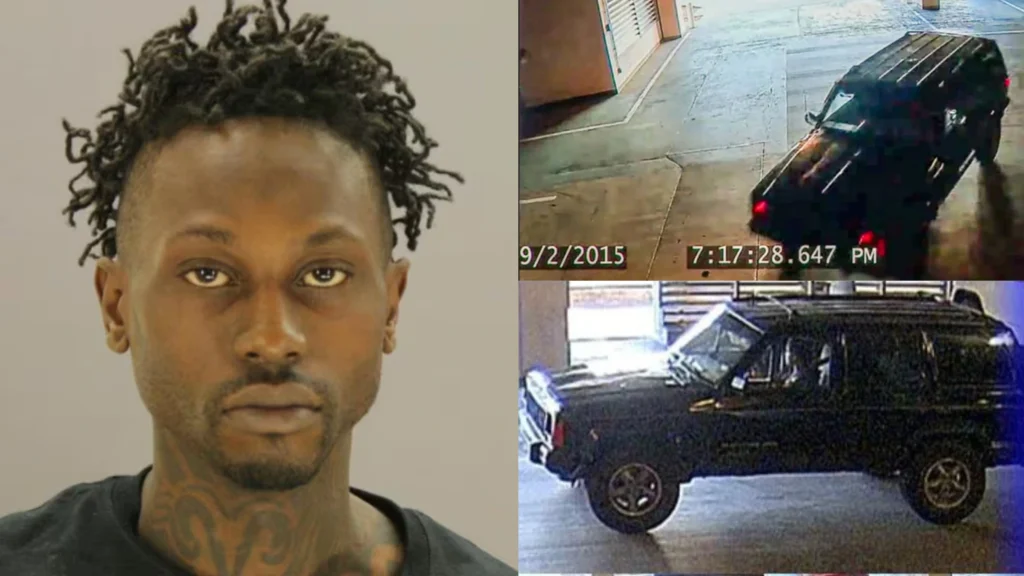
Around the same time, a mechanic recognized the Jeep from news coverage and contacted police. He had loaned the vehicle to a customer shortly before the murder, and that customer was Delgado.
Two days after the murder, Barnes brought Delgado in for questioning. She arrived calm and cooperative, presenting a detailed alibi that included a receipt from a restaurant and an account of studying at a library with a classmate that afternoon.
Barnes later testified that her account felt rehearsed despite matching the evidence she provided. When shown the image of the Jeep, Delgado admitted recognizing it but said a friend, Crystal Cortes, had borrowed it to give her a ride.
Investigators brought Cortes in the same day. Her account of the day changed multiple times, from claiming she had simply been looking for parking, to saying a masked stranger had forced her to drive at knifepoint, before she ultimately admitted that Delgado had paid her $500 to drive while a man she knew only as “Lamar” carried out the shooting.
Cortes was arrested and charged with murder.
During a later interview, Barnes confronted Delgado directly about her motive. “I think you hated it that you weren’t good enough,” he told her, according to testimony he later gave at her trial. Prosecutors did not yet have enough evidence to charge Delgado with murder, and she was held only on unpaid parking tickets. After paying the tickets, she was released. Within days, she crossed into Mexico.
Investigators spent the following weeks tracing phone records connected to Cortes and identified “Lamar” as Kristopher Love, a Dallas man with a dozen prior arrests.
Police located his car, a blue Chrysler Sebring, in an impound lot, where a search turned up the .40-caliber handgun used in the shooting. Love denied any involvement through a 22-hour interview before eventually admitting he was present, though he falsely claimed Cortes had fired the gun.
Surveillance footage contradicted that account. Love was charged with capital murder, and investigators later determined Delgado had promised him cash and drugs, along with false claims of cartel connections, in exchange for carrying out the killing.
As the case developed, investigators also learned Delgado had a saved copy of Paniagua’s Social Security card among the material she had collected during her surveillance of him.
On the night of the murder and the following morning, she had texted Paniagua offering to bring him groceries. A federal warrant for unlawful flight to avoid prosecution was issued for Delgado on October 7, 2015, but by then she had already fled the country.
While Delgado remained in Mexico, investigators asked her family in Dallas for help locating her. Her relatives declined to cooperate with police and instead continued sending her money, which investigators later used to help track her movements.
On April 6, 2016, roughly seven months after the murder, the FBI added Delgado to its Ten Most Wanted Fugitives list, making her the ninth woman ever placed on it, and offered a $100,000 reward for information leading to her arrest.
“Apparently she was jealous because the victim was dating her ex-boyfriend,” FBI Special Agent Jason Ibrahim said at the time. Two days later, on April 8, 2016, Mexican federal agents, working with the FBI, arrested Delgado in Torreón, in the state of Coahuila.
Extraditing Delgado proved complicated because she held dual citizenship and Mexico does not extradite its citizens to face the death penalty. To secure her return, American prosecutors agreed the death penalty would not be sought against her.
She was extradited to Dallas on October 6, 2016, escorted by the FBI’s Violent Crimes Task Force. Detective Barnes was waiting when she landed. “I told you I was going to get you,” he told her.
In October 2017, Cortes pleaded guilty to murder, a lesser charge than capital murder, in exchange for a 35-year sentence and her agreement to testify against Love and Delgado. She would become eligible for parole in 2033.
In October 2018, a jury convicted Love of capital murder. He was sentenced to death and is held at the Allan B. Polunsky Unit, Texas’ death row facility. He had rejected a plea deal that would have required him to testify against Delgado.
Delgado’s own trial began in Dallas County in June 2019. Prosecutors called Delgado’s cousin and her former roommate, Jennifer Escobar, to describe her earlier attempts to recruit a killer.
Paniagua testified about the timeline of his relationships with both women, growing emotional when asked to identify Delgado in the courtroom. Cortes served as the state’s key witness, describing the surveillance of Hatcher, the borrowed Jeep, and the payments made to her and Love.
Detective Barnes also testified, walking jurors through his interrogation of Delgado. During closing arguments, prosecutor Justin Lord described Delgado as a “stalker and crazy person,” while defense attorney George Milner argued Cortes had planned the crime herself and implicated Delgado to avoid a harsher sentence.
Lead prosecutor Kevin Brooks told jurors the case was not a love triangle, since the people in a love triangle typically know one another, and Hatcher had never known Delgado existed.
One juror later wrote, “I still don’t understand what makes people do such stupid, cruel things,” in an essay reflecting on the trial.
The jury deliberated for about eighteen minutes before finding Delgado guilty of capital murder. Because of the extradition agreement, she was automatically sentenced to life in prison without the possibility of parole.
Hatcher’s mother, Bonnie Jameson, addressed Delgado directly in the courtroom afterward, saying, “Kendra was blessed by a loving God and a family that loved her.”
Hatcher’s sister, Ashley Turner, also addressed Delgado, telling her that jealousy of another person never justifies destroying a life. Other relatives described the years of grief the murder had caused their family.
In October 2021, Texas’ Fifth Court of Appeals upheld Delgado’s conviction. Delgado is serving her sentence at the William P. Hobby Unit, a women’s prison near Marlin, Texas.
Cortes is held at the Christina Melton Crain Unit, and Love remains on death row at the Polunsky Unit. Paniagua completed his dermatology residency and returned to California, where he now practices at Kaiser Permanente facilities in the Sacramento Valley area, treating patients in English, Spanish, and Chinese.


Recent Comments