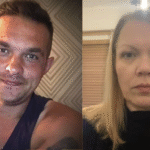
Ingrid Lyne was a nurse and mother of three who was murdered in April 2016 after going on a date with a man she met on the dating app Plenty of Fish.
Ingrid was born on August 2, 1975. She grew up with a warm and outgoing personality and people who knew her often described her as someone who was always smiling and easy to be around.
After finishing high school at Canyon del Oro in Tucson, Arizona, she went on to study nursing at the University of Arizona and earned her bachelor’s degree in 1997. Three years later, she moved to Renton, Washington.
The city’s closeness to Seattle’s medical facilities made it a good place for her career, and she got a job at the Swedish Medical Center in Seattle. She was known there for being professional and warm with both her colleagues and her patients.
Around the same time she settled in Renton, she met a local man named Phil. The two got married and had three daughters together, who were twelve, ten, and seven years old. After fourteen years of marriage, Ingrid and Phil separated.
The split was described as amicable, and both of them stayed in close contact to make sure their daughters were well taken care of. Phil later said that he had a lot of respect for Ingrid and that she was a devoted and loving mother who always put her children first.
After the separation, Ingrid spent two years focused entirely on her daughters and her career.
By 2016, at the age of forty, she felt ready to start dating again. Because her schedule was so full between work and parenting, she turned to the dating app Plenty of Fish to meet someone. It was there that she came across the profile of John Robert Charlton.
Charlton was thirty-seven years old at the time. He was five feet nine inches tall with green eyes and presented himself as a calm and simple person. His profile said he was a Catholic student from Seattle, a non-smoker, and only drank on occasion.
He wrote that he was not looking for romance but simply wanted to make friends and meet up for low-key outings like coffee or a comedy show. Nothing in his profile raised immediate concerns for Ingrid. The two began messaging each other regularly and after several conversations, they agreed to meet in person.
Their first date went well. After that, they began seeing each other three to four times a week. Charlton would come to Ingrid’s home in Renton, and they would go out together — usually to bars for drinks — before returning to spend the night.
As time went on, though, Ingrid started to notice things that did not quite add up. Charlton did not seem to have a place of his own, had no car and did not appear to have a steady job.
These were clear red flags but Ingrid continued seeing him. She enjoyed his company and appreciated having time to herself outside of her responsibilities at home and at work.
Importantly, she kept the relationship completely private. None of her friends or family knew she was seeing him. Whether this was because she felt uncertain about where things were going or because she was aware of his situation and felt embarrassed, she never brought him up to the people close to her.
That decision would later make it harder for those around her to piece together what had happened when she went missing.
Friday, April 8, 2016, was the last night anyone saw Ingrid alive. Her ex-husband Phil had taken their three daughters away for the night. With her shift at the hospital finished and her children accounted for, Ingrid got ready to spend the evening with Charlton.
The two had plans to attend a Seattle Mariners baseball game. Before heading to the stadium, they stopped at a nearby bar called the Beer Gardens for drinks.
At some point during the evening, Ingrid noticed that Charlton seemed much more intoxicated than she had expected. Despite this, the two continued to the stadium and watched the game.
The next morning, Saturday, April 9, Phil arrived at Ingrid’s home at 7:30 a.m. to drop off the children. As soon as he pulled up, he noticed that her car — a 2015 Toyota Highlander — was not there. He knocked on the door and got no answer.
He called her phone and it rang out. He sent a text message and received no reply. That kind of silence was completely out of character for Ingrid. She was reliable, especially when it came to her daughters, and would not normally leave a message unanswered.
Phil contacted Ingrid’s mother, Jorga Bass. The two of them were very close. They shared a Verizon phone account and each had a spare key to the other’s home.
When Jorga Bass heard that her daughter was unreachable and that her car was gone, she went straight to the house and used her spare key to get in. The house was completely quiet. She and Phil moved through each room calling out for Ingrid, but there was no response anywhere.
When they reached the master bedroom, a strong smell of bleach hit them immediately. Ingrid’s wallet, phone, and keys were all still there, which made it clear she had not left on her own terms.
Following the smell through the house led them to the bathroom. When they opened the door, they found a fifteen-inch pruning saw resting against the sink. Finding something like that in a bathroom was deeply alarming. Jorga Bass called 911 right away.
While Jorga Bass waited for officers to arrive, she went to speak to the neighbors and also reached out to Ingrid’s friends to ask if anyone knew where she might be.
One friend mentioned that Ingrid had sent her a message around 10:30 the previous night saying she was out on a date with someone named John. A neighbor said the name sounded familiar.
With that information and access to her daughter’s phone records through their shared account, Jorga Bass went through the call history and found one number that appeared far more frequently than any other. She searched the number online and it connected to a Facebook profile belonging to John Charlton.
Jorga Bass texted him. He replied quickly, saying he thought Ingrid had her kids that day. Jorga Bass told him that Ingrid’s belongings were still at the house and that the police had been called.
Charlton responded with apparent surprise and then mentioned that the two of them had gone to the Mariners game the night before but had not stayed together afterward because she had her children the next day. After sending that message, he stopped responding entirely.
Jorga Bass passed all of these messages on to the officers who had arrived at the scene. Around the same time, a completely separate call had come in to Seattle emergency services.
About ten miles from Ingrid’s home, on 21st Avenue at East Pine Street, a resident had gone to collect his recycling bin and found three white plastic bags inside it. When he tried to lift them out, he realized they contained human remains. He called 911 immediately.
Police were now responding to two scenes at the same time. At Ingrid’s house, forensic officers examined the bathroom more closely.
On initial inspection, they could not find obvious traces of human tissue in the bathroom itself, and there were no visible signs of a struggle. However, the presence of the saw and the heavy smell of bleach were more than enough to treat the location as a crime scene.
Six hours after the remains were found in the recycling bin, investigators made a visual identification using a photograph from Ingrid’s driver’s license. A forensic examination of the remains revealed that she had been strangled.
Broken blood vessels in her eyes and hemorrhaging around her neck indicated she had been killed with a significant amount of force. A toxicology report confirmed that she had a blood alcohol level of 0.074 at the time of her death, though no other substances were found in her system.
With a murder investigation now fully underway, police obtained a search warrant for Ingrid’s home on April 10. A more detailed forensic examination of the bathroom this time produced critical results.
Trace amounts of blood were found in the drain, and when investigators removed it and checked the plumbing below, they found more obvious evidence of tissue and blood.
In the kitchen, they also found an empty box of plastic trash bags — the same type that had been used to dispose of the remains found across the city.
On April 11, Ingrid’s missing Toyota Highlander was found parked in downtown Seattle, about three miles from the baseball stadium. The location was not considered a coincidence.
That same day, police tracked Charlton to Lake Stevens, roughly fifty miles from Seattle, and brought him in for questioning.
During the interview, officers noted how strangely calm and disinterested he appeared. He showed no visible concern about Ingrid’s death and became visibly irritated when questioned.
He also had noticeable abrasions on his forehead and hands, along with scratches on his lip, chin, and chest — injuries that raised the question of whether they were defensive wounds from a struggle.
Charlton confirmed that he and Ingrid had gone to the Beer Gardens and then the baseball game. He then claimed that he had blacked out after the game and had limited memory of the rest of the night.
He added that Ingrid had not allowed him to stay over because she was not yet ready for him to meet her daughters. Shortly after making that statement, he asked for a lawyer. The interview ended, and without sufficient evidence at that point, investigators had to let him go. He remained under close watch.
On April 13, forensic investigators found DNA evidence directly linking Charlton to the crime scene in Ingrid’s bathroom. He was arrested that day on charges of first-degree murder and auto theft and was booked into King County Jail on a two-million-dollar bond.
Between April 15 and April 18, additional remains were found in two separate recycling bins elsewhere in Seattle.
A review of Charlton’s background revealed a lengthy criminal history running from 1997 to 2009. His charges included felony theft, aggravated robbery, negligent driving, and two misdemeanor assaults.
He had been imprisoned twice and had a long history of problems with alcohol and drugs. In 2006, his own parents filed a restraining order against him after repeated incidents where he showed up at their home drunk, verbally abusive, and aggressive.
His father later confirmed that Charlton had privately told him he felt he was losing control of his own behavior and becoming mentally unstable. None of this history had been shared with Ingrid.
Nearly two years after his arrest, Charlton appeared in court and pleaded guilty to first-degree murder. His decision to plead guilty spared Ingrid’s family from having to sit through a full trial and relive the details publicly.
Before sentencing, Superior Court Judge Julie Spector read more than two dozen letters submitted by family members and friends describing how profoundly Ingrid’s death had affected their lives.
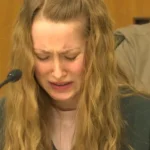
Phil addressed the court directly and spoke about what his daughters had lost. He said there would be no more motherly advice, no more holidays together, no more trips to the beach, and no more Thursday night dinners at their usual steakhouse.
He added that his children’s own children would grow up without a maternal grandmother.
Judge Spector told Charlton that what he had done was vicious and cruel beyond belief. She sentenced him to twenty-eight years in prison, which was the maximum penalty allowed under Washington State sentencing guidelines.
Before being taken away, Charlton briefly addressed the courtroom and acknowledged that no words could ease the pain he had caused. He offered an apology and was then led out of the courtroom to begin his sentence.